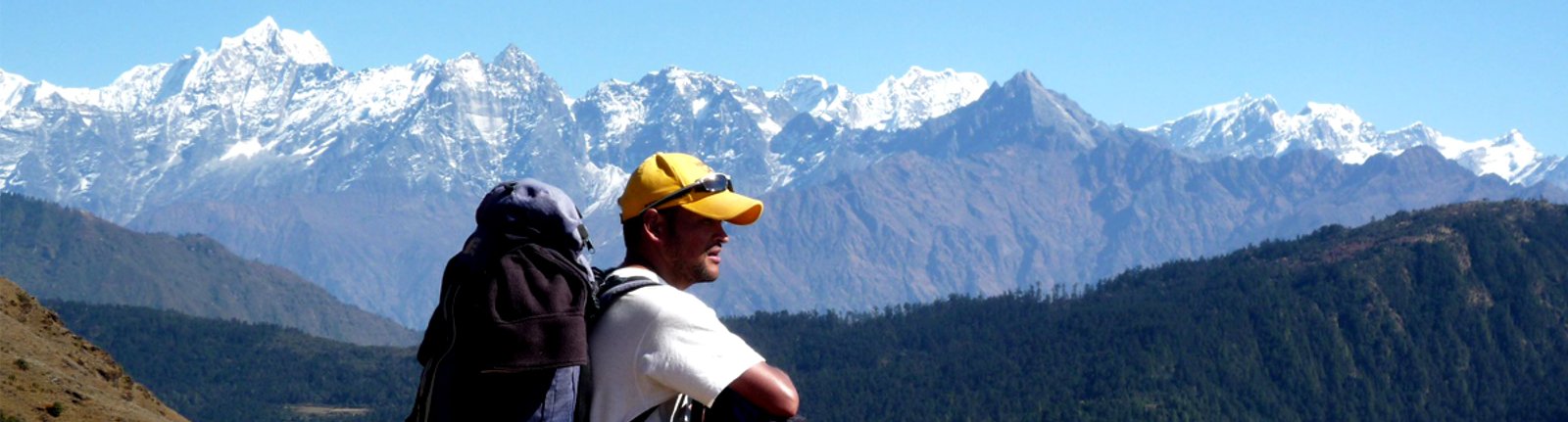
Everest Base Camp Trek
Mountain Hawk Trek
Everest RegionStrenuous

Everest BaseCamp Trek

Trek to Everest Base Camp at 5,364m on a 15-day guided route through the Khumbu. Kala Patthar sunrise at 5,545m, Namche Bazaar, Tengboche Monastery, teahouse stays along the classic Lukla trail. From USD 1,675.

View Itinerary
Trusted by 500+ trekkers on these trails
Trip Highlights

The moments that matter most

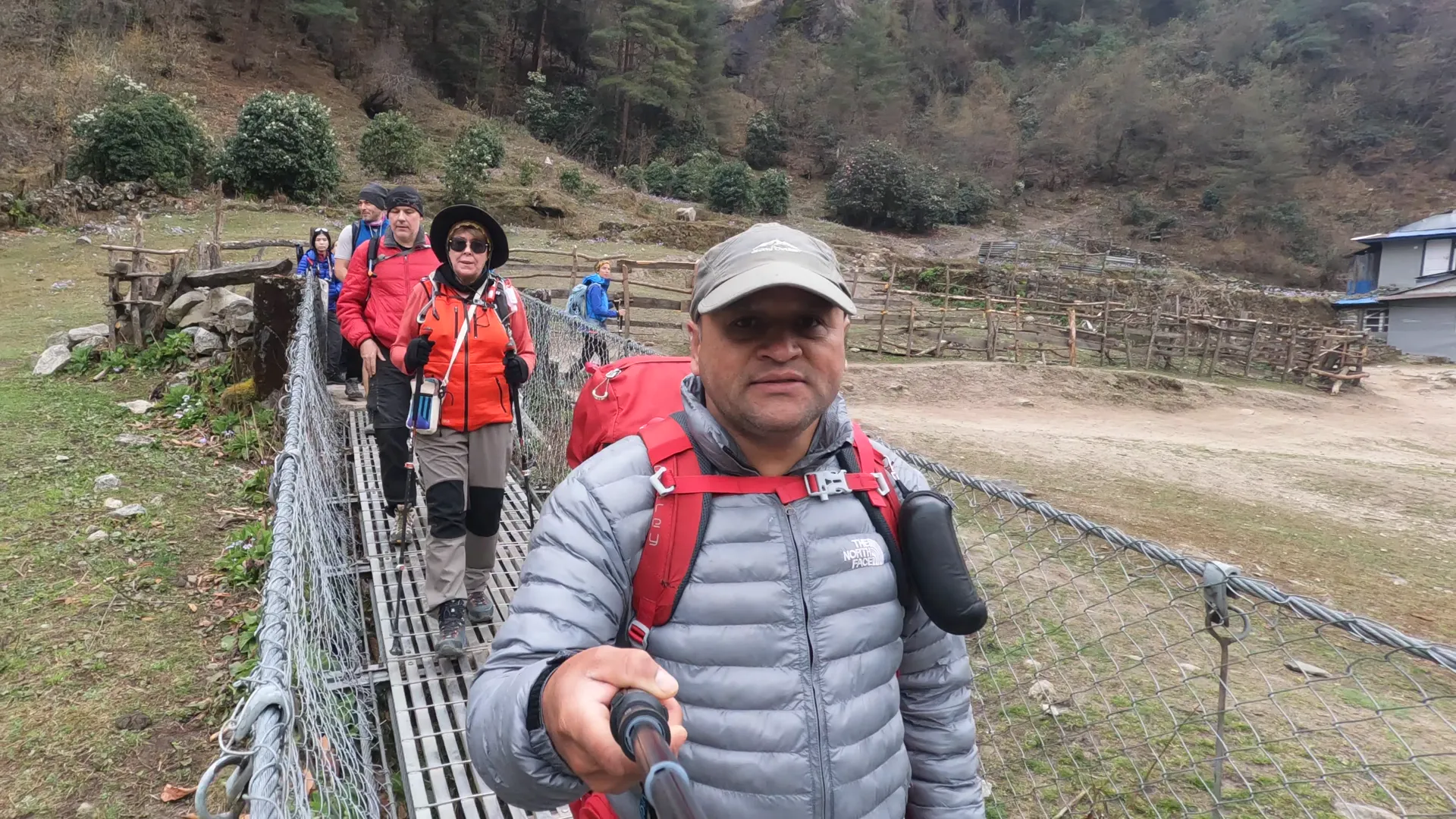
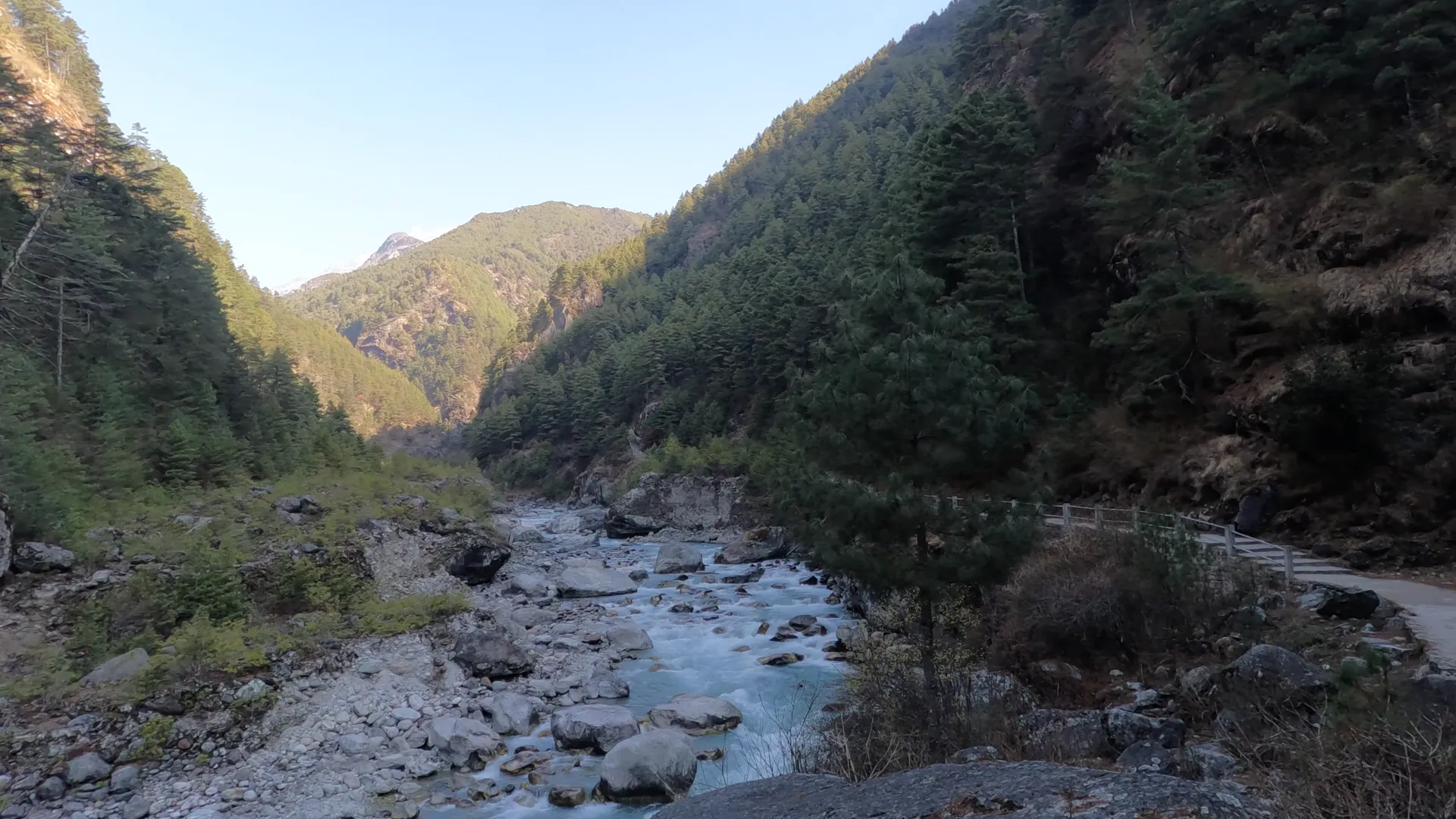
The Everest Base Camp trek follows the most walked trail in the Khumbu. You gain 2,304 meters between Lukla and Gorak Shep. You sleep in teahouses every night, eat dal bhat, Pasta, noodle, potato and Sherpa stew cooked by lodge owners, and walk 5 to 7 hours a day through terrain that shifts from forested river valleys to glacial moraine above 5,000 meters. The trail crosses suspension bridges over the Dudh Koshi gorge, passes through rhododendron forests that bloom pink and red in April, and opens into high alpine desert above Pangboche where vegetation thins to lichens and scrub juniper.

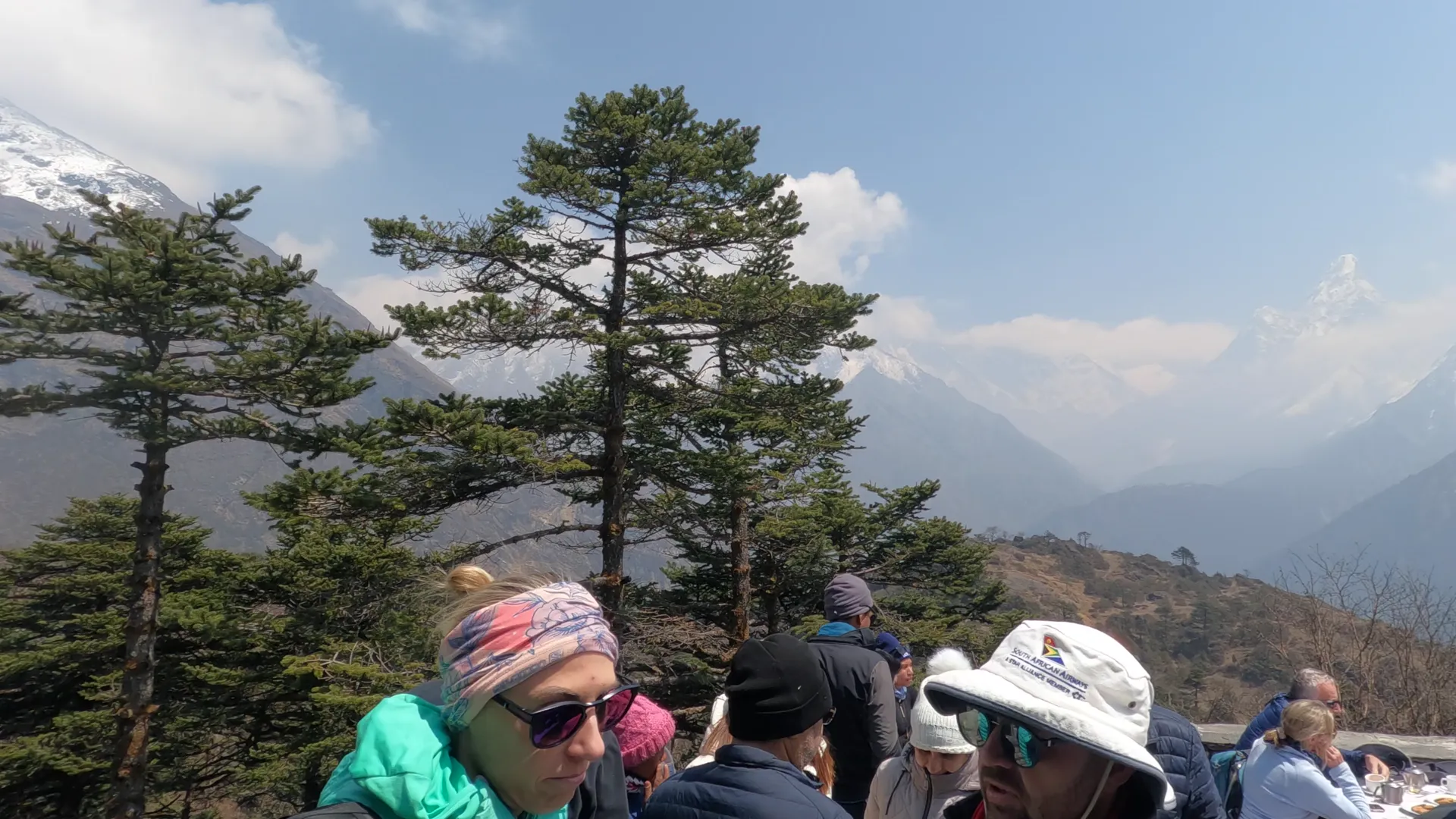
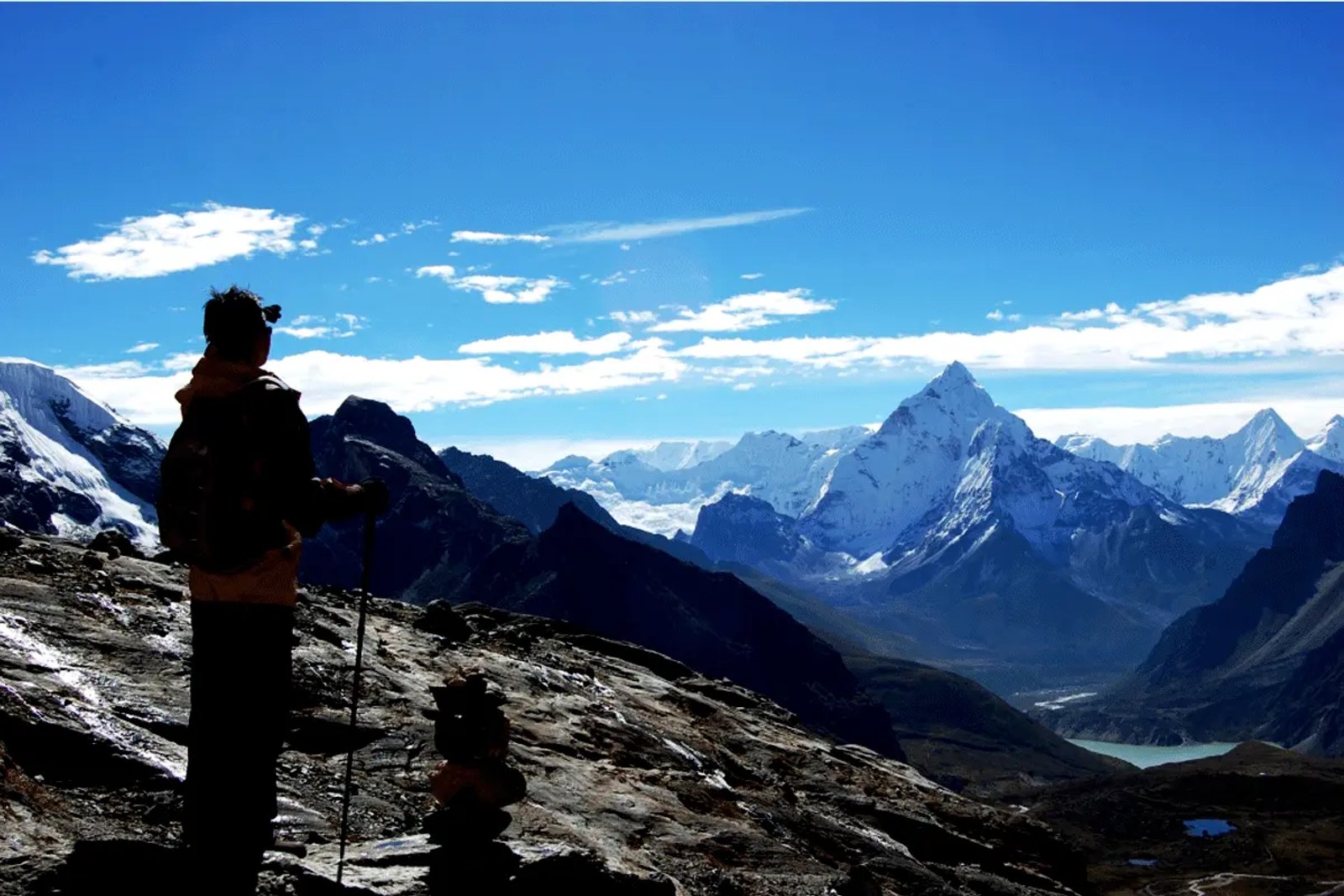
Key landmarks along the route include Namche Bazaar (3,440m), the trading hub where Sherpa families run bakeries, coffee shops, gear shops, handicraft and guesthouses. Tengboche Monastery sits at 3,860m on a ridge with Ama Dablam, Everest, and Lhotse filling the skyline behind its red-painted walls. The monastery holds daily prayer ceremonies open to trekkers. At Dingboche (4,410m), the last major settlement before the high camps, potato fields and stone walls stretch across a valley floor framed by Island Peak and the Lhotse wall.

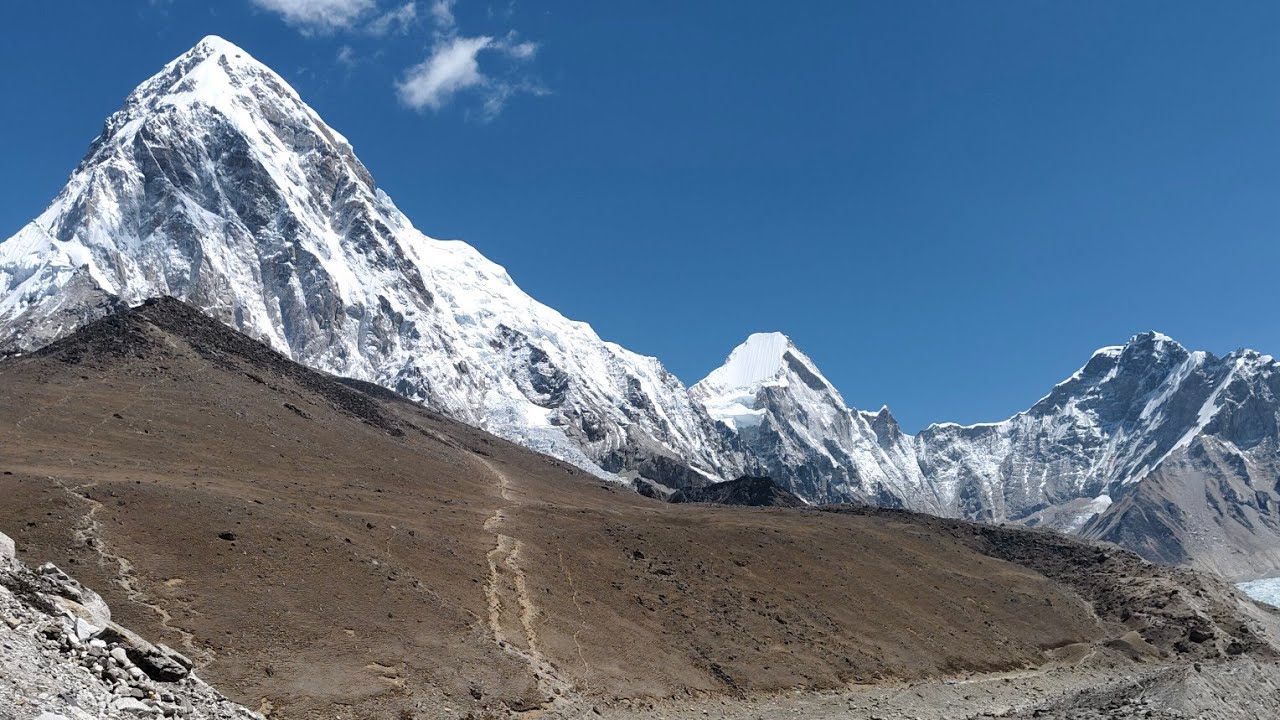
At Gorak Shep (5,180m), the last settlement before base camp, you drop your pack at the lodge we have booked and walk two hours across glacial rubble to stand at Everest Base Camp. The Khumbu Icefall towers directly above, its seracs shifting visibly. The next morning, you climb Kala Patthar (5,545m) for sunrise over the entire Everest massif. On clear mornings, three of the world's fourteen 8,000-meter peaks are visible from the summit of Kala Patthar. It is the single best viewpoint on any trekking trail in Nepal.

The daily rhythm on the EBC trek builds gradually. Below Namche, you walk 5 to 6 hours through shaded forest on well-graded paths. Above Namche, the trail steepens and air thins. By Dingboche, most trekkers settle into a pattern: wake at 6 AM, eat breakfast in the teahouse dining room (heated by a yak-dung stove), walk until the early afternoon, and arrive at the next lodge by 2 to 3 PM. Evenings are spent in the common room playing cards, reading, charging devices, and drinking ginger tea. We build two acclimatization days into this itinerary, at Namche and at Dingboche, both of them shorter hikes that climb high and sleep low, and your guide takes pulse oximeter readings on each before anyone goes higher.

The trail passes through one of the most ecologically diverse vertical transects in the Himalaya. Below 3,500m, birch and rhododendron forest supports Himalayan tahr, musk deer, red panda, snow leopard, Himalayan black bear and danphe (the national bird). Above treeline, Tibetan snowcock, Himalayan vultures and lammergeier vultures circle the thermals. Yak trains carry supplies between villages, bells clanging on switchbacks. At Gorak Shep, the terrain is lunar: grey moraine, frozen ponds, and the rubble-covered Khumbu Glacier stretching toward the icefall.

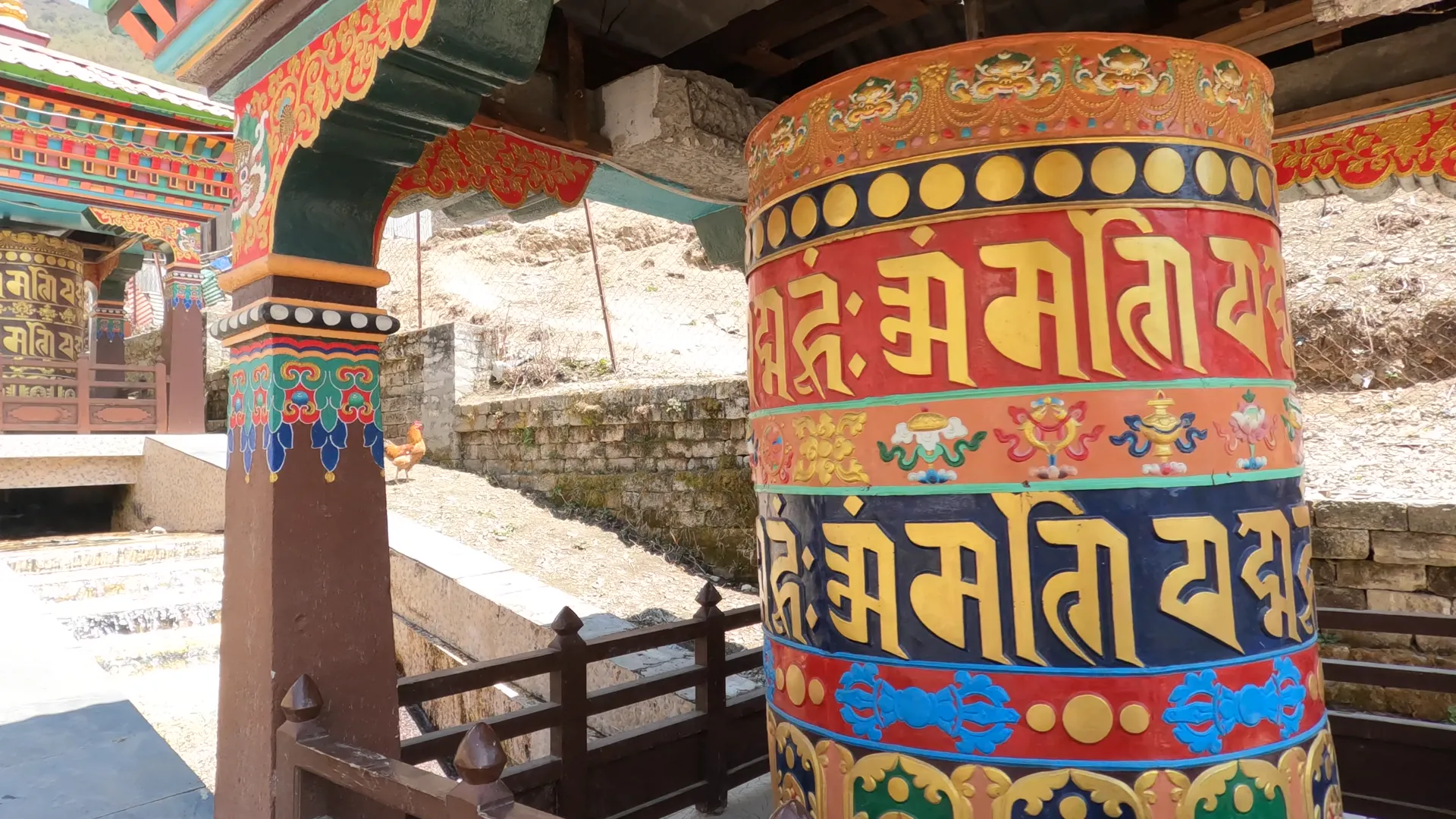
Unlike many high-altitude treks, the EBC route passes through permanently inhabited villages rather than empty wilderness. You interact with Sherpa culture daily: prayer flags at every pass, mani stones along the trail, monastery bells at dawn. The Khumbu has been receiving trekkers since the 1960s and the teahouse system reflects that history. Lodges serve espresso in Namche and dal bhat at 5,000 meters. That mix of extreme altitude and inhabited valley is what separates this trek from Kilimanjaro or the Inca Trail, and it is why we run the full 15-day pattern instead of a compressed one.

Trip Overview

A closer look

The Everest Base Camp trek is a 15-day, 130-kilometer round trip from Lukla to the south face of Mount Everest at 5,364 meters. The route passes through Sagarmatha National Park, a UNESCO World Heritage Site, climbing from Lukla (2,800m) through Namche Bazaar, Tengboche, Dingboche, and Lobuche before reaching Gorak Shep and the base camp itself. No ropes, crampons, or technical climbing skills are required. The trail is a walking route from start to finish.

The highest point on the trek is Kala Patthar at 5,545 meters, not the base camp. Most trekkers wake before dawn to climb Kala Patthar for sunrise over Everest. From the summit you can see the Majestic view of Khumbu Icefall, the Western Cwm, and the south face of Everest flanked by Lhotse (8,516m), Pumori and Nuptse. On a clear morning, Cho Oyu, Ama Dablam, Thamserku, Kangtega, Taboche and and Lobuche Peak are also visible. The view from Kala Patthar is widely regarded as the single best panorama on any trekking trail in Nepal. For a detailed breakdown of what each day looks like, read our Everest Base Camp trek complete guide.

The trail follows the Dudh Koshi valley through rhododendron and juniper forests before opening into alpine terrain above Pangboche (3,900m). Teahouses along the route provide meals, hot drinks, and shared or private rooms every one to two hours of walking. The standard itinerary includes two acclimatization days: one in Namche Bazaar (3,440m) with an optional hike to Everest View Hotel, and one in Dingboche (4,410m) with a side trip toward Chhukung Valley or Nagarsyang hill. Acclimatization stops are medically critical for reducing the risk of altitude sickness above 3,500 meters like Namche Bazaar. More on how to prepare your body for this altitude in our EBC difficulty guide.

Two permits are required for 2026: the Sagarmatha National Park Entry Permit (NPR 3,000 for foreign nationals) and the Khumbu Pasang Lhamu Rural Municipality Permit (NPR 3,000). Both are included in your trek cost or Package. TIMS cards are no longer required for the Everest region. Since April 2023, all foreign trekkers must hire a licensed guide. Full details on all Nepal permit types and costs are on our trekking permits guide.

The best months for the Everest Base Camp trek are October to November and March to May. October delivers the clearest skies and sharpest mountain visibility after the monsoon clears. April brings rhododendron blooms on the lower trail and expedition-season energy at base camp. Winter trekking (December to February) is possible for experienced cold-weather trekkers, though some teahouses above Dingboche close. Monsoon months (June to September) are not recommended for first-time Himalayan trekkers. But best time who love the summer Himalayan flower and Vegetation. Our EBC best time guide covers weather data and crowd levels month by month.

Our Everest Base Camp trek starts at USD 1,675 per person, and that covers the kathmandu to Lukla flights both ways, food, both permits, a government licensed guide, one porter for every two trekkers, your Kathmandu hotel and teahouse accommodation. Budget USD 10 to USD 20 a day for extras such as hot showers, WiFi, charging and drinking water, plus USD 200 to USD 300 in tips for your guide and porter. Travel insurance adds USD 80 to USD 180, and we ask for proof of it before we confirm your booking. A full cost breakdown covering every line item is in our EBC cost guide.

Mountain Hawk Trek runs several routes in the Everest region beyond the standard everest base camp itinerary. For a shorter, easier option, the Everest View Trek reaches 3,880m in 9 days without going above Tengboche. For a more demanding route, the Everest Three Passes Trek crosses Kongma La, Cho La, and Renjo La over 22 days. Trekkers who want to combine base camp with Gokyo Lakes can take the Gokyo Cho La Pass Trek via EBC, a 19-day circuit that adds Cho La Pass (5,420m) and Gokyo Ri (5,357m) to the standard route.

Those who prefer lodge comfort can book the Everest Base Camp Luxury Trek, which follows the same route with upgraded accommodation, private rooms, and hot showers. To walk the original old classic 1953 Hillary trekking route from the road instead of flying to Lukla, the Jiri to Everest Base Camp Trek adds seven extra days through the Lower Khumbu region before joining the standard trail at Lukla. Comparing this trek against other Nepal routes? Our EBC vs Annapurna comparison covers difficulty, cost, and views side by side.

Route & Elevation

The trail, mapped

Elevation ProfileDay-by-day altitude
TrailPeak
5,545m4,495m3,445m2,395m1,345mKathmanduPhakdingNamcheTengbocheDingbocheLobucheGorak ShepEBCKala PattharPhericheNamcheLukla5,545m
Itinerary

Day by day, on the trail

15 days from Kathmandu arrival to departure. Hover any day for full details.

Day01

Arrival in Kathmandu

Kathmandu

Arrive at Tribhuvan International Airport (1,345m). Transfer to your hotel in Thamel by private vehicle. If time permits, visit our office for a trek briefing, permit processing, and final gear check. Thamel has dozens of rental shops for sleeping bags, down jackets, and trekking poles. Exchange currency and withdraw enough Nepali rupees for the full trek since the last reliable ATM is in Namche Bazaar. Overnight at hotel with breakfast included.

1,345mHotel
Day02

Fly to Lukla, trek to Phakding

Phakding

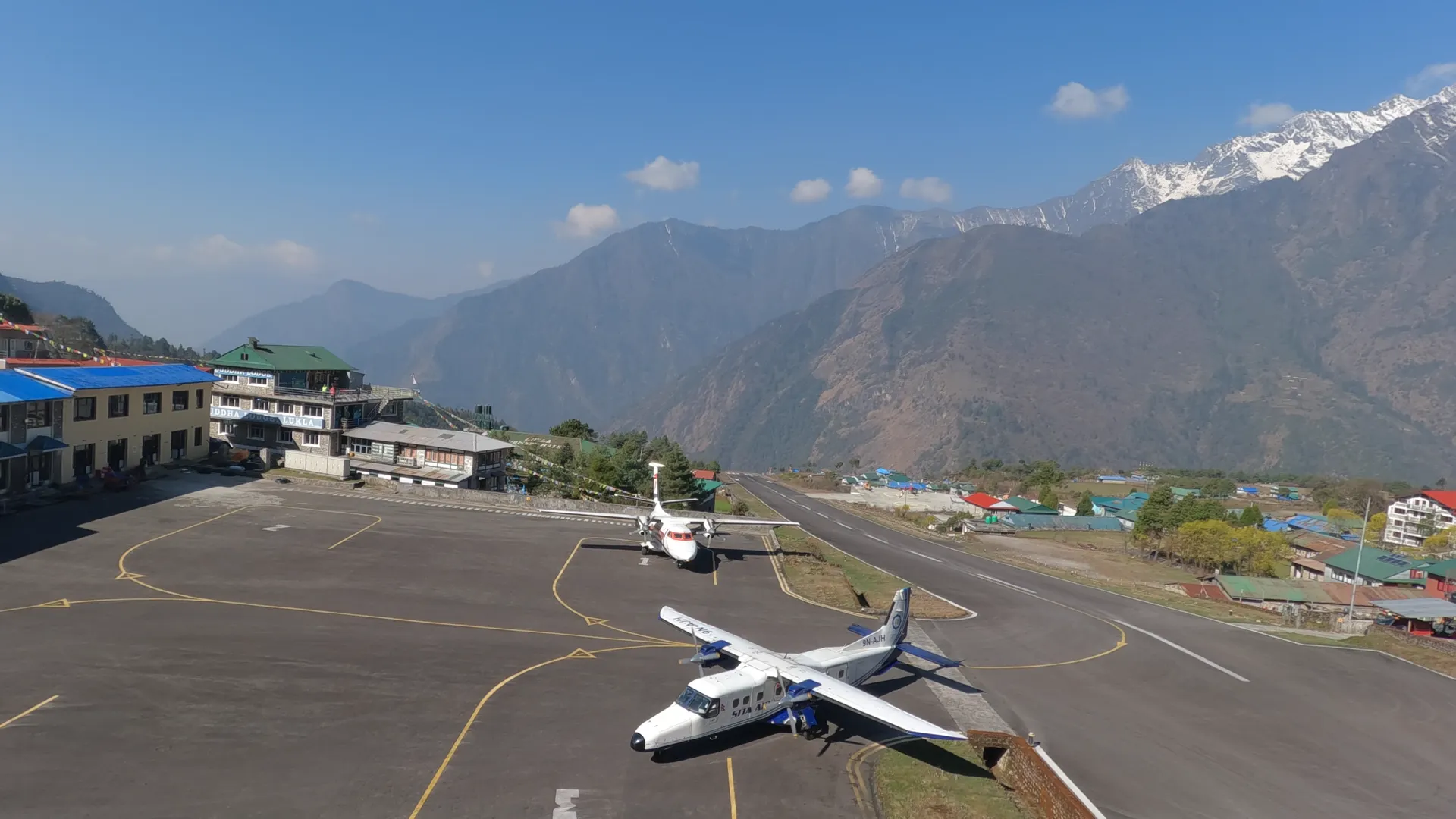
Early morning transfer to the airport for the 35-minute scenic flight to Lukla (2,860m). During peak season, flights operate from Ramechhap Airport, requiring a 3 to 4 hour pre-dawn drive. From Lukla, the trail descends gently through pine forest along the Dudh Koshi river to Phakding (2,610m). The walk is 3 to 4 hours, mostly downhill, and it is your warm-up. First views of Kusum Kanguru (6,369m) through the trees. Overnight at guesthouse.

2,610m3.5h trekGuesthouse1,265m
Day03

Trek to Namche Bazaar

Namche Bazaar

The toughest day of the first half. The trail follows the Dudh Koshi valley, crossing suspension bridges. Pass through Monjo, where you enter Sagarmatha National Park and show permits at the checkpoint. After Jorsale, the steep climb to Namche Bazaar (3,440m) gains roughly 900 vertical meters over 3 to 4 hours. Midway up, the trail rounds a bend and Everest appears for the first time, framed between Lhotse and Nuptse. Namche is a horseshoe-shaped Sherpa trading town with bakeries, ATMs, gear shops, and WiFi. Walking time: 5 to 6 hours. Overnight at guesthouse.

3,440m6h trekGuesthouse830m
Day04

Namche Bazaar Acclimatization Day

Namche Bazaar

Mandatory acclimatization day. The standard morning hike goes to Everest View Hotel (3,880m), a 90-minute climb above Namche. From the terrace you see Everest, Lhotse, Ama Dablam, and Thamserku. This follows the "climb high, sleep low" principle: ascend 440 meters during the day, return to sleep at 3,440 meters. Alternative options include the Sherpa Culture Museum, the Saturday market, or the Sagarmatha National Park visitor center. Your guide checks pulse oximeter readings. Walking time: 2 to 3 hours (optional hike). Overnight at guesthouse.

3,440m3h trekGuesthouse
Day05

Trek to Tengboche Monastery

Tengboche

The trail traverses high above the Dudh Koshi valley with continuous mountain views. Pass through Phungi Thanga (3,250m), then climb steeply through rhododendron and birch forest (blooming pink and red in March to April) to reach Tengboche (3,860m). Tengboche Monastery is the largest in the Khumbu with Ama Dablam as its backdrop. Afternoon prayers are open to visitors. On clear evenings, sunset lights up Everest, Nuptse, and Lhotse. Walking time: 5 to 6 hours. Overnight at guesthouse.

3,860m5.5h trekGuesthouse420m
Day06

Trek to Dingboche

Dingboche

Descend from Tengboche through forest to Debuche, cross the Imja Khola, and climb through Pangboche (3,985m), the oldest Sherpa settlement in the Khumbu. Vegetation thins rapidly above Pangboche. The valley opens and Ama Dablam dominates the southern skyline at close range. Dingboche (4,410m) sits in a wide valley used for potato farming in summer. Most trekkers feel the altitude for the first time here: headaches, reduced appetite, and disturbed sleep are common. Your guide monitors symptoms. Walking time: 5 to 6 hours. Overnight at guesthouse.

4,410m5.5h trekGuesthouse550m
Day07

Day Trip to Chhukung Valley

Dingboche

Second acclimatization day. Hike from Dingboche up the Chhukung valley to approximately 4,710m along the lateral moraine of the Lhotse glacier with views of Island Peak (6,189m), Lhotse's south face, and the Amphu Lapcha pass. Return to sleep at Dingboche (4,410m), following the "climb high, sleep low" rule. This day is critical. Skipping it is the most common reason trekkers fail above Lobuche. Walking time: 3 to 4 hours round trip. Your guide rechecks SpO2 readings. Overnight at guesthouse.

4,410m4h trekGuesthouse
Day08

Trek to Lobuche

Lobuche

Climb from Dingboche to Thukla (4,620m), then up the steep Thukla Pass (4,830m) marked by stone cairns and prayer flags memorializing climbers and Sherpas who died on Everest. The landscape above Thukla is barren: grey moraine, scattered boulders, wide glacial valleys. Lobuche (4,920m) is a small cluster of teahouses with basic facilities. Menus narrow to dal bhat, noodle soup, eggs, and Sherpa stew. Temperatures drop sharply after sunset. Walking time: 4 to 5 hours. Overnight at guesthouse.

4,920m5h trekGuesthouse510m
Day09

Trek to Everest Base Camp & back to Gorak Shep

Gorak Shep

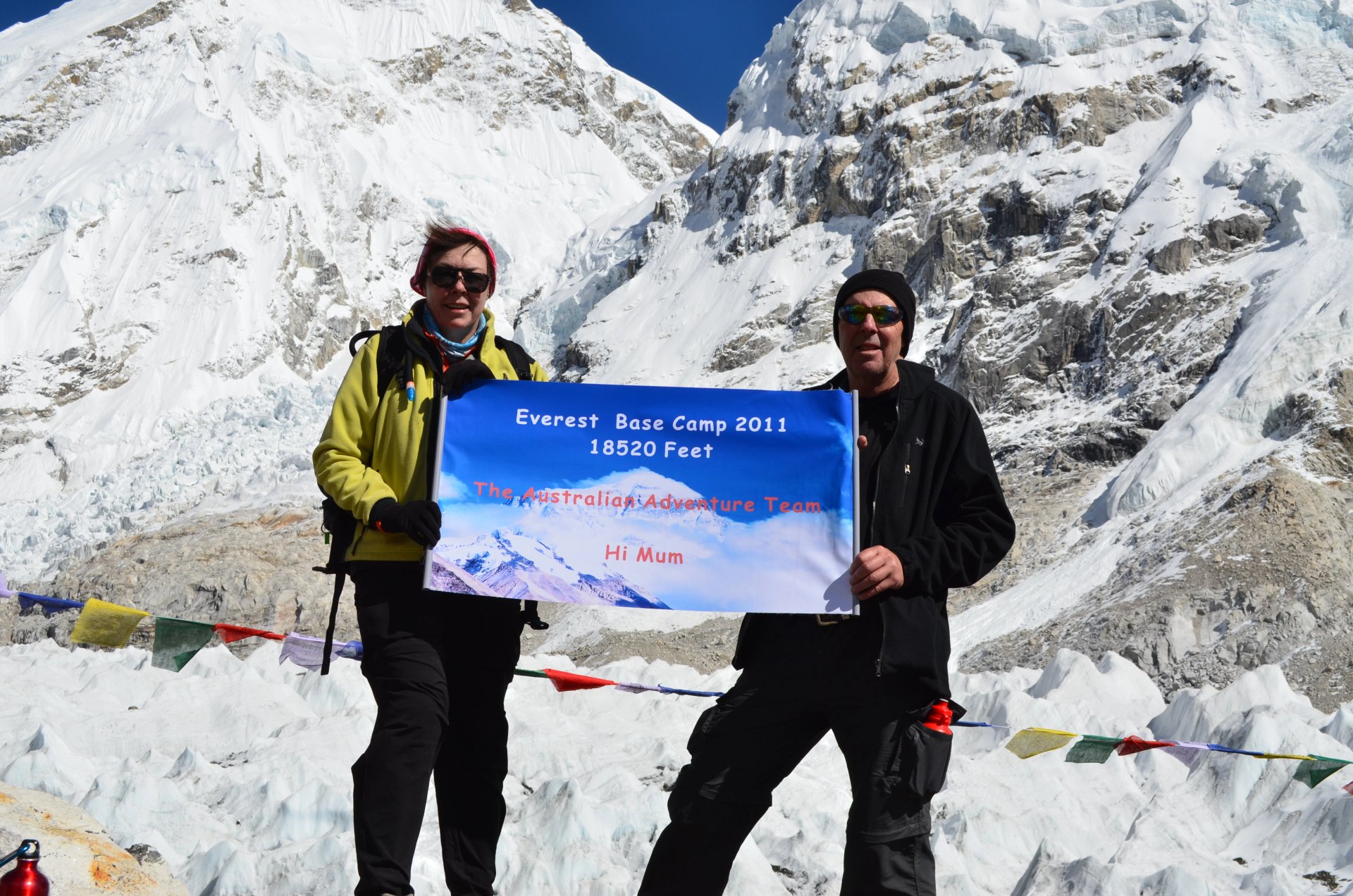
Trek to Gorak Shep (5,164m) in approximately 3 hours across rocky terrain alongside the Khumbu Glacier. Drop bags at the teahouse and continue to Everest Base Camp (5,364m), a further 2 to 3 hours over glacial rubble. The trail is not steep but altitude makes every step deliberate. At base camp: the Khumbu Icefall up close, prayer flags, and during expedition season (April to May) the tented camps of summit teams. Return to Gorak Shep by late afternoon. Walking time: 6 to 7 hours total. Overnight at guesthouse.

5,164m7h trekGuesthouse244m
Day10

Hike to Kala Patthar, trek down to Pheriche

Pheriche

The trek's highest point. Wake at 4:00 AM and climb Kala Patthar (5,545m) in darkness with headlamp. The ascent takes 1.5 to 2 hours on a steep, rocky trail. At the summit, first light moves across the entire Everest massif: the south face, Western Cwm, and summit pyramid in gold, with Lhotse, Nuptse, Pumori, Changtse, and Makalu visible. Descend to Gorak Shep for breakfast, then continue the long descent to Pheriche (4,200m), losing 964 meters. Trekking poles are essential for the knees. Walking time: 7 to 8 hours. Overnight at guesthouse.

4,200m7.5h trekGuesthouse964m
Day11

Trek to Namche Bazaar

Namche Bazaar

Long descent covering ground that took three days on the way up. From Pheriche, drop through Pangboche, cross the rhododendron forest below Tengboche, and descend to Namche Bazaar (3,440m). The return through forest feels different: you are fitter, acclimatized, and the mountain views are behind you. Namche feels luxurious after a week above 4,000 meters: hot showers, fresh baked goods, WiFi fast enough for a phone call. Walking time: 6 to 7 hours. Overnight at guesthouse.

3,440m6.5h trekGuesthouse760m
Day12

Trek to Lukla

Lukla

Final trekking day. Descend the steep Namche hill back to the Dudh Koshi valley, cross suspension bridges, and retrace the route through Jorsale, Monjo, and Phakding to Lukla (2,860m). Mostly downhill, and the warmer oxygen-rich air makes breathing easy after days above 4,000 meters. Arrive by early afternoon. Farewell dinner with your guide and porter. Walking time: 5 to 6 hours. Overnight at guesthouse.

2,860m6h trekGuesthouse580m
Day13

Flight from Lukla to Kathmandu

Kathmandu

Early morning flight from Lukla to Kathmandu (or Ramechhap during peak season with a 3 to 4 hour transfer). If the flight runs on schedule, arrive Kathmandu by late morning. Transfer to hotel in Thamel. Afternoon free for sightseeing at Boudhanath Stupa, Swayambhunath, or Kathmandu Durbar Square. Overnight at hotel with breakfast.

1,345mHotel1,515m
Day14

Extra Leisure Day

Kathmandu

Buffer day for Lukla flight delays, which affect approximately 15 to 20% of flights during peak season. If your flight arrived on schedule yesterday, this is a free day. Options: Bhaktapur Durbar Square (30-minute drive), Pashupatinath Temple, a cooking class, or recovery at the hotel. Overnight at hotel with breakfast.

1,345mHotel
Day15

Departure

Kathmandu

Transfer to Tribhuvan International Airport by private vehicle for your departure flight. Your Mountain Hawk Trek representative accompanies you to the airport. End of trek services.

1,345mTransfer
Daynull

Day null

Good to Know

Before you commit

What this trek costs and what moves the price

Our Everest Base Camp trek starts at USD 1,675 per person for 15 days. That covers the Lukla flights both ways, both permits, a government licensed guide, one porter for every two trekkers, three nights accommodation in Kathmandu, a teahouse room every night on trail and three meals a day while you walk. We lend you a down jacket, a sleeping bag and a complementary duffel bag as well. Tips, travel insurance and your Nepal visa sit outside it.

Three things move that number. Group size, because the guide and the porter ratio are shared across the party. The helicopter out from Gorak Shep to Lukla, USD 450 to USD 600 per person on a shared seat, which removes three to four days of walking. Extra nights in Kathmandu at either end, USD 60 per person for a single room and USD 35 for a double, breakfast included. If you want this same route with private rooms at premium lodges and the helicopter already inside the price, our Everest Base Camp Luxury Trek starts at USD 2,575 over 13 days.

Budget past the package as well. On trail, USD 10 to USD 20 a day covers hot showers, WiFi, charging and drinking water. Tips for your guide and porter come to USD 200 to USD 300 across the trek. Travel insurance with cover to 6,000m and helicopter evacuation runs USD 150 to USD 360, and we ask for proof of it before we confirm your booking. Most trekkers finish this trip having spent USD 2,100 to USD 2,400 from Kathmandu, with international flights on top. Better you see that number here than work it out at Gorak Shep.

Package Details

What's in, what's out

What's Included

11

Airport / Hotel / Airport pick up & drop by private car / van / bus.

Standard twin sharing accommodation in two/three star hotel in Kathmandu breakfast included (3 nights).

Standard meal Lunch, Dinner, and Breakfast and twin sharing Tea house accommodation during the Everest Base Camp trek.

A government licensed English speaking Guide during the Everest Base Camp trek, required number of porters (1 porter between 2 pax), their food, accommodation, salary, insurance, equipment and a general first aid kit.

Sagarmatha National Park permit, TIMS card and all necessary permits for Everest Base Camp trek.

Flight fare from Kathmandu to Lukla to Kathmandu including airport departure taxes in Kathmandu and Lukla airport.

Surface transfer from Kathmandu.

We provide Down Jacket, duffel/kit bag and sleeping bag (which needs to be returned after the Everest Base Camp trek).

All our government taxes.

Tourist service charge, VAT.

Official expense.

Not Included

8

Lunch and dinner whilst in Kathmandu.

Your travel insurance (compulsory).

Nepal entry visa fee.

Items of a personal nature such as alcoholic drinks, hot and cold drinks, laundry and hot shower.

Personal trekking equipment for Everest Base Camp trek.

Tips for trekking staff and driver.

Sightseeing / monument entrance fees during Everest Base Camp trek.

Any other expenses not mentioned in the Price Includes section.

Add-on

Extra Nights in Kathmandu

Single Room$60per night · breakfast included
Twin Sharing$35per person / night · breakfast included

Dear guest, should you require additional accommodation in Kathmandu, we are pleased to offer the following rates: US$60 per person per night for a single room and US$35 per person per night for a double (twin sharing) room, both inclusive of breakfast.

The Reward

Why you'll love it

Three reasons this trek stays with you long after the plane home.

Scenery

The Everest Base Camp trek follows the most established trail system in the Himalaya. Teahouses operate at every stop from Lukla to Gorak Shep, staffed by Sherpa families who have hosted trekkers for decades. You will not camp, carry a tent, or cook your own meals. The infrastructure on this route allows you to focus on walking and acclimatizing rather than logistics. Roughly 85 to 90 percent of prepared trekkers who follow the standard itinerary with proper acclimatization days reach base camp.

Thrill

The Khumbu is a lived-in valley. Namche Bazaar is a working Sherpa town with a Saturday market, bakeries, and gear shops at 3,440 meters. Tengboche Monastery holds daily prayer ceremonies open to visitors. At Dingboche, potato fields line the valley floor below Ama Dablam's south face. The cultural texture of this trail is what separates a walk to Everest from a walk to altitude. You pass through communities, not past them.

Connection

From a logistics standpoint, the Khumbu is the most supported trekking region in Nepal. The Himalayan Rescue Association runs a medical clinic at Pheriche during peak seasons. Helicopter evacuation can reach any point on the trail within hours. Mobile coverage (NTC/Ncell) extends to Namche, and WiFi is available in teahouses all the way to Gorak Shep. This is not a remote wilderness expedition. It is a high-altitude walk through one of the most carefully maintained trail systems in the world.

Honest Check

Is this trek for you?

A few things worth knowing before you commit. No sugar-coating, no surprises on day one.

Expectations

Before you book

7

You can walk 5 to 7 hours a day on uneven terrain for 11 consecutive trekking days. Prior multi-day hiking experience is strongly recommended, though beginners who train for 10 to 12 weeks can complete the route.

The highest sleep altitude is 5,164m at Gorak Shep. Approximately 40% of trekkers experience mild altitude sickness symptoms above 3,500m. If you have a history of severe altitude sickness, consult your doctor before booking.

Temperatures at Gorak Shep drop to minus 15 to minus 20 degrees Celsius at night in October and November. A rated sleeping bag, down jacket, and layered clothing are essential. We lend you the down jacket, sleeping bag and duffel with your package. Anything else rents cheaply in Kathmandu's Thamel district: trekking poles $0.50 to $1 a day, a shell or extra base layers for a little more.

The trail is well-marked and well-staffed with teahouses. You do not need technical climbing skills, ropes, or crampons. This is a walking trek, not a mountaineering expedition.

Trekkers under 16 must be accompanied by a guardian. There is no upper age limit. People in their 60s and 70s complete this trek regularly. Cardiovascular fitness matters more than age on this route.

A licensed guide is mandatory for all foreign trekkers in Nepal since April 2023. Your guide is included in the package and handles permits, teahouse bookings, health monitoring, and emergency coordination.

Travel insurance covering high-altitude trekking to 6,000m with helicopter evacuation is required. A rescue from above 5,000m costs $4,000 to $10,000 without coverage. We will ask for proof of insurance before confirming your booking.

Gear Up

What to pack

The full kit that's built from years on the trail. Skip it at your own risk, bring it and you'll never think about it again.

Equipment

Packing checklist

26 items

Duffel bag (Company provides complementary)

Daypack

Down Jacket and Sleeping bag 4 season (if you need nice and clean down jacket and sleeping bag company provides which needs to be returned after the trek)

Hiking pants

Waterproof jacket

Full-sleeves shirt

Jumper or pile jacket

T-shirts

Trekking boots (Waterproof)

Camp shoes / Sandal

Wool socks

Light cotton socks for under wool socks (take quite several pairs of these too, better to carry some extra weight rather than spend the whole time washing socks)

Sun hat

Beanie

Gloves

Sun block for lips

Sun lotion

Goggles or sunglasses (with spare)

Thermal long underwear (take quite a few pairs, although the weather may be cold one tends to sweat a lot)

Windproof pants

Water bottle

Sewing kit

Medical & first aid kit

Flashlight (with spare batteries)

Personal towel

Personal toiletries and medication which should be labelled please.

Note: Tight fitting, figure-hugging clothing, such as those made with Lycra can often be offensive to locals, especially on women. If you find these items comfortable as a base layer then please pack something to wear over the top of them.

Good to Know

Frequently asked questions

Still have questions? Tap through the answers below or reach out directly. We reply within the hour.

FAQs

The most asked

53
Season Calendar

When to walk the Everest Base Camp

Two clear windows a year: October to November for washed post-monsoon air, March to April for expedition season energy. Winter is cold but astonishingly clear; monsoon is a flight lottery.

Watch It Live

See it before you go

Shot on the trail in 4K. No stock footage, no reshoots — the actual terrain, weather, and light you'll walk through.

Everest Base Camp Trek video preview
From the Trail

Real footage, real trail

Trail Stories

What trekkers say

Reviews from trekkers who have walked this exact route.

5.0/ 5
6 verified reviews
Anil Shah
KenyaAugust 2023

Trip of a lifetime

I trekked with a group of 12 to Everest Base Camp in May 2023 with Mountain Hawk (MH). Prem and his team organised the trip to the finest detail. MH is an experienced operator ensuring that the trekkers' fitness levels are looked at from the outset. This ensures almost 100% success rate. I will definitely recommend MH as a responsible enabler.

Verified trekker
Rakhee Shah
United KingdomNovember 2019

Trip of a lifetime! An experience I will never forget

Prem and his team made the expedition a magnificently memorable experience. The views were amazing and the feeling of achieving daily goals to reach the Everest Base Camp under Prem's leadership was incredible. Prem's invaluable experience and knowledge of the mountains, his confidence, competence and considerate attention to everyone's specific needs helped us successfully reach the Everest Base Camp. He provided guidance on what we should wear, what to eat (or not to eat in my case as I like being adventurous!), to keep hydrated and he set the pace for trekking each day, kept on reminding us it is our own race! He made sure we were medically and physically fit each day for the trek. Thank you to Prem and his team for making my first Everest Base Camp trek an incredibly memorable experience. I have no hesitation in recommending Mountain Hawk Trekking for a splendid experience, the best in class!

Verified trekker
John Alchin
AustraliaApril 2012

Guest houses were very good and the food excellent

Had a great trek to EBC with Mountain Hawk in March 2012. Badri was our excellent guide and Niraj our porter. Everything was organised so well and our safety came first. Guest houses were very good and the food excellent. I recommend Mountain Hawk to anybody.

Verified trekker
Steve and Sarah
AustraliaMarch 2012

Travelled with Mountain Hawk

Sarah and I travelled with Mountain Hawk Trekking to Everest Base Camp in January 2012. Prem was recommended to us by friends as a very professional and knowledgeable guide and we were not disappointed. Our flights from Kathmandu to Lukla and back, meals and accommodation on the trek, porters and park passes were all arranged by Mountain Hawk Trekking. Prem's attention to detail is fantastic, as is his knowledge of the area. He ensured we were well looked after while walking, and in guesthouses each night. Prem and his team are very professional, friendly, and have a wonderful sense of humour, all of which added up to an absolutely wonderful trip. I can highly recommend Mountain Hawk Trekking for your trip to Nepal, we are certainly planning to return.

Verified trekker

Nepal trekking reviews
from trekkers worldwide

Verified reviews from Everest, Annapurna, Manaslu, and Langtang treks.

What trekkers say

Real reviews from real trekkers who walked these trails