Kathmandu 7 UNESCO World Heritage Sites Tour
Mountain Hawk Trek
Tours In Nepal RegionEasy

Explore Kathmandu's7 World Heritage Sites

Visit all 7 UNESCO World Heritage Sites in the Kathmandu Valley in a single guided day. Swayambhunath at sunrise, three royal Durbar Squares, Boudhanath's kora walk, Pashupatinath's evening aarti, and Nepal's oldest temple at Changunarayan. Private vehicle, licensed guide, hotel pickup and drop-off included.

View Itinerary
Trip Highlights

The moments that matter most

Seven monuments, three ancient kingdoms, two world religions, and 1,500 years of continuous civilisation, all in a 12-hour loop through the Kathmandu Valley. The route runs from the western hilltop stupa at Swayambhunath through the three royal Durbar Squares of the medieval Malla kings, past Nepal's oldest temple on a forested ridge, around the largest spherical stupa in the world, and finishes at the holiest Hindu site in the country as evening prayers begin on the Bagmati riverbank.

You climb 365 stone steps before 8 AM with monkeys swinging through the banyan trees beside you. You stand in the Kumari Ghar courtyard and wait for a girl considered a living incarnation of the goddess Taleju to appear at her window. You eat juju dhau from a clay pot in Bhaktapur while potters work their wheels across the square. You walk the kora circuit at Boudhanath with Tibetan monks who do this daily. You watch fire on the banks of the Bagmati at Pashupatinath as families carry out rituals that predate written history in this valley.

The Malla kings of Kathmandu, Patan, and Bhaktapur spent three centuries trying to outbuild each other. The result is three royal squares, each reflecting a different strain of Newari architecture: Kathmandu's is the largest with the most diverse temple styles, Patan's is the most refined in its stone and metalwork, and Bhaktapur's is the best preserved with entire medieval streets intact. Visiting all three in sequence makes the competitive architecture legible in a way that seeing one in isolation cannot.

Kathmandu is one of the few places where Buddhist and Hindu sacred sites sit within the same valley and within the same tour. Swayambhunath is sacred to both traditions. Boudhanath is the anchor of Tibetan Buddhism in Nepal. Pashupatinath is the country's holiest Hindu shrine. Changunarayan honours Vishnu, Shiva, and Durga in a single courtyard. The guide moves you between traditions without collision, explaining the iconography shift at each stop.

The 7.8-magnitude Gorkha earthquake on 25 April 2015 destroyed or damaged structures at five of the seven sites. Kasthamandap, the 16th-century wooden pavilion that gave Kathmandu its name, collapsed entirely. By 2025, it had been rebuilt from scratch using original techniques. The Trailokya Mohan Narayan Temple was restored in 2024. Maju Deval was completed in 2025. What you see now is a valley that broke and rebuilt itself. Your guide points out the seams where new brick meets old.

No altitude, no fitness requirement, no multi-day commitment. You sit in a vehicle between sites. You walk flat ground inside each complex. The full 7-site day is 10 to 12 hours, but the pace is yours to adjust. Families with children, seniors, solo travellers, layover visitors, and trekkers recovering from altitude all do this tour. Wheelchair access is partial (Boudhanath and Kathmandu Durbar Square are navigable; Swayambhunath's stairs are not, though the western vehicle road offers a bypass).

Trip Overview

A closer look

The Kathmandu 7 UNESCO World Heritage Sites tour covers every major heritage monument in the Kathmandu Valley in a single guided day. You visit Swayambhunath Stupa, Kathmandu Durbar Square, Patan Durbar Square, Changunarayan Temple, Bhaktapur Durbar Square, Boudhanath Stupa, and Pashupatinath Temple. A private vehicle and licensed English-speaking guide handle all logistics, from hotel pickup at 7:30 AM to drop-off by 7:00 PM. The seven monuments were inscribed together on the UNESCO World Heritage List in 1979, and together they span over 1,500 years of Hindu and Buddhist architecture, Newari craftsmanship, and living religious tradition.

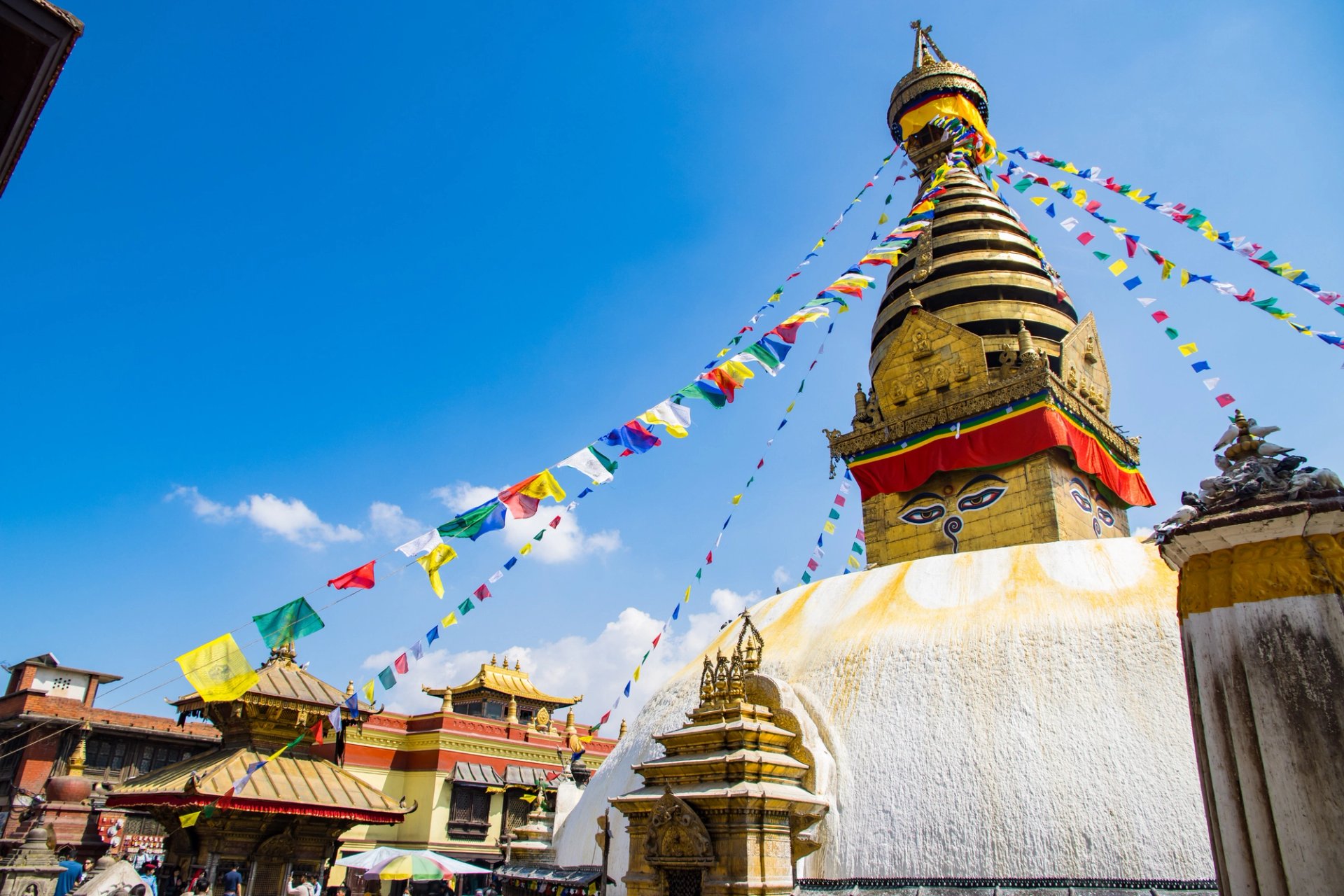
The day begins at Swayambhunath Stupa on the western hilltop, before the crowds. The 365-step eastern staircase climbs through rhesus macaque territory to the white dome with its painted Buddha eyes looking out across the valley. From the summit platform, Kathmandu sprawls below in every direction. The drive to Kathmandu Durbar Square takes 15 minutes. The square holds over 50 temples and palace buildings spanning the Malla and Shah dynasties. Your guide times the visit for the Kumari's morning appearance at the carved first-floor window of Kumari Ghar. The Living Goddess appears briefly between 9:00 and 11:00 AM on most days. Photography of the Kumari is strictly prohibited.

Patan Durbar Square sits 8 km south of Thamel in Lalitpur, across the Bagmati River. The square is the finest surviving example of Newari architecture in the valley: Krishna Mandir with its 21 golden spires, the Sundari Chowk royal bath, and the Golden Temple (Hiranya Varna Mahavihar) all sit within a 200-metre radius. The Poon Hill trek passes through similar Newari villages in the Annapurna foothills, but nowhere outside Lalitpur is the stonework this dense. From Patan, a 40-minute drive east reaches Changunarayan Temple, Nepal's oldest surviving Hindu temple. The stone pillar inscription dated 464 AD by Licchavi King Manadeva is the oldest dated inscription found anywhere in Nepal.

Bhaktapur Durbar Square is the best-preserved of all three squares and the most rewarding for slow exploration. The 55-Window Palace, the five-tiered Nyatapola Temple (the tallest pagoda in Nepal at 30 metres), and the Pottery Square where craftsmen still shape clay vessels by hand are all within walking distance. Lunch is at a local Newari restaurant here. The famous juju dhau (king's yogurt) served in clay pots costs NPR 80 to 150 and is one of the things people remember about Bhaktapur long after the temple names blur.

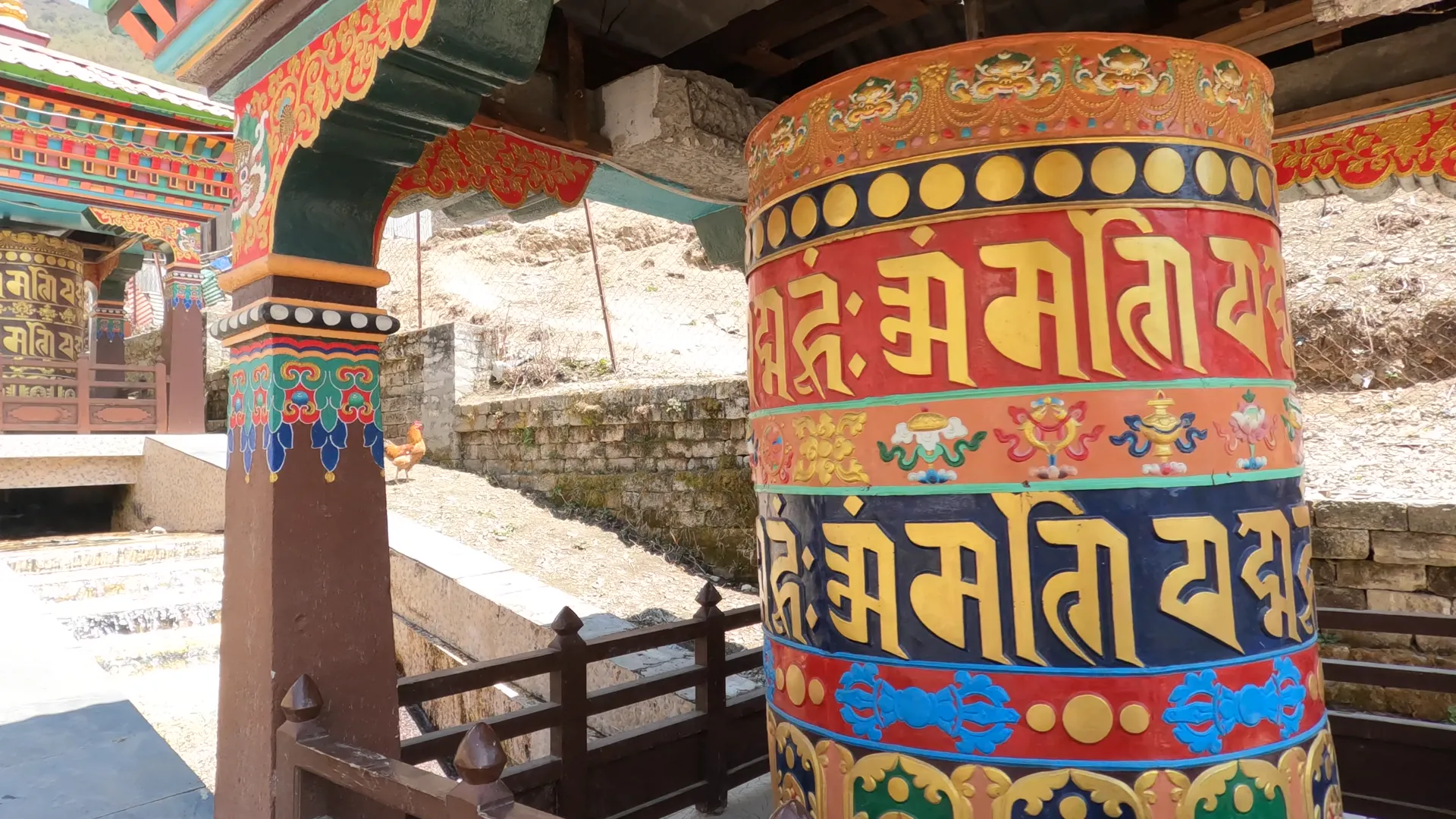
Boudhanath Stupa is the largest spherical stupa in the world. The dome stands 36 metres high with a circumference of roughly 100 metres, ringed by over 50 Tibetan Buddhist monasteries. The afternoon visit is timed for the kora, the traditional clockwise circumambulation of the stupa base. Butter lamps burn in rows. Prayer wheels spin under the hands of monks and pilgrims walking the same circuit. The surrounding streets sell thangka paintings, singing bowls, and Tibetan handicrafts. This is the spiritual centre of Nepal's Tibetan Buddhist community, established here by refugees after the 1959 uprising. If you are interested in the Everest region where many of these Tibetan Buddhist traditions also thrive, our Everest Base Camp trek passes through Tengboche Monastery at 3,860m.

The tour ends at Pashupatinath Temple, the holiest Hindu site in Nepal. The complex stretches along both banks of the Bagmati River with over 500 subsidiary shrines. Non-Hindus cannot enter the main sanctum where the sacred Shivalinga is housed, but the surrounding ghats, courtyards, deer park, and the elevated terrace on the east bank are all open. Your guide walks you through the outer complex, explains the iconography, and positions you on the terrace in time for the evening Sandhya Aarti ceremony. Cremation ceremonies at the Aryaghat burning ghats run continuously. Observation from the opposite bank is permitted. Photography of cremations is not. If the spiritual depth of Pashupatinath interests you, a multi-day option is our Himalaya Highlights Tour, which pairs Kathmandu with Pokhara and Chitwan.

Entrance fees for all 7 sites total approximately NPR 5,700 (~USD 43) per foreign national. Bhaktapur is the most expensive single site at NPR 1,800. SAARC nationals pay reduced rates (roughly 50% less). Children under 10 enter free at all sites. All fees are paid in Nepali Rupees cash at the site entrance. There is no combined ticket. Your guide carries exact change and handles ticket purchases at each counter so you spend your time inside the sites, not in queues. For an overview of all Nepal permits and site fees, see our trekking permits guide.

Many of our trekkers book this heritage tour for their arrival day or the day before they leave for the mountains. It is the most efficient way to see Kathmandu before an Annapurna Base Camp trek, before the Annapurna Circuit trek, or after returning from Langtang Valley. If you have a second day in Kathmandu, consider pairing the heritage tour with a Nagarkot sunrise trip for Himalayan views, or a Chandragiri Hills day hike for a cable car ride above the valley. Our best time to trek in Nepal guide covers seasonal planning for both sightseeing and trekking.

Journey Route

Your journey, visualized

Journey
4 Stops
1
Kathmandu Durbar SquareKathmandu Durbar Square (Hanuman Dhoka)
1
Patan Durbar SquarePatan Durbar Square (Lalitpur)
1
ChangunarayanChangunarayan Temple
1
Bhaktapur Durbar SquareBhaktapur Durbar Square (lunch)
Itinerary

Day by day, on the trail

1 days from Kathmandu arrival to departure. Hover any day for full details.

Day01

Swayambhunath Stupa (Monkey Temple)

Swayambhunath

Hotel pickup at 7:30 AM from Thamel or central Kathmandu. A 15-minute drive west to the base of Swayambhunath hill. Climb the 365 stone steps of the eastern staircase through forest inhabited by rhesus macaques. At the summit: the white dome with painted Buddha eyes (Wisdom Eyes), prayer wheels, butter lamp shrines, a Statue of Peace, and a 360-degree panoramic view across the Kathmandu Valley. Your guide explains the Buddhist and Hindu dual significance, the creation legend, and the meaning of the Wisdom Eyes. Allow 45 minutes.

1h trek
Day01

Kathmandu Durbar Square (Hanuman Dhoka)

Kathmandu Durbar Square

15-minute drive east to the old royal palace compound. Over 50 temples and palace buildings spanning eight centuries. Your guide walks you through Hanuman Dhoka Palace, the Kal Bhairav shrine, the Shiva-Parvati Temple, and Kumari Ghar where the Living Goddess appears between 9:00 and 11:00 AM. Kasthamandap (rebuilt 2021) and Trailokya Mohan Narayan Temple (restored 2024) visible. Entry NPR 1,000. Allow 45 to 60 minutes.

1h trek
Day01

Patan Durbar Square (Lalitpur)

Patan Durbar Square

20-minute drive south to Lalitpur, the City of Fine Arts. Krishna Mandir with 21 golden spires, Sundari Chowk royal bath, the Golden Temple, and the Patan Museum (optional). The finest Newari metalwork and stone carving in the valley. Your guide walks through Mul Chowk and Sundari Chowk courtyards. Entry NPR 1,000. Allow 45 to 60 minutes.

1h trek
Day01

Changunarayan Temple

Changunarayan

40-minute drive northeast to a forested hilltop 12 km from Bhaktapur. Nepal's oldest surviving Hindu temple (4th century), dedicated to Lord Vishnu. Stone pillar inscription dated 464 AD by Licchavi King Manadeva. 5th to 12th century stone and metalwork sculpture. Entry NPR 300. Allow 30 to 45 minutes.

0.75h trek
Day01

Bhaktapur Durbar Square (lunch)

Bhaktapur Durbar Square

15-minute drive south to the medieval City of Devotees. Best-preserved of all three squares. Four historic squares: Durbar Square (55-Window Palace, Golden Gate), Taumadhi Square (Nyatapola Temple, 30m), Dattatreya Square, and Pottery Square. Lunch at a local Newari restaurant: beaten rice, buffalo meat, bara lentil cakes, juju dhau. Entry NPR 1,800 / USD 15 includes museums. Allow 2 to 2.5 hours with lunch.

2.5h trek
Day01

Boudhanath Stupa

Boudhanath

45-minute drive west to the largest spherical stupa in the world. 36 metres high, ringed by over 50 Tibetan Buddhist monasteries. Afternoon kora (circumambulation) walk. Prayer wheels, butter lamps, monks in maroon robes. Surrounding streets sell thangka paintings, singing bowls, Tibetan handicrafts. Tea at a rooftop cafe. Entry NPR 400. Allow 45 to 60 minutes.

1h trek
Day01

Pashupatinath Temple (evening aarti)

Pashupatinath

5-minute drive from Boudhanath to Nepal's holiest Hindu temple on the Bagmati River. Over 500 subsidiary shrines. Non-Hindus cannot enter main sanctum. Outer complex, ghats, deer park, and east-bank terrace fully open. Sandhya Aarti evening ceremony. Cremation ghats along the river (observation permitted, photography prohibited). No leather items. Entry NPR 1,000. Allow 45 to 60 minutes. Return to hotel by 7:00 PM.

1.5h trek
Package Details

What's in, what's out

What's Included

12

Private air-conditioned vehicle with driver for the full day (7:30 AM to 7:00 PM)

Licensed English-speaking tour guide (TAAN-certified, Kathmandu Valley specialist)

Hotel pickup and drop-off within Kathmandu (Thamel, Lazimpat, Durbar Marg, Boudha area)

Entrance fees for all 7 UNESCO World Heritage Sites (~NPR 5,700 / ~USD 43 per person)

Lunch at a local Newari restaurant in Bhaktapur (Nepali set meal)

One bottle of mineral water per person

All parking fees, tolls, and fuel costs

Guide and driver gratuities (included in package)

Route map of all 7 heritage sites

Ticket purchasing at each site (guide handles queues)

Flexible itinerary order (adjustable based on Kumari schedule and traffic conditions)

All applicable taxes

Not Included

6

Personal expenses (souvenirs, additional food and drinks, extra museum entries)

Optional Patan Museum entry fee (NPR 500 for foreigners)

Nepal visa fee (arrange in advance or on arrival at Tribhuvan Airport)

Travel insurance (recommended for all visitors to Nepal)

International flights to and from Kathmandu

Additional activities outside the 7 heritage sites

The Reward

Why you'll love it

Three reasons this trek stays with you long after the plane home.

Scenery

This is the single most efficient way to understand the Kathmandu Valley. You could spend a week visiting these sites independently, navigating Kathmandu traffic, and trying to time your visits around opening hours and ceremonies. Or you can let a guide who has run this route hundreds of times sequence the day so you hit Swayambhunath before the crowds, the Kumari during her morning window, Bhaktapur during the potters' working hours, and Pashupatinath during the evening aarti.

Thrill

The guide context is what separates a tour from a photo walk. Each site carries layers of Hindu and Buddhist symbolism, Licchavi-era inscriptions, Newari architectural grammar, and living daily ritual that are invisible without someone who grew up in this valley explaining them. The difference between looking at a carved doorway and understanding what the 16 figures on its struts represent is the difference between a photo and a memory.

Connection

The private vehicle eliminates the worst part of Kathmandu sightseeing: the traffic. Between sites, you sit in an air-conditioned car while your driver navigates the ring road and the old city lanes. This is not a walking tour that leaves you exhausted by site four. Your energy goes into the sites themselves. The 7-site full-day route covers approximately 55 km of driving across the valley.

Honest Check

Is this trek for you?

A few things worth knowing before you commit. No sugar-coating, no surprises on day one.

Expectations

Before you book

7

You want to see all 7 UNESCO World Heritage Sites in the Kathmandu Valley in a single day. The tour starts at 7:30 AM and returns by 7:00 PM. Each site gets 45 to 60 minutes. If you prefer a slower 2-day split (4 sites on day one, 3 on day two with a Nagarkot sunrise), let us know and we will adjust the itinerary.

The tour involves moderate walking on flat ground inside heritage complexes. The only significant climb is the 365-step staircase at Swayambhunath. A vehicle road on the western side of the hill provides an alternative for anyone who cannot or prefers not to climb steps. No hiking boots or fitness preparation required.

Entrance fees for all 7 sites total approximately NPR 5,700 (~USD 43) per foreign national. These are paid in cash at each site entrance. Your guide handles ticket purchases. SAARC nationals pay roughly half. Children under 10 enter free. Bhaktapur alone costs NPR 1,800 and includes access to the Woodcarving Museum, Bronze Museum, and National Art Museum.

Dress modestly at all religious sites. Cover shoulders and knees. Remove shoes before entering any temple sanctuary. At Pashupatinath, leather items (shoes, belts, bags) are prohibited inside the main complex. Wear comfortable slip-on shoes that are easy to take on and off repeatedly throughout the day.

Non-Hindus cannot enter the main inner sanctum at Pashupatinath Temple. The surrounding complex, ghats, deer park, and terrace viewpoints are all fully open. Your guide explains everything from the east bank terrace, which gives the best vantage point of the entire site.

Photography is freely permitted at most outdoor areas. Photographing the Living Goddess Kumari and active cremation ceremonies at Pashupatinath is strictly prohibited. Pashupatinath levies fines of NPR 1,100 to 2,100 for prohibited photography. Your guide will tell you where to lower your camera.

The tour runs in any weather, year-round. October to November is the clearest season with the sharpest light. March to May is warm with occasional haze. Monsoon months (June to September) bring afternoon rain for 1 to 3 hours, but morning sightseeing is usually dry. Winter (December to February) is cool and clear with thin crowds.

Gear Up

What to pack

The full kit that's built from years on the trail. Skip it at your own risk, bring it and you'll never think about it again.

Equipment

Packing checklist

12 items

Comfortable walking shoes or sandals with grip

Slip-on shoes for easy removal at temple entrances

Modest clothing covering shoulders and knees

Light scarf or shawl (doubles as shoulder cover)

Sunscreen and sunhat

Sunglasses

Camera with charged battery and spare memory card

Reusable water bottle

Small daypack for personal items

Cash in Nepali Rupees (NPR 3,000 to 5,000 for extras)

Compact rain jacket (monsoon months)

Prescribed medication and basic first aid

Dress code is strictly enforced at Pashupatinath Temple: no leather items (shoes, belts, bags) inside the complex. Wear non-leather footwear for the day or carry a spare pair. Photography of the Living Goddess Kumari and cremation ceremonies is prohibited. Your guide will advise when to lower your camera.

Good to Know

Frequently asked questions

Still have questions? Tap through the answers below or reach out directly. We reply within the hour.

FAQs

The most asked

65
Trail Stories

What trekkers say

Reviews from trekkers who have walked this exact route.

Be the first to review this trekShare your experience and help other trekkers decide.

Nepal trekking reviews
from trekkers worldwide

Verified reviews from Everest, Annapurna, Manaslu, and Langtang treks.