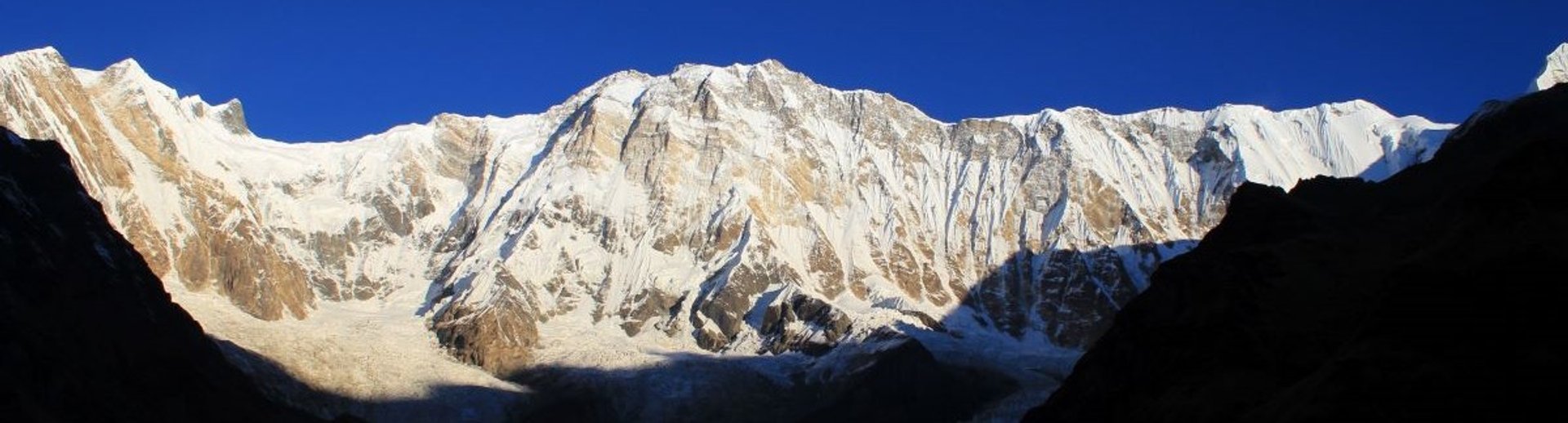
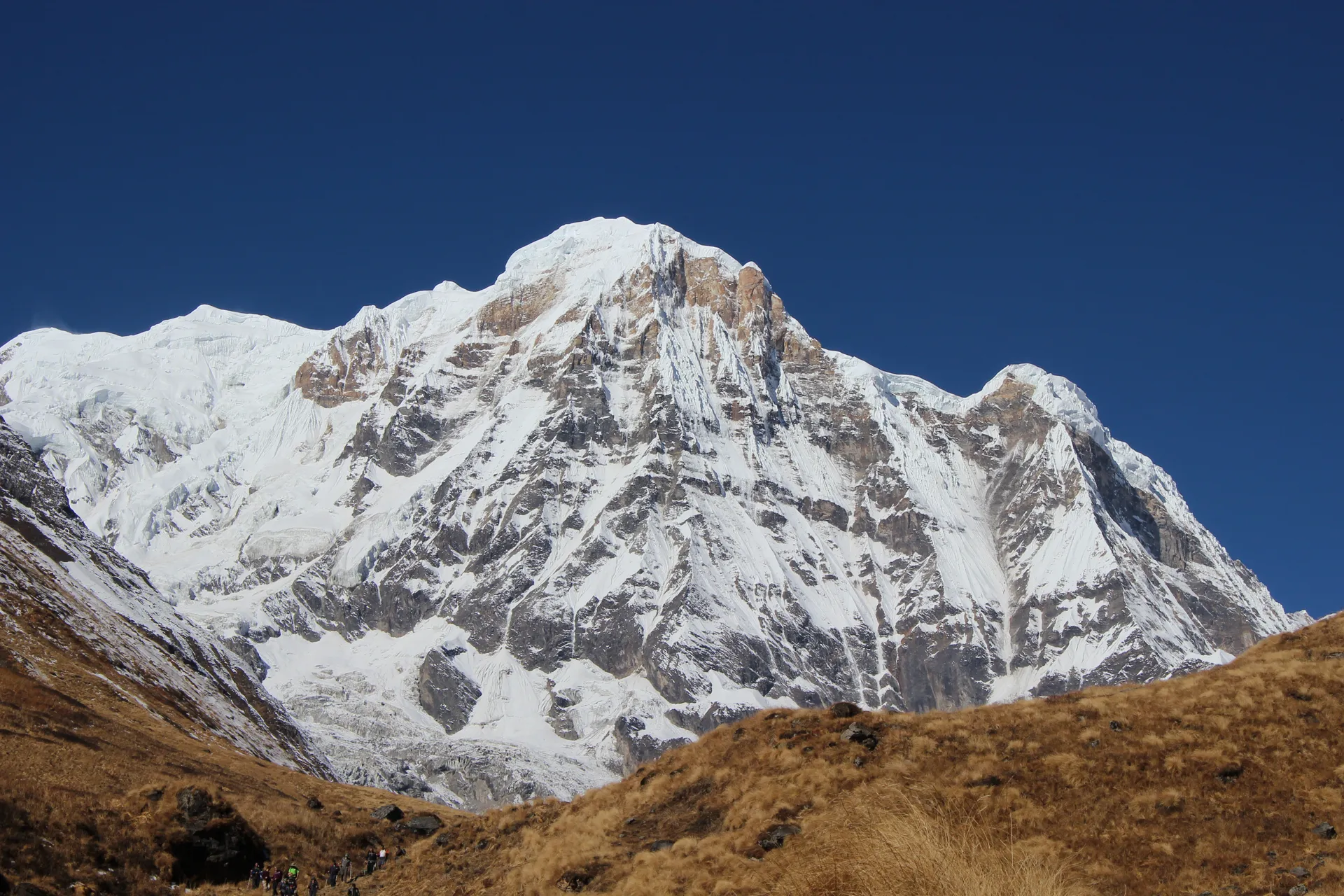
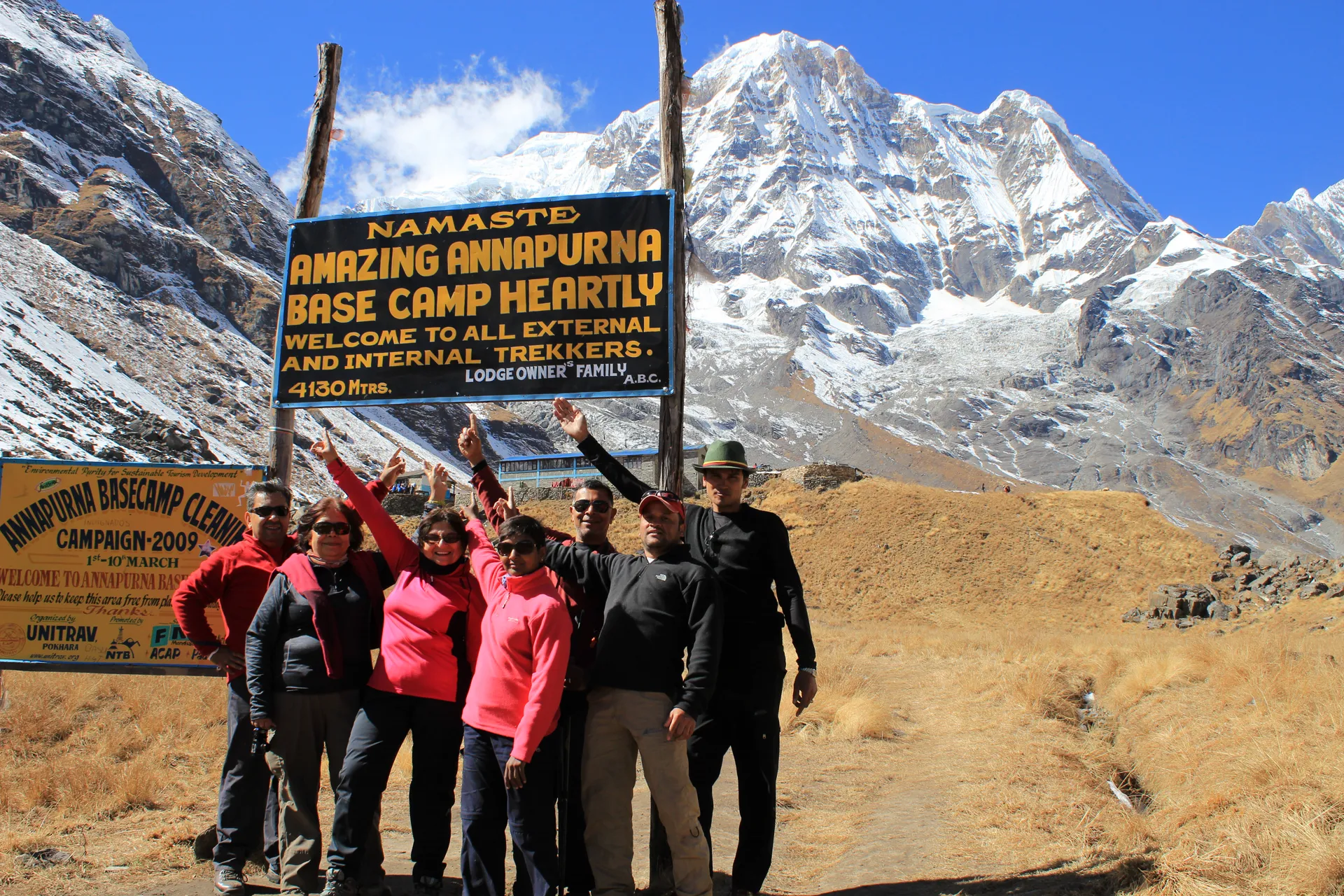
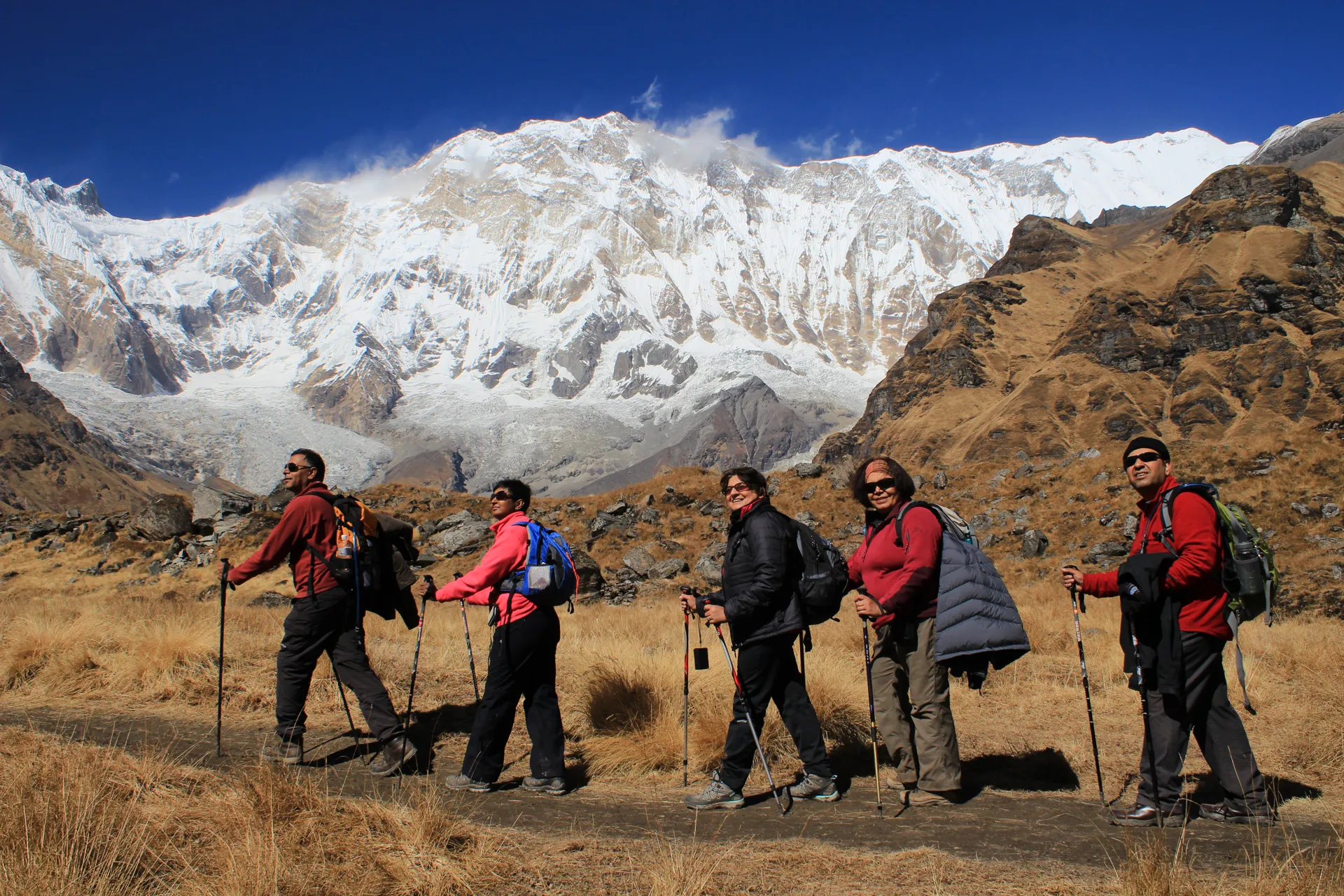
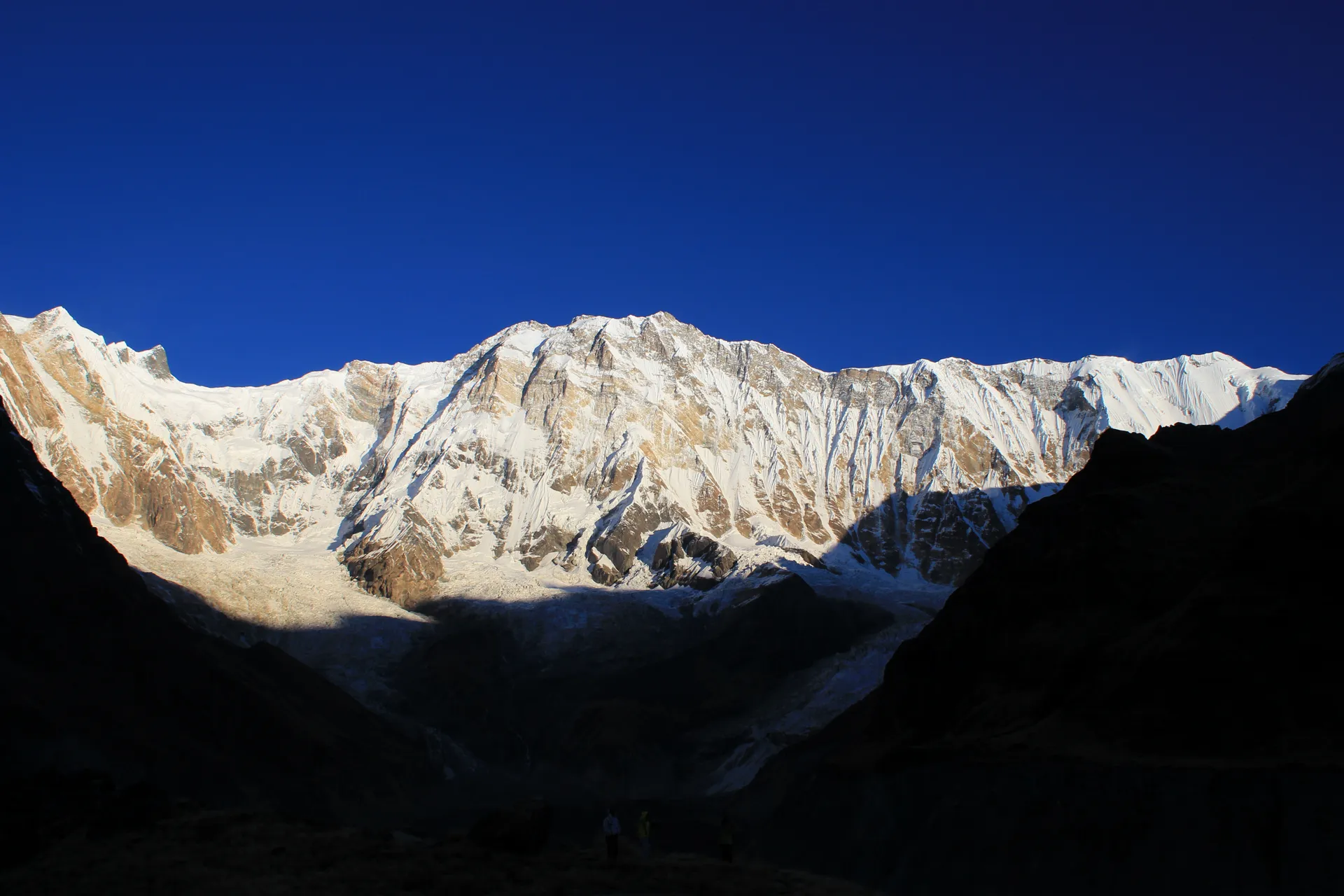
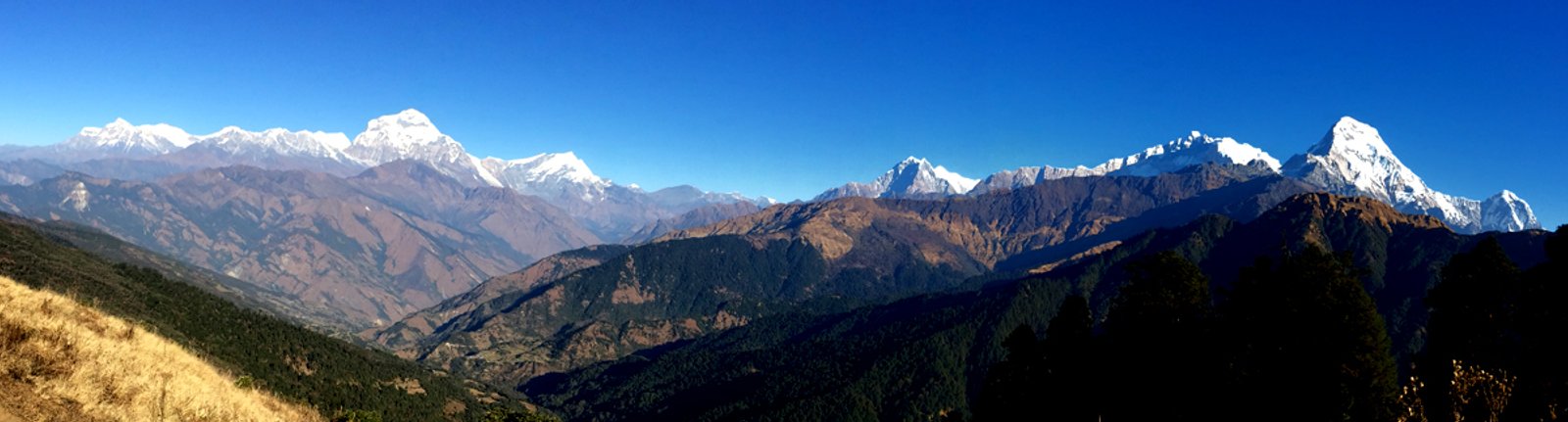
The Annapurna Base Camp trek is a 13-day route from Kathmandu into the Annapurna Sanctuary at 4,130 meters, the natural amphitheater at the heart of the Annapurna massif. The trail climbs from Pokhara through Tikhedhunga, Ghorepani, and Chhomrong before dropping into the gorge that leads to base camp itself, surrounded by Annapurna I (8,091m), Annapurna South (7,219m), Machhapuchhre (6,993m), Hiunchuli (6,441m), and Gangapurna (7,455m). Unlike Everest Base Camp, there is no flight risk and no domestic airstrip involved, the whole route is reachable by road and on foot from Pokhara. For the full route and logistics breakdown, our Annapurna Base Camp Trek complete guide covers planning details this listing does not have room for.
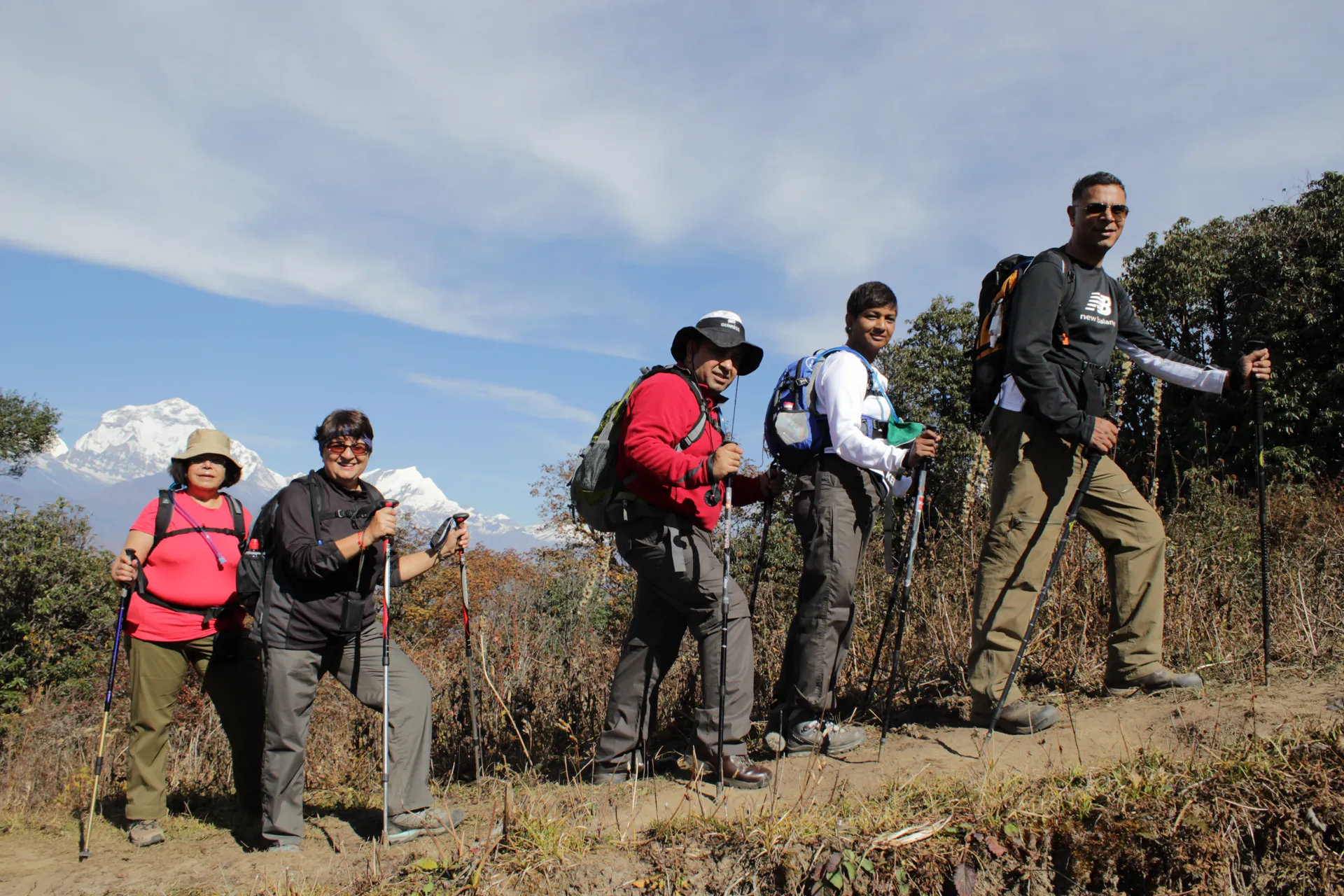
From Pokhara, the trail climbs stone steps through Tikhedhunga (1,440m) toward Ghorepani (2,800m), a village built around the Poon Hill sunrise viewpoint over Dhaulagiri and the Annapurna range. From Ghorepani the route continues through Tadhapani (2,650m) and down into Chhomrong (2,117m), the last proper settlement before the Sanctuary gorge narrows. Some operators route this trek directly through Ghandruk instead of over Ghorepani, a genuine choice rather than a single fixed path. Trekkers weighing that decision, or comparing it against a standalone Poon Hill trip or Mardi Himal, can read our Poon Hill versus Mardi Himal versus ABC comparison before choosing. Ours goes via Ghorepani for the Poon Hill option and the rhododendron forest along that ridge.
Below Chhomrong the trail drops on a long stone staircase to the Chhomrong Khola and climbs straight back up the far side, a stretch locals and guides alike treat as the hardest single push on the trek, regardless of how many actual steps it is, estimates vary depending on who is counting. From there the route runs through Sinuwa, Bamboo, Dovan, and Himalaya (2,800m), climbing through bamboo and rhododendron forest that thins as the valley narrows. Above Himalaya the trail passes Deurali and Machhapuchhre Base Camp before opening into the Sanctuary itself and reaching Annapurna Base Camp (4,130m), where the trek overnights before an early walk out to watch first light hit the surrounding wall of peaks. Our full Annapurna Base Camp Trek difficulty guide breaks down every one of these stretches hour by hour.
The section between Deurali and Machhapuchhre Base Camp deserves a straight answer rather than a marketing one. It has a real, documented avalanche history, most notably in 2001 and again in 2020, both in the same narrow stretch near Hinku Cave. Thousands of trekkers pass through here every season without incident, but this is exactly why a licensed guide who checks current snow and weather conditions matters more here than a fixed itinerary followed on autopilot. Our guides make the call on pace and timing through this section based on the day's actual conditions, not a script. Read our altitude sickness guide before you go, regardless of how fit you are.
Our 13-day package starts from USD 975 per person, covering Kathmandu and Pokhara hotel nights, teahouse accommodation and full board meals on the trail, a TAAN-licensed guide, porter, and the Annapurna Conservation Area Permit. Budget an extra $15 to $25 a day beyond that for wifi, hot showers, device charging, and bottled or boiled water, all of which rise in price the higher up the valley you go. Tipping your guide and porter at the end is customary in Nepal's trekking industry, not a fixed fee, and most trekkers build it into their overall trip budget rather than treating it as an afterthought. Our Annapurna Base Camp Trek cost guide itemizes every one of these line items in detail.
The Annapurna Conservation Area Permit (ACAP) is mandatory and checked at checkpoints along the route, Birethanti being the main one on this trek. Since April 2023, a licensed guide is legally required for all foreign trekkers inside Nepal's conservation areas, which ends any solo, independent version of this trek. TIMS card status is genuinely unsettled right now: Nepal Tourism Board's own guidance still lists it as required for this route, while several 2026 operator reports describe it as unenforced on the ground, with checkpoints checking ACAP only in practice. We process a TIMS card as part of your package regardless, since it is inexpensive and helps rescue coordination if anything goes wrong. Full permit requirements are on our trekking permits page.
October gives the clearest skies and is the single most recommended month, with April a close second for rhododendron blooms along the Ghorepani ridge. Monsoon (June to August) turns the lower valley green but buries the mountain views in cloud, and winter brings real cold and occasional trail closures after heavy snowfall. Our best time to trek Annapurna Base Camp guide covers month-by-month detail. Rated Moderate, the trek asks for 5 to 7 hours of walking most days on ground that is rarely flat, stone staircases more than technical difficulty. No climbing skill is required, and trekkers from their teens into their late 60s and 70s regularly complete it, though anyone on either edge of that range should get a doctor's clearance first.
On the return trail, a short detour off the main path leads down to Jhinu Danda, where natural mineral hot springs sit on the bank of the Modi Khola. A small local fee covers pool upkeep, the exact current amount varies and is best confirmed with your guide on the day rather than assumed in advance. Most trekkers visit on the way down, when tired legs actually want the soak, and it is one of the few treks in Nepal that ends with a hot spring rather than just a bus back to town. Our founder Prem Pandit has walked this stretch more times than he can count and still stops at Jhinu every time.
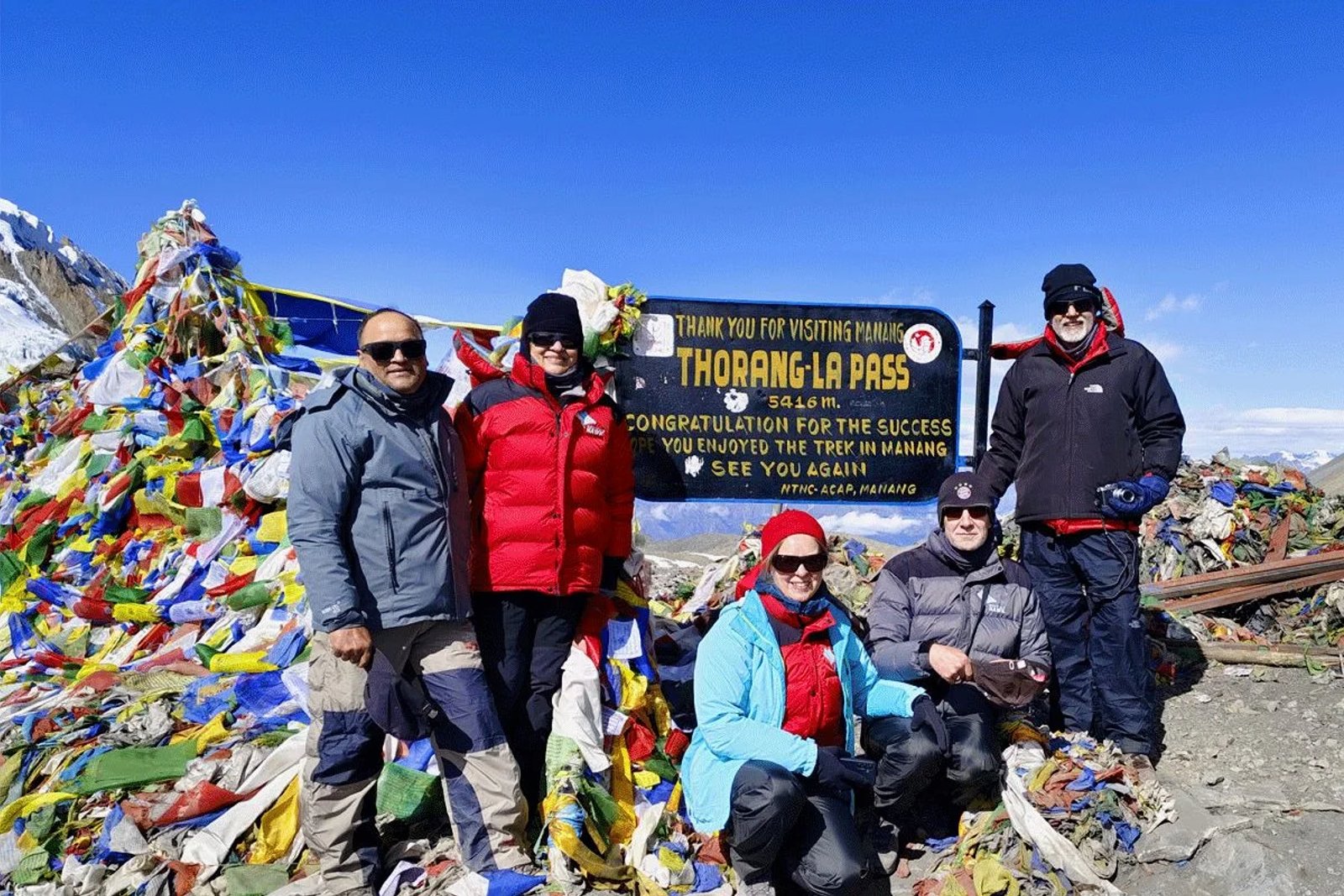
Trekkers short on time can look at the Annapurna Base Camp Short Trek, which reaches the Sanctuary in 10 days. For a longer, higher circuit around the whole Annapurna massif, the Annapurna Circuit Trek crosses Thorong La at 5,416m over 12 to 18 days, our Annapurna Circuit complete guide has the full breakdown. Trekkers who have already done the Manaslu Circuit and want a bigger multi-week trip sometimes ask about combining routes, worth a separate conversation with our team. Compared with Everest Base Camp, this route is shorter, cheaper, and carries no Lukla flight risk. Our full EBC versus ABC comparison breaks down the tradeoffs in more depth.