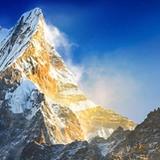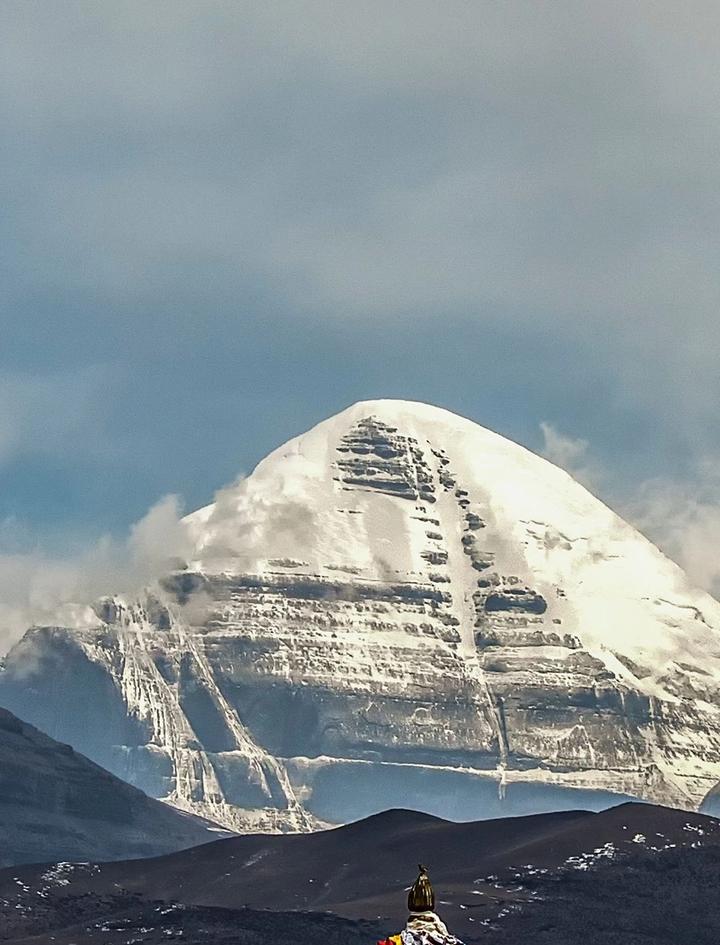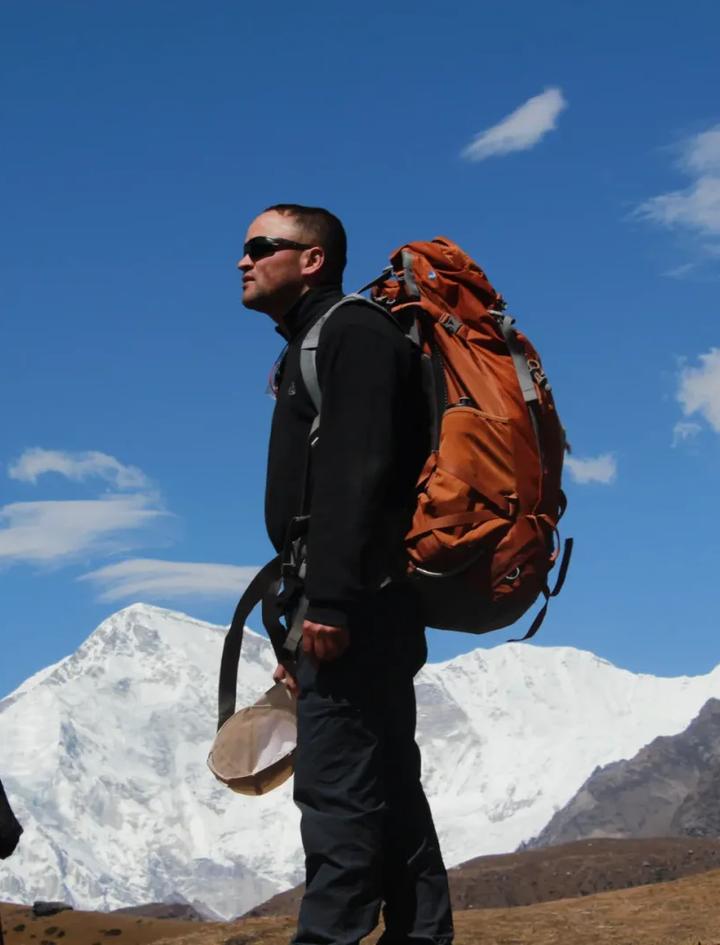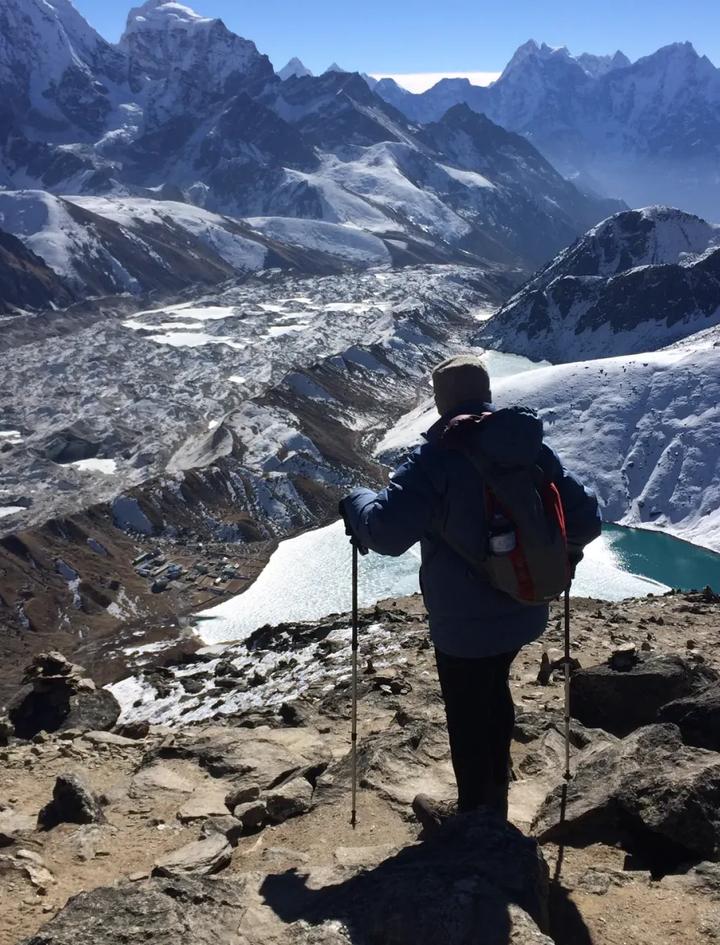

The Annapurna Base Camp trek ends in a glacial amphitheater at 4,130m, ringed by Annapurna I (8,091m), Annapurna South, Hiunchuli, and the sacred peak Machapuchare. It is one of the most photographed mountain panoramas in the Himalaya, and it earns it.
The trail to get there passes through terrain that the Everest region does not offer: subtropical forest in the Modi Khola valley, dense rhododendron stands that bloom pink and crimson in spring, terraced rice paddies at the trailhead, and traditional Gurung villages with stone-flagged courtyards and slate roofs. The scenery changes every 500m of elevation, from farmland to forest to alpine moraine. It is one of the most ecologically diverse treks in Nepal.
This guide covers the full 16-day ABC itinerary, day by day. Difficulty, costs, permits, best months, what to expect at Base Camp, and how it compares to Everest.
Route Overview
The Annapurna Base Camp trek starts from Nayapul, a small road-head town about 1.5 hours northwest of Pokhara by car. From Nayapul, the trail climbs into the Modi Khola valley through Ghandruk (a major Gurung village at 1,940m), drops into the river valley, ascends through Chhomrong (2,170m), and continues up through progressively narrower gorge terrain past Bamboo (2,310m), Deurali (3,230m), and Machapuchare Base Camp (3,700m) before reaching Annapurna Base Camp at 4,130m.
The return follows the same route. There is no circuit option for the ABC trek specifically, though you can combine it with a Poon Hill side trip at the start or end for a wider Annapurna experience.
Key numbers:
- Maximum altitude: 4,130m (Annapurna Base Camp)
- Total trekking days: 10 to 12 (within a 16-day itinerary)
- Daily walking: 5 to 7 hours
- Difficulty: Moderate
- Cost: From $1,275 guided
The trail is an out-and-back route, meaning you ascend and descend the same path. This sounds monotonous but the trail looks different going down. The views that were behind you on the ascent (Machapuchare looming over the valley, Hiunchuli catching morning light, the sweep of the Modi Khola gorge) are now in front of you, and the perspective shift from above the treeline back into the forest is striking.
Day-by-Day Itinerary
This is the standard 16-day itinerary. Days 1 and 16 are Kathmandu travel days. Days 2 and 15 are Pokhara transit. The trekking runs from Day 3 through Day 14.
Day 1: Arrival in Kathmandu (1,400m). Arrive at Tribhuvan International Airport. Transfer to hotel. If you arrive with time, Thamel has everything you need for last-minute gear. The EBC packing list applies to ABC with a few adjustments: you need less extreme cold gear since the maximum altitude is 1,200m lower, but you still need proper layers for nights at 4,130m.
Day 2: Kathmandu to Pokhara. Drive (6-7 hours via the Prithvi Highway) or fly (25 minutes). The drive follows the Trisuli River valley and is scenic but long. The flight gives aerial views of the Annapurna and Manaslu ranges. Afternoon free in Pokhara Lakeside, which is Nepal's second hub for trekking gear and preparation.
Day 3: Pokhara to Nayapul, Trek to Ghandruk (1,940m). Drive to Nayapul (1.5 hours). Begin the trek on a stone-stepped path through rice paddies and scattered farmhouses. The climb to Ghandruk gains roughly 800m through forest and terraced hillside. Ghandruk is one of the largest Gurung villages in the region: stone houses, slate roofs, a museum of Gurung culture, and the first clear views of Annapurna South and Machapuchare from the village square. 5-6 hours walking.
Day 4: Ghandruk to Chhomrong (2,170m). The trail descends into the Modi Khola valley (losing 500m), crosses the river, and climbs back out to Chhomrong. This up-down pattern is the defining characteristic of the first half of the ABC trail. Chhomrong is perched on a hillside with a commanding view down the valley. It is the last large settlement before the Annapurna Sanctuary. Stock up on anything you need; shops above here are limited. 5-6 hours.
Day 5: Chhomrong to Bamboo (2,310m). The infamous staircase day. Chhomrong to Bamboo involves a steep descent of roughly 1,500 stone steps to the Chhomrong Khola, then a climb back up and a long traverse to Sinuwa before descending again to Bamboo. This section is harder than the elevation numbers suggest because of the constant stairwork. Knees feel it going down; quads feel it going up. The forest closes in around Bamboo, dense bamboo and rhododendron, and the valley narrows perceptibly. 5-6 hours.
Day 6: Bamboo to Deurali (3,230m). The trail climbs steadily through forest along the Modi Khola. You pass through Himalaya Hotel (a small teahouse cluster, not an actual hotel) and continue up to Deurali. The forest transitions from bamboo to birch and rhododendron. Above 2,800m in March and April, the rhododendron canopy blooms in dense stands of red, pink, and white. Even in autumn, the forest here is atmospheric, with light filtering through moss-hung branches. You gain roughly 900m today and the altitude becomes noticeable for the first time. 5-6 hours.
Day 7: Deurali to Annapurna Base Camp (4,130m) via Machapuchare Base Camp (3,700m). The big day. The trail emerges from the forest above Deurali and enters the moraine landscape of the Annapurna Sanctuary. Machapuchare Base Camp (MBC, 3,700m) comes first, roughly 3 hours from Deurali. MBC sits on a flat clearing with Machapuchare's south face rising directly above. From MBC, another 2 hours of steady climbing on a moraine path brings you to Annapurna Base Camp.
The arrival at ABC is the payoff. The amphitheater opens up around you: Annapurna I (8,091m) to the north, Annapurna South and Hiunchuli to the west, Machapuchare's pointed summit behind you to the south. On a clear day, the ring of peaks fills every direction you turn. The teahouses at ABC sit on a flat glacial shelf at 4,130m, and the sunset here, when the alpenglow turns Annapurna I gold and then pink, is one of the finest sights in Nepal. 6-7 hours.
Day 8: Annapurna Base Camp (rest/exploration). A full day at ABC. Sunrise on the amphitheater. Walk toward the base of Annapurna South for a closer look at the glacier. Photograph the peaks as the light changes through the day. Rest. The altitude is 4,130m and some trekkers will feel mild AMS symptoms (headache, appetite loss). A rest day here helps and gives you time to absorb the scenery. If conditions and fitness allow, a walk up the moraine toward the higher glacial shelves offers a different perspective on the Annapurna massif.
Day 9: ABC to Bamboo (2,310m). The long descent begins. From 4,130m to 2,310m in a single day. The first section down to MBC and through the moraine is rocky. Below Deurali, you re-enter the forest and the temperature rises noticeably. Bamboo feels almost tropical after two nights above 3,700m. 6-7 hours. This is a big day for the knees. Trekking poles earn their weight today.
Day 10: Bamboo to Jhinu Danda (1,780m). The trail retraces through the Chhomrong staircases. Many itineraries stop at Jhinu Danda rather than climbing back up to Chhomrong, and for good reason: Jhinu Danda has natural hot springs on the Modi Khola riverbank. After a week of cold teahouse bathing, a soak in the hot springs is the single most popular moment on the return trail. The springs are a 20-minute walk downhill from the teahouses. Water temperature sits around 40C. 5-6 hours.
Day 11: Jhinu Danda to Nayapul, Drive to Pokhara. A final morning of walking through the lower valley, past Gurung farmhouses and through rice paddies that feel like a different country from the glacial moraine of two days ago. Reach Nayapul, vehicle transfer to Pokhara. Afternoon free. Pokhara Lakeside is the decompression zone: good food, Phewa Lake, and cold beer. 4-5 hours walking plus drive.
Days 12-14: Buffer/Contingency. Weather delays, an extra rest day in Pokhara, or the option to extend the trek by adding a Poon Hill sunrise hike at the start. These buffer days are built into the 16-day itinerary precisely because Himalayan weather does not negotiate with schedules.
Day 15: Pokhara to Kathmandu. Drive or fly back to Kathmandu.
Day 16: Departure. Transfer to Tribhuvan International Airport.
Difficulty and Physical Demands
The ABC trek is rated Moderate. In practical terms, this means it is physically demanding but significantly more accessible than the Everest Base Camp trek.
Altitude ceiling: 4,130m. This is roughly 1,200m lower than EBC's maximum. The practical difference is significant. At 4,130m, your body receives approximately 60% of sea-level oxygen. At EBC's 5,364m, it is closer to 50%. This means milder AMS symptoms, fewer nights of broken sleep, and less cumulative altitude fatigue. The acclimatization demands are real but more forgiving.
The stone staircases. The section between Chhomrong and Bamboo is the most physically demanding part of the trail, and it has nothing to do with altitude. Thousands of stone steps, cut into the hillside over centuries, take you down 1,500 steps to the river and back up the other side. This pattern repeats. Going down is harder than going up on these steps because the impact accumulates in your knees over hours. Trekking poles and a steady pace are the solution.
Daily hours: 5 to 7. Comparable to EBC but with more elevation variation in the lower section. The climb from Deurali to ABC on day 7 is the longest sustained ascent (900m gain) and comes at the highest altitude, making it the hardest single day.
Fitness benchmark: If you can hike 5 to 6 hours on hilly terrain with a 8-10 kg pack, you have the fitness for ABC. The EBC difficulty guide includes a 12-week training plan that works for ABC too, though ABC trekkers can reasonably start with 8 weeks.
Best Time to Trek
The ABC trail follows the same seasonal pattern as the rest of Nepal's trekking regions, with two primary windows.
October and November (post-monsoon). The best months. Clear skies, stable conditions, dry trails. Temperatures at ABC in October: 0 to 5C during the day, -10 to -15C at night. The amphitheater views are consistently sharp. This is peak season and the trail, particularly the section between Chhomrong and MBC, carries solid traffic. Teahouse booking above Chhomrong matters.
March and April (pre-monsoon). Warmer temperatures and the rhododendron bloom. Below 3,000m, the forest between Ghandruk and Chhomrong turns into a canopy of red and pink. At ABC, March days are slightly warmer than October equivalents. Afternoon cloud buildup is more common in spring, so morning departures above MBC matter for summit views. April sees the start of expedition traffic on Annapurna I, which adds activity at Base Camp.
Avoid: June through September (monsoon: heavy rain, leeches below Chhomrong, trail erosion, limited visibility), December through February (deep cold at ABC, some teahouses above Deurali close, shorter days).
Costs
The guided Annapurna Base Camp trek starts at $1,275 per person. This typically includes:
- Guide and porter services
- All teahouse accommodation (twin-share)
- All meals on the trail (breakfast, lunch, dinner)
- Annapurna Conservation Area Permit (ACAP)
- TIMS card (Trekkers' Information Management System)
- Kathmandu-Pokhara transportation
- Airport transfers
Not typically included: International flights, Kathmandu hotel nights, travel insurance, personal gear, bottled water on the trail, hot showers (NPR 300-500 above Chhomrong), device charging (NPR 200-400 above Bamboo), alcoholic drinks, tips.
Trail spending money: Carry NPR 15,000-25,000 in cash for extras. There are no ATMs on the trail above Nayapul. Hot drinks run NPR 150-300, a bottle of water NPR 200-400 (increases with altitude; Diamox-induced thirst makes this add up), and snacks NPR 100-300.
For detailed cost comparisons with EBC, a dedicated ABC cost breakdown article is forthcoming.
Permits and Logistics
Two permits are required for the ABC trek. Your agency handles both.
ACAP (Annapurna Conservation Area Permit): NPR 3,000 for SAARC nationals, NPR 3,000 for foreigners (rate as of 2026). Checked at multiple points on the trail. Your agency processes this in Pokhara or Kathmandu.
TIMS Card (Trekkers' Information Management System): NPR 2,000 (free if trekking with a registered agency in some cases). Checked at the same points. Your agency also handles this.
Guide requirement (since April 2023): All trekkers in the Annapurna Conservation Area must be accompanied by a licensed guide. Solo trekking without a guide is not permitted. This is enforced at ACAP checkpoints on the trail. Independent trekking (without an agency, but with a hired guide) is still possible.
Getting to Pokhara: The Prithvi Highway drive from Kathmandu takes 6 to 7 hours and follows the Trisuli River through a series of towns. The road condition is generally decent but can slow down behind trucks on narrow stretches. The domestic flight (Buddha Air or Yeti Airlines, $80-120 one way) takes 25 minutes and offers mountain views. Most trekkers drive one way and fly the other to experience both.
Accommodation on the Trail
The entire ABC route is teahouse-trekked. You sleep in lodges every night. No camping, no tents, no cooking your own food.
Below Chhomrong (1,400-2,170m): Comfortable teahouses with private rooms, attached bathrooms in some cases, hot showers, WiFi, and menu variety. Ghandruk in particular has lodges that approach small hotel quality. This is the most comfortable section.
Chhomrong to Deurali (2,170-3,230m): Simpler lodges. Rooms are twin-share with thin partitions. Shared bathrooms. Hot showers available but charged (NPR 300-500). Meals are dal bhat, noodle soup, fried rice, and similar trekking staples. Quality is consistent and portions are large.
Deurali to ABC (3,230-4,130m): Basic lodges. Rooms are small, cold at night, and you will hear your neighbors through the walls. Bathrooms are shared and cold. Charging and WiFi are available but expensive and unreliable. The dining room, heated by a single wood or kerosene stove, is where everyone gathers in the evening. This is the social heart of the teahouse and the warmest room in the building. Get there early to secure a seat near the stove.
At ABC itself (4,130m): Several teahouse lodges. Rooms are basic. Nights are cold (-10 to -15C in October). Your sleeping bag matters here. The dining rooms fill up in peak season. The views from the dining room windows are Annapurna I and Machapuchare. Nobody complains about the accommodation once they look outside.
What Makes ABC Different from EBC
Trekkers often ask which is better. They are different treks that appeal to different priorities.
Altitude: ABC tops out at 4,130m. EBC reaches 5,364m (or 5,545m with Kala Patthar). This 1,200m gap means less altitude sickness risk, fewer nights of poor sleep, and a lower physical barrier to entry on ABC.
Landscape diversity: ABC wins. The trail moves through subtropical forest, bamboo groves, rhododendron canopy, birch forest, alpine meadow, and glacial moraine across 10 days. EBC's scenery above Namche is dramatic but more uniform: arid moraine and glacier landscape for the upper half.
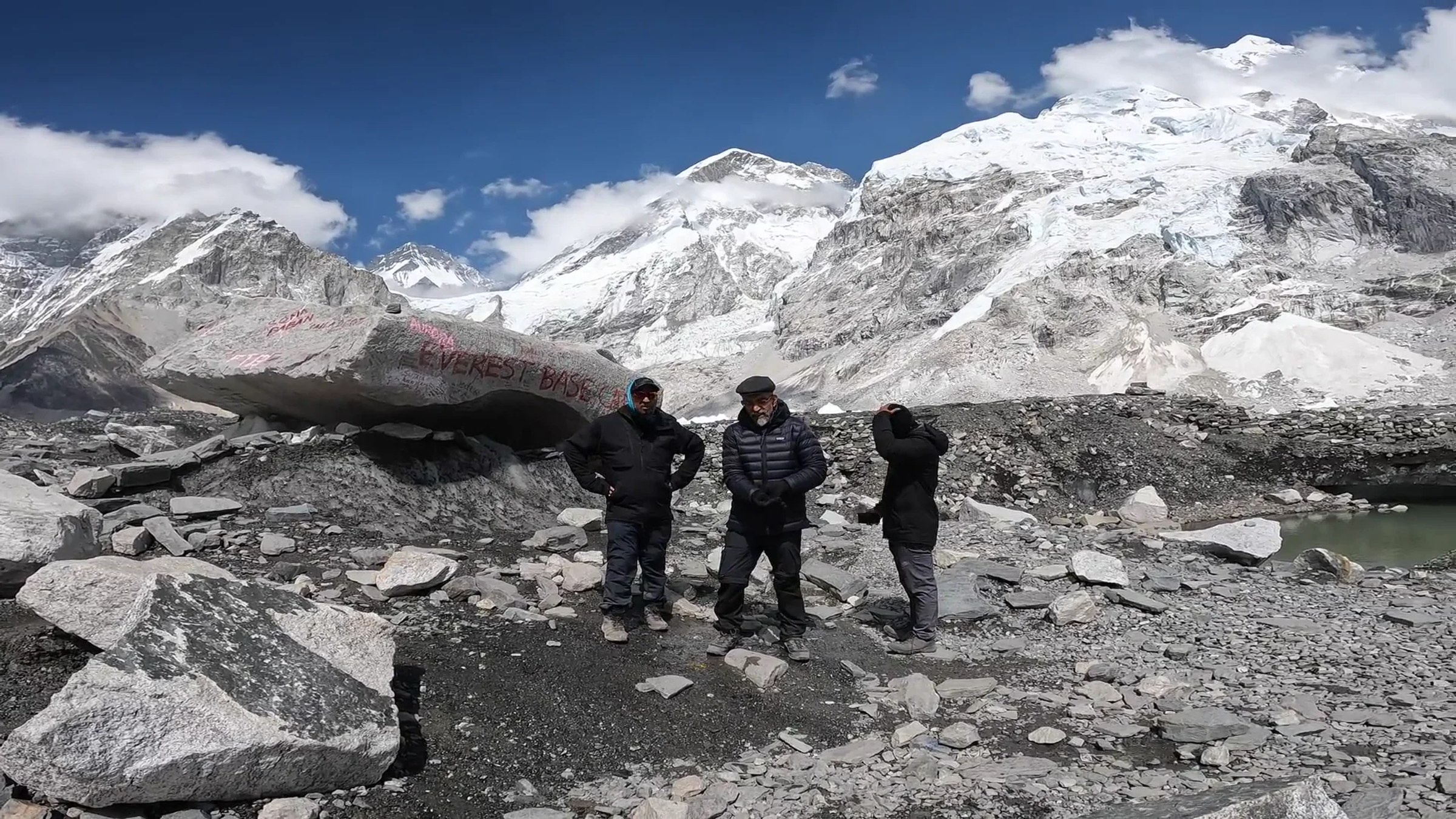
The destination: ABC's amphitheater is surrounded by peaks on all sides. You stand in a bowl of mountains. EBC is a rocky glacier at the foot of the Khumbu Icefall, with Everest's summit visible from Kala Patthar rather than from Base Camp itself. Both are powerful in different ways.
Cultural experience: The lower ABC trail passes through active Gurung villages where farming, weaving, and daily life continue independent of trekking tourism. The EBC trail's villages above Namche are largely trekking-economy settlements.
Duration and cost: ABC is shorter (16 days vs EBC's 14-day trek, but EBC trekkers often add buffer days) and less expensive ($1,275 vs $1,775). The shorter duration and lower altitude make it a practical option for trekkers with less vacation time.
Crowds: EBC is busier in peak season, particularly the Namche-to-Lobuche corridor in October. ABC sees solid traffic between Chhomrong and MBC but rarely feels as congested.
For trekkers considering both: the complete EBC guide covers the Everest route in the same detail.
The Annapurna Sanctuary
The Annapurna Sanctuary is the glacial basin at the head of the Modi Khola valley. It is bounded by a ring of peaks: Annapurna I (8,091m, the 10th highest in the world), Annapurna South (7,219m), Hiunchuli (6,441m), Machapuchare (6,993m, unclimbed and sacred), Gangapurna (7,455m), and several others. The "sanctuary" name is not metaphorical. The basin is enclosed on all sides, with only one natural entrance through the Modi Khola gorge.
The Gurung people consider the Sanctuary a sacred space. Machapuchare is venerated and has been closed to climbing since 1964 (the only major Himalayan peak with a permanent climbing ban). The one expedition that attempted it in 1957 stopped short of the summit and reported spiritual unease. Nepal closed the peak permanently seven years later. It stands at the entrance to the Sanctuary, its distinctive fishtail summit visible from Pokhara, from the trail, and from Base Camp.
For trekkers, the Sanctuary matters because it creates the amphitheater. The ring of peaks is not a line of mountains you view from one side; it surrounds you. At sunrise, light moves around the basin, catching different faces of different peaks minute by minute. At sunset, the alpenglow on Annapurna I's south face turns the mountain gold, then orange, then deep red. This light show repeats daily and is never quite the same.
What to Pack (ABC-Specific Notes)
The gear requirements for ABC overlap heavily with EBC but with key differences driven by the 1,200m altitude gap.
Less extreme cold gear needed. At 4,130m in October, nights drop to -10 to -15C. A sleeping bag rated to -10 or -15C is sufficient (vs. -15 to -20C for EBC). Your down jacket still matters for evenings but you are unlikely to need overmitts or a balaclava.
More rain gear for spring treks. The lower sections of the ABC trail (below Chhomrong) receive more precipitation than the equivalent altitude sections on EBC, particularly in April and May. A reliable waterproof shell and pack cover are more important here.
Trekking poles are critical. The stone staircase sections between Chhomrong and Bamboo are where poles earn their value. Descending 1,500 stone steps without poles is technically possible but your knees will register the decision for days.
Leech socks or gaiters in monsoon shoulder. If trekking in late September or early October, the lower trail can still carry leeches from the retreating monsoon. Ankle gaiters or purpose-made leech socks solve this cheaply.
For the full gear checklist with Kathmandu shopping tips and weight targets, the EBC packing list covers the complete system. Adjust the sleeping bag and cold layers down one notch for ABC.
Nearby Treks and Combinations
The Annapurna region offers several treks that can be combined with ABC or serve as alternatives.
Poon Hill (3,210m): A shorter 10-day trek that reaches a sunrise viewpoint with panoramic views of the Annapurna and Dhaulagiri ranges. Can be done as a standalone Poon Hill trek or combined with ABC by adding 2-3 days at the start of the itinerary via Ghorepani. Rated Easy. Excellent for first-time trekkers or as a warm-up before ABC.
Mardi Himal (4,500m): A quieter trail on the opposite side of the Mardi Himal ridge from the ABC route. The Mardi Himal trek offers close views of Machapuchare and the Annapurna range from a different angle, with fewer trekkers. Rated Easy. 11 days, $625.
Annapurna Circuit (5,416m at Thorong La): The classic 20-day Annapurna Circuit circumnavigates the entire Annapurna massif. Longer, higher, and more diverse than ABC, with desert landscape in the Mustang-influenced north side. Rated Moderate. A different scale of undertaking.
Booking
The Annapurna Base Camp trek runs from $1,275 per person with a licensed guide, porter, all meals, accommodation, and permits included. The best months to book are October, November, March, and April. Peak-season departures (mid-October) should be booked 2-3 months in advance to ensure teahouse availability above Chhomrong.
If you are weighing ABC against other options or want to discuss your fitness level, travel dates, or a combined itinerary, get in touch. We will give you a straight answer about which trek fits your situation.