
- What Makes EBC Difficult (It Is Not the Walking)
- Daily Distances and Walking Hours
- The Altitude Factor
- The Three Hardest Sections
- Phakding to Namche Bazaar (Day 2)
- Lobuche to Gorak Shep to Everest Base Camp (Day 8/9)
- Kala Patthar Pre-Dawn Ascent
- Fitness Requirements: An Honest Assessment
- A Training Plan That Works
- Can Beginners Do the EBC Trek?
- Who Should Reconsider
- The Mental Side
The Everest Base Camp trek is rated Strenuous by most agencies, including ours. That word scares people away. It shouldn't.
The trail to Base Camp is not technical. There are no ropes, no glacier crossings on the trekking route, no scrambling sections where your hands leave your sides. It is a walking path, the same one used by yak caravans carrying supplies to the lodges above Namche Bazaar. The difficulty is real, but it comes from altitude and sustained effort over two weeks, not from anything that requires climbing skills.
This guide breaks down exactly what makes the trek hard, what the hardest days look like in specific terms, and what fitness you need to complete it. For the full route and day-by-day itinerary, see the complete EBC guide.
What Makes EBC Difficult (It Is Not the Walking)
Three things make the EBC trek harder than a typical multi-day hike. In order of importance:
Altitude. You start at Lukla (2,860m) and finish at Everest Base Camp (5,364m). At 5,000m, every breath delivers roughly 50% of the oxygen your lungs process at sea level. This is the single factor that separates EBC from a 14-day walk in the Alps. Your body has to acclimatize, and acclimatization is not something you can train for at home. It happens on the trail, at altitude, over days.
Duration. Fourteen days of walking, 5 to 7 hours per day, with a pack on your back. The cumulative fatigue of day after day on the trail is different from a weekend hike. By day 8, even fit trekkers feel it in their legs, their sleep, and their appetite. This is normal.
Cold. Above 4,000m, temperatures at night drop well below freezing. At Gorak Shep (5,164m) in October, nights reach -12 to -16C. In November, -18 to -20C. The best time guide covers temperature ranges month by month. Cold compounds fatigue and altitude effects. Sleeping poorly because you are freezing makes the next day harder in ways that ripple forward.
What does not make EBC difficult: technical terrain, dangerous exposure, or the need for specialized skills. The trail is rocky and uneven above Lobuche, but it is a walking path the entire way. If you can walk on a rocky forest trail, you can walk to Base Camp.
Daily Distances and Walking Hours
Most days on the EBC trail run 5 to 7 hours of walking. That is actual moving time, not including lunch stops, rest breaks, or the slow photographer-stops that everyone takes above Namche when Ama Dablam appears in the skyline.
The total elevation gain from Lukla (2,860m) to Everest Base Camp (5,364m) is roughly 3,500m, spread over eight ascending days. The descent retraces the route and typically takes two to three days. For the complete day-by-day breakdown, the EBC guide covers every stop.
The toughest climbing day is Phakding to Namche Bazaar: 830m of elevation gain in 5 to 6 hours, with a sustained steep section through forest in the last two hours. Most trekkers feel this day in their thighs. It is also only day 2, which means your body has not yet adjusted, and you will notice the altitude by the time you reach Namche at 3,440m.
Acclimatization days at Namche (day 3) and Dingboche (day 6) are built into every responsible itinerary. These are not rest days in the sense of lying around. We take day hikes to higher elevations and return to sleep low, which is the most effective way to acclimatize. The Namche day hike typically goes up toward the Everest View Hotel at 3,880m. The Dingboche day hike heads toward Nagarjun Hill above 4,800m. These days are essential. Skipping them is the single most common mistake trekkers make.
Descent days are faster but harder on the knees. The drop from Gorak Shep to Lukla covers roughly 2,300m of elevation loss over two to three days on rocky trail surfaces. This is where most joint complaints arise. Trekking poles are not optional on the descent.
The Altitude Factor
Altitude is the thing that makes EBC fundamentally different from any lower-elevation trek, no matter how long. Understanding how it works prevents most problems.
At sea level, you breathe air that is roughly 21% oxygen. At 5,364m (Everest Base Camp), the percentage is the same, but air pressure is around 50% of sea level. Each breath delivers roughly half the oxygen. Your body compensates by producing more red blood cells, increasing heart rate, and breathing faster. This compensation takes days.
The critical threshold on the EBC trail is around 3,500m. Below this, most people feel fine. Above it, some percentage of trekkers will experience mild AMS symptoms: headache, nausea, poor sleep, loss of appetite. This is normal and not dangerous as long as you respond correctly.
The rules are simple and non-negotiable:
1. Ascend no more than 500m of sleeping altitude per day above 3,000m. The standard EBC itinerary is designed around this rule. 2. Take acclimatization days. Namche and Dingboche rest days are not suggestions. 3. Hydrate aggressively. 3 to 4 liters per day above 3,000m. Most trekkers underdrink because the cold reduces thirst sensation. 4. Descend if symptoms worsen. A headache that responds to ibuprofen and water is mild AMS. A headache that worsens after rest and medication is a signal to go down. Not tomorrow. Now.
The success rate for completing EBC with a guided group following a proper acclimatization schedule is above 90%. The failures almost always correlate with people who rushed, skipped rest days, or joined itineraries that were too aggressive.
The Three Hardest Sections
Not every day on the EBC trail is equally demanding. Three sections stand out.
Phakding to Namche Bazaar (Day 2)
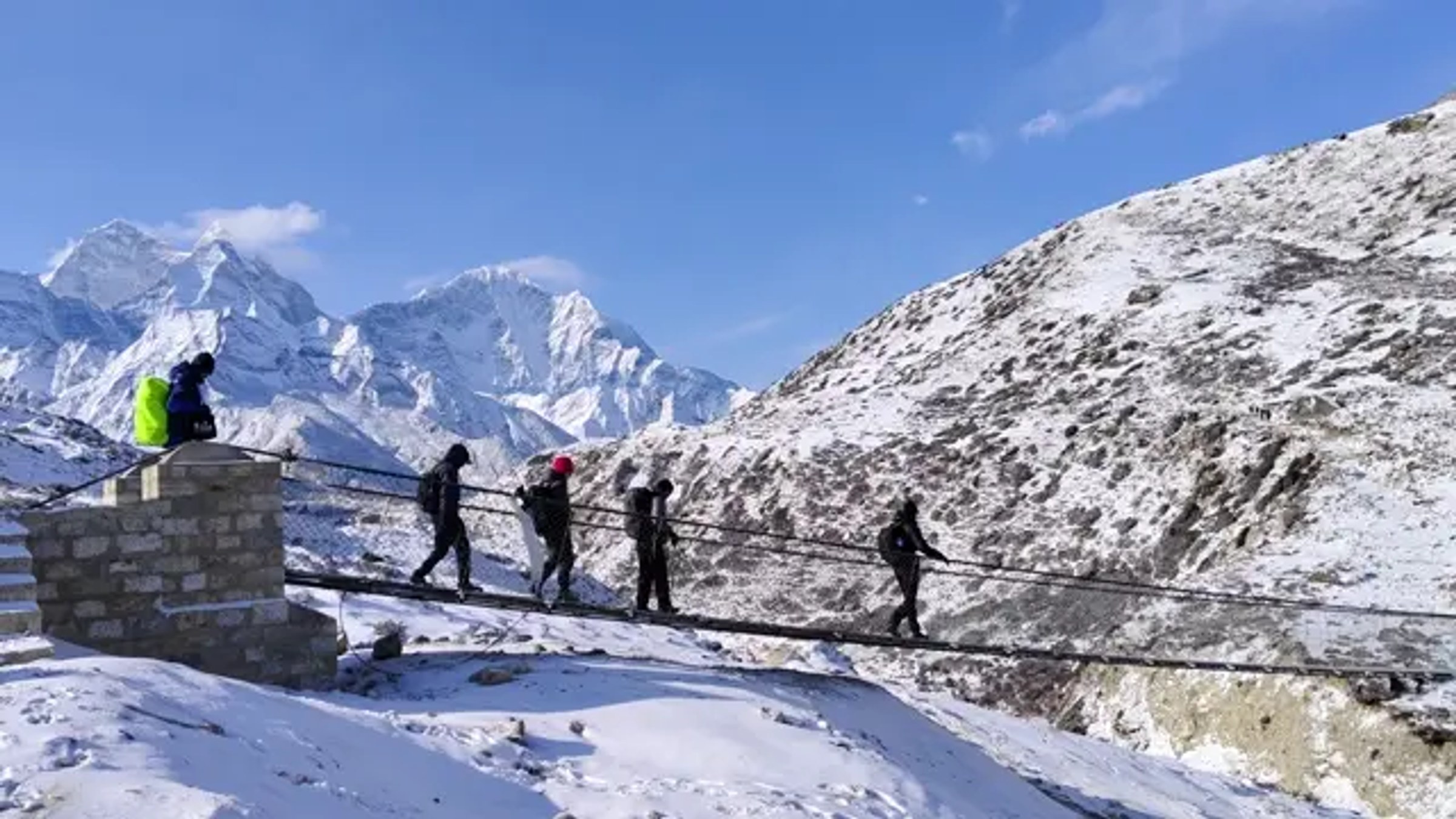
830m of elevation gain with a relentless final two hours. The trail follows the Dudh Kosi river valley from Phakding, crossing suspension bridges, until it reaches the junction with the Bhote Kosi. From here, the path turns uphill and does not let up. The ascent to Namche is steep, exposed to sun in the morning, and comes on day 2 when your body is still adjusting to walking at 3,000m. Quads burn. The altitude is noticeable. Namche appears around a corner just when you start wondering how much longer the climb goes.
This is a hard day, but it is hard in a way that any fit hiker can manage. It is not technical. It is just relentless uphill.
Lobuche to Gorak Shep to Everest Base Camp (Day 8/9)
The trail from Lobuche (4,940m) to Gorak Shep (5,164m) is only 3 to 4 hours of walking, but every step happens above 5,000m. The path crosses the Khumbu Glacier's lateral moraine: rocky, uneven terrain with no clear line in places. At this altitude, your pace drops to roughly half what it was at Namche. You stop every 50 to 100 meters to catch your breath. This is normal at 5,000m. It does not mean you are unfit; it means your body is working with less oxygen.
From Gorak Shep, the walk across the moraine to Base Camp at 5,364m takes another 2 to 3 hours. The mental challenge is real. You can see Gorak Shep across the moraine, but it takes longer to reach than you expect.
Kala Patthar Pre-Dawn Ascent
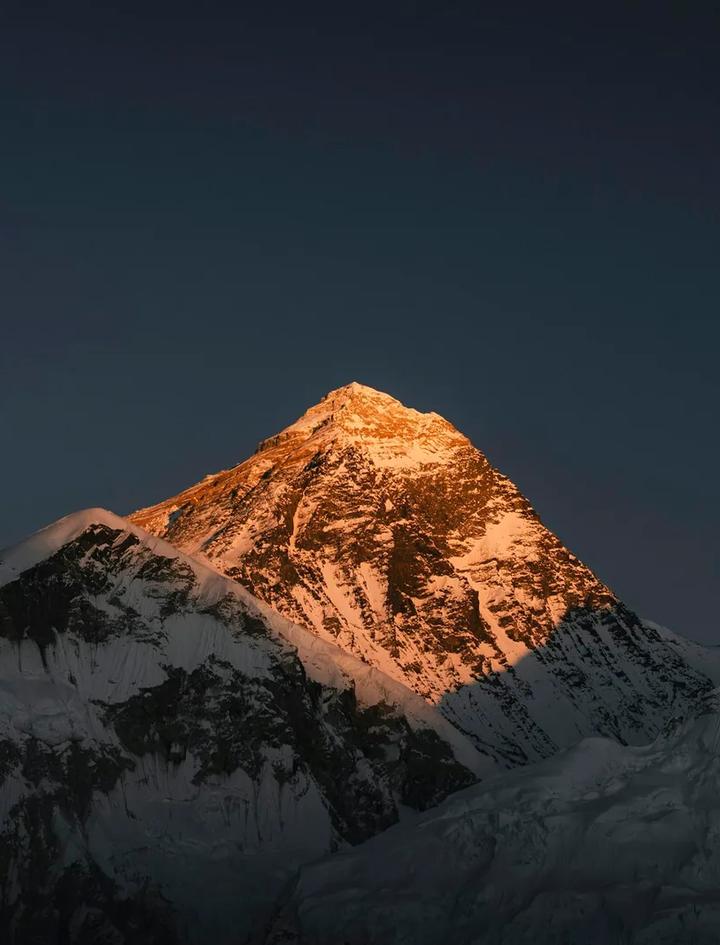
This is optional but almost everyone does it. Kala Patthar (5,545m) is the highest point on the trek and provides the best view of Everest's summit. The ascent starts from Gorak Shep at 4:30 to 5:00am, in the dark, in sub-zero temperatures. The climb gains 380m on a steep, rocky ridge in approximately 90 minutes to 2 hours.
At 5,500m, your body is operating at roughly 47% of sea-level oxygen. The cold is serious, typically -15 to -20C at that hour, and every step requires conscious effort. This is the single most physically and mentally demanding section of the entire trek.
It is also where you stand at sunrise and watch Everest, Lhotse, and Nuptse fill the sky. Nobody regrets going up.
Fitness Requirements: An Honest Assessment
You do not need to be an athlete. You do need a base level of cardiovascular and muscular fitness that exceeds "I walk to work sometimes."
The practical benchmark: Can you hike uphill for 45 minutes continuously, carrying a 10 kg daypack, at a pace where you can speak in short sentences but cannot hold a full conversation? If yes, your cardiovascular base is adequate for EBC.
If that description sounds easy, you are probably fit enough. If it sounds like something you would need to build up to, you have 3 to 4 months of training ahead.
What you need:
- Cardiovascular endurance for 5 to 7 hours of sustained effort at varying intensities
- Leg strength (quads, calves, glutes) for uphill climbs and downhill impact absorption
- Core stability for walking on uneven terrain with a pack
- Mental tolerance for discomfort, poor sleep, and cold
What you do not need:
- The ability to run long distances (the trail pace above 4,000m is slower than a casual walk)
- Upper body strength (you are walking, not climbing)
- Previous altitude experience (acclimatization happens on the trail, not in advance)
- A gym membership (outdoor training is more effective than indoor for trekking preparation)
A Training Plan That Works
Start 12 to 16 weeks before your departure. If you are already a regular hiker, 8 weeks is enough.
Weeks 1 to 4: Build the base. Walk or hike 3 to 4 times per week. Start at 60 minutes and add 15 minutes each week. Include hills. Carry a daypack loaded to 5 kg by week 3. The goal is not speed; it is time on your feet.
Weeks 5 to 8: Add load and duration. Increase pack weight to 8 to 10 kg. Extend your longest weekly hike to 4 to 5 hours. Include at least one session per week with sustained uphill: stair climbing, hilly trails, or a StairMaster. Add bodyweight squats and lunges after walks, 3 sets of 15.
Weeks 9 to 12: Simulate the trek. Two back-to-back hiking days every other weekend. Pack 10 to 12 kg. Walk 5 to 6 hours per day on hilly terrain. If you can complete two consecutive 5-hour days with a loaded pack and feel tired but functional on the morning of day 3, you are ready.
Supplementary work at any phase:
- Stair climbing: 30 minutes of continuous stair ascent builds the specific muscle endurance needed for the Namche climb
- Bodyweight squats and step-ups: 3 sets of 15, three times per week
- Ankle and knee mobility work: 10 minutes daily, especially if you have a history of joint issues
Skip the treadmill sprints and weightlifting supersets. Trek training is about sustained low-to-moderate effort over hours, not peak output in minutes.
Can Beginners Do the EBC Trek?
Yes. With conditions.
If "beginner" means no high-altitude trekking experience: absolutely. First-time high-altitude trekkers complete EBC every season. The trail is established, the route is well-supported with teahouses every few hours, and a good guide manages your acclimatization schedule so you do not have to navigate altitude decisions alone. A properly paced 14-day EBC itinerary gives your body enough time to adjust at each stage.
If "beginner" means no hiking experience at all: possibly, but you should be honest about your starting point. Someone who has never hiked more than two hours on a trail needs a full 16-week training build-up and should consider starting with a shorter introductory trek. The Poon Hill trek is 10 days, reaches a maximum of 3,210m, and is rated Easy. It is an excellent first-trek calibration before attempting EBC. The Annapurna Base Camp trek sits between the two: 16 days, maximum 4,130m, rated Moderate.
What beginners should not do:
- Join a "fast" 10 or 11-day EBC itinerary. These cut acclimatization days and the altitude sickness risk increases sharply.
- Skip the guide. Independent trekking is legal on the EBC trail, but AMS symptom management requires experience. A guide who has seen hundreds of acclimatization patterns is a safety measure, not a luxury.
- Underestimate the descent. Going down is not automatically easier. Knee impact on rocky trail over two to three days of descent is where many first-timers struggle most.
Who Should Reconsider
EBC is achievable for most healthy adults. It is not for everyone.
Serious heart or lung conditions. The reduced oxygen at altitude places additional load on both systems. Controlled asthma is generally manageable (bring your inhaler, consult your doctor). Uncontrolled hypertension, recent cardiac events, or severe COPD are genuine contraindications. Get a medical clearance before committing.
Significant knee or hip injuries. The descent from Gorak Shep to Lukla drops 2,300m over two to three days on rocky, uneven trail. If sustained downhill walking causes you significant joint pain at low elevation, this will be worse at altitude when fatigue compounds the impact. Trekking poles help, but they do not eliminate the load.
Inability to commit to training. Showing up untrained to a 14-day trek at altitude is neither heroic nor fun. The trek is manageable because people prepare for it. Without preparation, even strong-looking adults can find themselves struggling at 4,000m.
Children under 10. Not a hard rule, but the altitude risk assessment changes for younger children, and the ability to communicate symptoms reliably matters above 4,000m. Families with teenagers complete EBC regularly. Families with younger children should consult a travel medicine specialist and consider lower-altitude alternatives.
The EBC cost breakdown covers the full cost of proper gear, guide services, and the medical supplies responsible agencies carry. Cutting corners on any of these to save money is a false economy on this particular trek.
The Mental Side
Physical fitness gets all the attention. The mental side deserves some.
Day 8 onward, above Lobuche, things stack up. The altitude headache that responds to ibuprofen but never fully clears. The cold that arrives at 3pm and does not lift until 9am. The food you eat because you need to, not because you want to. The sleep that comes in two-hour fragments because your body keeps waking you to breathe faster. None of this is dangerous. All of it is uncomfortable.
The trekkers who struggle most above 4,500m are not always the least fit. They are sometimes the least patient with discomfort.
The remedy is perspective. Every trekker above Lobuche feels the same things. The headache, the appetite loss, the broken sleep. It is the altitude, not a personal failure. And it passes. Kala Patthar sunrise is 90 minutes of deliberate, exhausting climbing in the dark that ends with the entire Everest massif lit up in front of you. Nobody standing there is thinking about the headache from the night before.
The EBC trek asks more from your body than most vacations. The difficulty is specific and well-understood. Every challenge on this trail can be planned for.
If you want to see what the 14 days look like end to end, the complete guide walks through every stop. For timing your trip around weather and crowds, the best time guide covers all twelve months. And if you have specific questions about your fitness level or readiness, reach out and we can talk through it.