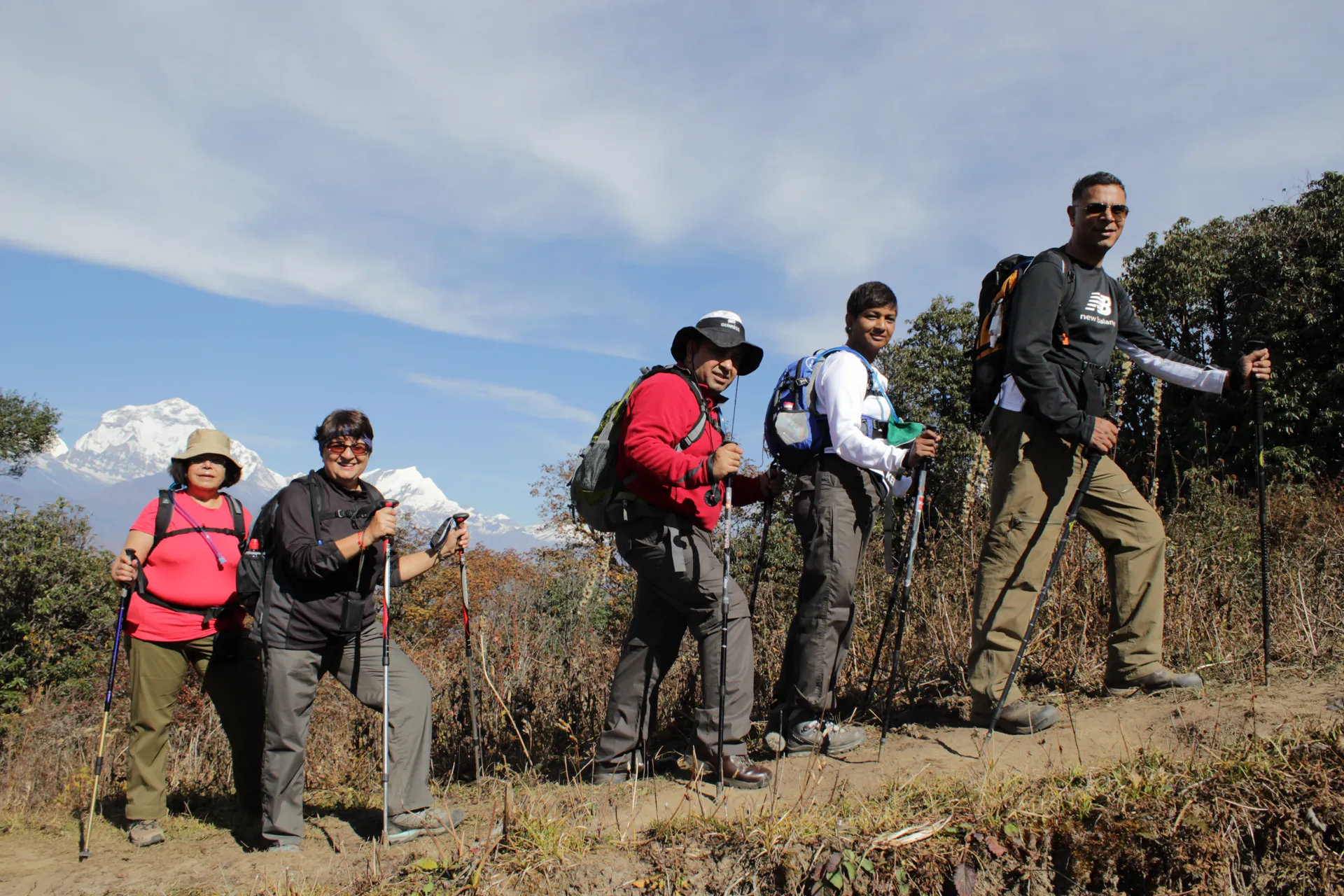
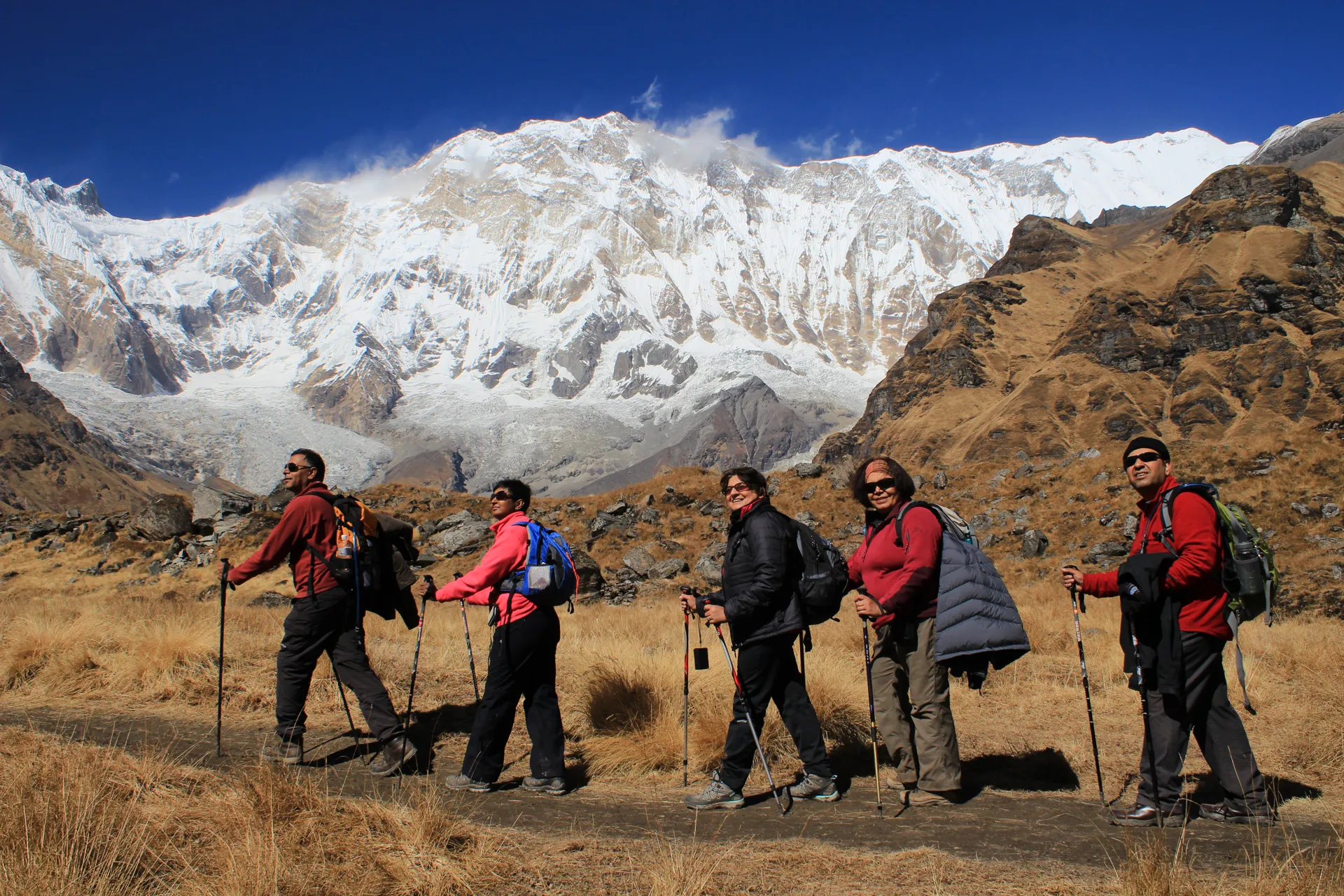
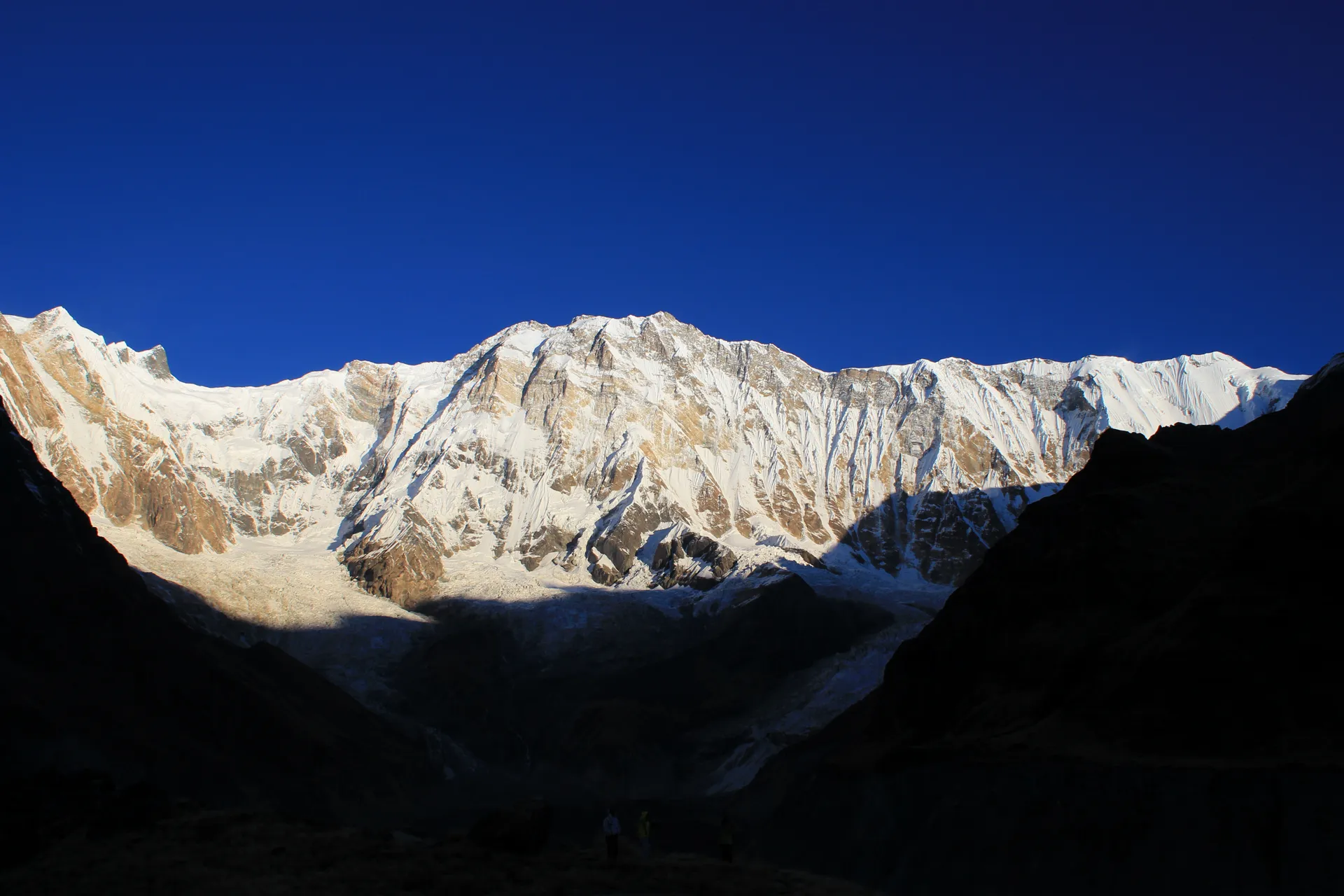
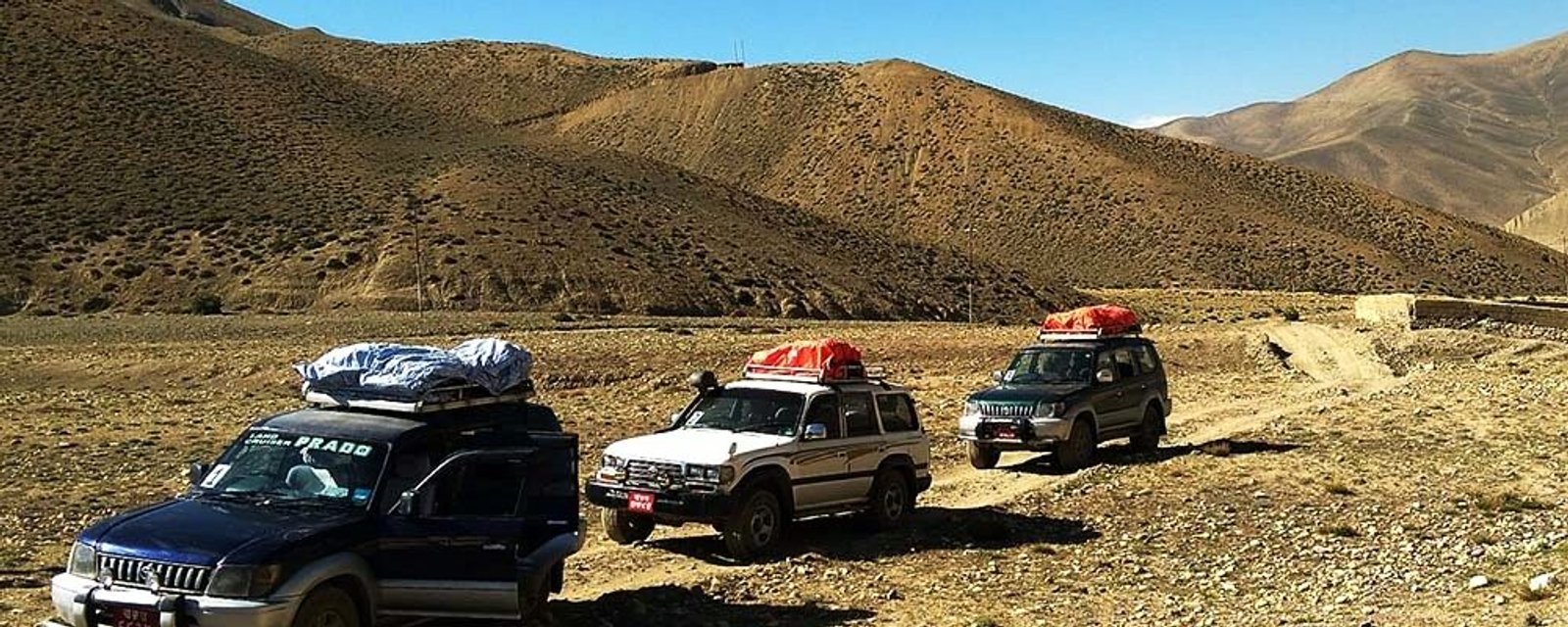
The circuit runs counter-clockwise from Besisahar (760m), with a shared jeep to Dharapani (1,860m) skipping the road-heavy lowest section. From there the trail climbs through pine forest to Chame (2,670m) and on to Pisang, where the route splits. We take the NATT high route through Upper Pisang (3,300m), Ghyaru, and Ngawal, hard-earned hillside villages with the Annapurna II and IV wall filling the sky, rather than the valley floor. Trekkers with extra days can extend from Manang toward Tilicho Lake (4,919m) on our Tilicho Lake via Annapurna Circuit itinerary, or detour into the restricted valley on the Nar Phu Valley Trek, which rejoins the circuit over Kang La.
Manang (3,519m) is where the circuit is won or lost. The mandatory acclimatization day here is not a rest day so much as a climb-high-sleep-low day: the Ice Lake trail reaches 4,620 meters, the Gangapurna glacier viewpoint sits an hour above the village, and Milarepa's Cave and the centuries-old Braga gompa fill a gentler afternoon. Bakeries in Manang sell sea buckthorn juice and apple pie to trekkers watching clouds pour over Gangapurna. Every hour spent high on these side trails buys a measurably easier pass day.
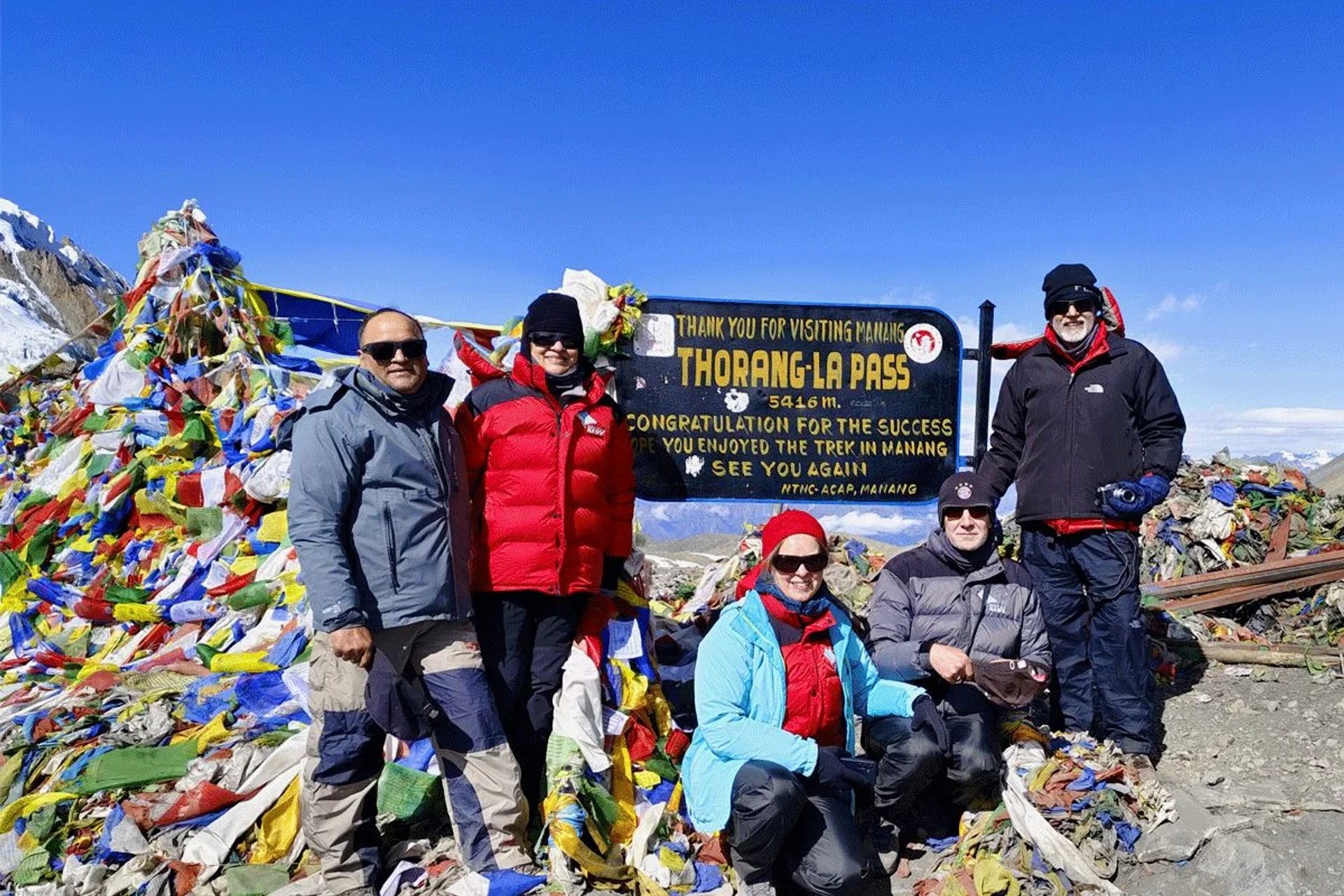
The pass itself deserves a straight answer rather than a marketing one. From Thorong Phedi (4,450m) the crossing starts around 4 AM, gains almost a thousand meters to the prayer-flag cairn at 5,416m, then drops 1,600 meters to Muktinath in the same day, 8 to 10 hours in total. In October 2014 a freak blizzard killed 43 people near this pass, and that event rewrote how responsible operators run it: fixed weather calls the evening before, a guide empowered to turn the group around, and no summit-fever schedules. Read our altitude sickness guide before you come, and if the full loop does not fit your calendar, the crossing alone runs as our Thorong La Pass Trek.
Over the pass, the trek changes country without changing country. Muktinath (3,800m) is one of the few shrines sacred to Hindus and Buddhists at once, its courtyard ringed by 108 water spouts where pilgrims bathe at dawn regardless of the temperature. Below it the trail enters the wind-scoured upper Kali Gandaki: the medieval alleys of Kagbeni at the edge of restricted Upper Mustang, the administrative town of Jomsom, and Marpha, a whitewashed Thakali village that grows the best apples in Nepal and distills them into brandy. Non-trekkers reach this same temple on our Muktinath Temple Tour, and the lower valley on its own is the gentler Jomsom Muktinath Trek.
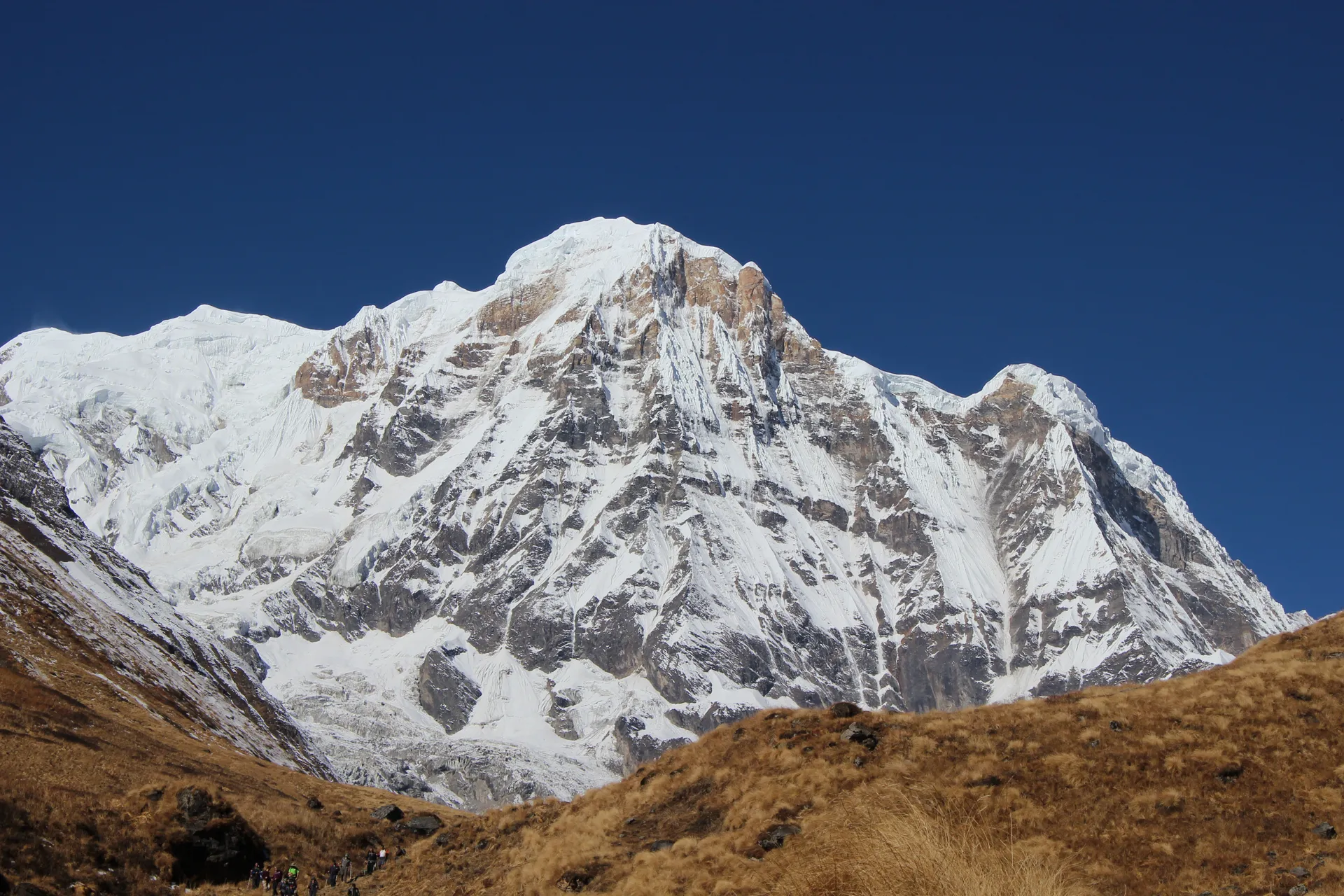
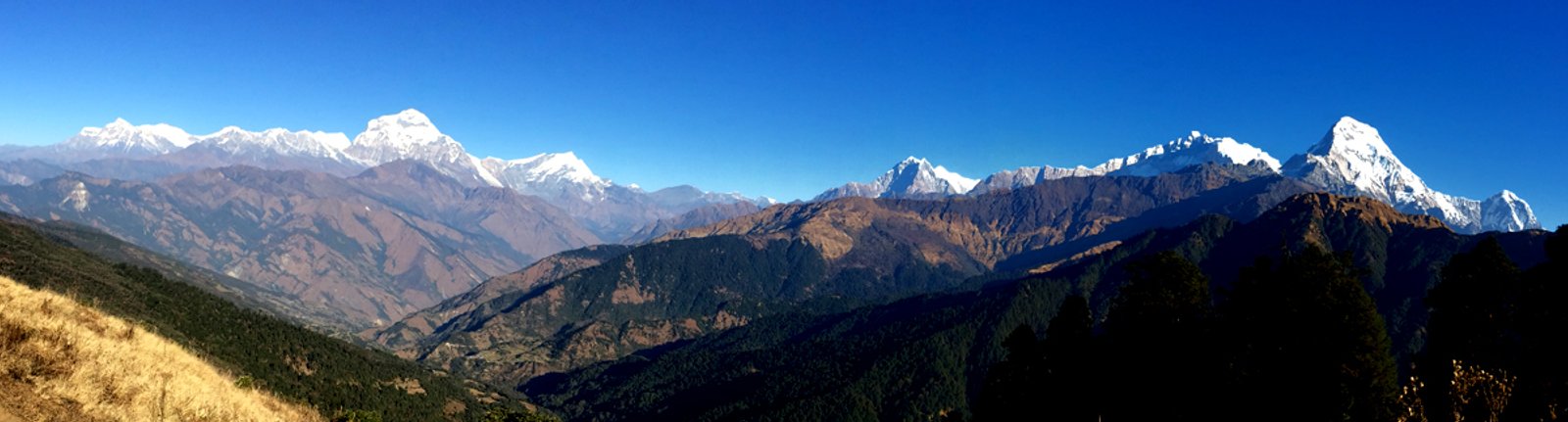
The Kali Gandaki gorge is the deepest on Earth measured rim to riverbed, with Dhaulagiri (8,167m) and Annapurna I (8,091m) standing barely 35 kilometers apart on opposite banks. The descent through Ghasa and the hot springs at Tatopani (1,190m) brings back green terraces and warm evenings, and then the trail climbs one last time to Ghorepani for the Poon Hill sunrise (3,210m), the classic dawn panorama of Dhaulagiri and the Annapurna wall that closes the circuit before the walk out to Nayapul and the drive to Pokhara.
Annapurna circuit trek cost, honestly broken down: our 16-day package is USD 1,325 per person, covering the ACAP permit (NPR 3,000), TIMS card, licensed guide, porter, all teahouse nights, three meals a day on trail, Kathmandu and Pokhara hotels, and transfers. Budget $15 to $25 a day on top for wifi, hot showers, charging, and safe drinking water, all of which get pricier the higher you climb. Carry cash from Kathmandu or Pokhara, the ATMs in Besisahar and Jomsom are best treated as broken until proven otherwise. Full permit rules live on our Nepal trekking permits guide, and our Nepal trek packing list covers gear down to the sock weight.
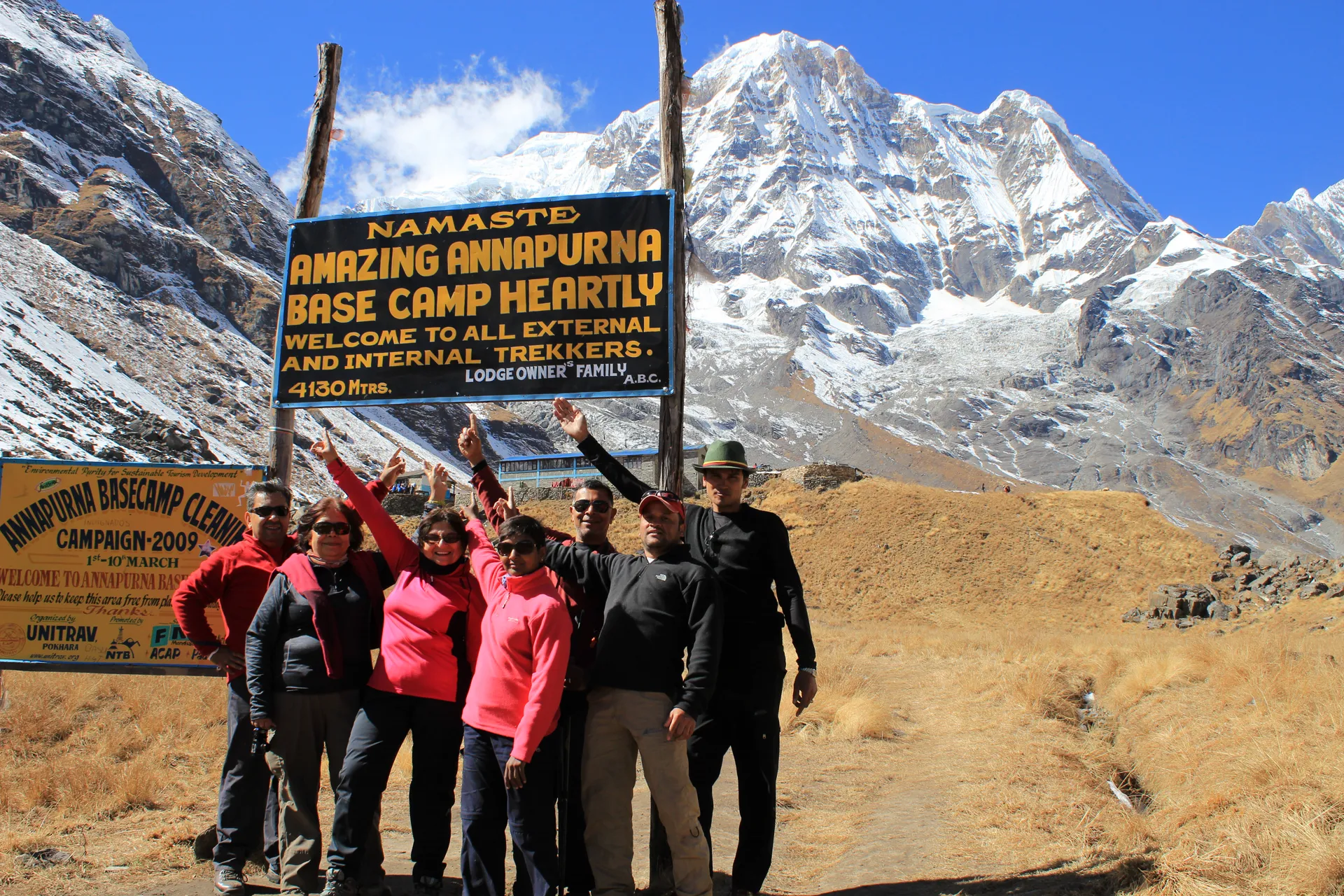
Annapurna circuit vs Everest Base Camp is the most common fork in our inbox, and the honest answer is shape, not difficulty: EBC is an out-and-back to one famous point, the circuit is a loop that never repeats a day. The Annapurna Base Camp Trek is shorter and lower if 16 days is too many, and the Manaslu Circuit Trek is the quieter, wilder cousin for trekkers who want a loop with a fraction of the foot traffic. Best time: October and November for the sharpest skies, March and April for rhododendrons and warmer valley days. Winter crossings of Thorong La happen in clear windows but hinge on snow, and monsoon largely spares the rain-shadowed upper valley even as it soaks the lowlands.
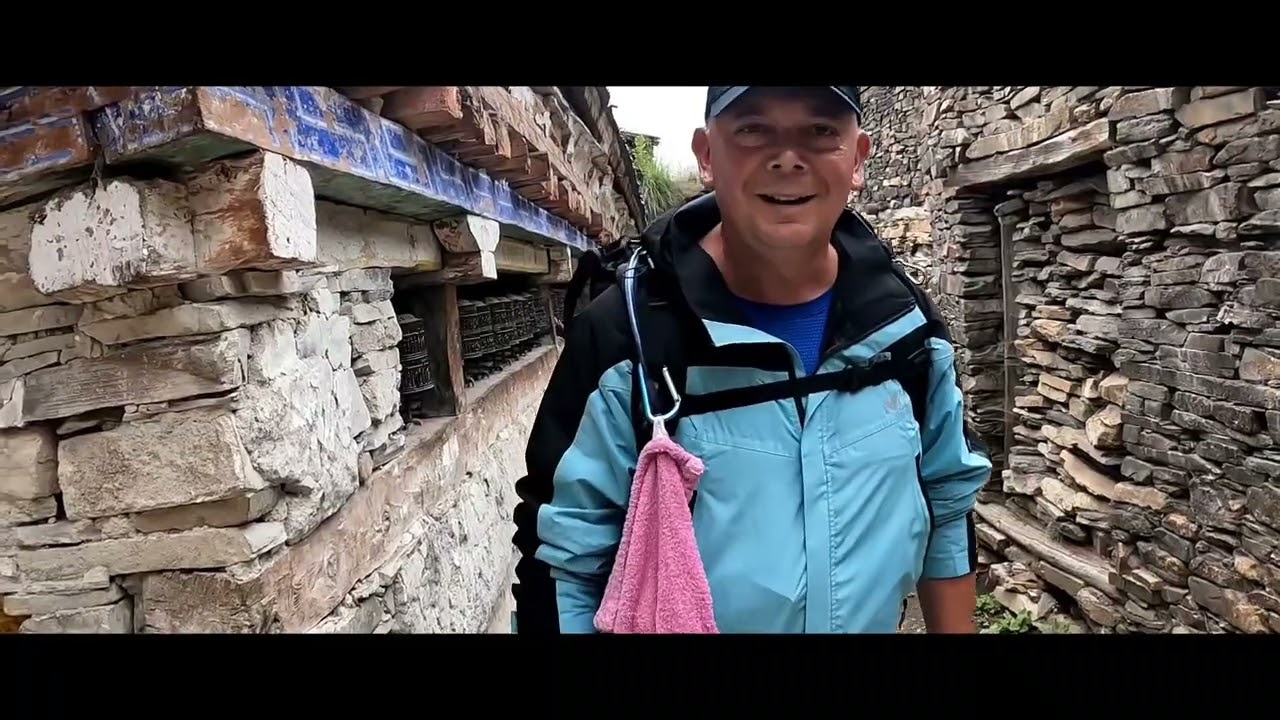
Since April 2023 a licensed guide is mandatory for foreign trekkers across the Annapurna Conservation Area, so the question can I trek annapurna circuit without a guide now has a legal answer, not just a safety one. Our guides are TAAN-licensed locals who cross Thorong La dozens of times a season, and our founder Prem Pandit still walks the circuit himself, the footage on this page is his. If you are weighing Nepal's two great circuits against each other, our Manaslu Circuit guide makes the comparison in detail. Our annapurna circuit trek nepal departures run September through May: pick your season, book the dates, and let us handle every permit, bed, and meal between Kathmandu and the pass.