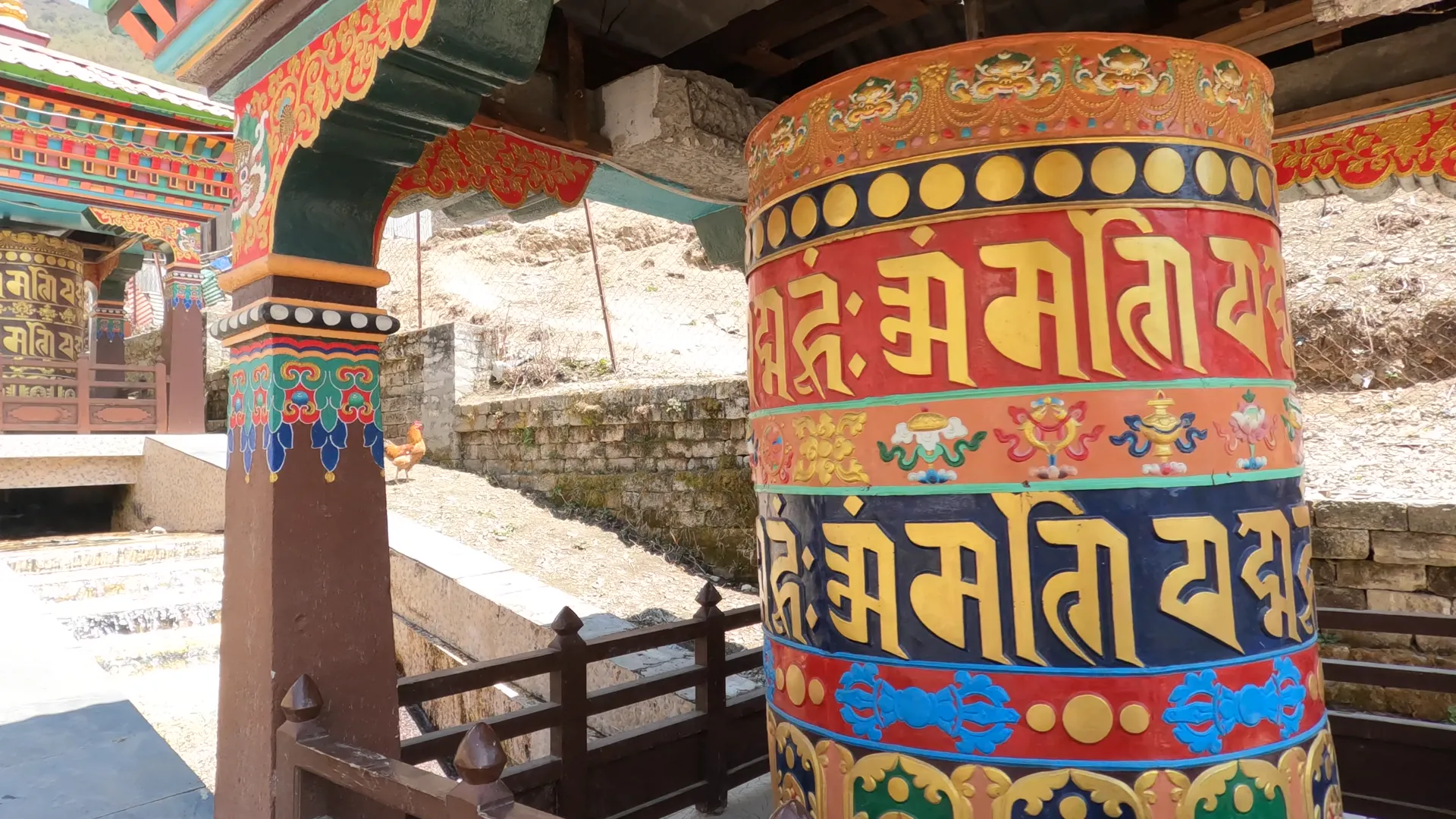
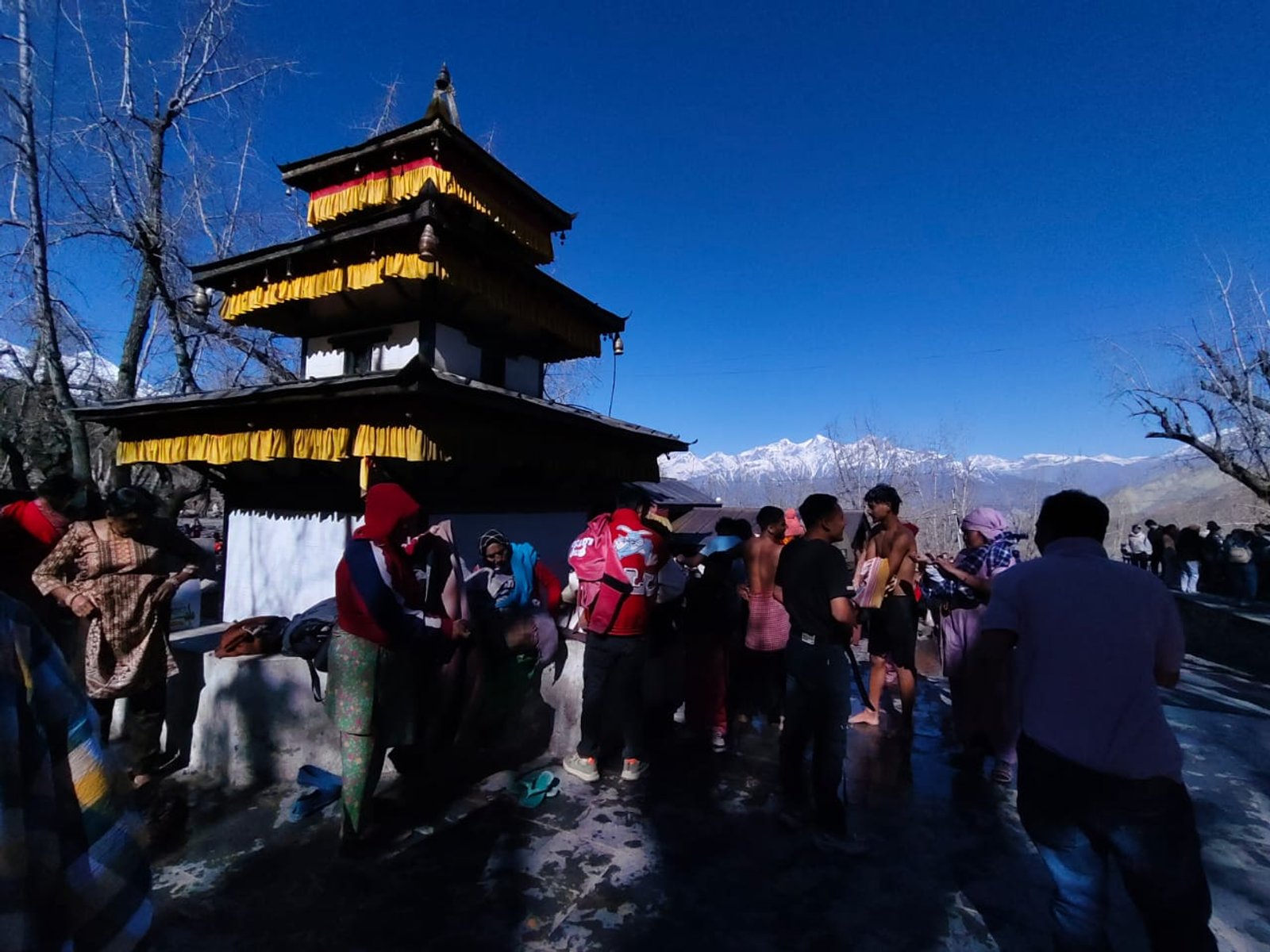
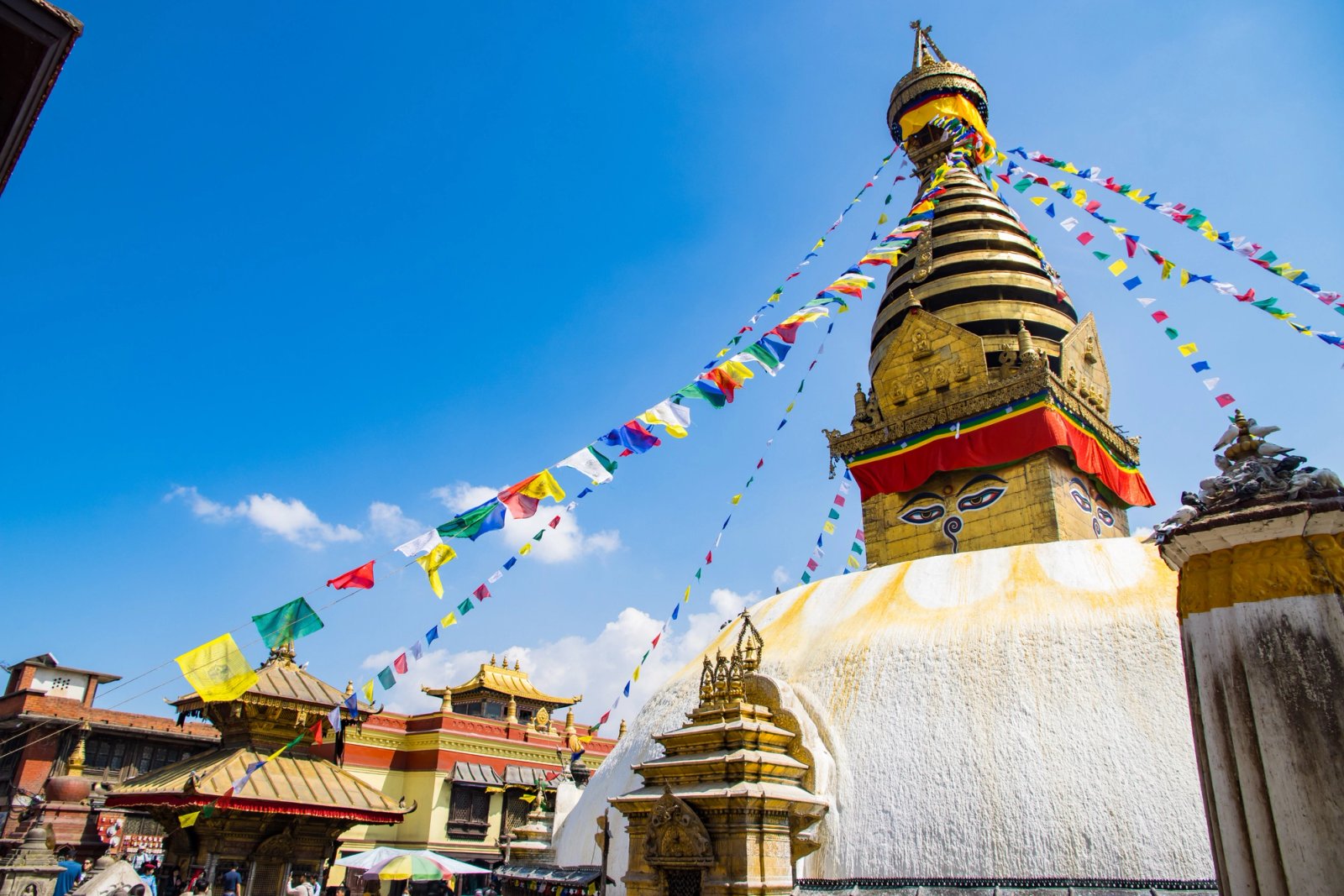
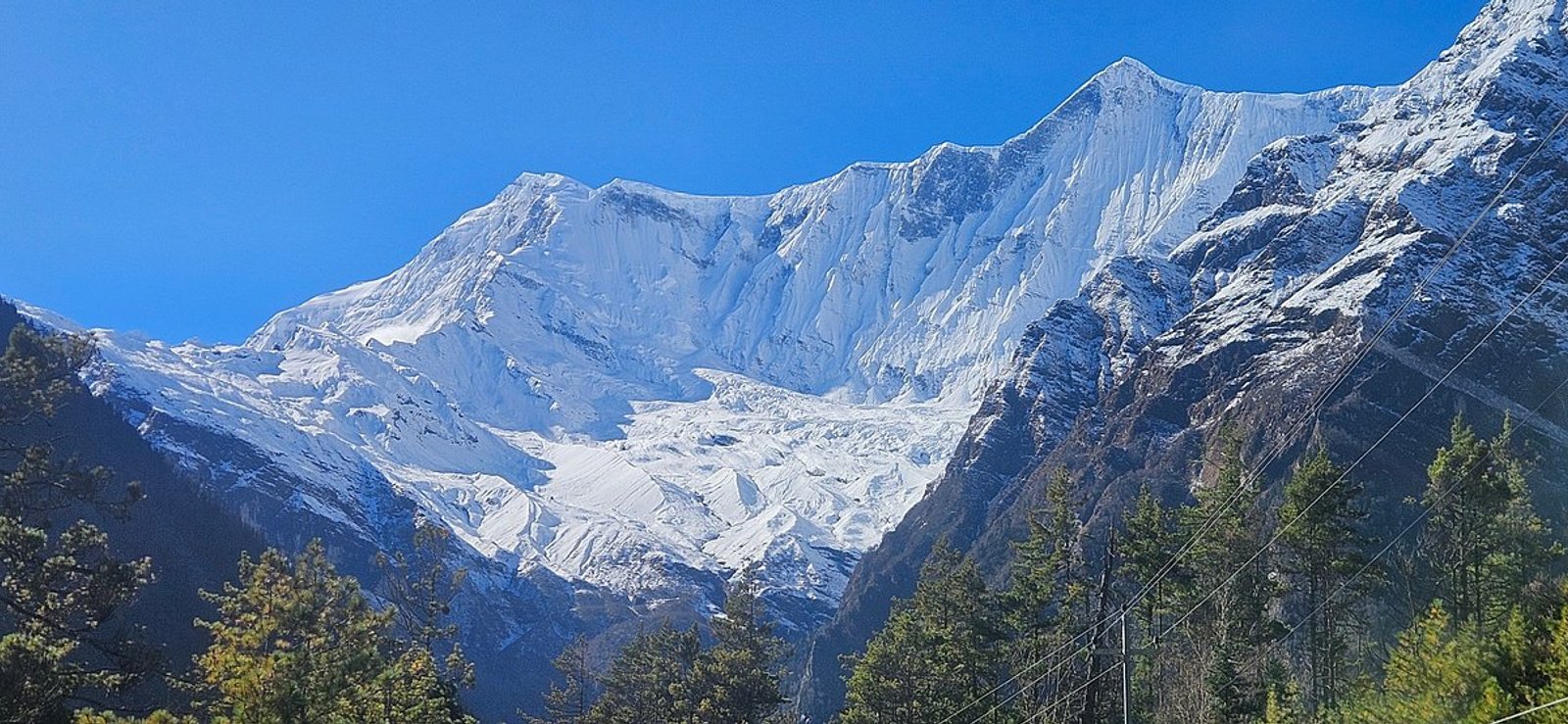
Damodar Kunda is not one lake. It is a cluster of three small holy ponds, Tamra Kund, Rajat Kund and Neel Kund, sitting in a bowl of scree below the Damodar Himal near Nepal's border with Tibet. The water is held to rise here and travel underground before surfacing as the Kali Gandaki, which is why the Puranic tradition treats a dip in the kunda as bathing in the river at its purest point. The name Damodar belongs to Vishnu in his child form: dama means rope, udara means belly, and the name recalls the infant Krishna tied at the waist by Yashoda. Pilgrims who complete darshan at Muktinath and then reach Damodar Kunda are held to have finished the full circuit of the Mukti Kshetra, the field of liberation. Hundreds make the journey each August on the full moon of Janai Purnima. Most of the year, the lakes sit alone under the wind.
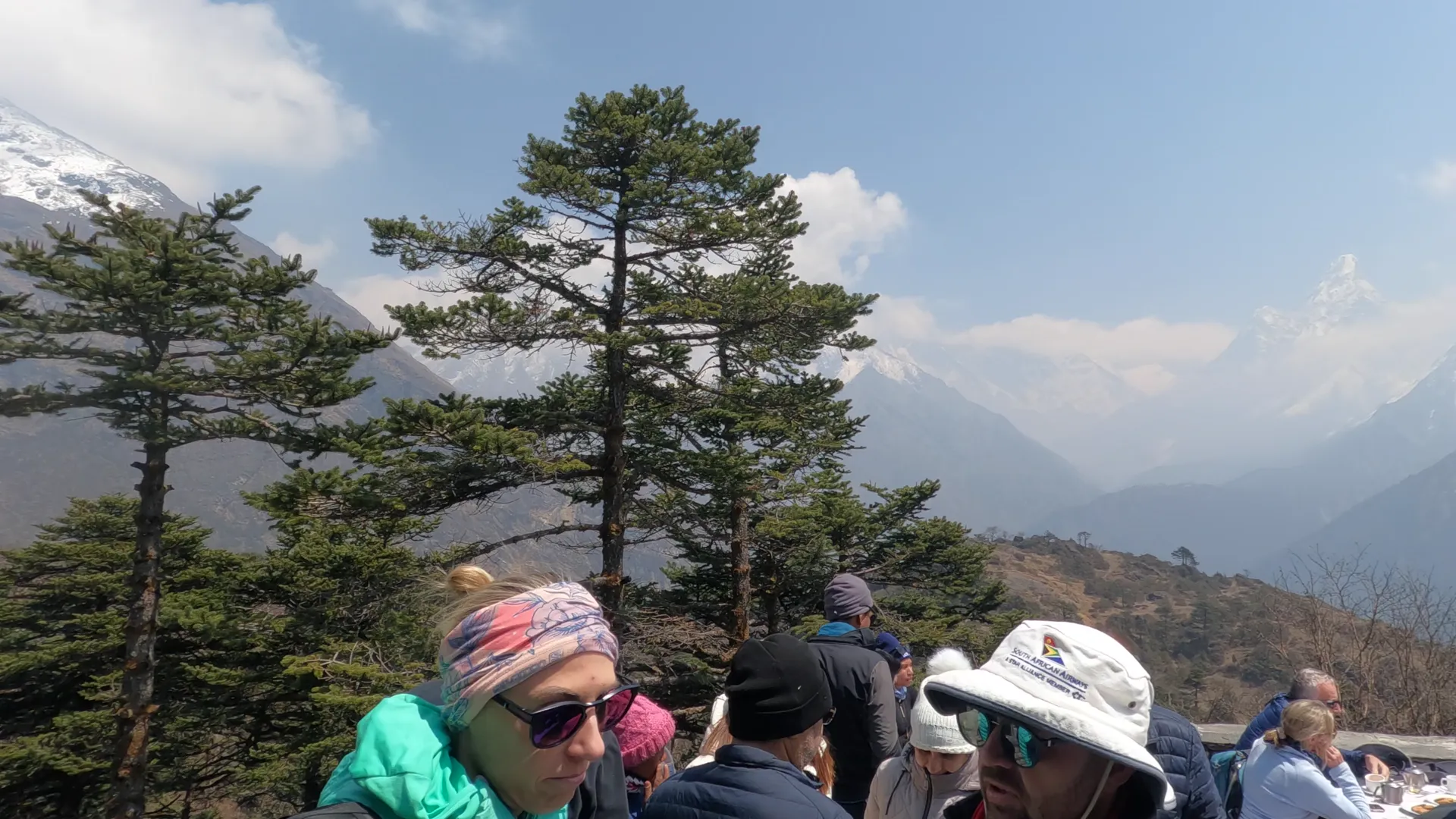
Be clear about what the ponds look like, because we would rather you hear it from us than feel misled at 4,890m. They are small. The trip reports that describe them honestly call them not much bigger than swimming pools, and after five days of driving and a full day in the saddle, that surprises people who expected a second Tilicho. The point of Damodar Kunda was never scale. The point is what the water is: the believed source of a river that carries the body of Vishnu downstream as black stone fossils, in a place so hard to reach that arriving is itself the offering. The Himalayan panorama around the bowl, with the Damodar peaks behind, does the rest.
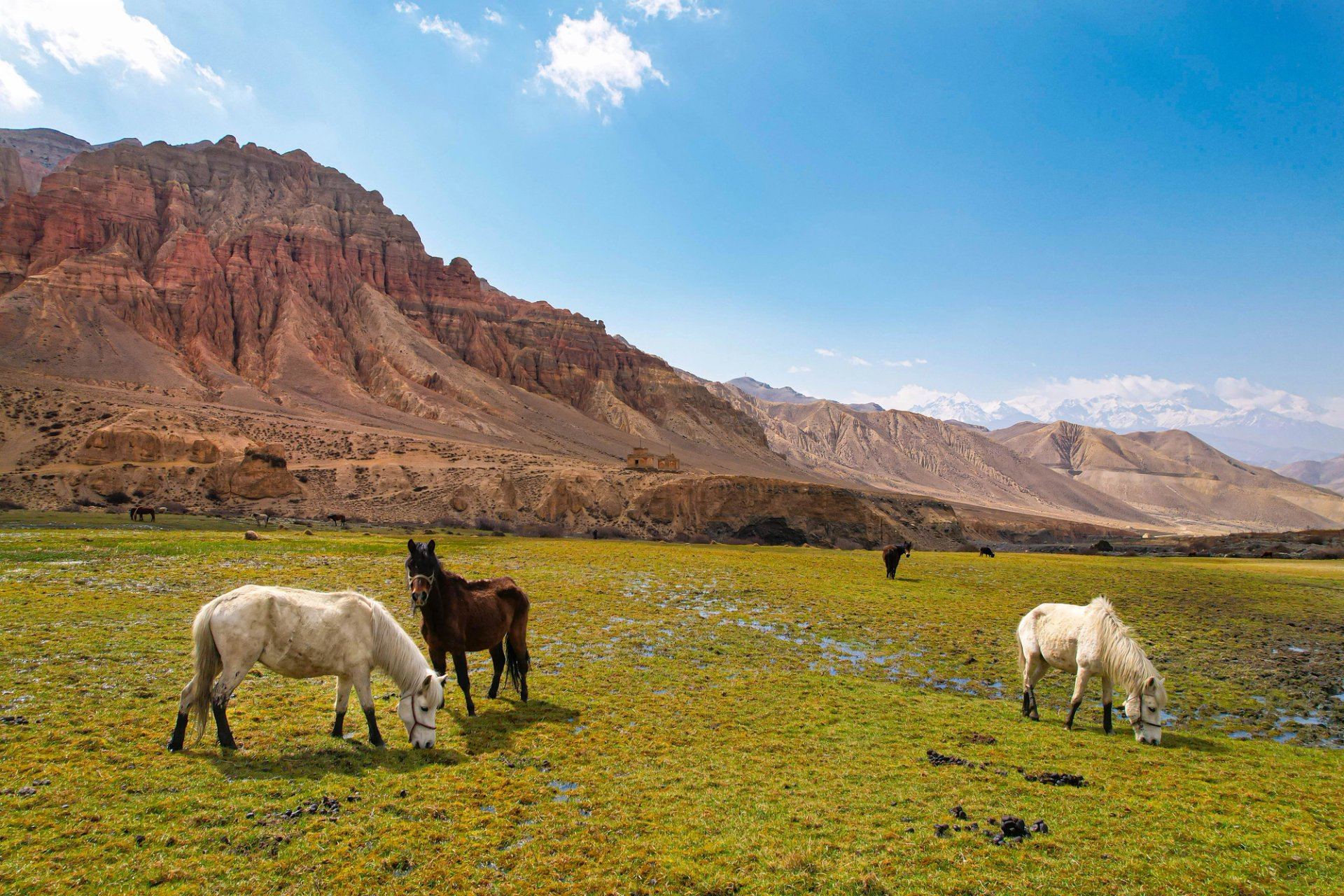
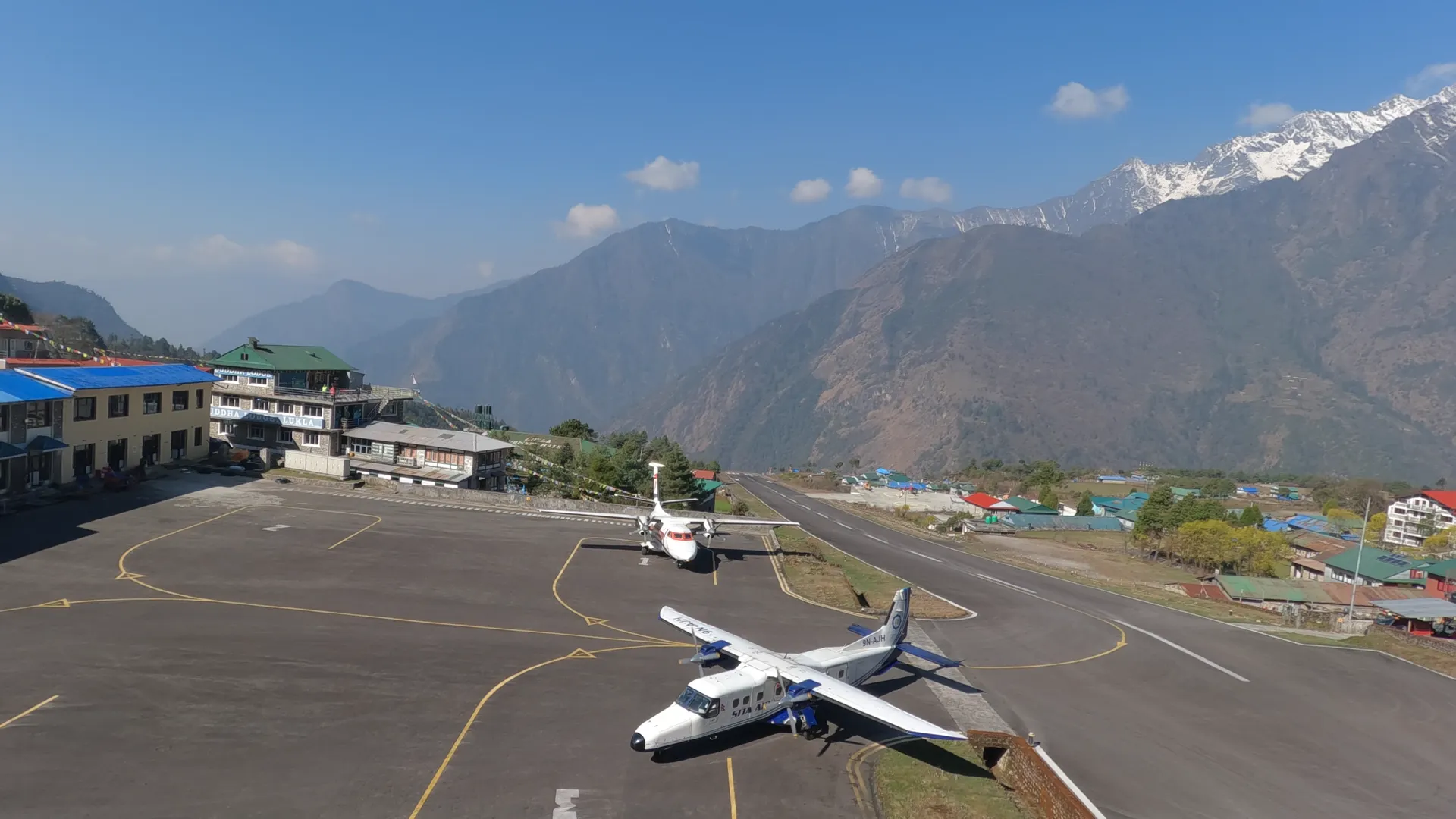
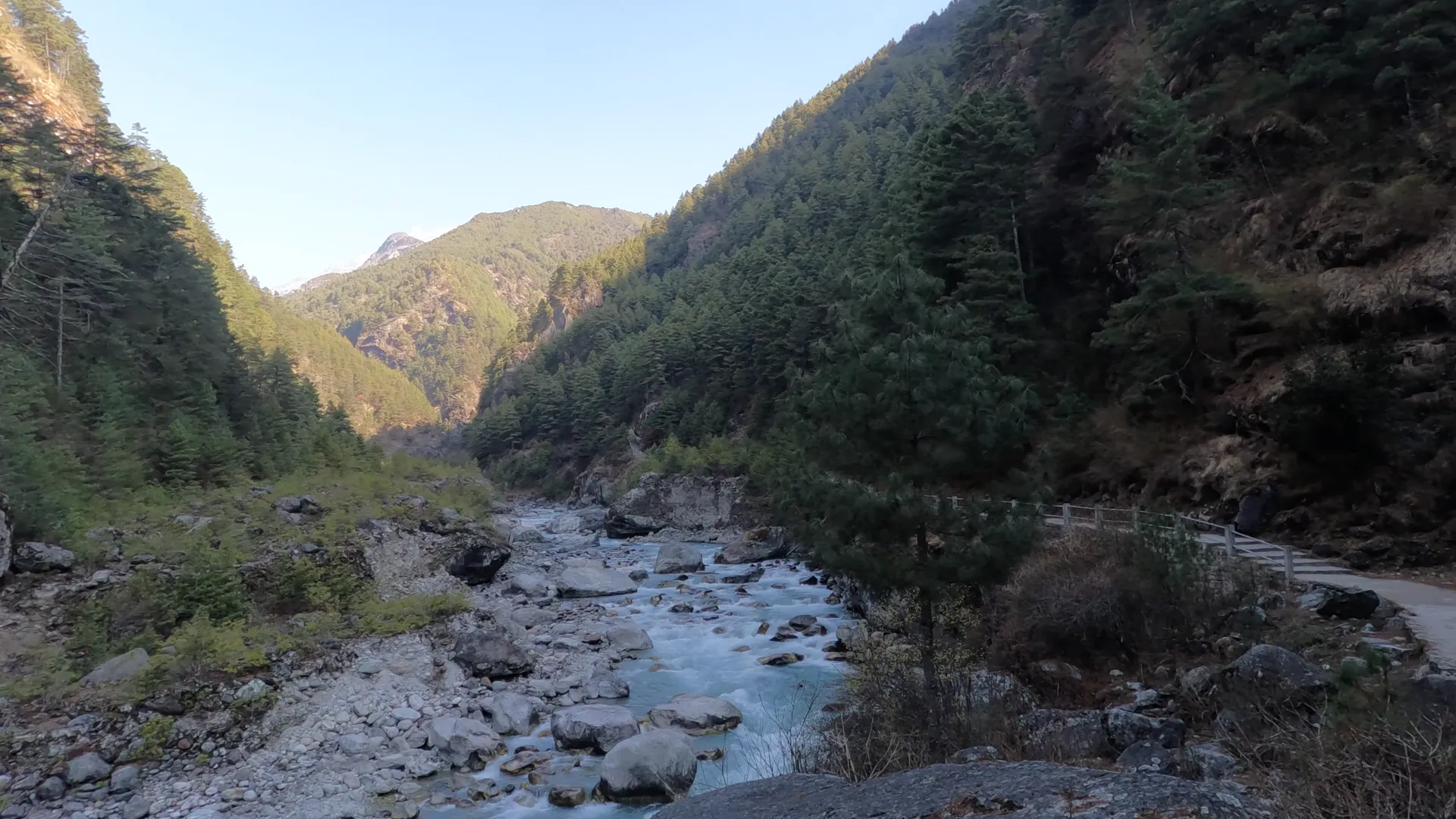
The tour is also, mile for mile, one of the great road journeys in Nepal. From Pokhara the road follows the Kali Gandaki gorge past Tatopani and Marpha into Jomsom, then crosses into the restricted zone north of Kagbeni, where the landscape turns to wind-cut desert in ochre and grey. You pass the cliff villages of Samar (3,620m) and Tsarang (3,560m), the royal walled city of Lo Manthang (3,840m), and the sky caves of Chhoser (about 3,975m), rooms cut into vertical cliff faces by people nobody has conclusively identified. South of Lo Manthang the jeep swings east to Yara (3,650m) and the cave monastery of Luri Gumba at about 4,000m, then climbs the rough seasonal track to Ghuma Thanti at approximately 4,750m. Thanti means rest house. It is a cluster of seasonal pilgrim shelters, tin roofed and doorless, and sleeping there with the camp equipment we carry is part of what makes this route feel like a true yatra rather than a sightseeing loop.
The horse day is the heart of the tour. From Ghuma Thanti the trail climbs to a pass at roughly 5,300m, recorded by GPS at 5,320m on the crossing, before dropping to the kunda at 4,890m. It is 15 to 18 km each way and six to eight hours round trip in the saddle. The horses are local, surefooted and handled by men who make this crossing all season; you ride the climbs and flats, and walk short steep downhill sections on foot for safety, as every pilgrim does. No riding experience is needed. If you have never been on a horse, you will be led at walking pace the entire way. This single day replaces what was, until the road reached Ghuma Thanti, a camping trek of up to 20 days from Jomsom.
Some pages sell this route with a 5,600m pass, and the competitor page for this exact itinerary prints a maximum altitude of 5,400m in one section and 4,890m in another. Neither figure survives checking. The lake is at 4,890m. The pass between Ghuma Thanti and the lake is approximately 5,300m, and that is the highest point you reach on this tour. We publish both numbers separately because they answer different questions: how high you sleep (never above the shelter at about 4,750m) and how high you ride (the pass, once, for under an hour). If an operator quotes you a single altitude for Damodar Kunda without saying which of these they mean, ask.
Permits changed in December 2025, and most of what you will read elsewhere is out of date. The Upper Mustang restricted area permit is now USD 50 per person per day for the days you actually spend inside the zone. The old rule, USD 500 flat for 10 days, was abolished effective 22 December 2025, and the two-person minimum for restricted permits was scrapped in March 2026, so solo pilgrims can now book this tour without a permit partner. Our route spends nine days inside the restricted zone, from the afternoon we pass the Kagbeni checkpoint to the morning we exit, which means about USD 450 in restricted-area fees per person. We arrange this, the Annapurna Conservation Area Permit, and every checkpoint registration, and all of it is included in the tour price. Details on how Nepal's permit system works are in our trekking permits guide.
Damodar Kunda is the traditional source of the shaligram, the black ammonite fossil that Vaishnava Hindus worship as a direct, aniconic form of Vishnu. The stones are 100 million years and more old, seabed creatures from before the Himalaya rose, and they wash down the Kali Gandaki to the riverbeds near Kagbeni and Muktinath where pilgrims find them. The shila given to Nepal for the Ram Mandir idols in Ayodhya came from this river. At the kunda itself the ponds are small and the shilas are found in the drainages below, so do not expect to lift museum pieces from the holy water. A pilgrim may keep a small stone for personal worship; commercial collection and export are prohibited under Nepali law and the Mustang checkpoints do search for it. Your guide will show you what a true shaligram looks like and where looking is allowed.
August is the pilgrimage month. On Janai Purnima, the full moon of Shrawan, hundreds of Nepali and Indian pilgrims ride and walk to the kunda for a holy dip; in 2026 the festival falls on Friday 28 August. An August yatra here works because Upper Mustang sits in the rain shadow of the Annapurna and Dhaulagiri massifs and receives a fraction of the monsoon that soaks the rest of Nepal, though the access roads south of Jomsom can still be slow and muddy in monsoon. For the sharpest mountain light, September and October are the pick. We do not sell this tour from December to February: the pass holds snow, the shelters at Ghuma Thanti stand empty, and no darshan is worth a winter crossing at 5,300m.
If you cannot spare 15 days, there is a shortcut, and unlike most operators we will tell you what it honestly costs. A Muktinath Damodar Kunda helicopter tour flies from Pokhara in about an hour each way, lands briefly at the lake, and typically adds a Muktinath darshan stop on the return. Shared seats, when a charter is filling, run around USD 1,000 to 1,300 per person; a private charter for up to five passengers runs roughly USD 4,500 to 5,000 and moves with fuel prices. Passengers still need the restricted area permit and ACAP. The helicopter buys you the darshan and costs you the yatra: no Lo Manthang, no sky caves, no Ghuma Thanti night, no horse crossing. We arrange the Damodar Kunda helicopter tour on request, and we recommend the road.
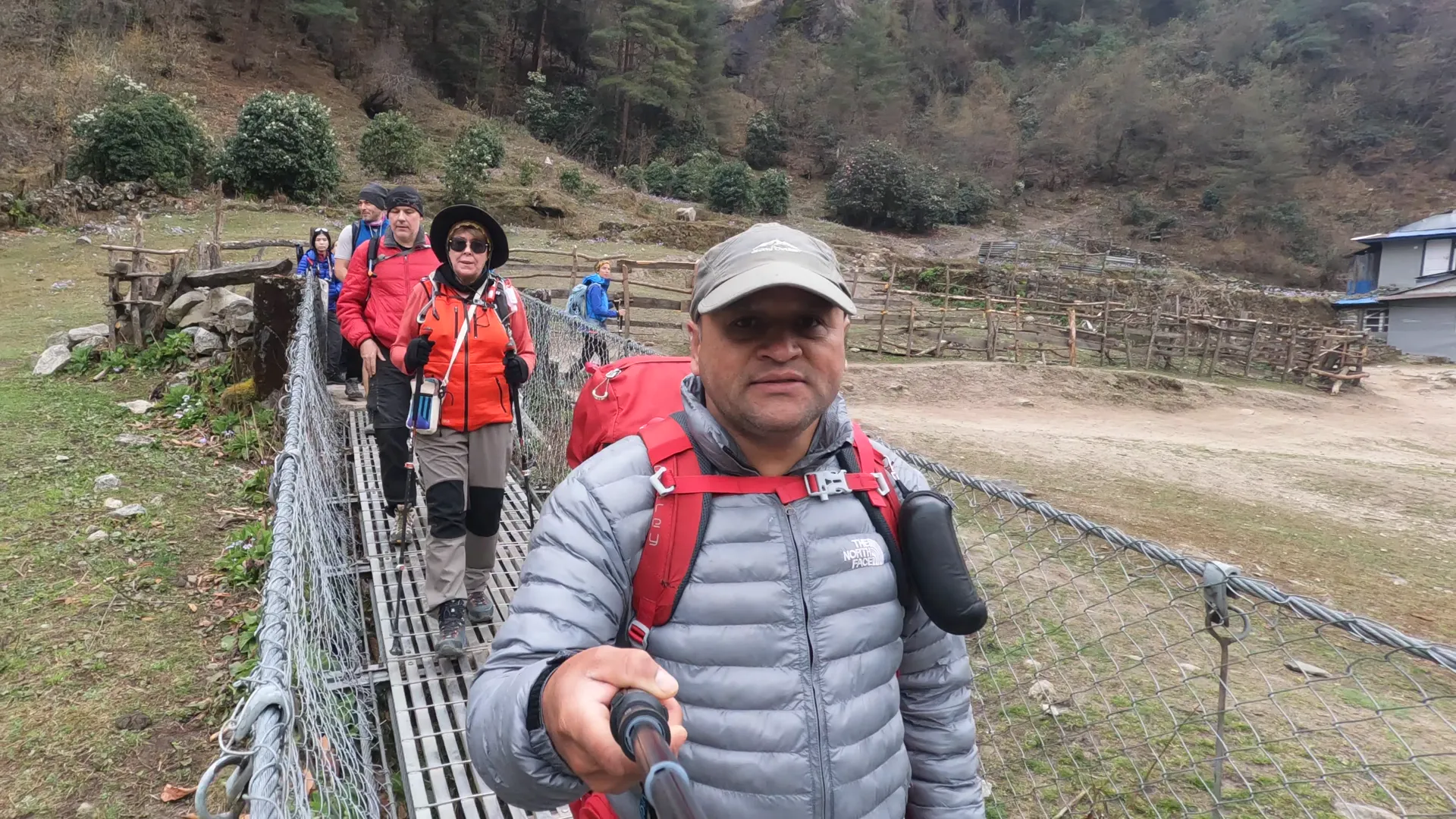
This is a listing you should compare carefully, because a damodar kunda tour package is easy to quote low and pad later. Ours includes all three meals every day, every permit at the new 2026 rates, the Kathmandu and Pokhara hotels, the mountain guesthouses, the tented camp night with equipment at Ghuma Thanti, the private 4WD for the full route, the horses and their handlers for the crossing day, the Pokhara to Kathmandu flight on the return, and a licensed English-speaking guide from pickup to drop-off. Mountain Hawk Trek is a Kathmandu operator registered with the Nepal Tourism Board, and Prem Pandit's team runs the Mustang corridor season after season, the same team behind our Upper Mustang Jeep Tour. The price you see in the table below is the price you pay.