Muktinath Temple Tour
Mountain Hawk Trek
Other RegionEasy

Sacred Pilgrimage toMuktinath Temple

Drive through the world's deepest gorge to Muktinath Temple at 3,800m in Mustang. Bathe under the 108 sacred water spouts, witness the Jwala Mai eternal flame where fire burns alongside water, and explore the medieval village of Kagbeni at the gate to Upper Mustang. All meals, private jeep, licensed guide, ACAP permit, and accommodation included.

View Itinerary
Trusted by 500+ trekkers on these trails
Trip Highlights

The moments that matter most

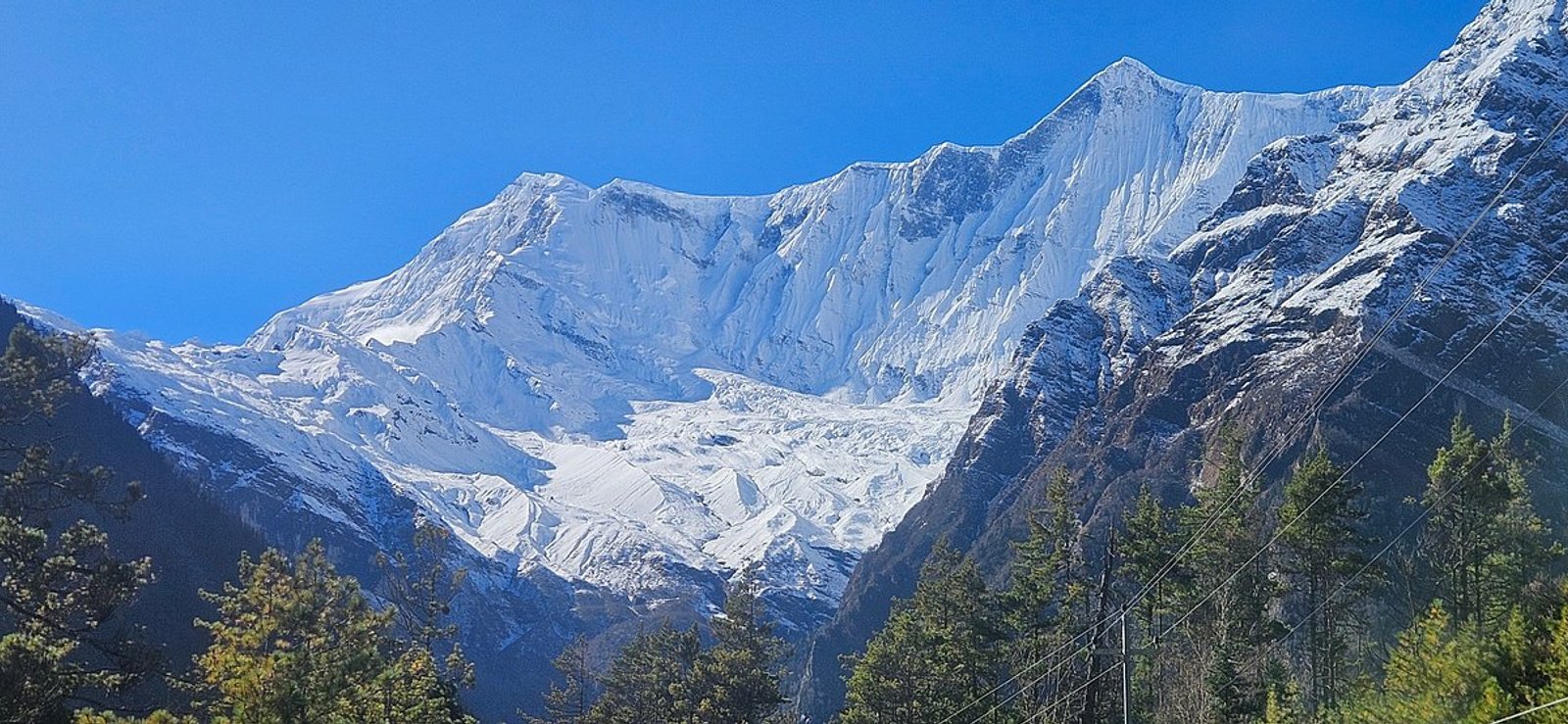
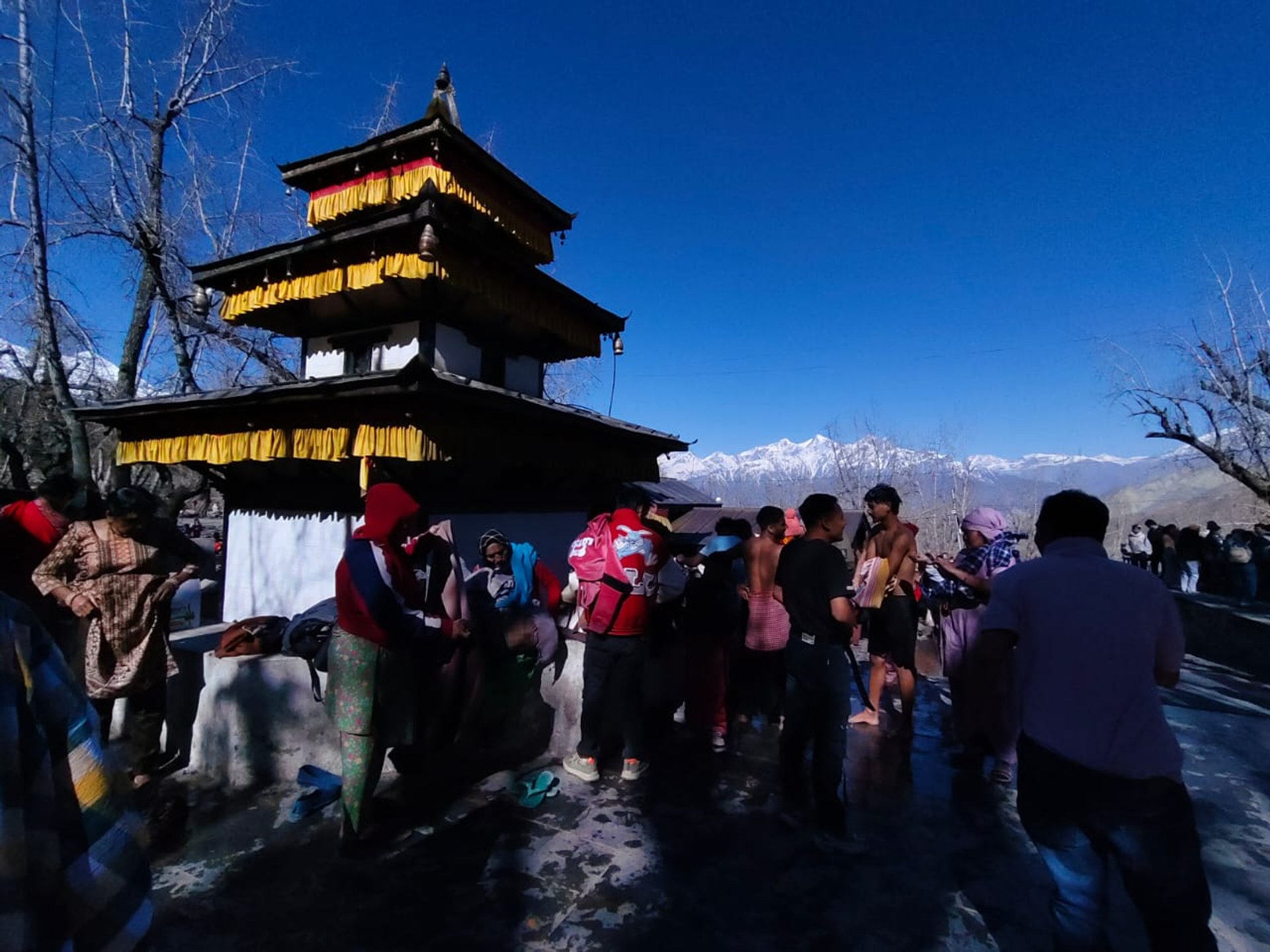
Muktinath is one of the 108 Divya Desams, the holiest Vishnu temples recognized in Vaishnavite tradition, and the only one located above 3,000 metres. You stand at 3,800m on a plateau in Mustang with the Annapurna and Dhaulagiri ranges filling the sky behind the pagoda-roofed shrine. The 108 water spouts pour glacial meltwater through stone bull-head faucets. Pilgrims who complete the full circuit believe the act washes away accumulated sins from 108 past lives. Below the spouts, the Jwala Mai shrine holds a flame that has burned continuously for centuries, fed by natural gas, alongside flowing water in the same small chamber. This is the place Hindu scriptures call Mukti Kshetra, the field of liberation. Buddhist practitioners from the Tibetan tradition know the same site as Chumig Gyatsa and come here to honour Guru Rinpoche.

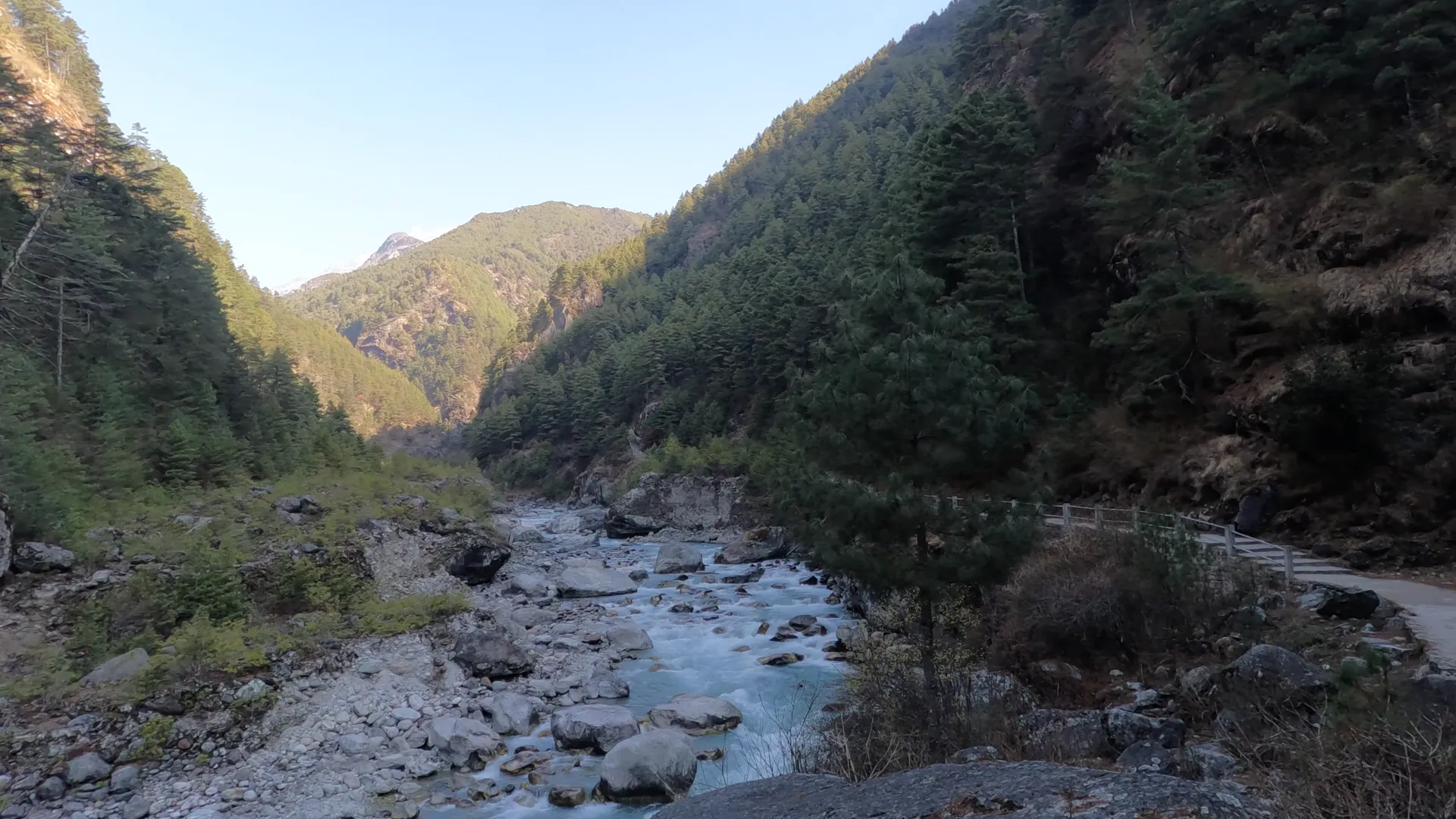
The drive from Pokhara to Muktinath passes through the Kali Gandaki gorge, measured as the deepest gorge on earth when calculated from the summits of Dhaulagiri (8,167m) on the west and Annapurna I (8,091m) on the east to the river floor at approximately 2,520m. The road follows the river northward through terrain that shifts from green subtropical forest to dry, wind-cut Mustang desert in a single day. You pass the 50-metre Rupse waterfall dropping from a cliff beside the road, drive through the Thakali villages of Lete and Tukuche, and stop at Marpha to walk whitewashed stone alleys lined with apple orchards and a Buddhist monastery.

Kagbeni is a 15th-century fortified village at 2,810 metres, sitting at the confluence of the Kali Gandaki and Jhong Khola rivers. The flat-roofed mud and stone houses, red-walled monastery, and narrow winding streets are architecturally closer to the Tibetan plateau than to the Kathmandu Valley. The village marks the gateway to Upper Mustang, the restricted area beyond which requires a separate $500 USD permit. On this tour, Kagbeni is where you spend time exploring one of the most visually distinct and historically preserved settlements in Nepal.

Tatopani sits at 1,190 metres on the banks of the Kali Gandaki and translates literally as "hot water." Natural geothermal springs produce water at 40 to 45 degrees Celsius, channelled into stone-lined bathing pools beside the river. After the altitude and cold of Muktinath at 3,800m, soaking in Tatopani on the return is both physically restorative and one of the moments people remember most clearly from this tour. The lower elevation also provides relief from any lingering altitude effects.

The Muktinath corridor runs through Thakali country, and the cuisine is distinct from anything you eat in Kathmandu or Pokhara. Thakali dal bhat is prepared with local ghee, jimbu (a Himalayan herb related to chives), and seasonal greens. Marpha is famous across Nepal for its apple products: fresh apples in season (September through November), dried apple rings, apple jam, and a locally distilled apple brandy that is technically illegal to export but available at every guesthouse in the village. Jomsom's restaurants serve buckwheat pancakes and yak steak alongside the standard rice and lentil set.

Every breakfast, lunch, and dinner for the full 6 days is included in the tour price. The ACAP conservation permit is included. The private jeep, licensed English-speaking guide, and all accommodation are included. There is no moment on this tour where you need to negotiate, arrange, or pay for a service that was supposed to be covered. We publish a transparent pricing table with per-person rates by group size because we believe you should compare packages on equal terms, not discover that meals, permits, and return transport were excluded after you booked.

Muktinath sits at 3,800m (12,467 feet), above the threshold where acute mountain sickness can develop. The itinerary builds in an overnight at Jomsom (2,720m) before ascending the final 1,080 metres to the temple. Your guide carries a pulse oximeter and a first-aid kit with Diamox (acetazolamide). The descent to Tatopani (1,190m) after the temple visit provides rapid altitude relief. Jomsom has a domestic airport (JMO) for emergency flights to Pokhara, and helicopter evacuation can be arranged through your travel insurance provider. We publish this because no other Muktinath tour operator in Nepal does, and we think you should know how your operator handles altitude before you pay.

Muktinath pairs naturally with Pashupatinath Temple in Kathmandu (the holiest Shiva temple in Nepal) and Manakamana Temple in Gorkha district (accessible by cable car, dedicated to the wish-fulfilling goddess). Together, these three form the core of Nepal's Hindu pilgrimage circuit. Our extended 7-day itinerary includes all three. For travellers interested in a wider Nepal temple tour, our itinerary can also incorporate Lumbini (birthplace of the Buddha, 280 km southwest of Kathmandu) and Janakpur Dham (birthplace of Sita, 400 km southeast of Kathmandu) as add-on days.

Trip Overview

A closer look

The Muktinath temple tour is a 6-day Muktinath yatra and sightseeing journey from Kathmandu through Nepal's Mustang district to the sacred Muktinath dham at 3,800 metres. This Muktinath darshan package takes you to Muktinath Temple Nepal, one of the holiest Vishnu temples in the world, for a guided Muktinath pilgrimage tour that covers the complete ritual circuit. You travel by private jeep along the Kali Gandaki gorge, the deepest gorge in the world, with views of Dhaulagiri (8,167m) and the Annapurna range rising on either side. The route passes through Pokhara, Beni, Tatopani's natural hot springs, the apple orchards of Marpha, the trading town of Jomsom, and the medieval village of Kagbeni before climbing to the temple complex at Ranipauwa. Muktinath is sacred to both Hindus and Buddhists. Hindus know it as one of the 108 Divya Desams, the holiest Vishnu temples. Buddhists call it Chumig Gyatsa, the Hundred Springs, and associate it with Guru Rinpoche (Padmasambhava). The tour includes all meals, accommodation, ACAP permit, licensed guide, and a private vehicle for the full duration.

Muktinath Temple sits on a high plateau above the village of Ranipauwa in the Mustang district of Nepal. The main pagoda-style temple houses a golden idol of Vishnu, known here as Mukti Narayana, the Lord of Liberation. Below the main shrine stand the 108 water spouts (Mukti Dhara), arranged in a long row of stone bull-head faucets. Pilgrims bathe under each spout in sequence, a purification ritual that Vaishnava texts describe as one of the most powerful acts of spiritual cleansing available at any tirtha in South Asia. Next to the spouts sit two sacred kunda ponds, Brahma Kunda and Vishnu Kunda, used for ritual immersion before the Mukti Dhara circuit. Below the temple complex, the Jwala Mai shrine holds an eternal flame fed by natural gas seeping through the earth. Fire burns alongside flowing water inside the same chamber, a phenomenon Hindu tradition reads as the unity of the five elements under Vishnu's protection. Buddhist tradition associates the flame with the protective deity Dorje Phagmo.

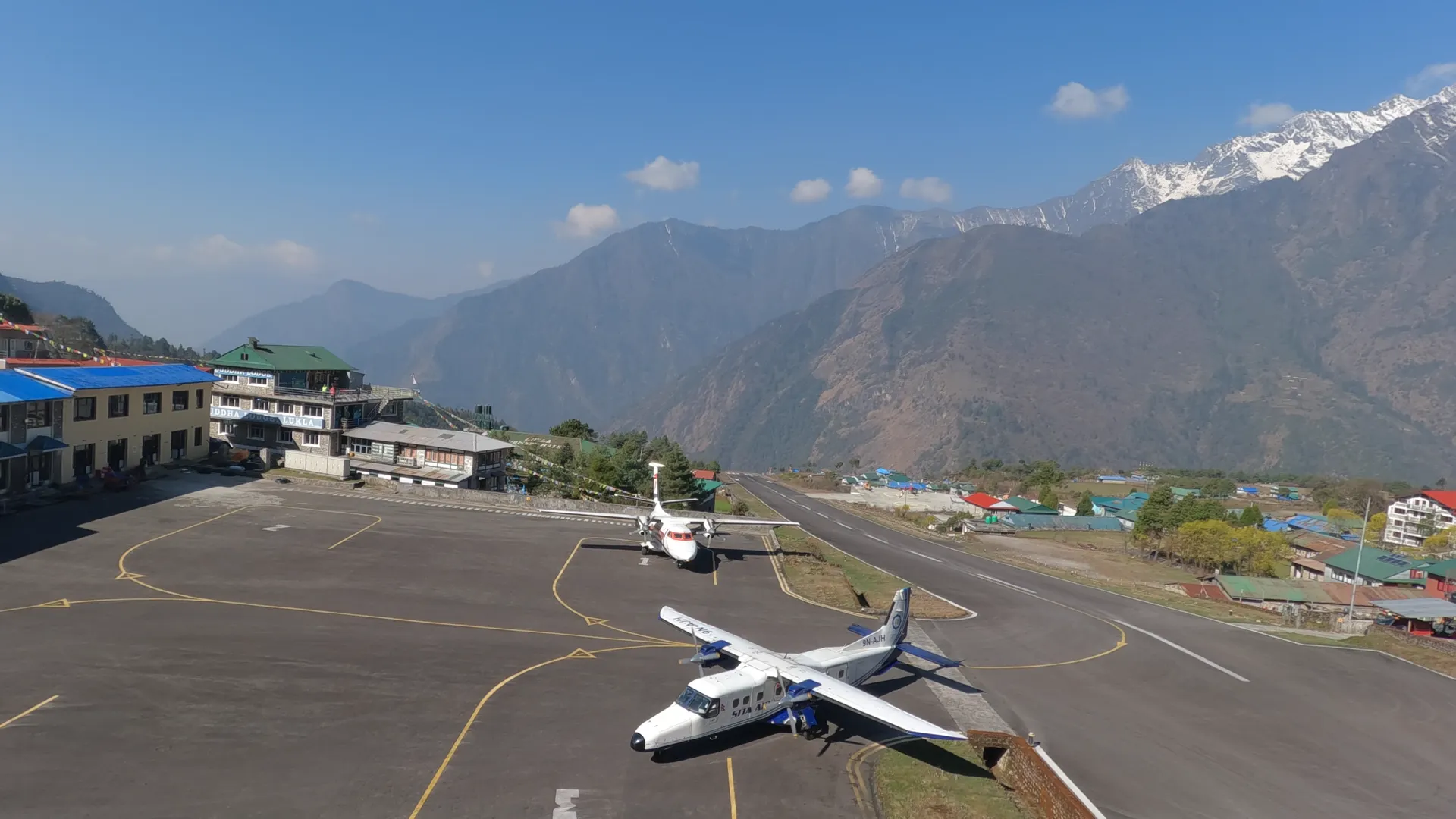
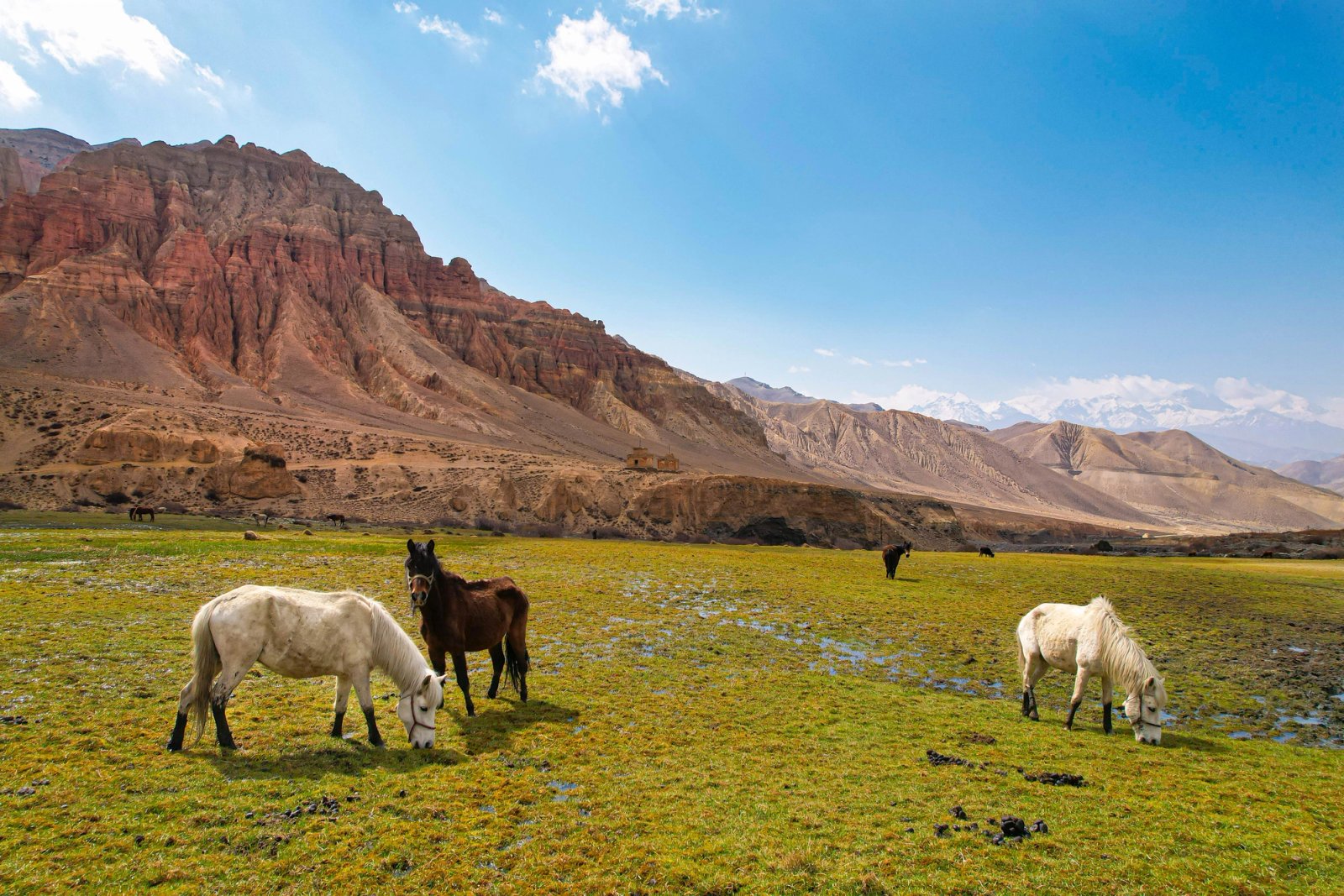
The drive from Pokhara to Muktinath follows the Kali Gandaki Highway through a landscape that changes every hour. South of Beni, the road passes through subtropical forest, terraced rice paddies, and the Magar villages of the Myagdi corridor. At Tatopani (1,190m), natural hot springs bubble out of the riverbank at 40 to 45 degrees Celsius. North of Ghasa, the valley narrows into the Kali Gandaki gorge, flanked by Dhaulagiri on the west and the Annapurna massif on the east. Rupse Waterfall drops 50 metres from a cliff face directly beside the road. Beyond Lete and Dana, the terrain shifts to the dry, wind-scored landscape of lower Mustang. Marpha (2,670m) is a Thakali village known for its apple orchards and locally distilled apple brandy. Jomsom (2,720m) is the administrative capital of Mustang, with an airport, a bazaar, and the last reliable ATM before Muktinath. Kagbeni (2,810m), a 15th-century fortified village at the gateway to Upper Mustang, sits at the confluence of the Kali Gandaki and Jhong Khola rivers, with a red-walled monastery and prayer-flag-strung streets that feel closer to Tibet than to Kathmandu.

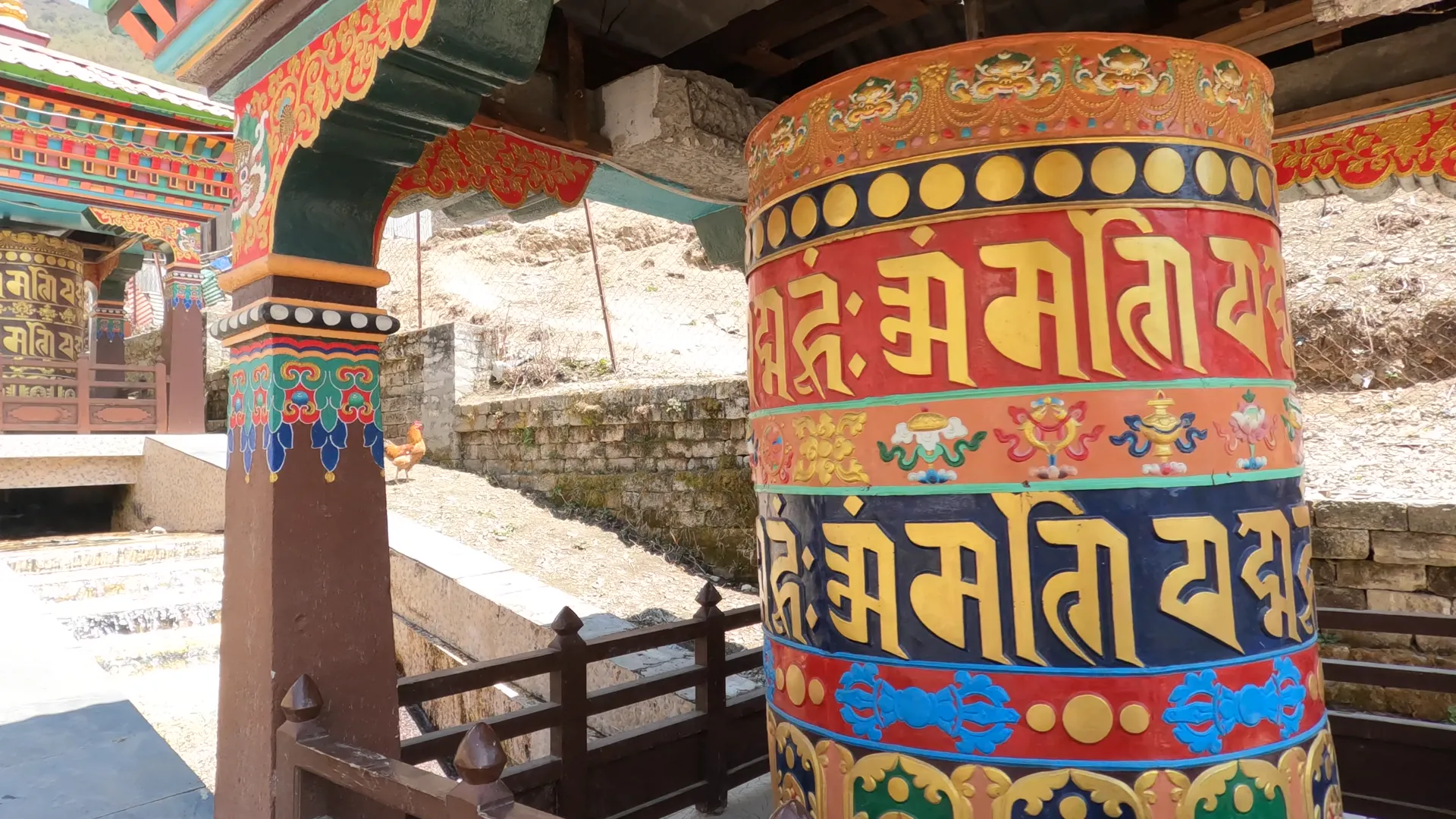
Muktinath translates as Lord of Liberation. The Gandaki Mahatmya and the Skanda Purana name this site among the most potent tirthas for achieving moksha, the permanent release from the cycle of birth, death, and rebirth. Hindu pilgrims believe that bathing under the 108 Mukti Dhara and receiving darshan of the deity breaks karmic bondage regardless of the pilgrim's prior spiritual state. The number 108 appears throughout Vedic and Buddhist cosmology: 108 names of Vishnu, 108 beads on a japa mala, 108 defilements recognized in Buddhist psychology. Completing the full bath is a symbolic cleansing of all 108 past lives. For Buddhists from the Tibetan tradition, Muktinath is Chumig Gyatsa, linked to the great tantric practitioner Padmasambhava (Guru Rinpoche), who is said to have meditated here. The Namgyal Gompa, a small Buddhist monastery adjacent to the main temple, maintains its own liturgical schedule independent of the Hindu priests. Both traditions share the physical space without conflict.

The Kali Gandaki riverbed near Muktinath and Kagbeni contains shaligram stones, ammonite fossils dating to the Jurassic period (approximately 140 million years ago). Hindu devotees regard shaligrams as aniconic forms of Vishnu himself. Each stone is identified by its spiral markings, which correspond to specific manifestations of the deity. Priests at Muktinath use particular shaligrams in daily puja rituals. The fossils cannot be bought or sold for profit under orthodox custom; they are received as gifts or collected personally from the sacred riverbed near Kagbeni. If you are interested in seeing shaligrams in their natural geological context, your guide will walk you along the river section between Kagbeni and Ekle Bhatti, where the black stones are most commonly found among the smooth grey river cobbles.

The Muktinath tour by jeep from Kathmandu runs 6 days and covers approximately 1,100 km of road travel (round trip). Day 1 transfers from Kathmandu to Pokhara (206 km, 6 to 7 hours by tourist vehicle via Prithvi Highway). Days 2 through 5 use a private 4WD jeep for the mountain road, which is paved through Beni but unpaved and rough beyond Tatopani. The final 21 km from Jomsom to Muktinath climbs 1,080 metres in elevation over recently blacktopped road. The ACAP permit (Annapurna Conservation Area Project, NPR 3,000 for foreign nationals, NPR 100 for SAARC nationals) is included in the tour price and handled by your guide before departure. All meals (breakfast, lunch, and dinner) are included every day of the tour. Accommodation is in 3-star hotels in Kathmandu and Pokhara, and in clean mountain guesthouses with hot water at Tatopani, Jomsom, and Muktinath village. For a full breakdown of Nepal trekking permits, see our trekking permits guide.

There is no formal entrance fee to Muktinath Temple itself. The ACAP conservation permit covers access to the entire Mustang corridor. Donations at the temple are voluntary: pilgrims typically offer NPR 100 to 500 to the priest inside the main shrine in exchange for tika and prasad. Materials for abhishek puja (milk, curd, flowers, incense) can be purchased from vendors outside the temple gate for NPR 200 to 500. There are no ATMs beyond Jomsom, so withdraw all needed cash in Pokhara before departure. Carry a minimum of NPR 15,000 to 25,000 (approximately $113 to $188 USD) per person for tips, personal purchases, and optional extras. Nepali rupees are the only accepted currency on the mountain road. Digital payments and card transactions are not available beyond Pokhara. Manakamana cable car tickets (if the extended 7-day itinerary option is chosen) cost NPR 390 per foreign adult one way.

If you are combining your Muktinath pilgrimage with trekking in the Annapurna region, our Annapurna Circuit trek passes through Muktinath after crossing Thorong La Pass at 5,416m, the highest point on the circuit. The Annapurna Base Camp trek starts from Pokhara and can be booked back to back with this tour. For travellers who want a Pokhara day before or after, the Ghorepani Poon Hill trek offers a 4 to 5 day hill walk with sunrise views of Dhaulagiri and Annapurna from 3,210 metres. Our Kathmandu 7 UNESCO Heritage Sites tour pairs naturally with this package on your arrival or departure day in Kathmandu.

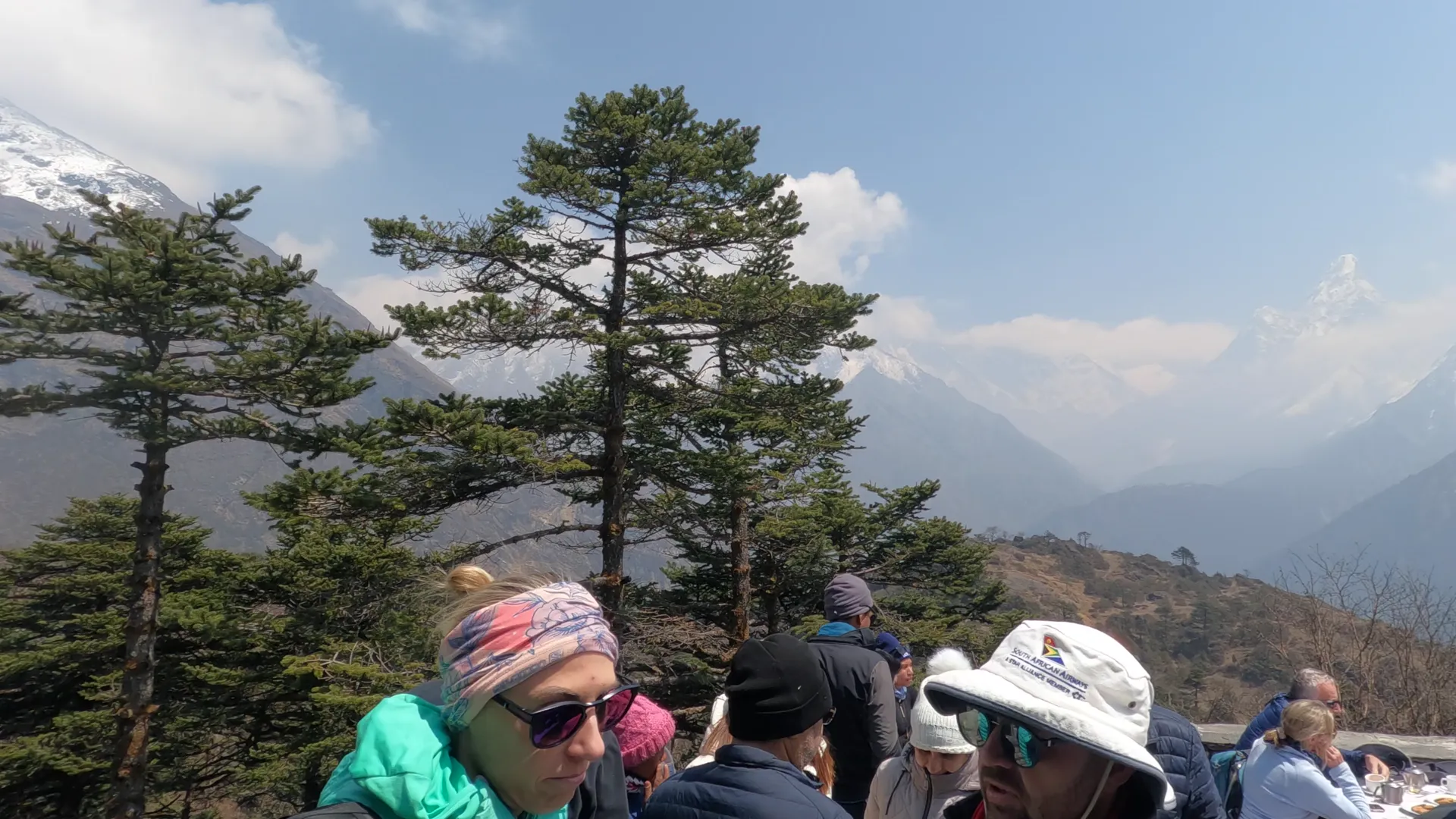
The strongest photography locations on this tour start with the Kali Gandaki gorge, where the road cuts through the deepest gorge on earth between two 8,000-metre peaks. At Muktinath, the row of 108 stone water spouts with the Himalayan panorama behind them is the defining image. Golden hour at the temple complex, with the Annapurna and Dhaulagiri ranges catching the last light, produces the photographs that stay with people. Kagbeni's red-walled monastery and Tibetan-style flat-roofed houses against the stark Mustang landscape are strong Instagram material. The Rupse waterfall beside the road between Ghasa and Dana is a reliable frame. Marpha's whitewashed stone alleys lined with drying apples have a visual character distinct from anything else on the route. Photography of the main deity inside Muktinath's inner sanctum is prohibited. Photography around the 108 spouts, the kunda ponds, the Jwala Mai shrine, and the Namgyal Gompa courtyard is permitted.

A 3-day Muktinath tour from Pokhara (fly to Jomsom, jeep to Muktinath, return next day) is technically possible but leaves zero time for acclimatization, Kagbeni, Marpha, or Tatopani. A 5-day tour from Pokhara covers the core route with an overnight at Jomsom for altitude adjustment before the temple visit. The standard 6-day tour from Kathmandu adds the Kathmandu-to-Pokhara transfer and a buffer day for weather or road delays. A 7-day extended version adds Manakamana Temple (via cable car), Pokhara sightseeing (Phewa Lake, Sarangkot sunrise, Devi Falls, Gupteshwor Cave, World Peace Pagoda), and Pashupatinath Temple darshan in Kathmandu. For transport, the jeep is the most immersive option: you see the gorge, stop at villages, and experience the terrain change from subtropical to high-altitude desert over 8 hours. A flight from Pokhara to Jomsom Airport (25 minutes, approximately $115 to $130 USD one way, Tara Air or Yeti Airlines) cuts road time but removes the gorge drive and is frequently cancelled by afternoon winds. A helicopter from Pokhara (45 to 60 minutes, approximately $350 to $500 per person for a shared 5-seat charter) is the fastest option and a curated experience with Annapurna panorama views, but it bypasses Tatopani, Marpha, and Kagbeni entirely.

The best time to visit Muktinath is October and November. Post-monsoon skies are the clearest of the year, and the Dhaulagiri and Annapurna views from the temple plateau are sharpest. Temperatures at 3,800m range from 5 to 12 degrees Celsius during the day and drop below zero at night. Kartik Purnima (the full moon in October or November) is the most important pilgrimage date for Hindu devotees, when thousands arrive for darshan. March through May is the second peak window: warmer temperatures, rhododendron blooms in the lower foothills, and stable road conditions. Muktinath in winter (December through February) is cold but possible. Snow can block sections above Jomsom, and Jomsom Airport flights operate less frequently. The temple remains open year-round. Monsoon months (June through August) bring rain to the lower sections, though Mustang sits in a rain shadow and receives significantly less rainfall than other parts of Nepal. Muktinath Purnima (full moon of Shrawan, July or August) draws the largest annual pilgrimage crowd. Janai Purnima and the Buddhist Saga Dawa festival also bring heavy traffic. The Tiji festival, a Tibetan Buddhist ceremony held annually in Mustang (typically May), centres on Lo Manthang but draws visitors through the Muktinath corridor. The Yartung horse festival in Muktinath village (August) is a local event with horse racing and traditional music.

This Muktinath tour package is built for Hindu and Buddhist pilgrims who want to complete the darshan at one of the most sacred Vishnu temples in the world. It fits Indian travellers visiting Nepal for a religious tour: no visa is required for Indian citizens (a valid passport or voter ID is sufficient), Hindi-speaking guides are available on request, and vegetarian meals (including Jain options) are standard at every stop on the route. It fits senior citizens and elderly pilgrims who want to reach Muktinath by vehicle without trekking: the jeep handles all altitude gain, and the temple steps can be taken slowly with guide assistance. It fits families with children who want a cultural tour with the Tatopani hot springs, Marpha apple orchards, and Kagbeni's medieval streets as additional experiences. It fits solo travellers who can join a shared departure to reduce costs, and couples looking for a honeymoon tour that combines spiritual significance with Himalayan scenery. It fits first-time visitors to Nepal who want a multi-destination package covering Kathmandu, Pokhara, and Mustang in a single trip. And it fits photographers and spiritual retreat travellers who want to experience Muktinath without the physical demands of the Annapurna Circuit trek. Mountain Hawk Trek is a Kathmandu-based operator registered with the Nepal Tourism Board. Prem Pandit and the Mountain Hawk team have been running tours through Mustang since the company was founded. The altitude safety protocol, acclimatization schedule, and emergency procedures are published on this page because we believe you should know what to expect before you book, not after you arrive.

Journey Route

Your journey, visualized

Journey
6 Stops
1
PokharaKathmandu to Pokhara
2
JomsomPokhara to Jomsom via Tatopani and Marpha
3
Muktinath / KagbeniJomsom to Muktinath Temple Darshan and Kagbeni
4
TatopaniKagbeni to Tatopani via Jomsom and Marpha
5
PokharaTatopani to Pokhara
6
KathmanduPokhara to Kathmandu and Departure
Itinerary

Day by day, on the trail

6 days from Kathmandu arrival to departure. Hover any day for full details.

Day01

Kathmandu to Pokhara

Pokhara

Hotel pickup in Kathmandu at 7:00 AM. Drive 206 km west along the Prithvi Highway to Pokhara (6 to 7 hours). The road follows the Trishuli River through terraced hills, Magar and Gurung settlements, and the town of Muglin before climbing into the Pokhara Valley. Arrive in Pokhara Lakeside by early afternoon. Free time to explore Phewa Lake, visit Bindhyabasini Temple, or rest before the mountain road ahead. Overnight at a 3-star hotel on Pokhara Lakeside. For travellers on the 7-day extended itinerary, the Kathmandu departure includes Pashupatinath Temple darshan in the morning and a stop at Manakamana Temple (cable car, 15 minutes) en route. All meals included.

7h trek3-star hotel, Pokhara Lakeside
Day02

Pokhara to Jomsom via Tatopani and Marpha

Jomsom

Depart Pokhara at 6:30 AM in a private 4WD jeep. Drive north through Beni Bazaar (76 km, 2 hours) and into the Kali Gandaki gorge. Stop at Galeshwor Mahadev Temple at the confluence of the Kali Gandaki and Rahughat rivers. Continue to Tatopani (1,190m), where a brief stop at the natural hot springs lets you soak your feet before the road climbs higher. North of Ghasa, the valley narrows dramatically. Rupse Waterfall drops 50 metres from a cliff face directly beside the road. Pass through Dana village and Lete village as the landscape shifts from subtropical forest to the dry terrain of lower Mustang. Stop for lunch in Marpha (2,670m), a Thakali village known for apple orchards and apple brandy. Walk the whitewashed stone alleys and visit the Buddhist monastery. Continue 20 km north to Jomsom (2,720m), the administrative capital of Mustang district. Arrive by late afternoon. Jomsom sits at an elevation that allows your body to begin acclimatizing before the ascent to Muktinath the following day. Total drive: approximately 180 km, 8 to 9 hours with stops. Overnight at guesthouse in Jomsom. All meals included.

9h trekMountain guesthouse, Jomsom
Day03

Jomsom to Muktinath Temple Darshan and Kagbeni

Muktinath / Kagbeni

Morning departure from Jomsom. Drive 21 km north to Muktinath (3,800m) on recently blacktopped road (approximately 1 hour, gaining 1,080m in elevation). Arrive at Ranipauwa, the small village below the temple complex. Walk up to Muktinath Temple for the sacred darshan. The pilgrimage circuit begins at the two kunda ponds (Brahma Kunda and Vishnu Kunda), proceeds to the 108 water spouts (Mukti Dhara) where you bathe under each bull-head faucet in sequence from left to right, enters the main pagoda shrine for darshan of the golden Vishnu idol (Mukti Narayana), and concludes at the Jwala Mai shrine where the eternal flame burns alongside water. Visit the adjacent Namgyal Gompa (Buddhist monastery). Your guide explains the puja procedure, the significance of each ritual station, and the Hindu and Buddhist dual tradition at the site. After completing the darshan, drive 12 km south to Kagbeni (2,810m). Explore the 15th-century fortified village, its red-walled monastery, Tibetan-style houses, and prayer-flag-strung streets at the gateway to Upper Mustang. Walk along the Kali Gandaki riverbed to look for shaligram fossils. Overnight at guesthouse in Kagbeni or Jomsom. All meals included.

6h trekMountain guesthouse, Kagbeni or Jomsom
Day04

Kagbeni to Tatopani via Jomsom and Marpha

Tatopani

Morning in Kagbeni. Optional early return to Muktinath for a second visit at sunrise (additional drive arranged with your guide, no extra charge). After breakfast, drive south through Jomsom and Marpha, retracing the Kali Gandaki gorge route. Stop at Tukuche village (2,590m), a former salt-trading post with traditional Thakali architecture. Pass through Lete, Dana, and Ghasa as the landscape transitions back from dry Mustang desert to forested valleys. Arrive at Tatopani (1,190m) by late afternoon. Soak in the natural hot springs (40 to 45 degrees Celsius) beside the Kali Gandaki River. The hot springs are the highlight of the return journey and the perfect recovery after the cold and altitude of Muktinath at 3,800m. Overnight at guesthouse in Tatopani. All meals included.

7h trekMountain guesthouse, Tatopani
Day05

Tatopani to Pokhara

Pokhara

Morning hot spring soak (optional, free access) before departure. Drive south through the Kali Gandaki gorge to Beni Bazaar, then east to Pokhara (approximately 100 km, 5 to 6 hours). Arrive in Pokhara Lakeside by early afternoon. Free time for Pokhara sightseeing: Phewa Lake boating, Sarangkot sunrise viewpoint, Devi Falls, Gupteshwor Mahadev Cave, World Peace Pagoda, Barahi Temple, and the Pumdikot Shiva Statue are all within reach by taxi or the tour vehicle. For the extended 7-day itinerary, a full day of Pokhara sightseeing is scheduled before the return to Kathmandu. Overnight at 3-star hotel in Pokhara Lakeside. All meals included.

6h trek3-star hotel, Pokhara Lakeside
Day06

Pokhara to Kathmandu and Departure

Kathmandu

After breakfast, drive 206 km east on the Prithvi Highway from Pokhara to Kathmandu (6 to 7 hours). Optional stop at Bandipur, a preserved Newari hilltop settlement, for a 30-minute walkthrough (the detour adds approximately 45 minutes). Arrive in Kathmandu by late afternoon. Transfer to your hotel or directly to Tribhuvan International Airport for departure flights. For travellers departing the next morning, overnight hotel accommodation in Kathmandu can be arranged. Tour concludes at hotel or airport. Breakfast and lunch included.

7h trek
Good to Know

Before you commit

The Muktinath temple tour is priced per person with all meals, accommodation, private vehicle, licensed guide, and ACAP permit included. No hidden fees, no surprise add-ons. The price covers every breakfast, lunch, and dinner for the full tour. Compare this against operators who quote lower base prices but exclude meals, permits, and return transport. A self-arranged 4-day trip costs NPR 30,000 to 60,000 ($225 to $450) per person in transport, accommodation, meals, and permits alone, without a guide. Our guided package adds a licensed English-speaking guide, a private vehicle, puja coordination, and altitude safety monitoring for a cost that is competitive with the self-arranged total.

Muktinath Tour Cost Per Person (6 Days, All Inclusive)

TierPrice
Solo TravelerPrivate jeep, guide, all meals, all accommodation
USD 750per person
2 TravelersShared jeep and guide, all meals, all accommodation
USD 595per person
3-4 TravelersShared jeep and guide, all meals, all accommodation
USD 495per person
5+ TravelersGroup rate, shared jeep, guide, all meals, all accommodation
USD 445per person

Booking and Cancellation

  • Booking ConfirmationA 30% deposit confirms your booking. The balance is due 14 days before departure or upon arrival in Kathmandu. Booking requires a passport copy for ACAP permit registration.
  • Cancellation PolicyCancellations 30+ days before departure receive a full deposit refund. Cancellations 15 to 29 days before departure receive a 50% deposit refund. Cancellations within 14 days are non-refundable. Weather-related changes (Jomsom flight cancellations, road closures) are handled with itinerary adjustment at no extra cost, not treated as cancellations.
  • Altitude and SafetyIf a participant develops altitude sickness symptoms at Muktinath (3,800m) or Jomsom (2,720m), the guide will arrange immediate descent. Emergency flights from Jomsom Airport (JMO) to Pokhara operate daily, weather permitting. Helicopter evacuation costs USD 2,000 to 4,000 and is covered by your travel insurance. We strongly recommend insurance with a minimum USD 100,000 medical coverage and explicit high-altitude helicopter evacuation cover.
Package Details

What's in, what's out

What's Included

15

Airport pickup and drop-off in Kathmandu (Tribhuvan International Airport)

2 nights 3-star hotel accommodation in Pokhara (Lakeside, twin sharing)

1 night mountain guesthouse in Jomsom

1 night mountain guesthouse in Kagbeni or Jomsom

1 night mountain guesthouse in Tatopani

All meals: 6 breakfasts, 5 lunches, 5 dinners (vegetarian and non-vegetarian options)

Private 4WD jeep for all mountain road transport (Pokhara to Muktinath and return)

Tourist vehicle or bus for Kathmandu-Pokhara transfers

Licensed English-speaking guide for the full duration

ACAP permit (Annapurna Conservation Area Project)

All government taxes and local entry permits

First-aid kit with pulse oximeter and Diamox

Muktinath Temple puja coordination with guide

Tatopani hot spring access

Kagbeni village walking tour with guide

Not Included

10

International flights to and from Nepal

Nepal visa fee (15-day: $30, 30-day: $50, 90-day: $125; Indian citizens exempt)

Travel insurance (minimum USD 100,000 coverage with high-altitude helicopter evacuation recommended)

Tips for guide and driver (customary: NPR 500 to 1,000/day for guide, NPR 300 to 500/day for driver)

Personal expenses (laundry, shopping, phone charging fees at remote guesthouses)

Alcoholic beverages and soft drinks beyond meals

Optional Pokhara-Jomsom flight upgrade (+$115 to $130 per person one way)

Optional helicopter transfer (+$350 to $500 per person shared charter)

Manakamana cable car ticket (NPR 390 per foreign adult, included only in extended 7-day itinerary)

Emergency helicopter evacuation costs (covered by travel insurance)

The Reward

Why you'll love it

Three reasons this trek stays with you long after the plane home.

Scenery

Muktinath is a pilgrimage that most people think requires a multi-week trek. It does not. The Jomsom-Muktinath road is now blacktopped for the final 21 km, and a private jeep covers the full Pokhara-to-Muktinath route in two driving days with stops at Tatopani, Marpha, Jomsom, and Kagbeni along the way. You reach the same temple that Annapurna Circuit trekkers reach after 12 days of walking, and you do it in a fraction of the time. The altitude is the same either way, so the acclimatization protocol matters, but the physical demand is completely different. This is a vehicle-based tour, not a trek. You do not need hiking boots, a porter, or any prior trekking experience.

Thrill

Everything is included in the price. Every meal, every night of accommodation, the jeep, the guide, and the ACAP permit. Competitors in this market exclude most meals (one operator provides 1 lunch and 1 dinner across 7 days), charge ACAP fees separately, and publish prices that look lower until you add the extras. We publish a per-person pricing table on this page because we believe the comparison should be on equal terms. The price you see is the price you pay.

Connection

The route itself is half the experience. The Kali Gandaki gorge between Dhaulagiri and Annapurna, the Rupse waterfall, the hot springs at Tatopani, the Thakali food, the apple orchards in Marpha, and the medieval streets of Kagbeni are not filler between Pokhara and Muktinath. They are the reason the jeep route is worth choosing over a flight to Jomsom. You lose all of this if you fly. We recommend the overland route for every traveller who has the time for it.

Honest Check

Is this trek for you?

A few things worth knowing before you commit. No sugar-coating, no surprises on day one.

Expectations

Before you book

10

You want to reach Muktinath Temple (3,800m) for darshan without trekking. This is a vehicle-based tour, not a trek. A private 4WD jeep handles all driving and altitude gain. The only walking is at the temple complex itself: several hundred stone steps over 15 to 30 minutes at a slow pace. No hiking boots, no porter, no multi-day camping. Families, senior citizens, and first-time Nepal visitors complete this tour comfortably.

The tour costs $495 to $750 per person depending on group size, and that price includes every meal, all accommodation, the private jeep, the licensed guide, and the ACAP conservation permit. There is nothing to add. Compare this against operators who quote lower base prices but exclude meals, permits, and return transport.

The standard tour runs 6 days from Kathmandu. A 4-day express from Pokhara (fly to Jomsom, jeep to Muktinath, return overland) is available for travellers with limited time. A 7-day extended version from Kathmandu adds Pashupatinath Temple, Manakamana cable car, and Pokhara sightseeing (Phewa Lake, Sarangkot sunrise, Devi Falls, Gupteshwor Cave, World Peace Pagoda, Bindhyabasini Temple, Barahi Temple).

Indian travellers do not need a visa for Nepal. Carry a valid Indian passport or voter ID. Hindi-speaking guides are available on request. Vegetarian and Jain food options are standard at every stop on the route. The ACAP permit for SAARC nationals costs NPR 100 (approximately $0.75 USD), significantly less than the NPR 3,000 charged to other foreign nationals.

Muktinath is at 3,800m (12,467 feet). Acute mountain sickness symptoms, including headache, nausea, and fatigue, are common in travellers arriving from low elevation on the same day. Our itinerary builds in a night at Jomsom (2,720m) before ascending to Muktinath. Your guide monitors the group, carries a pulse oximeter, and can arrange emergency descent or evacuation from Jomsom Airport (JMO) if needed.

Photography is permitted around the 108 water spouts, the kunda ponds, the Jwala Mai shrine, and the Namgyal Gompa courtyard. Photography of the main deity inside the inner sanctum is prohibited. The strongest shots on this route are the 108 spouts with the Himalayan backdrop at golden hour, Kagbeni's red monastery against the Mustang desert, the Rupse waterfall from the road, and the Marpha alleys.

There are no ATMs beyond Jomsom. Withdraw all personal cash in Pokhara before departure. Carry NPR 15,000 to 25,000 ($113 to $188) for tips, personal purchases, and optional extras. Nepal Telecom SIM cards (purchased in Pokhara for NPR 200 to 500) have wider coverage than Ncell on this route.

The best season for this tour is October and November (clear skies, best mountain views, Kartik Purnima pilgrimage dates). March through May is the second window. December through February is cold but possible with the temple open year-round. The tour runs daily, year-round.

If you are travelling solo, you can join a shared group departure to reduce per-person cost. If you are a couple looking for a honeymoon tour that combines spiritual meaning with Himalayan landscape, this tour delivers both without trekking. If you are a group of 5 or more, per-person pricing drops to $445.

We are not an OTA. Mountain Hawk Trek is a local Kathmandu tour operator registered with the Nepal Tourism Board. Your booking goes directly to the guide and driver who will show up at your hotel. The best Muktinath travel agency in Nepal is the one that publishes its prices, includes all meals, and tells you what happens at altitude before you pay.

Gear Up

What to pack

The full kit that's built from years on the trail. Skip it at your own risk, bring it and you'll never think about it again.

Equipment

Packing checklist

12 items

Down jacket or warm insulated jacket (rated to -5C minimum)

Thermal base layers (top and bottom)

Waterproof outer shell (jacket and pants)

Warm gloves and wool hat

Sturdy walking shoes with ankle support (for temple steps and village walking)

Sunscreen SPF 50+, UV-blocking sunglasses

Refillable water bottle (1L minimum)

Personal medications (including Diamox if advised by your doctor)

Portable power bank (20,000mAh+ recommended, limited charging beyond Jomsom)

Cash in Nepali rupees (NPR 15,000 to 25,000 per person; no ATMs beyond Jomsom)

Change of clothing for the 108 water spout bath (water temperature near 4-6 degrees C)

Passport copy and 2 passport-size photos (for ACAP permit registration)

This is a vehicle-based tour, not a trek. You do not need a full trekking gear list. A 20 to 30L daypack is sufficient for daily use. Your main bag travels in the jeep at all times. The most critical items are warm layers for Muktinath at 3,800m (temperatures drop below zero at night even in October), a change of clothes for the 108 water spout bath, and cash in Nepali rupees since there are no ATMs after Jomsom.

Good to Know

Frequently asked questions

Still have questions? Tap through the answers below or reach out directly. We reply within the hour.

FAQs

The most asked

36
Trail Stories

What trekkers say

Reviews from trekkers who have walked this exact route.

Be the first to review this trekShare your experience and help other trekkers decide.

Nepal trekking reviews
from trekkers worldwide

Verified reviews from Everest, Annapurna, Manaslu, and Langtang treks.