
- On the trail
- 15 days
- High point
- 5,545m
- Starts
- Kathmandu
- Nights
- Teahouse
- Best window
- Spring & Autumn
- Effort
- Strenuous
People ask me which day is the hardest, and I always give the same unsatisfying answer: the one you are not ready for. Day two catches strong people. Day nine catches fit people. Day ten catches people who forgot the walk back down is still the same trek. There is no single test on this route. There are fifteen of them, one after another, and the ones that surprise you say more about you than about the mountain.
This is not a packing list and it is not a summary of the itinerary. Both of those exist elsewhere on this site, done properly. This is the walk itself, in the order it actually happens: the noise before the quiet, the trees before the rock, and the highest morning of the whole trip landing on day ten instead of day nine, which surprises almost everyone who has not done this trek before.
I still feel it every time I stand at Gorak Shep and look at where the trail keeps going, past the last lodge, out across the moraine toward Base Camp. Fifteen days is long enough to change how you walk. It is not long enough to make the mountain familiar. Nothing does that, not for me and not for anyone I have walked up here with.
Read this the way the days actually stack, chapter by chapter, or skip ahead to whichever part worries you most. Either way, what follows is what fifteen days on this trail actually feels like, start to finish, without the parts you can already find on the tour page.
Walking this one? See the Everest Base Camp Trek package, dates and group sizes.
The Loud Part
Kathmandu on day one is a formality more than an experience. You land, someone from our team meets you, there is a hotel, a gear check, a short briefing about tomorrow's flight, and that is most of what day one actually is. Nobody remembers day one. They remember day two.
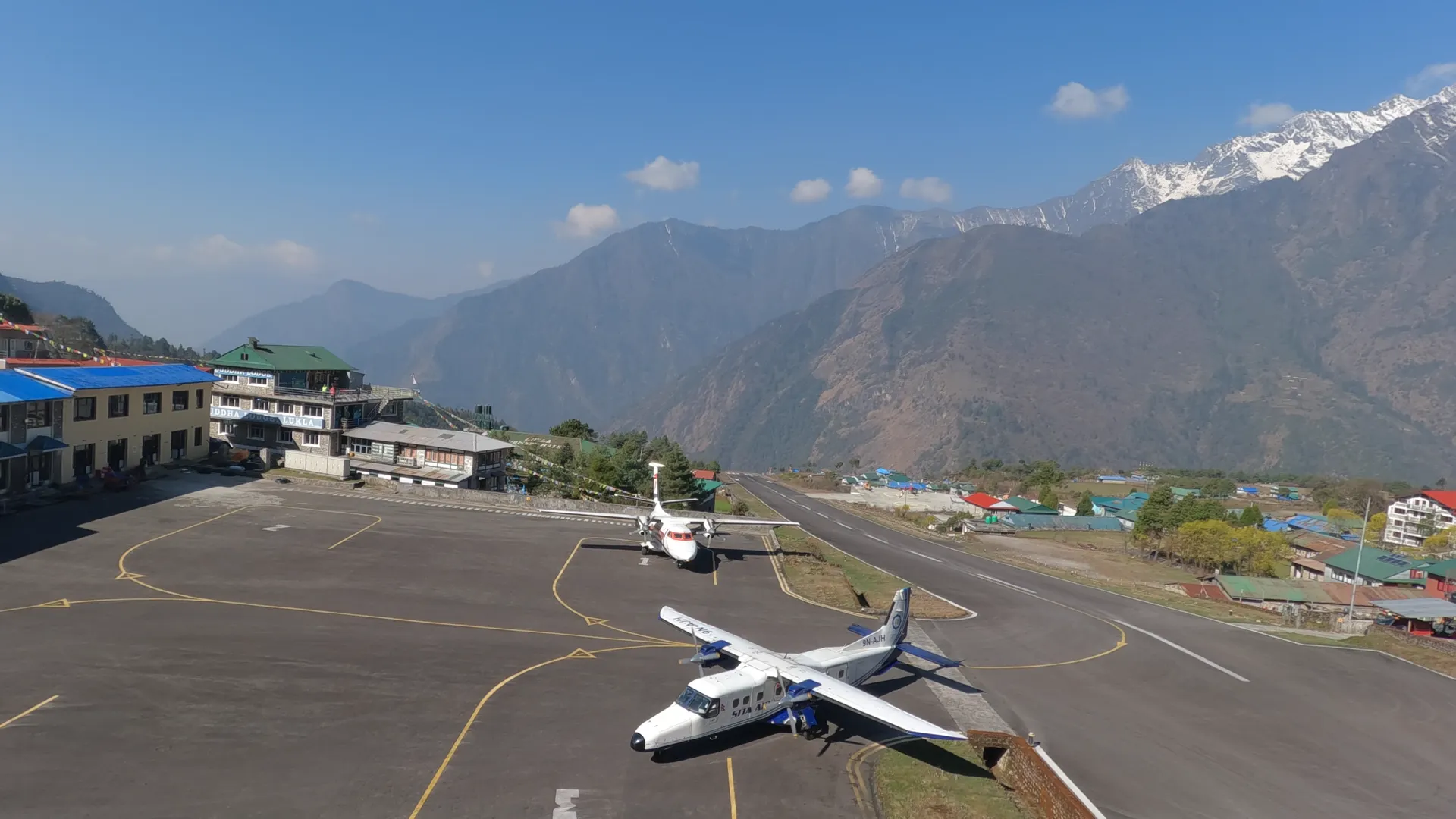
Day two is the flight to Lukla, and it is loud in a way nothing else on this trek is loud. The runway is short and it runs uphill into the mountain, which is the point, since gravity does the braking a longer flat runway would need engines for. You feel the engines the whole way in. Then the door opens, the propellers cut, and the noise just stops. That silence is the actual start of the trek, more than any line in the itinerary.
From Lukla the trail drops toward Phakding along the Dudh Koshi, and it is an easy few hours, which is deliberate. Nobody should be tested on the first afternoon. What you notice instead is the valley itself: pine forest, the river running fast and cold below the trail, and somewhere on the switchbacks, almost always, a line of yaks carrying supplies up toward Namche, bells clanging with every step, the same job they have done here for longer than any teahouse on this route has existed.
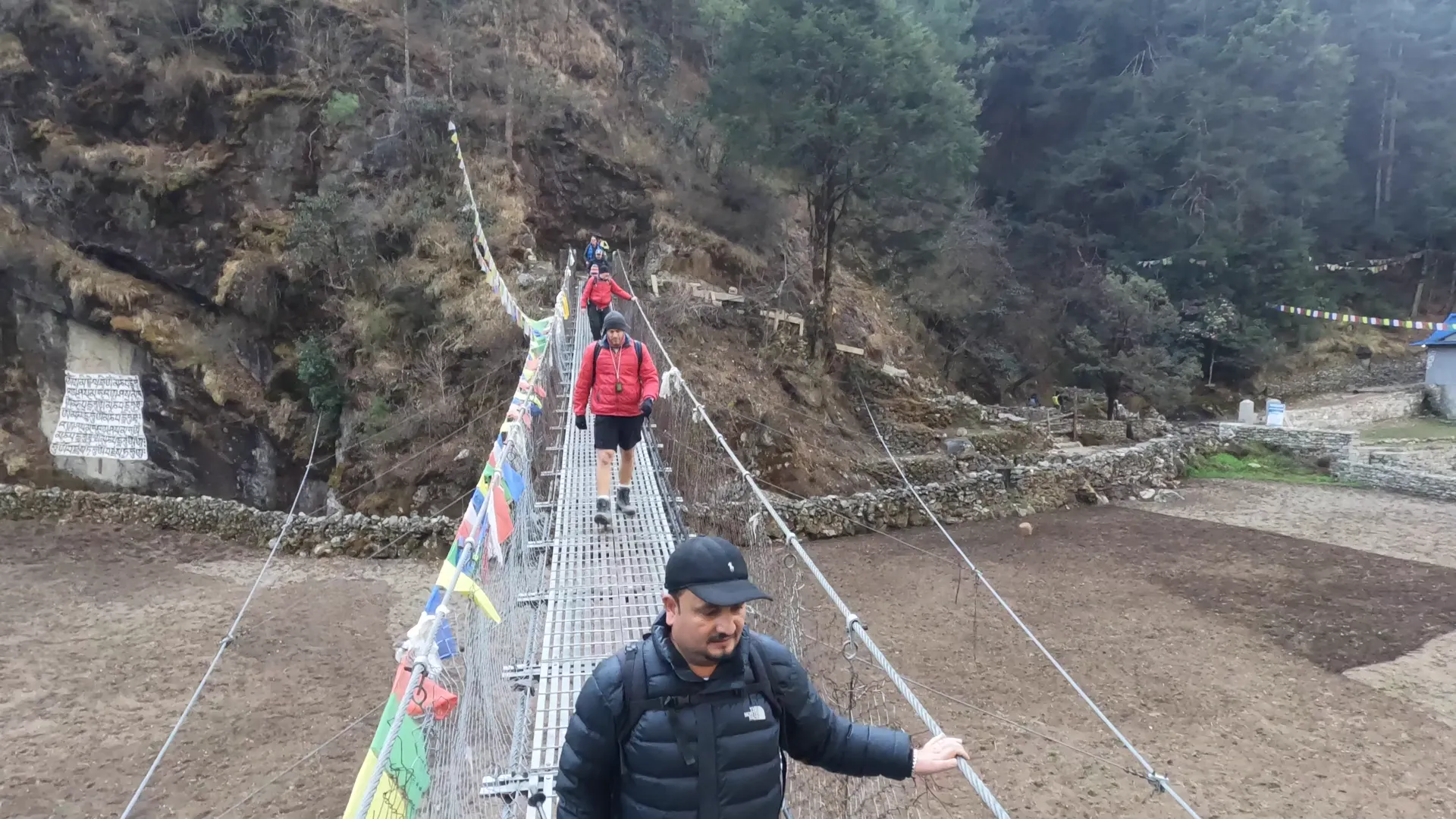
Day three is the climb into Namche Bazaar, and it is the first day that actually asks something of your legs. The trail follows the river, crosses it more than once on the suspension bridges the Khumbu is known for, and then turns uphill for the last stretch, steep enough that conversation drops off and breathing takes over. Namche appears the way it always does, suddenly, around a bend, terraced into the hillside like an amphitheatre. Walking into it for the first time, after that climb, is when the trek stops being a departure and starts being a walk you are actually inside of.
| Day | Stage | Altitude | On foot | Night |
|---|---|---|---|---|
| 1 | Arrival in Kathmandu | 1,345 m | Hotel | |
| 2 | Fly to Lukla, trek to Phakding | 2,610 m | 3 hr 30 min | Guesthouse |
| 3 | Trek to Namche Bazaar | 3,440 m | 6 hr | Guesthouse |
Where the Trees Stop
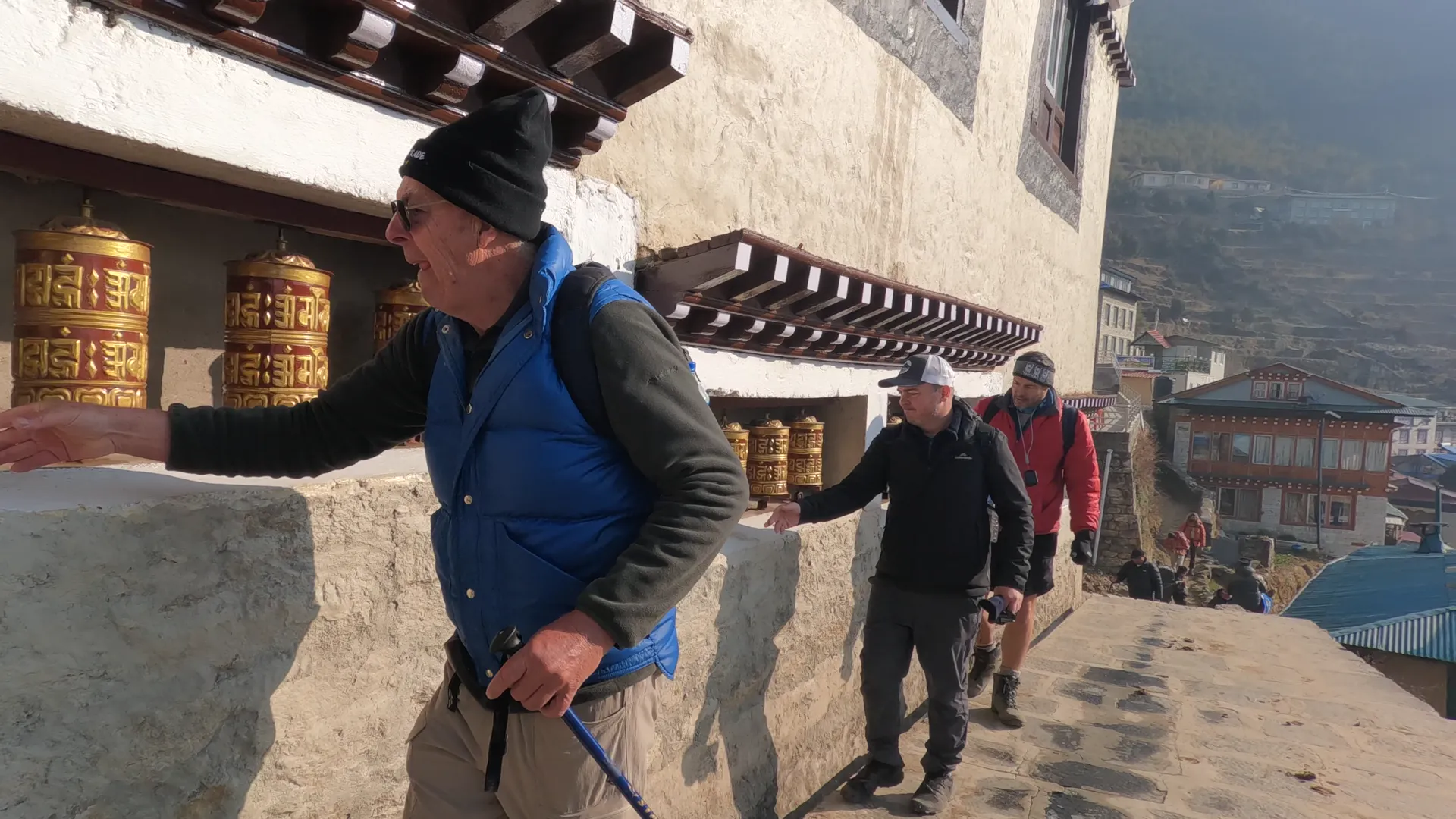
The acclimatization day in Namche gets sold as a rest day and it is not one. It is a three hour walk uphill, usually toward the Everest View Hotel, and then a walk back down to sleep at the same elevation you started at. The logic is simple even if it feels backward the first time someone explains it to you: climb high, sleep low, and the body adjusts to the altitude it will face without having to spend the night at it. Skipping this day is the single most common mistake trekkers make on this route, and it is also the easiest mistake to avoid, since nobody is asking you to do anything except walk uphill for a few hours and then walk back down.
That hike is usually the first time Ama Dablam shows itself properly, and I have never once led a group up that trail without someone stopping mid-stride to take the same photograph everyone else has already taken from that exact spot. It does not matter how many times you have told people the view is coming. The mountain still stops conversation.
Tengboche, a day later, is the last village on this route with real trees around it. The monastery sits on a ridge above the village, and the walk up to it after Namche's thinner air already feels different in the legs. Dingboche, the day after that, is where the trees give out completely. The valley opens, the ground turns to rock and scattered moraine, and the potato fields around the village are the last cultivated ground you will see until you are on your way back down.
Evenings by this point have their own shape. The dining room is the one warm room in the building, heated by a stove that goes cold once everyone gives up and goes to bed, and everyone ends up in it anyway: cards, a paperback under a headlamp, a phone left charging in the corner, a mug of ginger tea nobody really needs but drinks anyway. The walls are thin enough that you learn your neighbours' sleep schedules whether you want to or not. Earplugs are not optional gear on this trek. They are standard.
| Day | Stage | Altitude | On foot | Night |
|---|---|---|---|---|
| 4 | Namche Bazaar Acclimatization Day | 3,440 m | 3 hr | Guesthouse |
| 5 | Trek to Tengboche Monastery | 3,860 m | 5 hr 30 min | Guesthouse |
| 6 | Trek to Dingboche | 4,410 m | 5 hr 30 min | Guesthouse |
Where the Air Thins
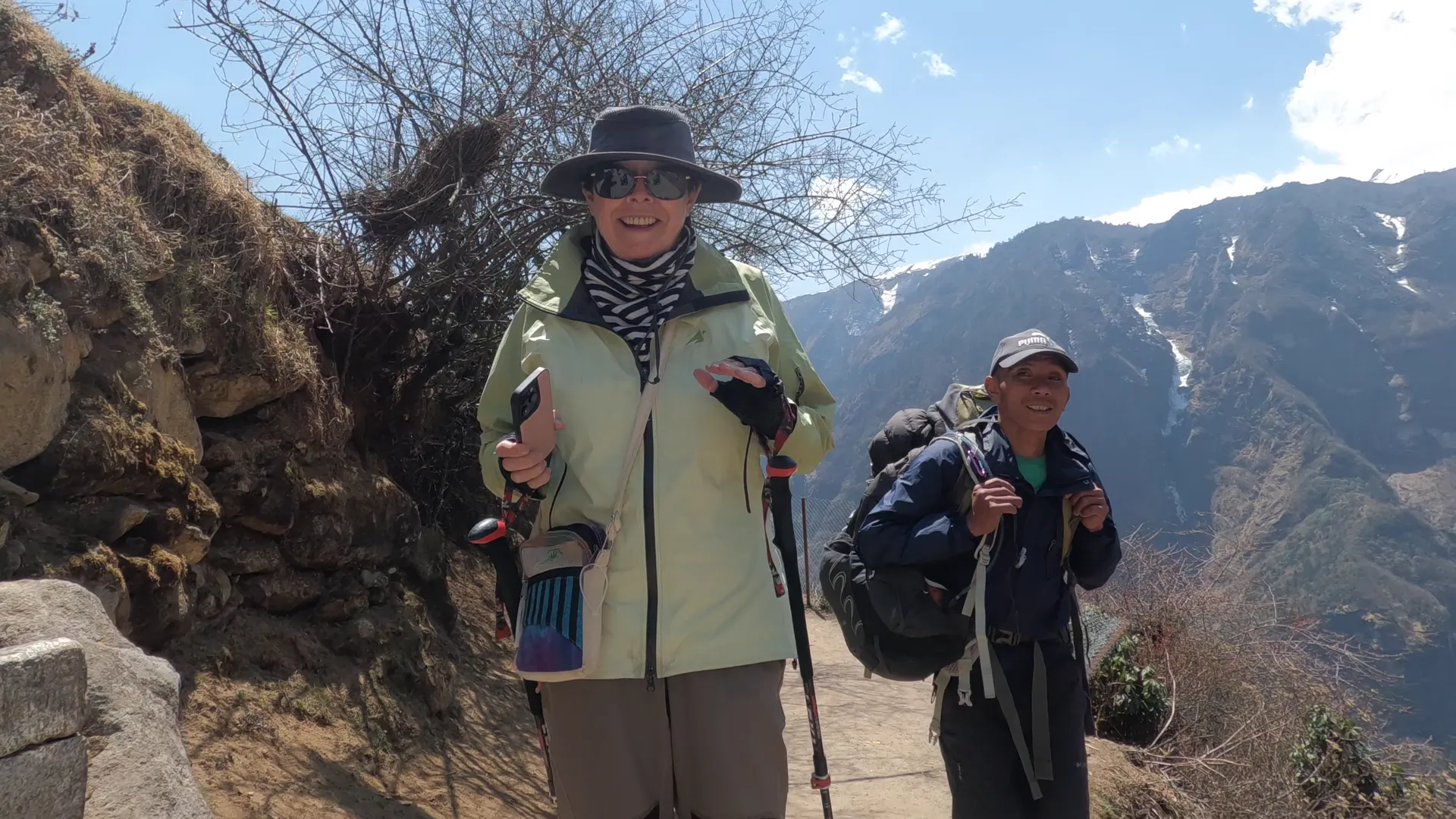
Day seven is a side trip into the Chhukung Valley, and it has a shape I like: you leave Dingboche, climb for a few hours toward Chhukung, and come back down to sleep at exactly the elevation you left from. Same 4,410 metres in the evening as the morning. The gain is real while you are making it, and then you give all of it back by dinner, which is the entire point. It buys your body another day at altitude without a single extra metre of sleeping height, and that trade is worth more than it sounds like on paper.
Lobuche, the next day, is a colder and thinner version of every teahouse you have already slept in. The rooms are smaller. The stew is thinner. The pace on the trail slows in a way you notice even if nobody points it out, and this is where guides on this route start repeating the one phrase that matters more than any piece of gear you brought: bistari bistari. Slowly, slowly. It sounds like something you say to a child. It is the best advice anyone gives you above 4,500 metres.
Day nine is the day the whole trek has been walking toward, literally. Lobuche to Gorak Shep is short on paper and long in practice, the ground turning to loose rock and glacial moraine that never quite settles under your boots. From Gorak Shep you drop your pack and walk out across the moraine to Base Camp itself, then walk back to Gorak Shep to sleep, because nobody sleeps at Base Camp on this route. It is a visit, not a night.
Base camp is not beautiful in the way people expect. It is grey rock and ice and prayer flags tied to nothing in particular, and I have watched people go completely silent in front of it, every single time.
Prem Pandit
At the tables that evening, the food thins out along with everything else. The rule I give every group by this point in the trek is simple: eat the dal bhat because the refills are free and you will want them, and leave the meat alone this high up, because it walked here on someone's back for two days before it reached this kitchen.
| Day | Stage | Altitude | On foot | Night |
|---|---|---|---|---|
| 7 | Day Trip to Chhukung Valley | 4,410 m | 4 hr | Guesthouse |
| 8 | Trek to Lobuche | 4,920 m | 5 hr | Guesthouse |
| 9 | Trek to Everest Base Camp & back to Gorak Shep | 5,164 m | 7 hr | Guesthouse |
The Walk Back Down
The decision about Kala Patthar gets made the night before, at Gorak Shep, not at four in the morning when your alarm goes off in the dark. That is deliberate advice, not a suggestion. Nobody sleeps well at 5,164 metres, and the four a.m. version of you, cold and short of breath and half convinced the whole idea was someone else's, will vote to stay in the sleeping bag. Decide the night before, while the version of you doing the deciding still wants to see the sunrise.
The climb itself is short and it is the hardest hour and a half of the whole trip. Kala Patthar sits above Gorak Shep, and the reward for the climb, if the sky cooperates, is Everest standing clear of everything else around it, with nothing taller in front to block the view. People stand there in silence more often than they talk.
Then the trek turns around. Day ten alone gives back 964 metres, down through Gorak Shep and on to Pheriche, and it does not feel like relief the way you would expect. The knees notice the descent before anything else does. Days eleven and twelve retrace the whole climb in reverse, through Lobuche, Dingboche, Tengboche, and back into Namche, and every bridge and every switchback that took effort on the way up takes a different kind of effort now, harder on the joints, easier on the lungs.
What surprises most people is how different the same ground looks going the other direction. Ama Dablam sits behind you now instead of ahead, the river you were too focused on your footing to hear properly on the way up is suddenly loud again, and Namche, when it appears again, looks smaller than it did on the day you first climbed into it. The mountain has not changed. You have.
| Day | Stage | Altitude | On foot | Night |
|---|---|---|---|---|
| 10 | Hike to Kala Patthar, trek down to Pheriche | 4,200 m | 7 hr 30 min | Guesthouse |
| 11 | Trek to Namche Bazaar | 3,440 m | 6 hr 30 min | Guesthouse |
| 12 | Trek to Lukla | 2,860 m | 6 hr | Guesthouse |
Kathmandu Again
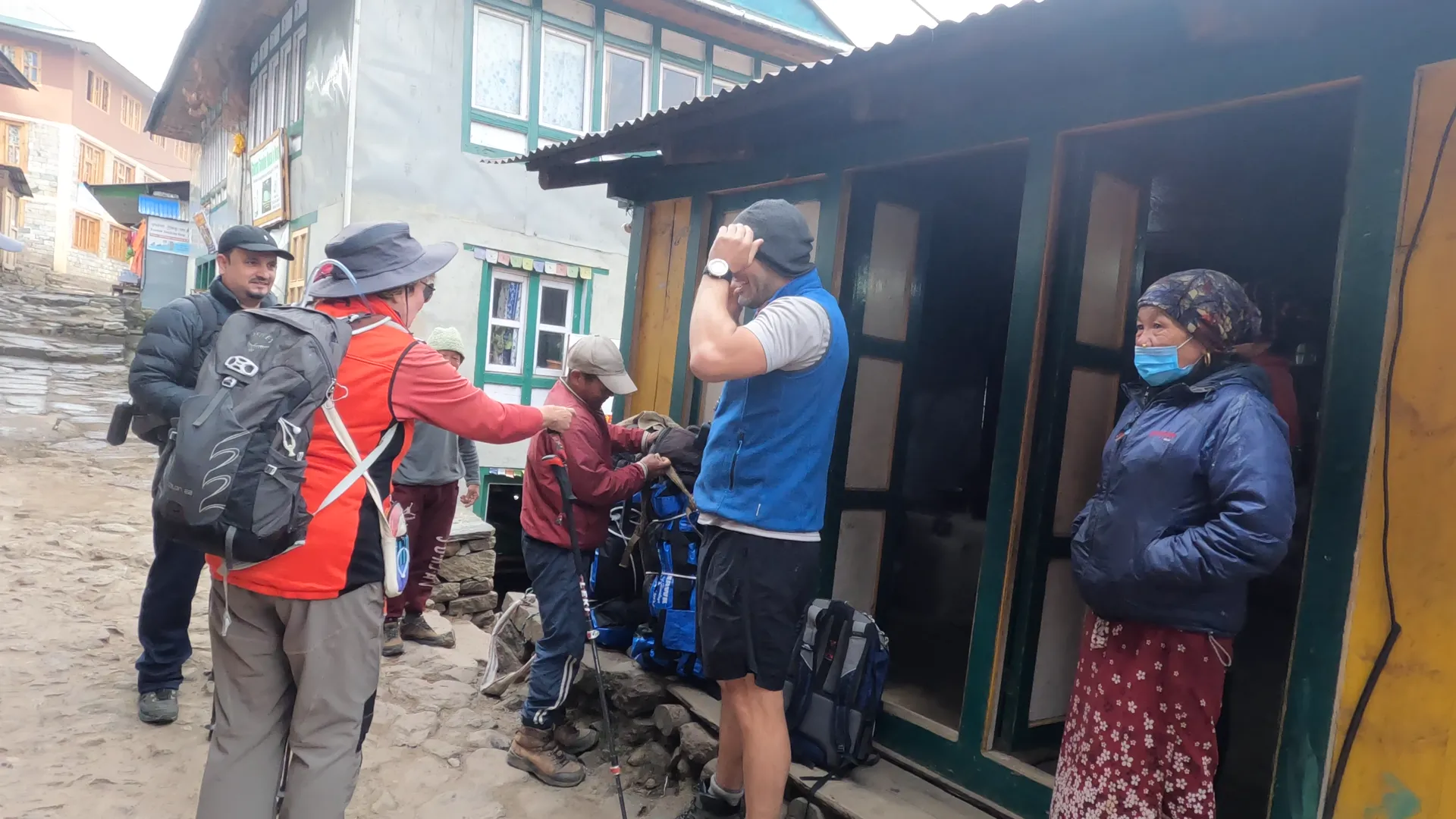
The flight back from Lukla to Kathmandu is the trip's second loud moment, and it lands differently than the first one did. Nobody is nervous about the noise this time. Everyone just wants to be sitting in it, headed the other direction.
The first hot shower back in Kathmandu deserves to be named honestly as one of the best moments of the entire trip, and I say that without exaggerating it. After twelve days of a stove that only heats one room in a building and goes cold the moment everyone gives up and goes to bed, a shower that stays hot for as long as you want it to feels less like a convenience and more like an event.
The extra day built into the schedule at the end is not filler. Lukla flights slip in both directions, weather does not care about return tickets, and a single buffer day in Kathmandu turns a delay into a lazy afternoon instead of a missed flight home. Most groups spend it doing very little, which is exactly what it is for.
Departure, when it comes, has its own small disorientation. You have spent fifteen days on a trail where the ground was never flat for more than a few hundred metres at a time, and the drive to the airport, on a paved road, at a speed no set of legs could manage, feels wrong in a way that is hard to explain to anyone who was not there. It passes. It always does. What does not pass, not completely, is the trail itself. People come back from this one differently than they leave for it.
| Day | Stage | Altitude | Night |
|---|---|---|---|
| 13 | Flight from Lukla to Kathmandu | 1,345 m | Hotel |
| 14 | Extra Leisure Day | 1,345 m | Hotel |
| 15 | Departure | 1,345 m | Transfer |
I said at the start that people ask me which day is the hardest, and I still do not have a single answer for them. What I can tell them is what actually happens across fifteen days: the noise of Lukla, the acclimatization day that is not a rest day, the day the trees stop, the day the air runs thin enough that food and conversation both get simpler, the morning at Kala Patthar that decides itself the night before, and the long walk back down through everything you already crossed once.
None of that shows up properly on a departure calendar or an inclusions list. It shows up on the trail, one day at a time, in the order it actually happens. That is what this page has tried to give you instead of another summary: the shape of the walk itself, not the paperwork around it.
If you have read this far, you already know whether this is the trek you want. Come find us when you are ready to talk about dates.
Written by Prem Pandit, Founder