- Two permits for one trek
- What the permits cost
- The guide rule
- What changed on 22 March 2026
- How we get the permits for you
- Checkpoints on the trail
- If the trek runs long
- How to read a permit page
- Kanchenjunga against Manaslu
- Frequently Asked Questions
- Do I need a guide for the Kanchenjunga trek?
- Can I apply for the Kanchenjunga permit myself?
- Can I trek Kanchenjunga solo since March 2026?
- What if my trek takes longer than the permit dates?
- Do I need a TIMS card for Kanchenjunga?
We read eight operator pages on the Kanchenjunga permits while preparing this guide. They disagree on the restricted area fee, on the conservation area fee and on whether you can apply alone. One of them, updated in September 2026, still says solo applications are impossible.
The rules are simpler than that. Our 21-day Kanchenjunga Base Camp trek needs two permits. The Restricted Area Permit is billed by the week. The Conservation Area Permit is one flat fee. Both go through a registered Nepali trekking agency, and a licensed guide walks with you. Both permits are included in our price, so what follows is a description of what we file for you and what the government charges behind the scenes. The fees come from the government tables.
Two permits for one trek
The Kanchenjunga Conservation Area Permit, shortened to KCAP, covers the protected area around the mountain. The conservation area sits in Taplejung District, was established in 1997, and has its headquarters at Lelep. You pay once per entry, and the operators we read say it has no time limit.
The Kanchenjunga Restricted Area Permit, shortened to RAP, exists because the border country here is restricted. It is issued by the Department of Immigration in Kalikasthan, Kathmandu, and the government fee table defines it by local government ward, with no trail name in it: Phantanglung rural municipality wards 6 and 7, Mikwakhola ward 5, and Sirijunga ward 8. Nobody on the trail will ask you which ward you are standing in. Your guide just needs the paper to say the right thing.
One pair of permits covers the whole circuit, from the north base camp at Pangpema to the south base camp at Oktang. For the route itself, the villages and the conservation area's wildlife, read our Kanchenjunga Base Camp trek complete guide. For the two base camps side by side, see Pangpema against Oktang.
What the permits cost
These are the government figures. The Nepal Tourism Board and the Trekking Agencies' Association of Nepal publish the same Taplejung row for the RAP, and the Nepal Tourism Board's conservation area page gives the KCAP.
| Permit | Fee for foreigners | Basis |
|---|---|---|
| Restricted Area Permit | USD 20 per person per week, first 4 weeks | Weekly, paid in US dollars |
| Restricted Area Permit | USD 25 per person per week, beyond 4 weeks | Weekly |
| Conservation Area Permit | NPR 2,000 per person | Per entry |
Neither government page prints a revision date, and fees in Nepal change by notice, so your agency confirms the figure when it files.
The RAP runs in whole weeks. Magical Nepal, an operator, says a 16-day trek is charged as three weeks, which is USD 60 at the table rate. The government pages do not say how a partial week is treated, so read that as operator practice.
The arithmetic at the table rate is short. One week is USD 20, two weeks USD 40, four weeks USD 80. A fifth week costs USD 25 more, which makes USD 105 for five. Our trek is 21 days from Kathmandu to Kathmandu, so it stays well inside four weeks and the USD 25 tier never applies to it.
Other pages print other numbers. Two of the operator pages we read give NPR 3,000 for the KCAP, and one prints USD 40 for two weeks of the RAP in a different section from its own USD 20 first week. We use the government figures. The whole trip is more than its permits, and our Kanchenjunga trek cost breakdown lays out every line. If you want the fees for other regions, our Nepal trekking permits guide keeps them.
The guide rule
A licensed guide is mandatory in the restricted area. That is true for a group of six and for one person.
Since the March 2026 notice, one guide may lead a maximum of seven trekkers. Our groups are capped at 8, so a full group needs a second guide on the application <!-- PREM CONFIRM: second guide for a group of 8 -->. A porter does not count as a guide, and neither does a friend who knows the trail.
The agency carries the weight too. The Department of Immigration's statement, reported by the Kathmandu Post, says the facilitating agency is "fully responsible for emergency rescue and logistical arrangements". That is a heavy sentence to put on an agency, and it explains why the agency wants your passport details early.
Independent trekking is not available in the Kanchenjunga region.
What changed on 22 March 2026
Before that date, restricted-area permits went only to groups of two or more. A trekker who wanted to go alone either paired up with a stranger or paid for a second name on the application that never appeared on the trail. Our Manaslu restricted area permit guide calls that second name a ghost permit.
On 22 March 2026 the Department of Immigration decided that individual foreign tourists can get those permits. The Kathmandu Post reported it the same day. The decision followed lobbying by the Trekking Agencies' Association of Nepal. It did not remove anything else. A solo trekker still needs a licensed guide and a trip arranged through a registered agency.
The report says the change covers restricted areas in 13 districts. It names Mustang, Dolpa, Gorkha and Manang and then says "among others". It does not name Taplejung.
That gap is why so many Kanchenjunga permit pages are out of date or hedge. Our tour notes say a solo trekker can apply for the Kanchenjunga permit since March 2026, and we confirm the current position for Kanchenjunga with you when you book <!-- PREM CONFIRM: solo application for Kanchenjunga confirmed in practice with Immigration or the agency -->. The Association's own fee page, the one the fee row above comes from, still says permits go only to groups. I would trust the news report over the table on this one point, and I would trust a phone call to your agency over both <!-- PREM CONFIRM: first-person view -->.
So "solo" means no paying companion. It never means no guide.
How we get the permits for you
Your agency files the RAP at the Department of Immigration in Kathmandu. You cannot buy it at a counter or at a checkpoint on the trail. The KCAP also goes through your agency. The Department has digitised the application: a foreigner already in Nepal is identified by the number on a valid Nepali visa, and an applicant abroad can use an application submission ID to pay the fees in advance.
The paperwork is plain. Operator pages and our own practice agree on the core of it:
- a passport valid for at least six months
- a Nepal visa
- passport-sized photographs
- an itinerary that shows where you enter and leave the restricted area
- travel insurance that covers high-altitude evacuation
Insurance is compulsory on our trek and is not in the price. Check that the policy names helicopter evacuation before you buy anything else in it.
Processing at Immigration takes one to two business days, and we build three days of buffer into every restricted-area booking. The office closes on Saturdays, which is Nepal's weekly holiday. A Friday evening arrival with a Sunday departure leaves no room at all. We ask for passports early in your Kathmandu stay for the same reason. Our permits reference page has the shorter all-region summary.
Checkpoints on the trail
Carry the permit and show it when immigration staff or police ask. That is the Nepal Tourism Board's own wording. Your guide holds the working copy, and you should keep a photo of yours.
Permits are checked at points including Sekathum and Ghunsa <!-- PREM CONFIRM: checkpoints on our route -->. Sekathum is where our walking starts, 245m below the town you sleep in at Taplejung on day 3. You can see both on our Kanchenjunga Signature Itinerary page.
Posts open and close. A trekker's May 2016 report on the Magical Nepal site says the police post at Tapethok was shut that year and permits were checked at Ghunsa instead. The same report says the lodge owner at Ghunsa who issued conservation permits was away up at Lhonak with police to retrieve a dead snow leopard. Do not expect a snow leopard at your checkpoint. Do expect your guide to know which posts are staffed this season.
If the trek runs long
The RAP is date-bound to the days your agency applied for. You cannot fix an overrun at a trailside counter. Your guide contacts the agency, the agency files an extension, and the extra days are charged at the weekly rate. Approval on short notice is not guaranteed, which is one reason restricted-area itineraries carry a spare day.
The day most likely to eat that spare day is day 14, when three passes are crossed in about 7 hours and snow on any of them slows the walk. Our month-by-month calendar for this trek shows which weeks carry the most snow risk, and our Kanchenjunga trek difficulty guide takes the pass day apart hour by hour.
How to read a permit page
Three checks sort the good pages from the stale ones in about a minute.
First, look at the date. A page that says the minimum is two trekkers was almost certainly written before 22 March 2026, or copied from something that was. Second, see whether the fee matches the government table: USD 20 a week for the first four weeks, then USD 25. A page that prints USD 10 for each extra week is quoting an older schedule. Third, see whether the page says who is responsible. A permit page that never mentions the agency, the guide or the Department of Immigration is describing a system that does not exist.
Third Rock Adventures and Nepal Trekking Experts both say the permits are non-refundable, and Third Rock adds that they cannot be transferred. Those claims come from operators and not from a government page, but they match how a permit tied to a passport behaves. If someone drops out of your group after the paperwork is filed, ask your agency what happens to that person's share before you pay a deposit.
Kanchenjunga against Manaslu
Manaslu has three permits and two seasonal fee tiers. Its Restricted Area Permit is USD 100 for the first seven days in September to November, then USD 15 a day, and its two conservation permits are NPR 3,000 each. Kanchenjunga has two permits and one weekly rate with no seasonal tier, so the arithmetic is easier to do in your head. Both need a registered agency and a licensed guide.
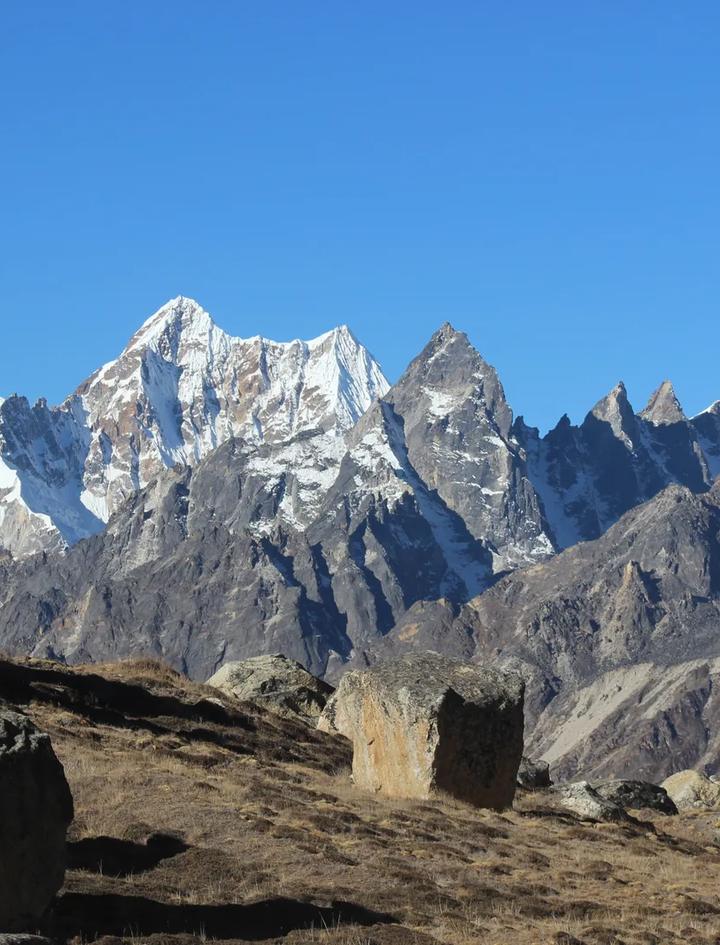
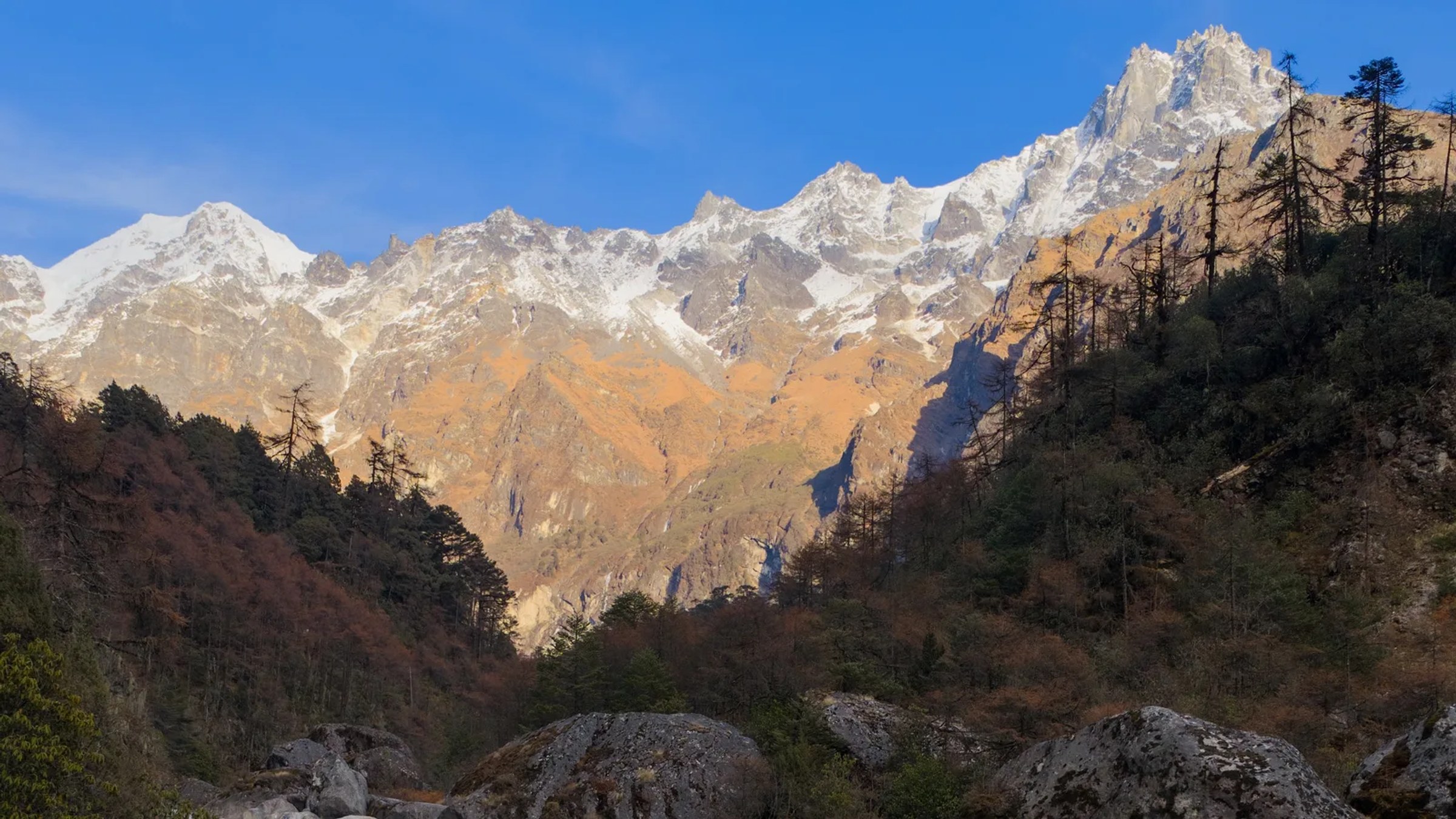
Cover photograph: late light on the peaks above the Ghunsa Khola at Ghunsa, by Megaurab09 on Wikimedia Commons, licensed CC BY-SA 4.0.
Frequently Asked Questions
Do I need a guide for the Kanchenjunga trek?
Yes. A licensed guide is mandatory in the restricted area, for a solo trekker and for a group. One guide may lead at most seven trekkers. The permits go through a registered agency, and the agency is responsible for rescue and logistics.
Can I apply for the Kanchenjunga permit myself?
No. The Restricted Area Permit is filed at the Department of Immigration in Kathmandu by a registered Nepali trekking agency. There is no counter or online portal for an individual trekker, and permits are not sold at checkpoints on the trail.
Can I trek Kanchenjunga solo since March 2026?
The Department of Immigration decided on 22 March 2026 that individual foreigners can get restricted-area permits, and a licensed guide is still required. The Kathmandu Post report does not name Taplejung, so we confirm the current position for Kanchenjunga with you at booking.
What if my trek takes longer than the permit dates?
The Restricted Area Permit is date-bound. Your guide calls the agency, the agency files an extension with Immigration, and extra days are charged at the weekly rate. Approval is not automatic, so a spare day in the itinerary matters.
Do I need a TIMS card for Kanchenjunga?
No separate card is issued on this trek. The restricted area permit process replaces it. Our permits are the Restricted Area Permit and the Conservation Area Permit, and we arrange both.