
The first night above 4,000 metres is day seven, at Dingboche. The last is day sixteen, at Arye. That is ten nights in a row, and all three passes fall inside them: Kongma La on day ten, Cho La on day thirteen, Renjo La on day sixteen.
Nobody sleeps on a pass. Each one is crossed in a single day, with no teahouse at the top, and the crossings take between seven and nine hours. You start at a lodge on one side and finish at a lodge on the other.
The order is the one our tour notes recommend. Kongma La comes first, while your legs are freshest, and at 5,535 metres it is the highest of the three. Renjo La comes last, with the Gokyo lakes below you and the Everest massif filling the eastern skyline.
The nine days before the first pass and the six after the third get shorter chapters here. The seven days from day ten to day sixteen run long.
Walking this one? See the Everest Three Passes Trek package, dates and group sizes.
Five Nights Below 3,500 Metres
You land in Kathmandu on day one, at 1,345 metres. Day two holds the pre-trip meeting and sightseeing around the valley. Both nights are in a hotel.
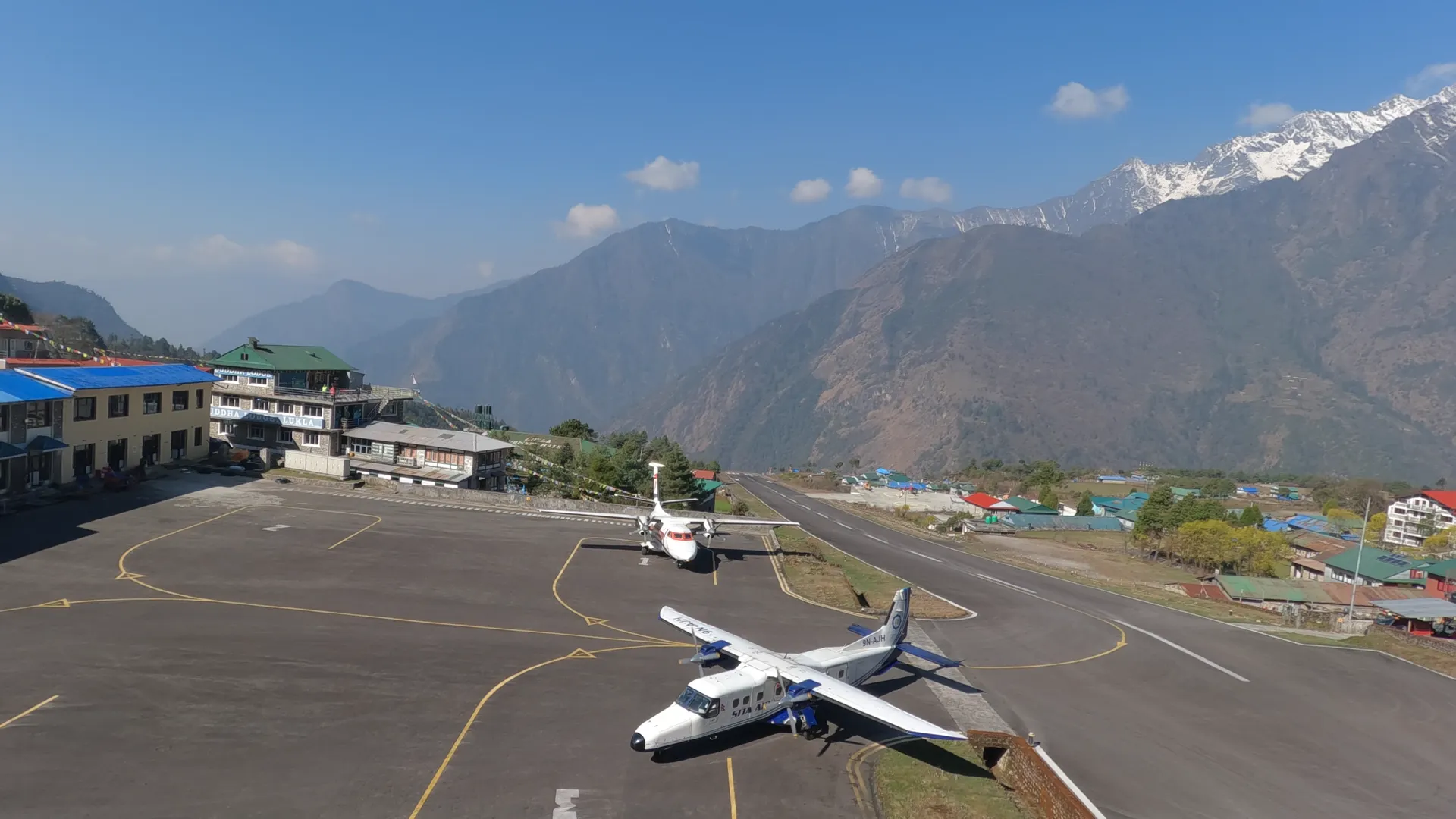
Day three is the flight to Lukla. In March, April, May, October and November the flights leave from Ramechhap, a drive of five to six hours from Kathmandu. In the other months they leave from Kathmandu itself. The airline decides, month by month, and it decides on how many people are flying.
You land at 2,795 metres and sleep that night at Phakding, at 2,610, after about three hours of walking. Day four is about five hours to Namche Bazaar, at 3,480 metres, which is 870 metres higher than Phakding. Day five is the acclimatization day in Namche, and you sleep at 3,480 again.
That makes five nights, and every one of them is below 3,500 metres. You come back through Namche on day eighteen, fourteen days after you first slept there.
- Day01Arrival in Kathmandu
- Day02Pre-trip Meeting & Kathmandu Sightseeing
- Day03Fly to Lukla & Trek to Phakding+1,265 m
- Day04Trek to Namche Bazaar+870 m
- Day05Acclimatization Day in Namche Bazaar
Walking Up to Chhukung Twice
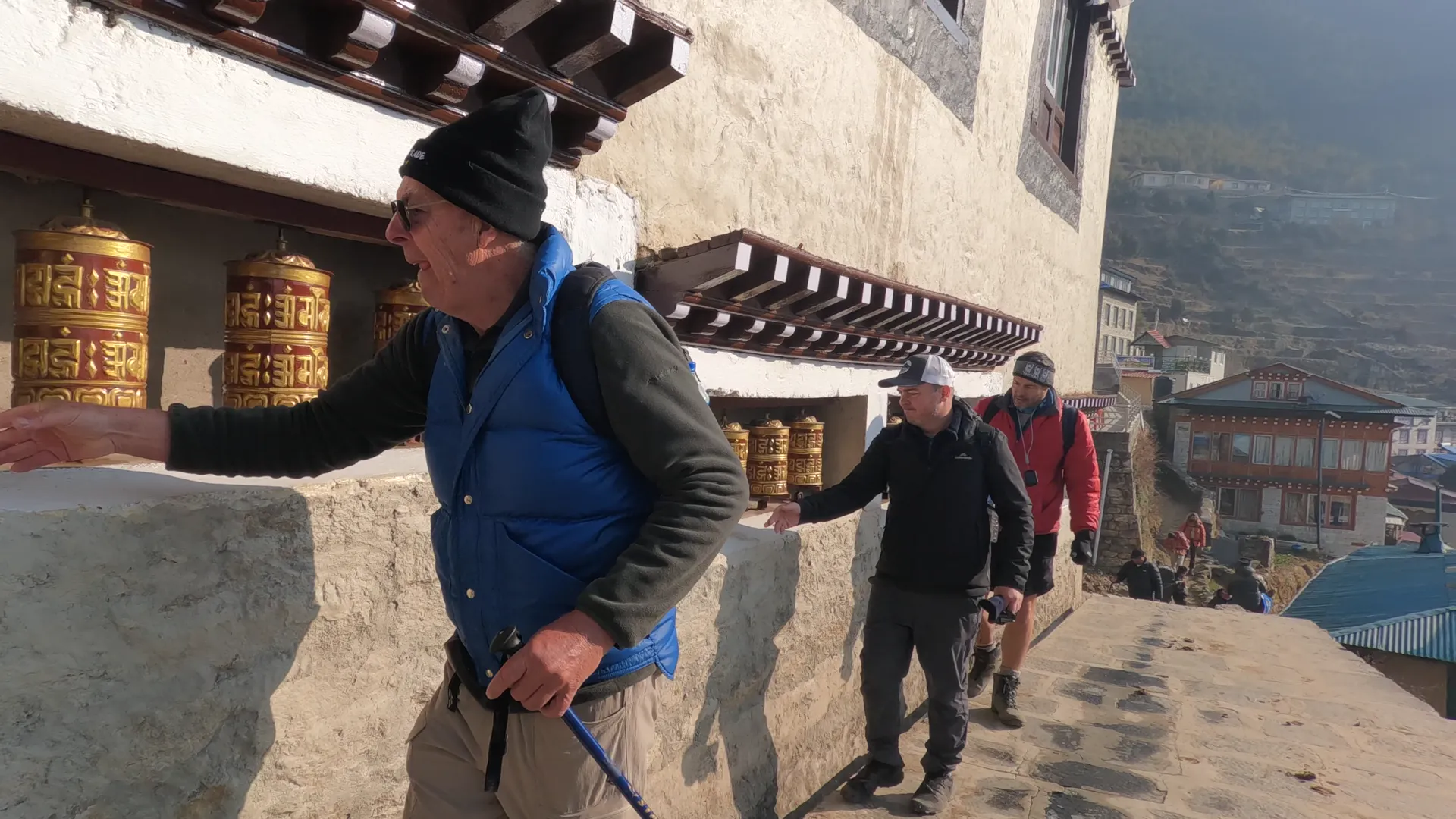
Day six is about five hours to Tengboche Monastery, at 3,860 metres. Day seven is about six hours to Dingboche, at 4,350, which is 490 metres higher. Tengboche is the last bed below 4,000 metres until Thame on day seventeen.
Day eight is a day trip up the Chhukung Valley, about four hours, and back to Dingboche to sleep. Day nine walks the same valley to Chhukung, at 4,700 metres, in about five hours, and this time you stay. The first visit you walk back from. The second you sleep in, and the next morning is Kongma La.
If ten nights above 4,000 metres is the part that worries you, read what altitude sickness does on the Base Camp trail before you decide anything else.
The tour's packing list asks for several pairs of light cotton socks and gives its reason: better to carry the weight than to be washing socks the whole time. I agree with it. It also asks for a notepad, and says that writing a diary by the fire in the evening is a favourite pastime of trekkers.
- Day06Trek to Tengboche Monastery+380 m
- Day07Trek to Dingboche+490 m
- Day08Day Trip to Chhukung Valley
- Day09Trek to Chhukung+350 m
The Highest Pass First
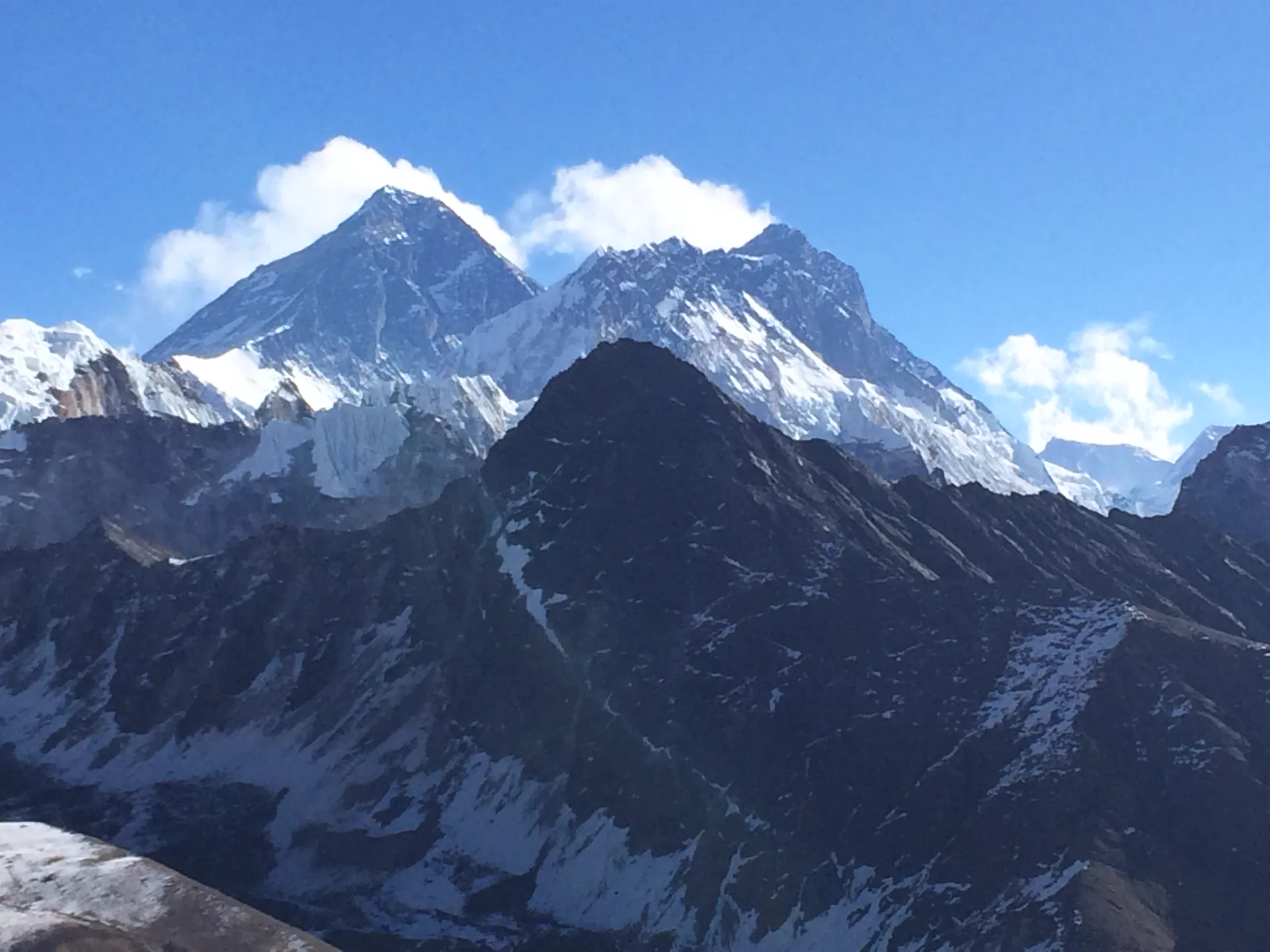
Day ten is the longest day on the table: 8 to 9 hours from Chhukung over Kongma La, at 5,535 metres, and down to Lobuche, at 4,920. From Chhukung the climb to the top is 835 metres. The way down is 615. Our tour notes describe the climb as a steep scramble over loose rock.
You sleep at Lobuche, 220 metres higher than you woke. I put this pass first on purpose. You meet 5,535 metres once, on day ten, and both passes still ahead of you are lower.
Day eleven starts at Lobuche and reaches Everest Base Camp before the night at Gorak Shep, at 5,180 metres. It takes about eight hours. Gorak Shep is the highest night of the trek, and the next highest is Lobuche, at 4,920.
Day twelve is the early hike up Kala Patthar, the viewpoint above Gorak Shep. Then you go down to Dzongla, at 4,800 metres. The table lists the day at about seven hours. The Base Camp and Kala Patthar days are told in full in Prem's Base Camp page. The difference here is that you arrive having crossed Kongma La the day before.
- Day10Cross Kongma La Pass to Lobuche+220 m
- Day11Trek to Everest Base Camp & Gorak Shep+260 m
- Day12Kala Patthar & Trek to Dzongla−380 m
The Middle Pass
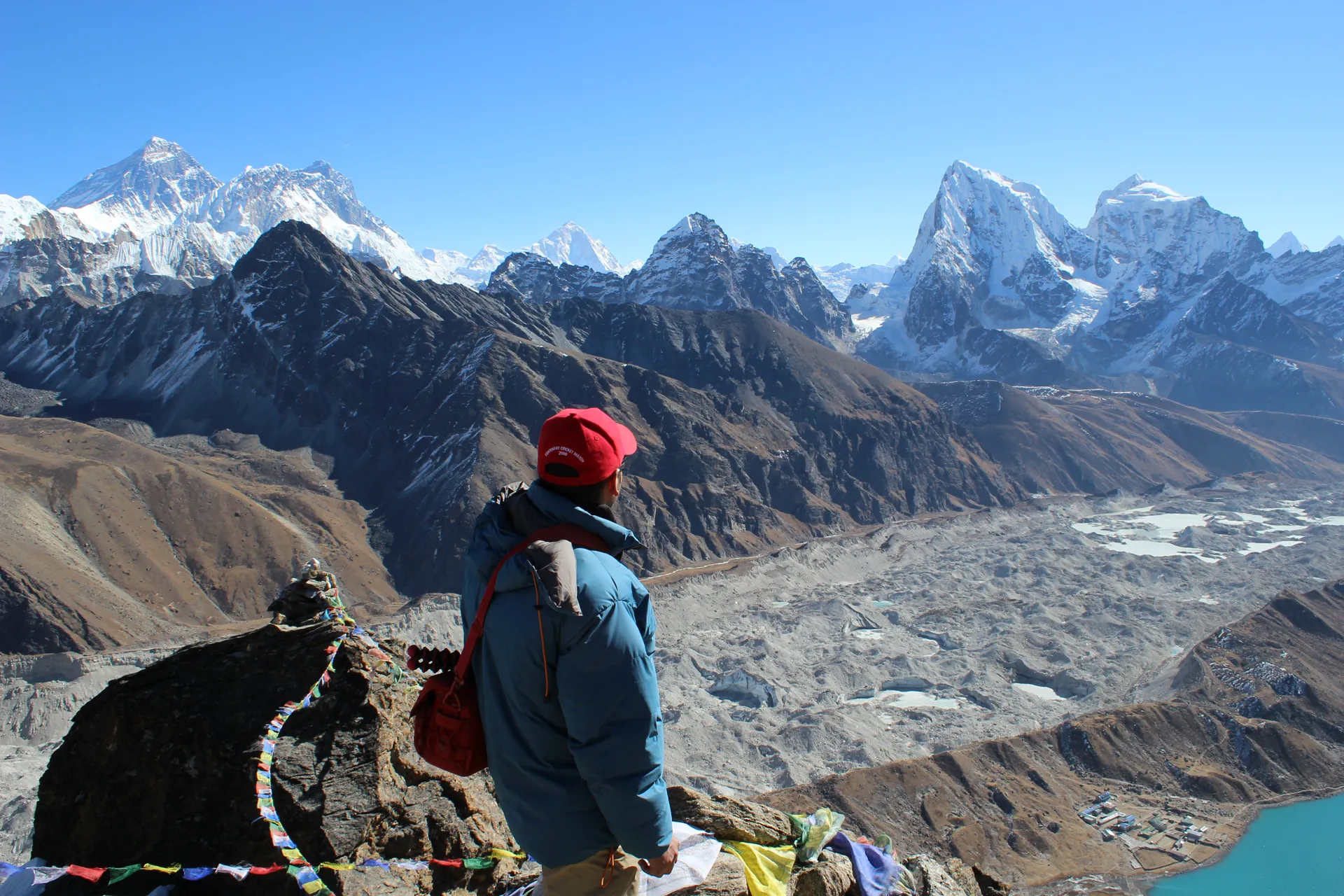
Day thirteen is Cho La, the middle of the three: the third day after Kongma La and the third day before Renjo La. You leave Dzongla, at 4,800 metres, cross the pass and sleep at Thangnak, at 4,700. The day takes about seven hours.
This is the pass with ice on it. Cho La has a short glacier section near the top, and early in the morning that surface can be hard and slick. Microspikes or light crampons are recommended. Your guide carries a rope as a precaution. There is no roped climbing, and poles matter on all three passes.
The morning before this one you were on Kala Patthar at dawn. This morning you climb again.
Add up days ten to thirteen and you get 30 or 31 hours of walking: 8 to 9, then 8, then 7, then 7. Seven hours is the shortest of the three pass days, and it comes after the other long ones. You sleep 100 metres lower than the night before.
- Day13Cross Cho La Pass to Thangnak−100 m
Gokyo, Then the Last Pass
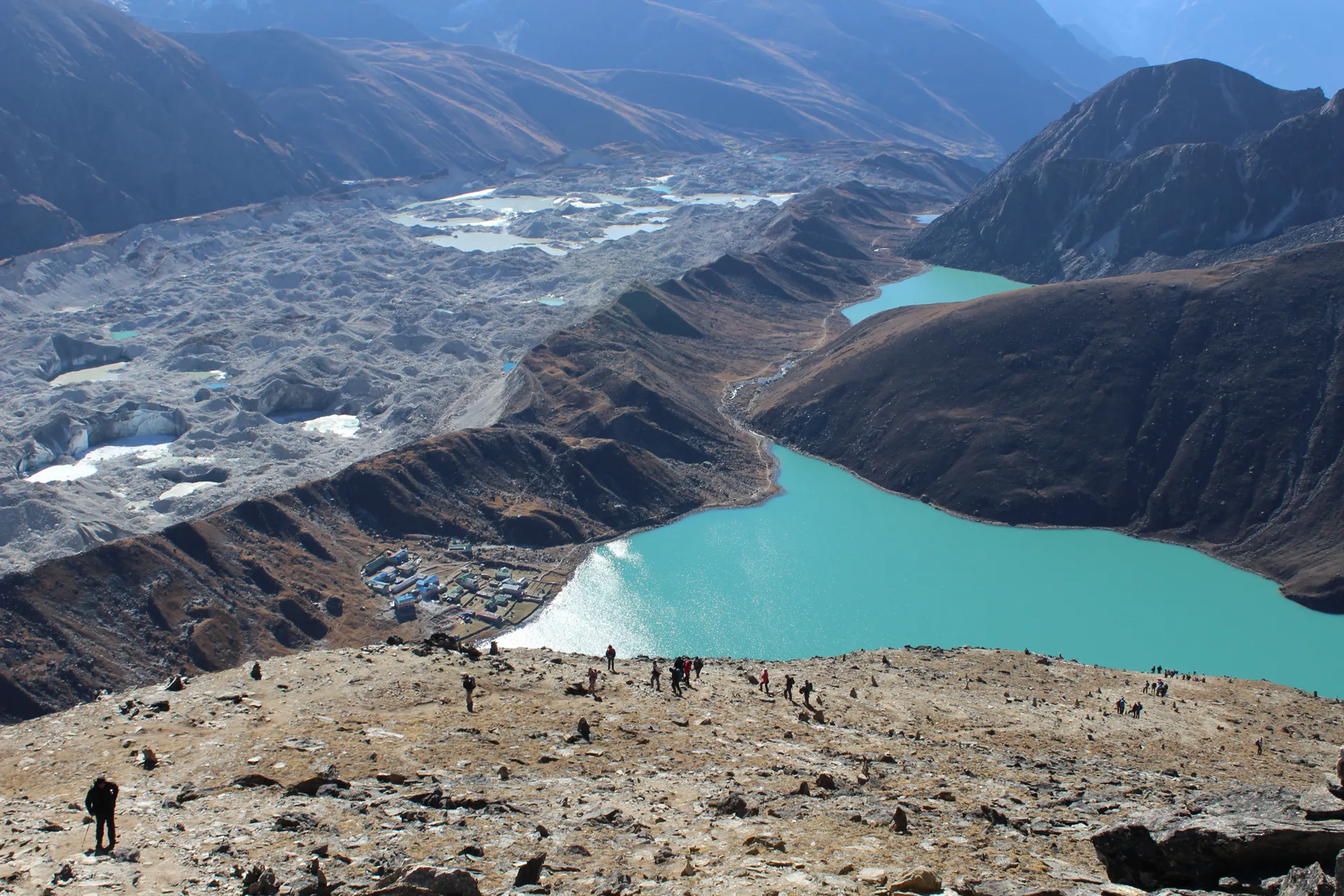
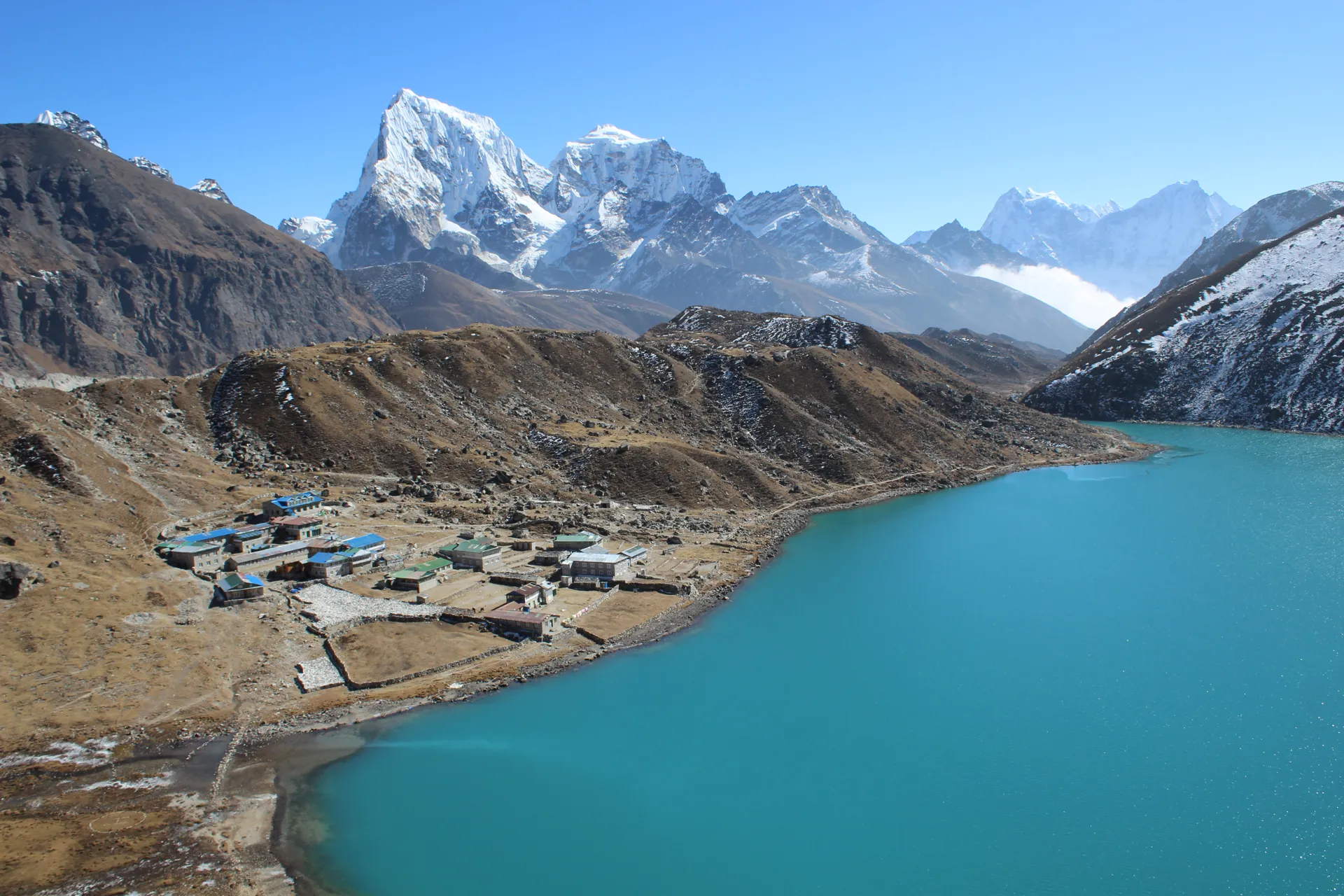
Day fourteen is about four hours from Thangnak to Gokyo, at 4,800 metres, and the bed is 100 metres higher than the one you left. Day fifteen is the early climb of Gokyo Ri, at 5,360 metres, and back down to Gokyo for a second night. The view from the top takes in Everest, Cho Oyu and the turquoise lakes.
Gokyo is one of three trail villages where you sleep two nights in a row. The others are Namche and Dingboche. No pass is crossed on day fourteen or fifteen.
Day sixteen is Renjo La, at 5,338 metres, and about eight hours from Gokyo to Arye, at 4,300. The climb from Gokyo is 538 metres. The drop to Arye is 1,038, nearly twice that, and on this descent the knees work harder than the lungs. Our tour notes call it the most scenic of the three passes.
Arye is the tenth night above 4,000 metres, and the last.
- Day14Trek to Gokyo+100 m
- Day15Gokyo Ri & Return to Gokyo
- Day16Cross Renjo La Pass to Arye−500 m
Six Days Down
Day seventeen is about four hours down to Thame, at 3,800 metres, 500 below Arye. Thame is the birthplace of Tenzing Norgay and one of the oldest Sherpa settlements in the Khumbu, and it is far quieter than the main Everest trail. Day eighteen is about three hours to Namche, and day nineteen is about six hours to Lukla, at 2,795 metres, which is 685 below Namche.
From the top of Renjo La to Lukla is 2,543 metres of descent in four days. Use your poles on every one of them.
Day twenty is the morning flight out of Lukla and a night in a Kathmandu hotel. Day twenty-one is a leisure day. On day twenty-two you are driven to the international airport. The Lukla flight notice asks travellers to keep one or two extra days free for delayed or cancelled flights, which come from weather, congestion and runway conditions. Day twenty-one is the one the schedule gives you.
- Day17Trek to Thame−500 m
- Day18Trek to Namche Bazaar−320 m
- Day19Trek to Lukla−685 m
- Day20Flight from Lukla to Kathmandu−1,450 m
- Day21Leisure Day in Kathmandu
- Day22Departure
Take the seven days from day ten to day sixteen. Five of them are named for a pass or a viewpoint, and the two that are not are the walk to Everest Base Camp on day eleven and the four hours to Gokyo on day fourteen.
Between Namche on day five and Namche on day eighteen you sleep twelve nights in ten villages. The only two you sleep in twice are Dingboche and Gokyo, two nights each, back to back.
Written by Prem Pandit, Founder