
- The two camps side by side
- Pangpema, the north base camp
- Oktang, the south base camp
- The three passes between them
- One camp or both
- Which camp suits which trekker
- When to go for each
- Frequently Asked Questions
- Which Kanchenjunga base camp is higher?
- Which base camp is harder to reach?
- Can you visit both Kanchenjunga base camps on one trek?
- How many days does each side take?
- Is either camp a good first Himalayan trek?
Pangpema is the higher base camp and the shorter day. Oktang is the lower base camp and the bigger climb. Most pages that compare the two stop at altitude and call the north side the harder one. By altitude it is. By the day's walking it is not.
Kanchenjunga has a north base camp and a south base camp, and our 21-day Kanchenjunga Base Camp trek walks to both. Pangpema sits at 5,143m on the north side. Oktang sits at 4,740m on the south side, 403m lower. The route between them, with every night and every drive, is in our complete Kanchenjunga guide, so I leave it there. This piece compares the two camps: what each day asks, what you see, what the ground is like, how long each side takes, and whether to walk one or both.
The two camps side by side
| Pangpema (north) | Oktang (south) | |
|---|---|---|
| Bed before and after the climb | Lhonak, 4,792m | Tseram, 3,870m |
| What you pass on the way | Ghunsa, Khambachen, Lhonak | Ramche, 4,580m |
| What stands in front of you | The north face | The south face above the Yalung Glacier |
| Ground | Glacial valley, moorland, moraine | A moraine shelf beside the glacier |
The altitude gap is 403m, and it points the wrong way for effort. From the bed at Lhonak the climb to Pangpema is 351m, and the day takes 7 hours there and back. From the bed at Tseram the climb to Oktang is 870m, and the day takes about 8 hours. That is 519m more climbing at the lower camp.
The reason is where you sleep. The Pangpema day starts at 4,792m, the highest bed of the whole trek. The Oktang day starts 922m lower and has to make the height up on foot. So Pangpema is the harder place to be, and Oktang is the harder day to walk. Our difficulty guide ranks every walking day if you want the full picture.
Pangpema, the north base camp
The north side is a long valley, and you walk all of it. From Sekathum the trail climbs to Ghunsa at 3,415m, where day 8 is a rest day. It goes on through Khambachen to Lhonak, and you sleep two nights there, one before Pangpema and one after. The camp itself is a day trip from a bed.
Lhonak is a small place. Mark Horrell, who walked the valley in April 2018 and wrote it up, counted about half a dozen wooden teahouses on a grassy plain, with a sandy flood plain where a side valley joins and some 50 blue sheep grazing the hillside behind. He walked from Lhonak to Pangpema in about three hours, over moorland in a broad glacial valley with moraine banks along the glacier. Our day table allows 7 hours for the whole out and back. The same trekker found a single seasonal teahouse at Pangpema and a rocky, dusty camping ground, so do not expect Lhonak's comforts at the top.
The two days before it are shorter than they sound. Day 9 is 10km and 6 hours to Khambachen, and day 10 is 10km and 5 hours on to Lhonak, a gain of 1,377m from Ghunsa over the two days. Then day 12 gives it all back: Lhonak to Ghunsa in 6 hours, 1,377m down in a single day. Poles help on that one.
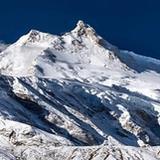
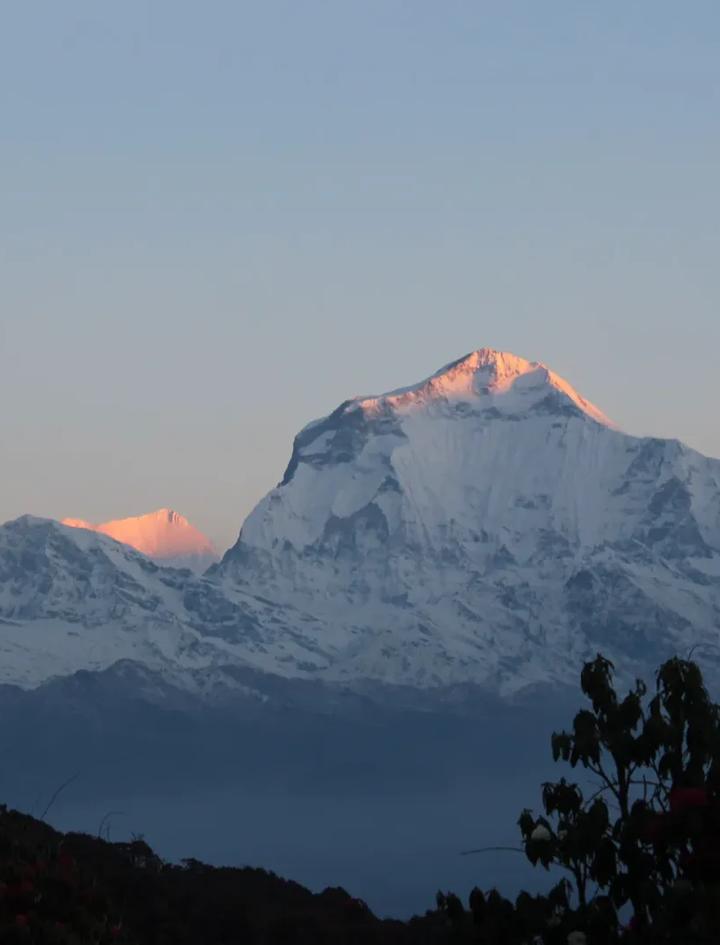
At the top you face the north face of Kanchenjunga, 8,586m, the third-highest mountain on Earth. Jannu, 7,711m, stands to the west, and our notes place it in view on the way up and again from the south side on a clear morning. The north side has its own climbing history too. On 16 May 1979 Doug Scott, Peter Boardman and Joe Tasker made the third ascent of the mountain by a new route on the North Ridge, the first ascent without oxygen.
The cold is the other thing to know. Lhonak is the coldest bed on the trek. Our season calendar puts still-air nights there at about minus 10 to minus 5°C in October and minus 15 to minus 10°C in November, which are derived ranges and not records. The October page of the calendar goes through what that month feels like.
Oktang, the south base camp
Oktang belongs to another valley. From Tseram, 3,870m, the day climbs through Ramche at 4,580m to Oktang at 4,740m, then returns to Tseram for the night. The climb from the bed is 870m and the table prints about 8 hours. Breeze Adventure's route notes have the last stretch from Ramche crossing the moraine of the Yalung Glacier. It is strange to stand at the lower camp and feel you did more work for it. The numbers say you did.
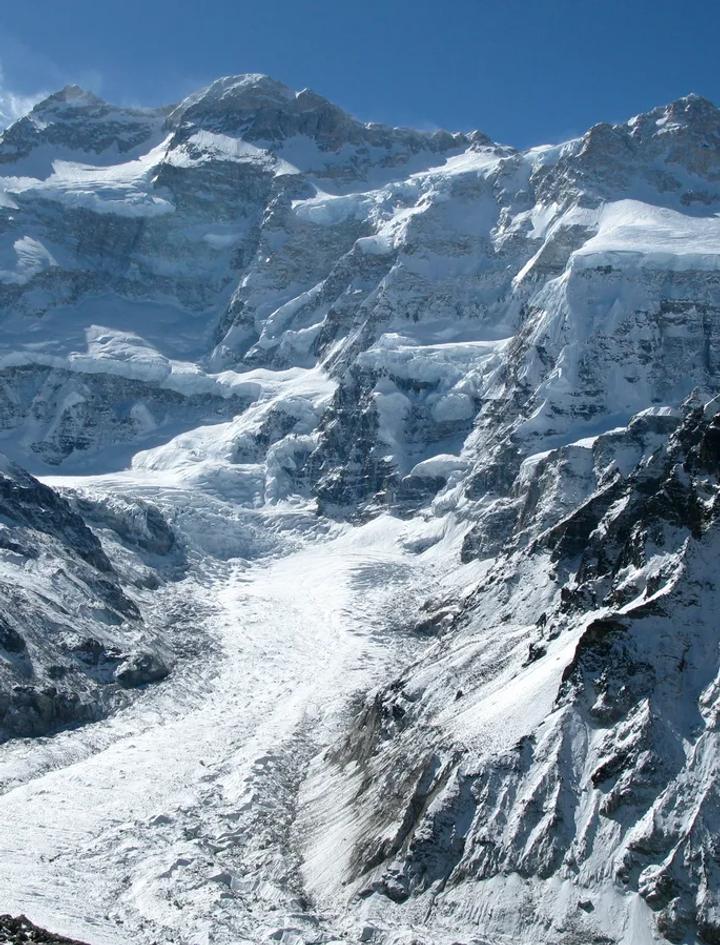
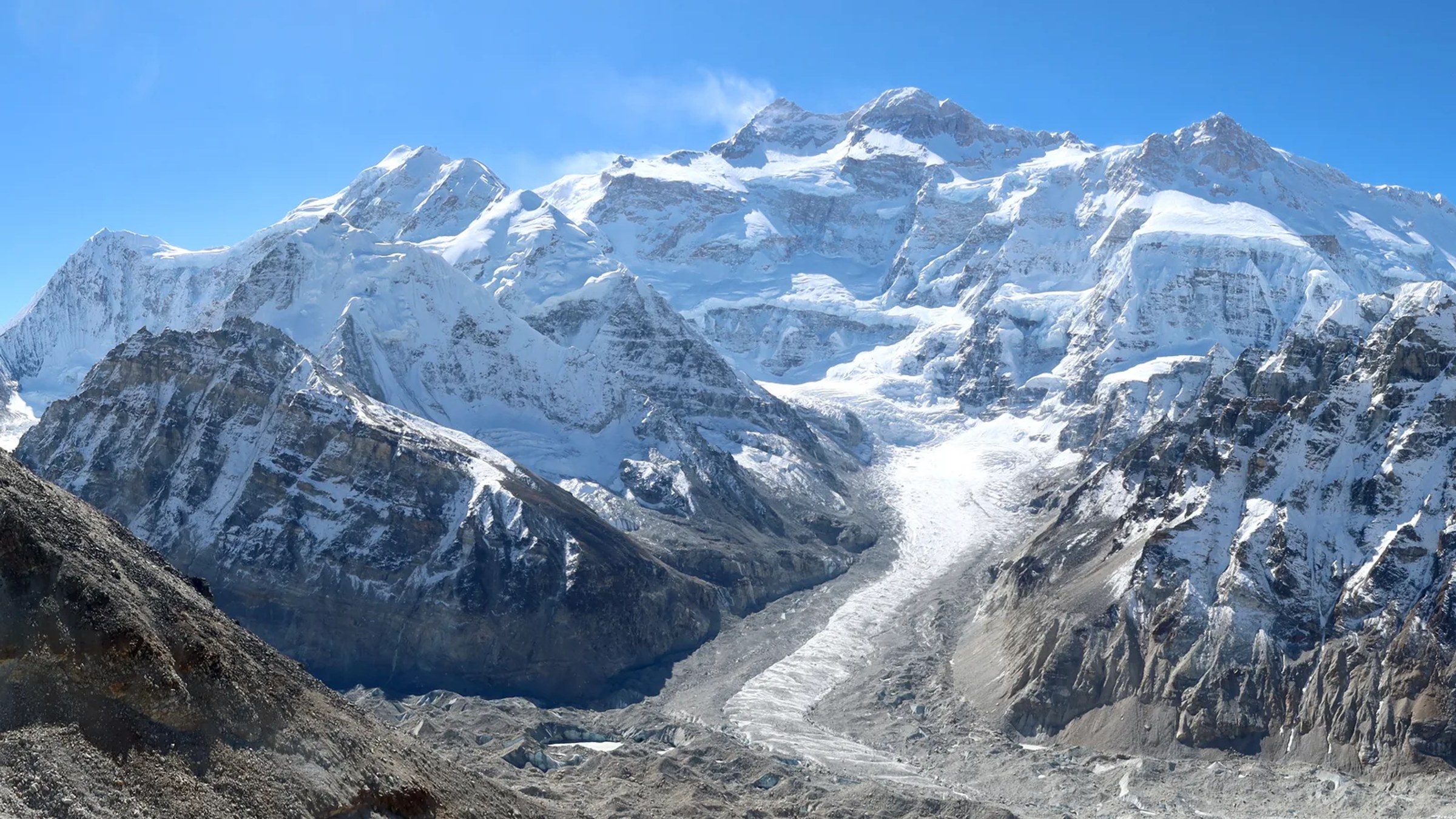
Our notes describe the south camp as a moraine shelf with the Yalung Glacier and the south face of Kanchenjunga directly above. The Yalung Glacier flows southwest from the mountain, and the 1955 first ascent started from it. Nepal Trekking Experts, a Kathmandu operator, lists Yalung Kang, Kabru, Rathong, Talung and Kokthang among the peaks around Oktang on its south-only trek page, and adds that Jannu shows on clear days. Breeze Adventure, another operator, describes the south view as broader and gentler than the north, quieter and less dramatic.
Weather decides how much of it you get. In the monsoon our calendar warns that Oktang is a long walk to a place that may be hidden in cloud. A clear late September or October morning is a different day altogether.
The day after Oktang the trek starts losing height for good. Tortong, at 2,995m, is 875m below Tseram, and the three days of the exit take you down to Khebang at 1,915m.
The three passes between them
The two valleys do not meet at the bottom. They are joined at height, and that join is the reason our trek is a circuit. Day 12 takes you from Lhonak back down to Ghunsa, 1,377m in 6 hours. Day 13 is 7 hours to Sele Le Base Camp. Day 14 crosses Sele Le, then Sinion La at 4,440m, then Mirgin La at 4,480m, and ends at Tseram after about 7 hours, with a 610m drop from the last pass.
Without that crossing you have two separate treks, and each one goes back down the way it came up. With it, the exit runs through Tortong, Yamphudin and Khebang instead.
We walk north first. The reason in our own season data is that by the time you reach the passes the northern leg has done the acclimatising, and by the time you reach Oktang you have had two weeks to get ready for the biggest single-day climb on the trek. The Ghunsa rest day and both Lhonak nights sit on the north leg. <!-- PREM CONFIRM: reason for running north first --> Other operators run the circuit the other way round, starting in the south, and I have no reason to call that wrong. <!-- PREM CONFIRM: first-person view on south-first --> It is a different shape of the same trek.
Snow is the variable on day 14. Fresh snow on any of the three passes slows the day, and the guide decides on the morning whether to go. Our month-by-month season calendar shows which weeks carry the most risk.
One camp or both
On our schedule the two camps are four days apart, day 11 and day 15. Between them you drop to Ghunsa, climb to Sele Le Base Camp, cross three passes and sleep at Tseram. That is the whole argument for doing both: the mountain looks different from each side, and the walk that joins them is a day of its own.
Not every operator sells both camps. Nepal Trekking Experts publishes a south-only trek of 14 days, sleeping at Ramche and walking to Oktang from there, and grades it moderate. Breeze Adventure writes that a short circuit of both camps can be done in 16 days and that most circuits run from 24 to 32, and it suggests a single camp for someone with about two weeks and a fixed flight home. Those are their itineraries, not ours.
A south-only trek is a real option. Its high point is Oktang, it takes fewer days, and it skips the Ghunsa valley and the cold of Lhonak. What it gives up is the north face, Pangpema and the pass day. A north-only trek gives up the south face and the pass in the same way. Both camps on our trek add days 13 to 15 to the northern leg, and those three days are the pass approach, the pass and Oktang.
Every one of these treks runs through a restricted area, so a licensed guide is mandatory whichever camp you choose, and the permit paperwork goes through a registered agency, which for our departures is us. Our restricted area permit guide explains how that works, and our Kanchenjunga trek cost guide breaks down what the trek costs.
Which camp suits which trekker
Choose the north side if the north face and the empty valley are the point, and you have the altitude experience our notes ask for, above 4,500m. Expect cold nights and a long, steady approach, with the whole valley to yourself. Our tour notes say you may not see another group for days, and our groups are capped at 8.
Choose the south side if you have about two weeks, want the glacier and the south face, and would rather keep your highest bed lower. On the south-only itinerary that operator publishes, the highest bed is Ramche at 4,580m, against 4,792m at Lhonak on ours.
Choose both if you have 21 days, you have been above 4,500m before, and you want the crossing. That is the trek we run, so weigh my view accordingly. <!-- PREM CONFIRM: recommendation voice -->
None of the three is a first Himalayan trek. The same altitude rules apply on every one, and our altitude sickness guide covers how it develops and what the early signs are. The full table of days, with hours and heights, is on our Kanchenjunga Signature Itinerary.
When to go for each
Both camps share the same two windows. October and November give the clearest views, and April and May bring the rhododendron and warmer days. Nothing in our notes gives either camp a season of its own. Horrell's April 2018 trip report adds a practical point about the two windows: autumn was colder and clearer, spring warmer but cloudier in the afternoons, so spring days want early starts. In November the nights at Lhonak fall to the lower end of that derived range, and the November page of the calendar covers the month. For other regions, see our guide to the best time to trek in Nepal.
Cover photograph: the north aspect of Kangchenjunga and its glacier, by Bruno Rijsman on Wikimedia Commons, licensed CC BY 2.0.
Frequently Asked Questions
Which Kanchenjunga base camp is higher?
Pangpema, the north camp, by 403m. It stands at 5,143m against 4,740m for Oktang in the south.
Which base camp is harder to reach?
Oktang is the bigger day, with 870m of climbing from the Tseram bed in about 8 hours. Pangpema is 351m from the Lhonak bed in 7 hours, but the bed is the highest on the trek at 4,792m.
Can you visit both Kanchenjunga base camps on one trek?
Yes. Our 21 day trek does, and day 14 over Sele Le, Sinion La and Mirgin La joins the north valley to the south.
How many days does each side take?
Ours takes 21 days Kathmandu to Kathmandu and covers both. Other operators publish a south-only trek of about 14 days and circuits from 16 days up. We sell neither one-camp trek, so we have no day count of our own for one.
Is either camp a good first Himalayan trek?
No. Both sit in a restricted area, both need a licensed guide, and our notes recommend prior experience above 4,500m. Start with a shorter trek first.