
- The day table, ranked by effort
- How the height is spread out
- The pass day
- The long way out
- Remote means slow help
- Teahouse conditions
- Fitness and training
- Who should and should not go
- How it compares in difficulty
- Frequently Asked Questions
- Is the Kanchenjunga trek harder than Everest Base Camp?
- What is the hardest day on the Kanchenjunga trek?
- Can a beginner do the Kanchenjunga trek?
- How many hours a day do you walk?
- How remote is the Kanchenjunga trek?
Kanchenjunga is graded strenuous, and nothing about the rating tells you how. The trail needs no rope or crampons and involves no climbing. It does have thirteen walking days spread over three weeks, most of them 5 to 8 hours long, in country where the nearest help is a long way off.
Our 21 day Kanchenjunga Base Camp trek adds up to about 80 hours on foot. Six of the thirteen days run 7 hours or more. That is the difficulty in one sentence: the days stack, and there is little to fall back on when they do.
This guide ranks the days by effort, shows where you sleep, takes the pass day apart and covers the long walk out. The route story, the permits and the cost belong to our Kanchenjunga Base Camp trek complete guide, so I leave them there.
The day table, ranked by effort
Every figure below comes from our own day table. Days 1 to 4 are Kathmandu and two days of driving, so the table starts when the walking does. Day 8 is a rest day at Ghunsa and has no row.
| Day | Walk to | Hours | Height change | Effort |
|---|---|---|---|---|
| 5 | Amjilosa | 6 | up 805m | Moderate |
| 6 | Gyabla | 5 | up 345m | Easy |
| 7 | Ghunsa | 5 | up 690m | Moderate |
| 9 and 10 | Khambachen, then Lhonak | 6, then 5 | up 1,377m over the two days | Hard |
| 11 | Pangpema and back to Lhonak | 7 | up 351m, then down 351m | Hard |
| 12 | Ghunsa | 6 | down 1,377m | Hard on the legs |
| 13 | Sele Le Base Camp | 7 | up 875m | Hard |
| 14 | Tseram, over three passes | 7 | passes at 4,440m and 4,480m, down 610m from the last | Hardest |
| 15 | Oktang and back to Tseram | about 8 | up 870m, then down 870m | Hardest |
| 16 | Tortong | 5 to 6 | down 875m | Moderate |
| 17 | Yamphudin | 7 | down 915m | Hard on the legs |
| 18 | Khebang | 7 | down 165m | Moderate |
The effort column is my own reading of the table, not a number from the tour document. Add the hours and you land between 79 and 83, depending on which of the doc's day lengths you trust for days 15 and 16. About 80 is the honest figure.
The first three walking days are the gentle part, and they are better than they look. You climb from Sekathum, which sits 245m below the town you slept in at Taplejung, through Limbu and Rai villages with millet terraces and bamboo houses. Tongba, the fermented millet beer, is part of village life here. The rhododendron forest between 2,500m and 3,500m starts to close in around Gyabla. In 16 hours of walking you gain 1,840m, and none of it feels heroic.
Then the table stops being gentle. From Ghunsa on, no day is shorter than 5 hours, and the next ten walking days include five of 7 hours and one of about 8. There is no flat week to recover in. The full sequence with every figure is on our Kanchenjunga Signature Itinerary page.
The hardest two days are the pass day and the Oktang day, and they come back to back. Day 14 is covered below. Day 15 starts at Tseram, 3,870m, climbs through Ramche at 4,580m to Oktang at 4,740m and returns the same way, about 8 hours and 870m up in a single push. That is a bigger climb than the Pangpema day, which surprises people. Pangpema is higher on the map and easier on the legs.
How the height is spread out
You can read the whole acclimatization plan from where the beds are.
| Night | Place | Height |
|---|---|---|
| 5 | Amjilosa | 2,380m |
| 6 | Gyabla | 2,725m |
| 7 and 8 | Ghunsa | 3,415m |
| 10 and 11 | Lhonak | 4,792m |
| 12 | Ghunsa | 3,415m |
| 14 and 15 | Tseram | 3,870m |
| 16 | Tortong | 2,995m |
Khambachen on night 9 and Sele Le Base Camp on night 13 are the other two beds. I leave their heights out, because our own paperwork prints two different figures for each.
The sleeping climbs are steep, and I would rather you saw them in numbers than guessed. Gyabla to Ghunsa is 690m in one day. Ghunsa to Lhonak is 1,377m over two nights. Ghunsa to Sele Le Base Camp is 875m in a single day on day 13. Each one has something built in to answer it. Ghunsa gets a full rest day before the climb north. Lhonak gets two nights, one before Pangpema and one after. Pangpema itself is a day trip from a bed at 4,792m, which is 351m below it, and Oktang is a day trip from a bed at 3,870m. You never sleep at either base camp.
So the route does the slow work for you, and what remains is your own behaviour. Climb at the guide's pace, drink before you are thirsty, and tell the guide about a headache the first time you have it. A headache that does not respond to ibuprofen, nausea, dizziness and broken sleep are the early signs. Fitness does not protect you, and the strongest person in the group is as likely to feel it as anyone. For how altitude sickness develops and what the warning signs look like, read our altitude sickness guide for the Everest trek, which applies on this side of Nepal too, and our general altitude sickness guide. Whether to take a preventive drug is a question for your doctor, before you fly.
The pass day
Day 14 turns the trek from two out-and-back trips into a circuit. You leave Sele Le Base Camp and cross Sele Le, then Sinion La at 4,440m, then Mirgin La at 4,480m, and end the day at Tseram, 3,870m. The tour notes put it at about 7 hours.
Mirgin La is only 40m above Sinion La. There is no single big climb. You go up, cross, drop a little, go up again, cross again, and only then come down for good, 610m from Mirgin La to the beds at Tseram. On a profile the ups and downs look small. On foot they add up, and they come at the end of a 7 hour walk the day before.
Snow is the variable. Fresh snow on any one of the three passes slows the day, and our season calendar names late autumn and winter as the months when it matters. The guide decides on the morning whether to go, and a spare day at Sele Le Base Camp is the sensible buffer. Our month-by-month calendar for this trek shows which weeks carry the most risk.
The long way out
Everyone plans for the climb. Nobody plans for the descent, and on this trek the descent is a large part of the work.
Day 12 takes you from Lhonak at 4,792m down to Ghunsa at 3,415m in 6 hours, a drop of 1,377m. Then the exit: Tseram to Tortong is 875m down, Tortong to Yamphudin is 915m down, and Yamphudin to Khebang is a further 165m. That is about 1,955m of descent in three days, roughly 17 to 19 hours of walking, depending on which day 16 figure you take.
The air gets thicker with every step, so the lungs have an easy time and the knees do the braking. Trekking poles earn their weight on days 12, 16 and 17, and anyone with a bad knee should say so to the guide before the trek, not on day 16. It is a strange feeling to be 5 hours into a descent and still not at the bottom of it.
Remote means slow help
Our tour notes call the Kanchenjunga trek very remote. Infrastructure is limited above 3,000m, the teahouses are basic, and a helicopter evacuation takes longer to arrange here than in the Khumbu or Annapurna regions. I will not give you response times or a list of clinics, because I do not have a source for either, and a made-up number on a page like this is worse than none.
What I can tell you is what that means for you. The trail is quiet. You may not see another group for days. When something goes wrong on a busier trek, a lodge owner, another guide or a clinic is often within an hour. Here your own guide is the first line of help and often the only one. The groups are capped at 8, and a licensed guide is mandatory in the restricted area, so you are never alone on the route. Since March 2026 a solo trekker can apply for the restricted area permit individually, and the guide rule did not change. Our permits guide explains how that works.
Travel insurance is compulsory on our trek and it is not in the price. Read the policy for evacuation cover at altitude before you read anything else in it.
I would not choose this as a first Himalayan trek.
Teahouse conditions
The nights on the day table are listed as hotel, lodge or teahouse, and above Tseram the facilities get simpler. Expect a basic bed and a dining room. The valley gets cold fast after dark. Our season calendar puts the still-air nights at Lhonak at about minus 10 to minus 5°C in October and minus 15 to minus 10°C in November. Those are derived ranges, not records, and wind on open ground makes them feel lower.
We lend a down jacket, a sleeping bag and a duffel, and they go back after the trek. Our equipment list asks for several pairs of light cotton socks to wear under the wool ones. The reason is stated plainly in the list: better to carry the extra weight than spend the whole time washing socks. It asks for a few pairs of thermal underwear as well, because the weather may be cold but you sweat a lot. Take a torch with spare batteries and a sewing kit. Our Nepal trek packing list covers the rest of the kit.
Fitness and training
The tour notes ask that you can walk 6 to 7 hours a day on remote trails, and they recommend prior experience above 4,500m. Both lines match the day table. Six of the thirteen days are 7 hours or more, and none of the walking days is easy enough to skip training for.
So train for the shape, not for a number. Long days on your feet matter most, and so do back-to-back long days. The test on a trek like this is the fourth hard morning in a row, when your legs are tired before you start. Walk hills with a loaded pack. Include a long downhill, because days 12, 16 and 17 are descents and the quads that handle them are trained by descending.
A simple test: walk a 6 to 7 hour day with your pack, on hills if you can. Get up the next morning and do the same again without your legs refusing. If the second day breaks you, that is your training gap, and it is cheaper to find it at home than on day 11.
If you have never trekked above 4,000m, start smaller. Our guide to Nepal trekking for beginners lists the shorter treks that build the base this one assumes.
Who should and should not go
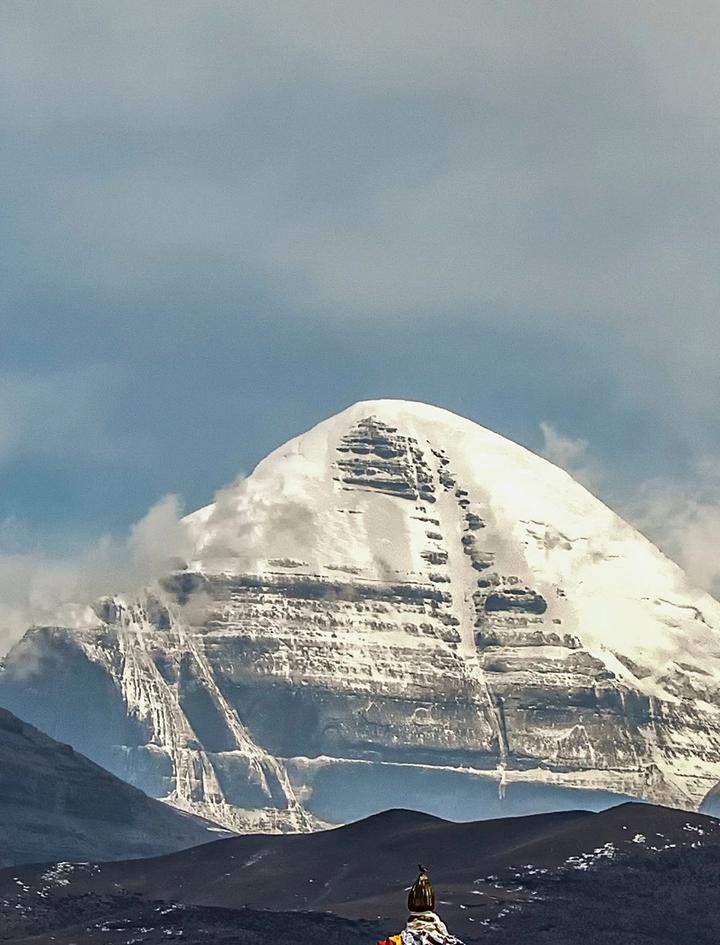
This trek suits you if you can walk 6 to 7 hours a day on remote trails, you have been above 4,500m before, and you are comfortable with basic lodges whose facilities get simpler above Tseram. It suits you if you want to reach the foot of the world's third-highest mountain in real wilderness and have 21 days to do it.
It does not suit a first-time trekker. It does not suit anyone who needs a clinic within an hour, anyone with a knee that complains on descents, or anyone who wants other trekkers on the trail. A group of up to 8 on a trail with no other group for days means the people you walk with matter more than usual.
I would send someone to the Everest Base Camp trek first, and then to this one.
How it compares in difficulty
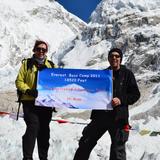
Everest Base Camp runs 15 days and reaches 5,545m, with teahouses along the way and a steady stream of trekkers in season. Kanchenjunga runs 21 days and reaches 5,143m, so the Everest trek has the higher single number. Kanchenjunga has more days, longer days, and far fewer people on the trail. Our Everest Base Camp difficulty guide covers the other side of that comparison.
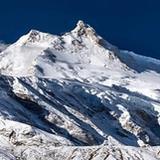
Manaslu is the closer match. Both are restricted-area treks that need a permit and a licensed guide, and both are quiet. The Manaslu argument is that isolation, not altitude, makes it hard, and the same logic applies here. Our Manaslu Circuit difficulty guide makes that case for the Larkya La route. Kanchenjunga is further east, the drive to the start is longer, and the trail is quieter again.
The Annapurna Circuit is the busy one of the group. It runs alongside roads for part of its length, and our Annapurna Circuit complete guide shows how much easier it is to leave. The Kanchenjunga trek has no such exit. That one fact is why I rank it above the other three, even though Everest Base Camp and the Annapurna Circuit both climb higher.
Cover photograph: high ground in the upper Ghunsa valley between Khambachen and Lhonak, by King james007 on Wikimedia Commons, licensed CC BY-SA 4.0.
Frequently Asked Questions
Is the Kanchenjunga trek harder than Everest Base Camp?
Yes, on days and distance from help. It takes 21 days against 15, with six days of 7 hours or more. Everest Base Camp reaches a higher point, 5,545m against 5,143m, but has teahouses and a steady stream of trekkers.
What is the hardest day on the Kanchenjunga trek?
Day 14 and day 15, back to back. Day 14 crosses three passes in about 7 hours. Day 15 climbs 870m from Tseram to Oktang and returns, about 8 hours.
Can a beginner do the Kanchenjunga trek?
We do not recommend it for a first Himalayan trek. The tour notes ask for 6 to 7 hours of walking a day and prior experience above 4,500m. A shorter trek makes a better start.
How many hours a day do you walk?
Between 5 and 8 hours on the 13 walking days, about 80 hours in all. The shortest days are 5 hours and the longest, the Oktang day, runs about 8.
How remote is the Kanchenjunga trek?
Very. Infrastructure is limited above 3,000m, the teahouses are basic, and a helicopter evacuation takes longer to arrange than in the Khumbu or Annapurna regions. A licensed guide goes with you throughout.