
- The Route: 14 Days from Lukla to Base Camp and Back
- What EBC Costs in 2026
- Altitude: The Part Most People Get Wrong
- When to Go (and When to Stay Home)
- Fitness: What "Moderate" Means on This Trail
- Packing: The Short Version
- The Lukla Flight: Everything They Don't Tell You
- A Few Things I Wish Every Trekker Knew Before They Came
The first time I saw someone turn back from Everest Base Camp, we were two hours below Lobuche. She was a fit woman, a marathon runner from the Netherlands. She had trained hard. She had good gear. She was throwing up on the side of the trail at 4,700 meters, and her lips had gone slightly blue. We sat with her for twenty minutes, gave her water, and I told her the truth: we needed to go down. She cried. Not because she was weak. Because she had wanted this for years and her body simply said no.
The trail teaches you things if you walk it enough times. You learn to read the cloud formations off Nuptse before the airline announces a cancellation. You learn that the porters warming their hands on a butter lamp at 2am know more about this mountain than most guidebooks. You learn when someone needs to turn around, and when they just need ten minutes and a cup of tea.
This is what the trail has taught me. Not what the brochures say. What the mountain says.
The Route: 14 Days from Lukla to Base Camp and Back
Most standard EBC itineraries run 12-16 days. We run 14. That extra time is not padding. It is the difference between people reaching Base Camp and people turning back sick at Dingboche.
Day 1: Fly Kathmandu to Lukla (2,860m). Trek to Phakding (2,610m).
The Lukla flight is 35 minutes and genuinely unforgettable. The runway ends at a wall. We will talk more about that flight later. From Lukla it is about 2.5 hours of easy downhill walking to Phakding. Use this afternoon to rest and hydrate. Do not push on. Your legs feel fine. Save them.
Day 2: Phakding to Namche Bazaar (3,440m). +830m gain.
This is the day most people underestimate. The trail is beautiful through pine forest and across wire suspension bridges, including a long one above the Dudh Kosi river with Thamserku visible ahead. The final push up the Namche hill is 600 vertical meters of steep switchbacks over roughly 2.5 hours. On the last bend before Namche, if the weather is clear, you get your first clean sight of Everest between Lhotse and Nuptse. Most people stop walking without realizing they have stopped.
Day 3: Acclimatization in Namche (3,440m).
Do not skip this. Sleep at Namche altitude, hike higher during the day. The standard acclimatization hike goes up to Everest View Hotel at 3,880m. The views of Ama Dablam and the Khumbu icefall are worth it. Spend the afternoon walking Namche's market lanes. There are good gear shops here if you forgot anything. Above Namche, there are none.
Days 4-5: Namche to Tengboche (3,860m) and on to Dingboche (4,410m).
Tengboche monastery is the most photographed location on the trail and for good reason. Mani Rimdu festival happens here in October or November. If your dates overlap, do not miss it. It is one of the most remarkable things you will see on this trail. Arrive for evening puja if you can. The air smells of juniper incense and the monks' horns carry across the valley for a mile.
From Tengboche the vegetation starts thinning. Shrubby rhododendrons, then low scrub, then open hillside. The first time you realize there are no trees anymore is somewhere between Pangboche and Dingboche.
Day 6: Rest and acclimatization in Dingboche (4,410m).
This is where altitude starts being real for most people. Headaches in the morning are normal. Poor sleep is normal. Feeling slightly stupid, like your brain is wrapped in cotton, is also normal. The acclimatization hike here goes up to Nagarjun peak at 5,100m. It is a hard 4-hour round trip, loose stone near the top, cold even in October. But sleeping that night at 4,410m after touching 5,100m is the best altitude insurance you can buy.
Day 7: Dingboche to Lobuche (4,940m). +530m gain.
This day is long and psychologically heavy. The terrain is moraine and loose glacial rubble. Chorten memorials line the ridge above Thukla for trekkers and climbers who died on Everest. People slow down here, and the silence has a different quality. Keep moving. Lobuche teahouses are small and usually full. Hotel Pyramid there has decent rooms but thin walls and you will hear your neighbour coughing all night at altitude.
Day 8: Lobuche to Gorak Shep (5,164m), then Base Camp (5,364m).
The trail from Lobuche to Gorak Shep crosses the lateral moraine of the Khumbu Glacier. It is rubble walking, mentally demanding, not technically difficult. Gorak Shep is a few teahouses clustered on a frozen lake bed. Drop your pack, eat something, and continue to Base Camp. The round trip is about 3-4 hours from Gorak Shep.
Base Camp itself is not what most people expect. We will cover that honestly in the final section. If you are looking for a longer challenge, consider extending into the Gokyo Valley or tackling the full Everest Three Passes Trek, which loops through Renjo La, Cho La, and Kongma La over 22 days.
Day 9: Gorak Shep to Kala Patthar (5,545m), then descend to Pheriche (4,240m).
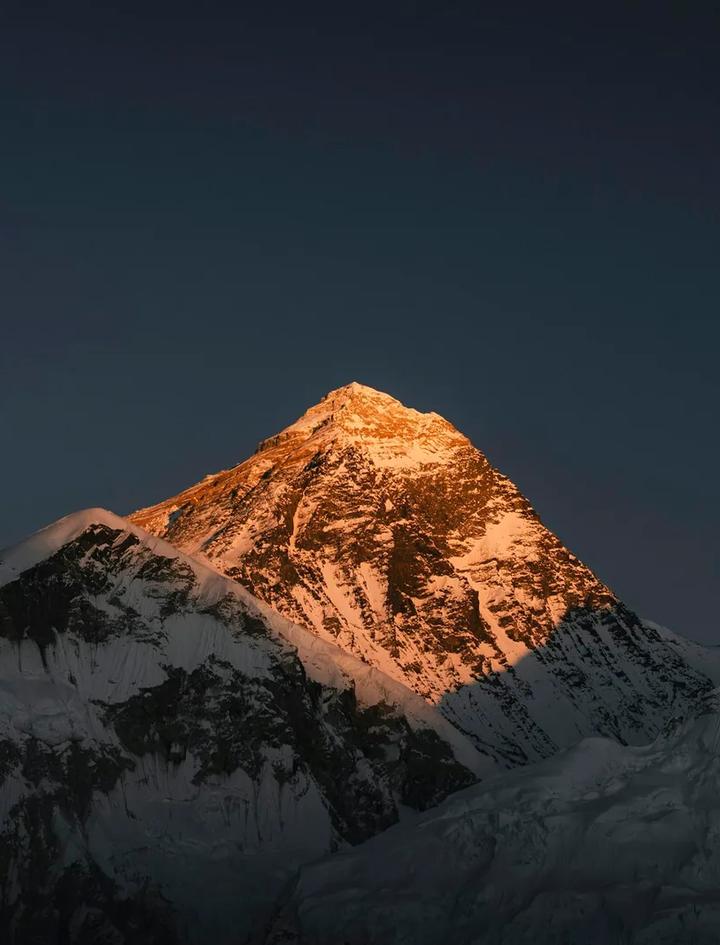
Pre-dawn departure. Cold. Very cold. This is the day. We leave Gorak Shep at 4am with headlamps and reach the summit of Kala Patthar by first light to see Everest's face as the sun hits it from the east. There is no photograph that captures it accurately. I have tried every season.
Days 10-14: Descent via Pangboche, Namche, Phakding, back to Lukla.
The descent is faster but hard on the knees. By Namche you will be eating double portions and sleeping like you have been sedated. The Lukla flight home feels surreal after two weeks at altitude.
What EBC Costs in 2026
Let me give you honest numbers.
Flights: Kathmandu to Lukla return runs approximately USD 180 each way with Tara Air or Summit Air, so roughly USD 360 round trip. Helicopter alternatives cost USD 400-500 per person one way. Book Lukla flights at least 3-4 weeks in advance in peak season.
Permits: TIMS card is NPR 2,000 for foreign trekkers. Sagarmatha National Park entry is NPR 3,000 for SAARC nationals, or approximately USD 30 (NPR 4,000+) for everyone else. Total permit cost: roughly NPR 5,000-6,000, call it USD 40-50.
Guide: A licensed guide costs USD 30-45 per day depending on experience. For 14 days of trekking, budget USD 420-630. This is non-negotiable as far as I am concerned. An experienced guide watches your oxygen saturation, reads weather, negotiates teahouse rates, and handles medical emergencies. The Nepal government also requires a licensed guide for Sagarmatha National Park as of recent regulations.
Porter: USD 25-35 per day. For 14 days, roughly USD 350-490. A porter carries up to 25kg (though we cap ours at 20kg out of basic decency). With a porter you carry a day pack of 4-5kg. Your knees will thank you above 4,000m.
Teahouses: NPR 500-1,500 per night (roughly USD 4-12) below Namche. Above Namche the prices rise with altitude: NPR 800-2,000 in Dingboche and Lobuche. Budget USD 5-15 per night on average.
Food: In Namche you might spend NPR 800-1,200 per day (USD 6-9) on three meals. In Gorak Shep you will spend NPR 3,000-4,500 per day (USD 22-34) because everything has been carried up by yak or helicopter and the teahouses know it. Average across the whole trek: USD 18-25 per day.
Gear rental in Kathmandu: If you do not own a down jacket, sleeping bag, or trekking poles, Thamel gear shops rent quality equipment. Budget NPR 1,000-1,500 per day for a full kit rental.
Full budget range:
- Budget-conscious independent trekker: USD 1,200-1,500
- Mid-range independent: USD 1,600-2,000
- Fully guided Mountain Hawk Trek EBC package (14 days): from USD 1,775, which covers licensed guide, all teahouses, airport pickup and drop-off, all permits, and a support porter ratio of 1:2
What the package does not include: international flights to Kathmandu, travel insurance (mandatory, minimum USD 50,000 evacuation cover), personal gear, and tips for your guide and porter.
On tipping: USD 200-250 for a 14-day guide and USD 100-150 for a porter is the accepted range. They earn it.
Altitude: The Part Most People Get Wrong
Altitude sickness does not care how fit you are. I have guided ultra-marathon runners who were completely stopped at 4,500m and watched 55-year-old retired teachers walk to Base Camp without a single headache. Fitness helps with endurance. It does not protect you from altitude.
Here is how altitude sickness works. As you climb, barometric pressure drops and your body gets less oxygen with each breath. Below 3,000m, most people barely notice. Between 3,000m and 4,000m, mild symptoms like headache, fatigue, and disrupted sleep are common. Above 4,500m, your body is working hard just to maintain normal function.
Acute Mountain Sickness (AMS) usually announces itself with a dull headache at the temples, nausea, and loss of appetite. Feeling tired is expected. Feeling confused or stumbling is not.
Where it hits hardest on EBC:
Namche (3,440m) causes the first noticeable symptoms for some people. But Dingboche (4,410m) is where we lose the most trekkers. The jump from Tengboche (3,860m) to Dingboche in one day is 550m. That is why the acclimatization day in Dingboche is not optional on any responsible itinerary.
Lobuche (4,940m) is the next serious altitude step. And Kala Patthar at 5,545m is the highest most EBC trekkers go. The cold at that altitude before dawn drops apparent temperature to -15C or colder with wind.
Diamox: I recommend 125mg twice daily, starting 24 hours before your acclimatization day in Namche. Some guides will say start it in Kathmandu; I prefer Namche because it gives you time to confirm no allergic reaction before you are deep in the Khumbu. Diamox is a diuretic, so you will urinate more and need to drink more water. Some people get tingling in fingers. Both are normal. If you have a sulfa allergy, speak to a doctor before using it.
The golden rule: climb high, sleep low. Every acclimatization day involves hiking to a higher point and returning to sleep lower. Your body needs the exposure.
When to turn back: Any combination of two or more serious symptoms requires descent immediately. Loss of coordination. Persistent vomiting. Severe headache that does not respond to ibuprofen or rest. Rattling chest. Confusion. High-altitude cerebral edema (HACE) and high-altitude pulmonary edema (HAPE) are both life-threatening and both are reversed by rapid descent. The mountains will still be there next year.
I have turned groups around at 4,700m when the right call was clear. It is never easy. It is always the right decision.
When to Go (and When to Stay Home)
October-November: Post-monsoon. The skies clear out by early October and stay sharp through most of November. You will see the mountains. These are also the busiest months. In peak October the trail from Namche upward can feel crowded at the narrow sections. Teahouses fill up; book ahead or have your guide call ahead. Daytime temperatures at Namche are around 10-14C. At Lobuche, 0-5C during the day and -10 to -15C at night.
March-May: The second-best window. Pre-monsoon brings rhododendrons from 2,000m to 4,000m; the valleys between Lukla and Namche are pink and red in late March and April. This is also peak season for the Annapurna Base Camp Trek and the Langtang Valley, so if your spring dates are flexible, you have options. It is warmer than autumn by 3-5 degrees at altitude. Clouds build in the afternoon more than in October, but mornings are usually clear. Slightly less crowded. I personally prefer April on this trail.
December-February: Cold and quiet. Some of the emptiest teahouses I have sat in were in January. Daytime at Lobuche can be -10C, nights -20C or colder. The Lukla flights are more reliable because the air is crisper and drier. If you are experienced, well-geared, and want the mountains to yourself, this is your window. If you are a first-time high-altitude trekker, do not start here.
June-September: The monsoon. Do not come. Trails are slippery, visibility is gone for days at a time, and leeches are thick in the lower sections below Lukla and between Phakding and Monjo. Some years the trail itself closes due to landslides. Even if you make it to Base Camp, you will likely see nothing but cloud from Gorak Shep.
Fitness: What "Moderate" Means on This Trail
When trekking companies write "moderate to strenuous" in their literature, those words are doing a lot of work.
The Everest Base Camp trek requires you to walk 6-8 hours per day on consecutive days, at altitude, often on rough terrain, carrying a pack. You will do this for 12-14 days in a row. Your legs will be tired by day 4. They stay tired until day 10. It goes with the territory.
You do not need to be an athlete. I have guided people in their 60s to Base Camp without drama. But they prepared properly. Six to eight weeks of training minimum:
- Weekend hikes of 4-6 hours wearing your actual boots and actual pack. Not a gym session. Hills.
- Stair climbing 3-4 times per week. A 20-story building two or three times counts. Use the pack.
- General cardio: swimming, cycling, running. Anything that elevates your heart rate for 45+ minutes.
The hardest days on the trail:
The Namche hill (Day 2). 600m of gain in roughly 2.5-3 hours, steep and relentless at the end. This day is when undertrained trekkers realize they miscalculated.
Dingboche to Lobuche (Day 7). Long. Cold. Moraine terrain. Psychologically grinding. No single hard section, just hours of accumulation.
Gorak Shep to Kala Patthar before dawn (Day 9). The summit push to 5,545m in the dark at -15C with a headlamp. By this point you have been trekking for 8 days and your legs have forgotten what it felt like to not ache. The last 100 vertical meters to the Kala Patthar summit ridge feel like climbing stairs with a bag of sand on your chest. Then you turn around and Everest is lit gold by the rising sun and none of it matters anymore.
The benchmark I use: if you can hike 6 hours continuously with a 10kg pack on consecutive days without quitting, you are ready. If you cannot, give yourself more time to prepare and book a later departure. And if EBC feels like too big a first step, the Ghorepani Poon Hill Trek or Mardi Himal Trek are shorter, lower altitude, and excellent ways to test your legs before committing to the Khumbu.
Packing: The Short Version
People overpack. Every year. I watch trekkers arrive in Lukla with 20kg bags and by Day 5 they are paying the local yak herder to carry their spare fleece.
The layering system that works:
Base layer (merino or synthetic, not cotton), mid layer (200-weight fleece), insulation layer (down jacket, minimum 600-fill, hood required above 4,500m), outer shell (waterproof, breathable, taped seams). That is four layers total. You will wear different combinations depending on altitude and whether you are walking or stopped.
Sleeping bag: Rated to -15C. At altitude in teahouses the rooms are cold, the blankets are thin, and you will not sleep well in a three-season bag above Dingboche.
Boots: Waterproof, above-ankle, broken in for at least 50 hours of hiking before the trip. New boots at altitude with 6 days still ahead of you is a specific kind of misery.
Trekking poles: Mandatory in my view. The descent from Lobuche to Pheriche in tired legs without poles is how knees get damaged. Go with two.
Water: Aquatabs or a SteriPen. Teahouses charge NPR 200-600 for a bottle of filtered water; that adds up fast. Bring a 2-liter platypus and purify from taps and streams (above 3,000m the water is generally clean if purified). Budget NPR 100-200 per day this way instead of NPR 1,000-2,000.
What people forget:
Sunscreen SPF 50 or higher. At 5,000m the UV index is extreme. I have watched trekkers get burned so badly on the Khumbu Glacier approach that they could not sleep on Day 8. Lip balm with SPF. Extra batteries for your headlamp (lithium last longer in cold). Cash in small bills (NPR 100 and NPR 500 notes, not NPR 1,000 if you can help it).
Total target pack weight with a porter: 8-10kg day pack. Without a porter: aim for 12-14kg maximum. More than that and the trail will collect payment from your knees.
The Lukla Flight: Everything They Don't Tell You
Tenzing-Hillary Airport in Lukla sits at 2,860m on a mountainside above the Dudh Kosi valley. The runway is 527 meters long, ends in a wall of mountain, and drops sharply off the other end. It is consistently listed as one of the most dangerous airports in the world. It is also the only practical way in and out of the Khumbu unless you plan the Jiri to Everest Base Camp route, which adds roughly a week of walking through the lower Solu region before joining the standard trail at Lukla.
The flights operate in the early morning. Tara Air and Summit Air both run Cessna Grand Caravans on this route. The window for safe flying is roughly 6am to 11am before thermals and afternoon cloud build up. If weather closes in, flights stop.
Cancellations are real and frequent. In October, which is the best weather month, I still plan for 2-3 days of cancellations over a two-week trip. In November the numbers get worse. In spring they are similar to October.
What happens when your flight cancels: This is where trekkers without guides panic and trekkers with guides stay calm. Your guide has seen this many times. The flight gets rescheduled, usually the next morning. You stay in Lukla, eat dal bhat, rest, and try again. Most itineraries carry a built-in buffer of 1-2 days for exactly this.
If you are on a hard deadline (connecting international flight, important meeting), the helicopter option exists. Lukla to Kathmandu by helicopter runs USD 350-450 per person. It is not scheduled like a flight; you call an operator and if the weather opens, they come. It usually works within a 6-12 hour window.
The landing itself: The pilots on this route are experienced beyond what their age sometimes suggests. Some of them have flown Lukla for 15-20 years. The aircraft comes in over the valley, you see the runway angling upward, and the brakes do the rest. It is over in 12 seconds. Your heart rate will be elevated regardless of how calm you think you are. Going out is the reverse: the aircraft rolls down the slope and drops off the edge into the valley below. Both are fine. Both will get your attention.
Do not book a Kathmandu-Lukla flight for the same day as your international departure. Always give yourself at least one buffer night in Kathmandu.
A Few Things I Wish Every Trekker Knew Before They Came
Cash.
The last ATM is in Namche Bazaar (3,440m). Above Namche, everything is cash. Bring more than you think you need, in smaller bills. NPR 50,000 is a reasonable amount for a 14-day trek if you include your share of guide and porter tips, daily food and accommodation, and incidental costs. Divide it into daily envelopes if it helps you track spending. Do not arrive in Namche with NPR 5,000 and assume you will manage.
Wifi and charging.
Most teahouses have wifi above Namche. It costs NPR 300-600 per device per day or per hour depending on the teahouse. It works well enough for WhatsApp and email. Video calls will be painful. Charging your devices (phone, camera, power bank) costs NPR 200-400 per charge above Namche because electricity is scarce and often solar-dependent. Budget NPR 500-700 per day for these two things and you will not be surprised.
Tipping culture.
Your guide and porter work very hard. They carry loads, watch your oxygen saturation, wake up at 4am to check weather, and arrange everything from teahouse rooms to emergency helicopter calls. The accepted tipping range: USD 200-250 for a guide over 14 days, USD 100-150 for a porter. Pay in cash. Pay directly. At Mountain Hawk Trek, we give you a tip envelope at the end of the trek because I believe guides and porters should be paid fairly, and most foreign trekkers genuinely want to do the right thing but are not sure of the right number.
Learn three Nepali words.
Namaste (hello, respect). Dhanyabad (thank you). Bistari bistari (slowly slowly). The last one is what Nepali porters say to each other on long climbs. If you say bistari bistari to yourself on the Namche hill, you will understand why.
What Base Camp looks like.
Instagram has created an expectation. The pictures show a sea of colorful tents against a backdrop of Everest's South Face, dramatic and clean. The reality: Base Camp during expedition season (April-May) does look something like that, with hundreds of tents clustered on the glacier. In October, when most trekkers go, the expeditions have packed up and left. Base Camp in October is moraine, rubble, prayer flags on cairns, and occasionally some orange tent remnants from the season. The Khumbu Icefall towers above it. The view of Nuptse, Lhotse, and the Everest ridge is extraordinary.
But Kala Patthar, the peak you summit on Day 9, is the real view. From Kala Patthar you see Everest's full face, south and west, with nothing blocking it. Every climber who summits Everest walks past you to reach the South Col route below. This is the panorama that justifies everything.
The thing I hope you take from this.
This trail has a way of reorganizing people's priorities. Accountants from London have cried at Tengboche monastery at sunset. People who thought they were the fittest person in any room have been humbled at 4,500m. Trekkers at Kala Patthar at 5am have said afterward it was the most significant thing they had ever done.
The Everest Base Camp trek is genuinely hard. It will demand more from you physically than most things in ordinary life. And it gives back in a proportion I have never seen matched by any other experience I can offer someone.
Go prepared. Go with a guide who knows the route in bad weather, not just good. And build in more rest days than you think you need. The people who enjoy this trail the most are the ones who stopped racing it somewhere around Day 3.
If you want to talk through your fitness level, your dates, or whether your planned itinerary makes sense, get in touch with us. We will be honest with you, even if that means telling you to wait another season.