
- Day-by-day difficulty breakdown
- The three things that make ABC hard
- 1. The stone staircases (Day 5)
- 2. The altitude push (Day 9)
- 3. Cumulative fatigue (Days 7 onward)
- Can beginners do the Annapurna Base Camp trek
- The fitness self-test: are you ABC-ready
- Altitude sickness at 4,130m
- How ABC compares to other Nepal treks
- 8-week training plan
- Next steps
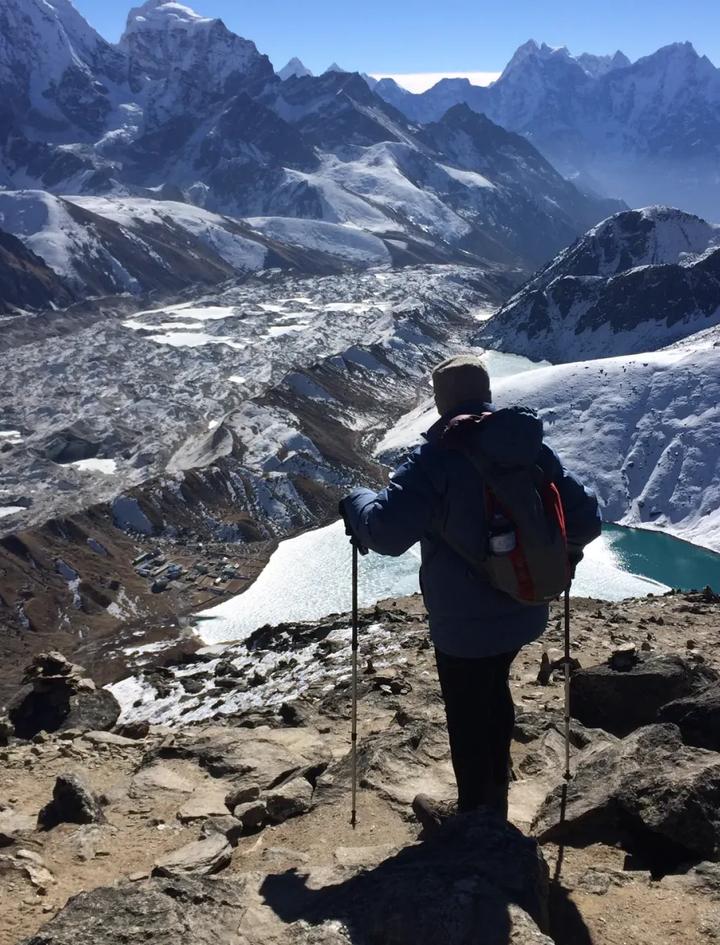
The Annapurna Base Camp trek is rated Moderate. That is accurate but incomplete. "Moderate" does not tell you about the 3,200 stone steps between Tikhedhunga and Ulleri on Day 5, or the 1,330m altitude push to base camp on Day 9 when your legs have already been walking for a week.
This guide exists because difficulty is not a single number. Some days on the ABC trek are easy. Two of them are genuinely hard. The rest sit in between. Knowing which days demand what, and whether your body is ready for it, is the difference between reaching base camp comfortably and grinding through it.
The headline numbers: 4,130m maximum altitude, 9 trekking days, 5 to 7 hours of walking per day, 95 to 98 percent success rate. No ropes, no crampons, no mountaineering skills. Teahouses at every stop. For the full route and costs, read the ABC complete guide and the ABC cost breakdown.
Day-by-day difficulty breakdown
This is MHT's 16-day itinerary, which includes Kathmandu, Pokhara, and the Poon Hill extension. The trekking portion is Days 4 through 12.
| Day | Route | Elevation | Gain/Loss | Hours | Difficulty |
|---|---|---|---|---|---|
| 4 | Nayapul to Tikhedhunga | 1,440m | +570m | 5h | Easy |
| 5 | Tikhedhunga to Ghorepani | 2,800m | +1,360m | 6h | Hard |
| 6 | Ghorepani to Tadhapani (Poon Hill sunrise) | 2,650m | -150m net | 5h | Moderate |
| 7 | Tadhapani to Chhomrong | 2,117m | -533m net | 6h | Moderate |
| 8 | Chhomrong to Himalaya | 2,800m | +683m | 6h | Moderate to Hard |
| 9 | Himalaya to Annapurna Base Camp | 4,130m | +1,330m | 6h | Hard |
| 10 | ABC to Bamboo | 2,400m | -1,730m | 5h | Moderate (knees) |
| 11 | Bamboo to Jhinu Danda | 1,780m | -620m | 6h | Easy to Moderate |
| 12 | Jhinu Danda to Nayapul, drive to Pokhara | 865m | -915m | 4h trek | Easy |
Two days are hard. The rest are manageable. If you understand what makes Day 5 and Day 9 hard, you can prepare for them specifically.
The three things that make ABC hard
1. The stone staircases (Day 5)
The trail between Tikhedhunga and Ghorepani climbs 1,360m through dense forest on stone steps cut into the hillside. The staircase to Ulleri alone has over 3,200 steps rising continuously for roughly 2 hours with no flat rest sections. This is the single most physically demanding stretch on the entire trek, and it happens on Day 2 of walking when your body is still adjusting.
The steps are not uniform. They vary in height from 15cm to 40cm, which is harder on the legs than a consistent staircase. After Ulleri (2,050m), the trail continues climbing through rhododendron forest to Ghorepani (2,800m). By the time you arrive, you will have gained more vertical elevation than any other day on the trek.
How to prepare: stair climbing with a loaded daypack (5 to 8kg) is the single best training exercise for this day. If you can climb 50 floors of stairs (roughly 150m of elevation) without stopping, the Ulleri staircase will be hard but manageable.
2. The altitude push (Day 9)
Day 9 climbs from Himalaya (2,800m) through Machhapuchhre Base Camp (3,700m) to Annapurna Base Camp (4,130m). The 1,330m gain happens above 3,500m, where the air has roughly 60 percent of the oxygen available at sea level. Your heart rate increases, your pace slows, and efforts that felt normal at 2,000m feel heavy.
This is also Day 6 of consecutive walking. Cumulative fatigue compounds the altitude effect. Most trekkers who struggle on the ABC trek struggle here, not because the terrain is steep (it is actually gentler than Day 5) but because their body is doing two things at once: fighting fatigue and adapting to thin air.
3. Cumulative fatigue (Days 7 onward)
Six to seven hours of walking per day, every day, adds up. By Day 7 or 8, your legs are heavy, your feet may have blisters, and your appetite may dip. This is normal. It does not mean you are failing. It means your body is working. Rest days are not built into MHT's standard ABC itinerary because the altitude profile (4,130m) does not require a dedicated acclimatization day. But pacing yourself on Days 7 and 8, hydrating aggressively, and sleeping well matters more than it does on Days 4 and 5.
Can beginners do the Annapurna Base Camp trek
Yes. ABC is the most common first Himalayan trek, and for good reason.
Why ABC works for beginners:
- Maximum altitude of 4,130m is below the threshold where serious altitude sickness becomes common (typically above 4,500m)
- Teahouses at every stop with beds, meals, and hot showers
- No technical terrain. The trail is well-maintained steps, dirt path, and suspension bridges.
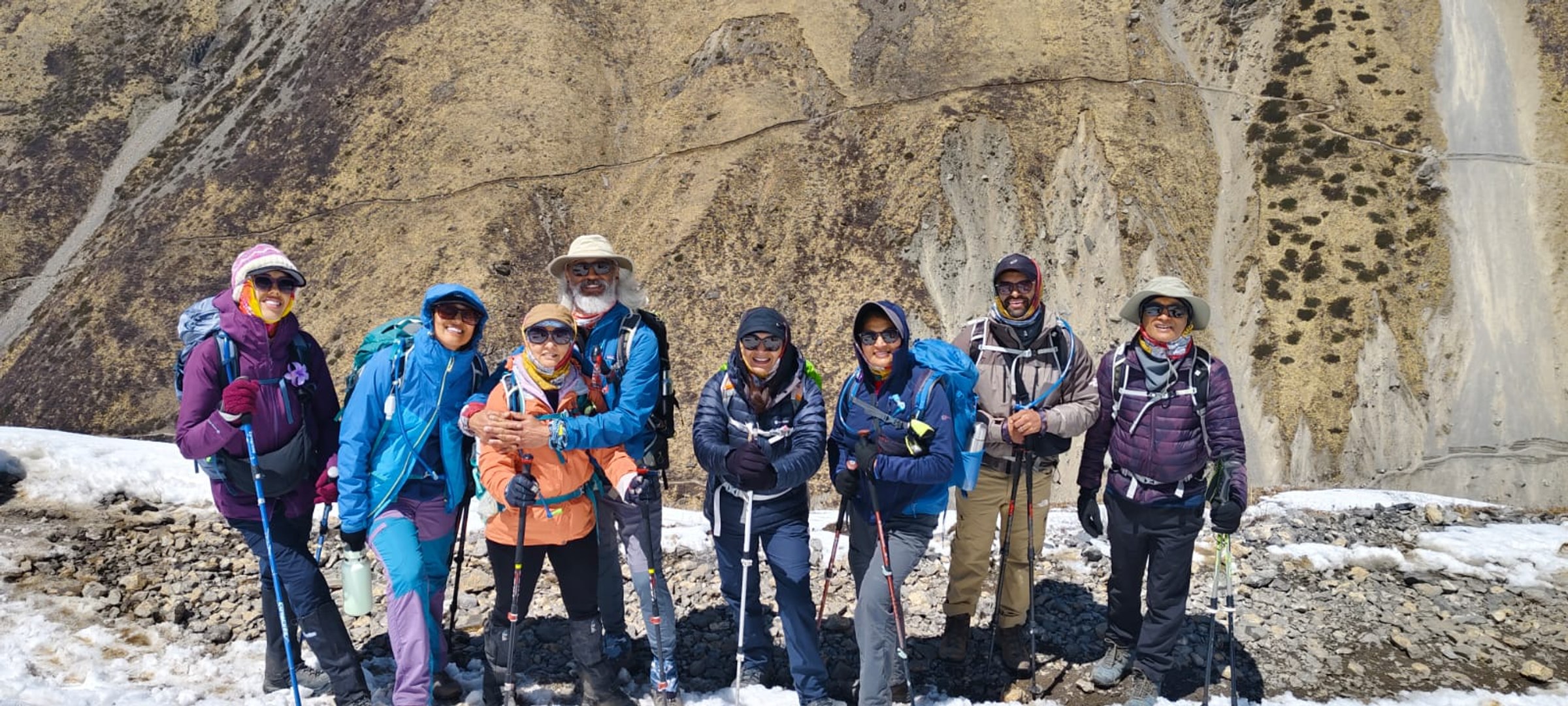
- The Annapurna Conservation Area is well-trafficked. You are rarely alone on the trail.
- Helicopter evacuation is available from multiple points
Who should not attempt ABC without prior experience:
- Anyone who has never hiked more than 3 hours in a single day
- Anyone with unmanaged heart, lung, or blood pressure conditions (consult your doctor)
- Anyone uncomfortable sleeping in basic shared accommodation (teahouses are not hotels)
If ABC feels too ambitious as a first trek, start with Poon Hill (10 days, $675, max altitude 3,210m, Easy). Poon Hill covers the same stone staircases as ABC Days 4 to 6 but stops before the altitude challenge. It is the ideal test run.
The fitness self-test: are you ABC-ready
No competitor gives a concrete benchmark. Here are four:
Test 1: The stair test. Climb 50 floors of stairs (or roughly 750 steps) wearing a 7kg daypack without stopping. If you can do this in under 40 minutes, the Ulleri staircase will be hard but achievable. If you need to stop multiple times, train for 4 more weeks.
Test 2: The consecutive day test. Hike 5 to 6 hours on hilly terrain on two consecutive days. If you feel recovered enough on the morning of Day 2 to go again, your endurance baseline is sufficient. If Day 2 feels impossible, your recovery capacity needs work.
Test 3: The loaded walk test. Walk 10km on mixed terrain (flat + hills) with a 7kg daypack. If your knees, ankles, or hips are in pain afterward (not just tired), address the specific weakness before the trek. Knee pain on descents is the most common issue and responds well to strengthening exercises for the quadriceps and IT band.
Test 4: The altitude proxy. If you have hiked above 3,000m anywhere in the world (Colorado, the Alps, Kilimanjaro approach, Andes) and felt fine, your body likely handles moderate altitude well. If you have never been above 2,000m, you have no data point, which is not a problem but means the altitude days (8 and 9) will be an unknown. Diamox prophylaxis and aggressive hydration are your insurance.
Altitude sickness at 4,130m
ABC's maximum altitude (4,130m) is below the severe AMS danger zone. For context, Everest Base Camp is 5,364m. The Annapurna Circuit crosses 5,416m. ABC sits in the zone where mild symptoms are common and serious complications are rare.
What to expect above 3,500m:
- Mild headache (60 to 70 percent of trekkers experience this)
- Disrupted sleep (waking frequently, vivid dreams)
- Reduced appetite
- Slight shortness of breath on exertion
These are normal altitude adjustment symptoms, not emergencies. They typically resolve within 24 to 48 hours or upon descent.
When to descend immediately:
- Severe headache not relieved by ibuprofen and hydration
- Vomiting
- Inability to walk in a straight line (ataxia)
- Confusion or unusual behavior
- Crackling sounds when breathing (HAPE)
AMS incidence on the ABC trek: Around 20 to 30 percent of trekkers experience mild symptoms above 3,500m. Severe AMS is rare at 4,130m. The ABC trek has an effective mortality rate near zero from altitude itself. Recorded fatalities in the Annapurna region are overwhelmingly from avalanches and landslides, not altitude sickness.
Diamox: Consult your doctor before the trek. The typical prophylactic dose is 125mg twice daily starting 24 hours before ascending above 3,500m. Side effects include tingling in fingers and toes and increased urination. Not everyone needs it at ABC altitudes.
How ABC compares to other Nepal treks
| Trek | Max altitude | Duration | Difficulty | Hardest challenge | Best for |
|---|---|---|---|---|---|
| Poon Hill | 3,210m | 4-5 days | Easy | Stone stairs to Ulleri | Complete beginners |
| Mardi Himal | 4,500m | 5-7 days | Moderate | Steep ridge trail above 3,500m | Quieter alternative to ABC |
| ABC | 4,130m | 9 trekking days | Moderate | Stone stairs + altitude push | First Himalayan trek with prep |
| Langtang | 4,773m (Kyanjin Ri) | 7-8 days | Moderate | Sustained uphill days 3-5 | Gentler terrain, fewer stairs |
| EBC | 5,364m | 12-14 days | Moderate to Hard | Altitude above 4,500m for 4+ days | Experienced trekkers |
| Annapurna Circuit | 5,416m | 14-20 days | Moderate to Hard | Thorong La pass, 20-day duration | Endurance trekkers |
ABC vs EBC is the most common question. ABC is easier because of lower altitude (4,130m vs 5,364m), shorter duration, and less cumulative altitude exposure. But ABC has steeper daily elevation changes, particularly the Ulleri staircase. EBC terrain is more gradual. Read the full EBC vs ABC comparison.
ABC vs Poon Hill: Poon Hill covers the same stone staircases (Days 4 to 6 of the ABC itinerary are the Poon Hill trek) but stops at 3,210m. If you complete Poon Hill comfortably, ABC is within reach. Read the Poon Hill vs Mardi Himal vs ABC comparison.
8-week training plan
No gym required. All exercises use body weight, stairs, and a loaded daypack.
| Week | Cardio (3x/week) | Strength (2x/week) | Weekend hike |
|---|---|---|---|
| 1-2 | 30 min brisk walking | 3x15 squats, 3x10 lunges, 60s plank | 2-hour walk, flat terrain, no pack |
| 3-4 | 40 min walking with hills or stair climbing | 3x20 squats, 3x15 lunges, 90s plank, 3x15 step-ups | 3-hour walk, hilly terrain, 3kg pack |
| 5-6 | 50 min, include 15 min stair climbing with 5kg pack | 3x20 squats, 3x15 lunges, 2 min plank, 3x20 calf raises | 4-hour hike, hilly terrain, 5kg pack |
| 7-8 | 60 min, include 20 min stair climbing with 7kg pack | Maintain Week 5-6 routine | 5-6 hour hike, hilly terrain, 7kg pack, do this on two consecutive days in Week 8 |
The consecutive-day hike in Week 8 is your dress rehearsal. If you complete two back-to-back 5-hour hikes with a 7kg pack and feel tired but functional the next morning, you are ready for ABC.
Next steps
The Annapurna Base Camp trek runs September through May, with October to November and March to April as the strongest windows. Mountain Hawk Trek's 16-day package costs $1,275 per person including guide, porters, full board, permits, and Kathmandu/Pokhara hotel nights.
For questions or to discuss dates, contact us. For route and cost details, read the ABC complete guide and the ABC cost breakdown.