Best Time · Island Peak

Island Peak Climbing in February

Tough seasonLate winter: still brutal at High Camp, but the season begins to loosen
0 to 4°C
Daytimeat Chukhung
-15 to -20°C
Overnightat Island Peak High Camp
3-4 days
Rain / Snowdays with precipitation
Quiet
Trail Trafficvisibility excellent
Island Peak, the year at a glance

February keeps January’s cold at Island Peak’s High Camp, nights still well below minus 15°C, but days stretch longer and the headwall ice begins to lose its hardest winter edge by the final week. It suits the same cold-hardened climber as January, with slightly better odds toward month’s end. Most climbers should still wait for April or October.

Weather by altitude

February temperatures, valley to high camp

WaypointElevation Day Night
Namche Bazaar3,440m4 to 8°C-8 to -3°C
Dingboche4,410m1 to 5°C-13 to -8°C
Chukhung4,730m0 to 4°C-16 to -11°C
Island Peak High Camp5,600m-5 to 0°C-20 to -15°C

February behaves like January with a little of the edge filed off. Winter high pressure still dominates the sky, delivering the same runs of hard blue days, but each week hands back a few more minutes of daylight and the headwall’s iron-hard January ice starts to soften at its margins by the last ten days. Wind remains the number that matters more than the thermometer on summit morning; a calm minus 18°C High Camp night is a kinder start than a windy minus 10°C one.

On the trail

Trail conditions in February

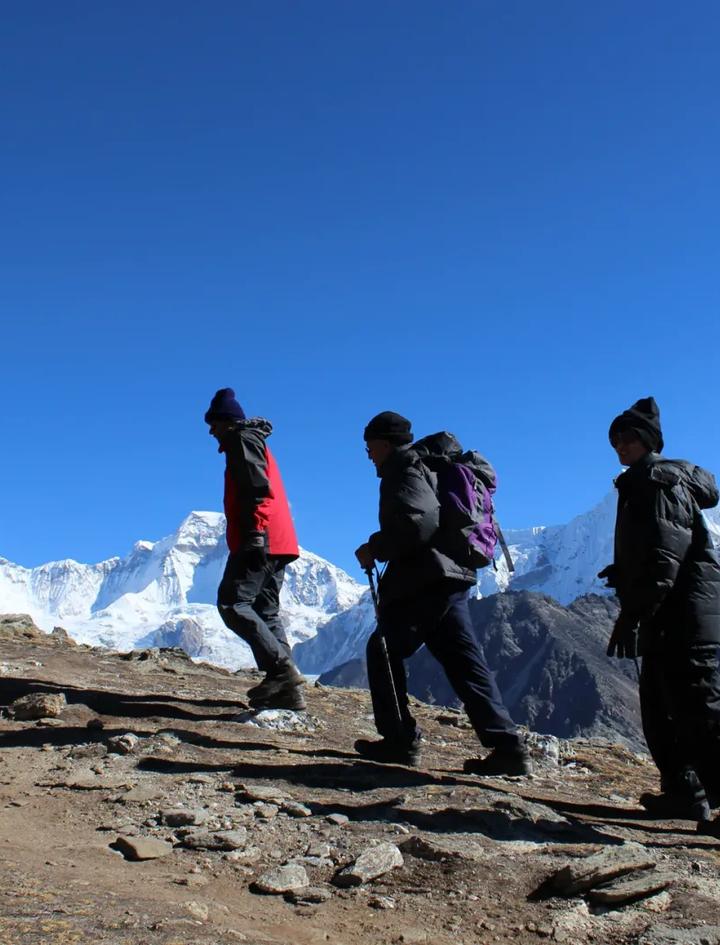
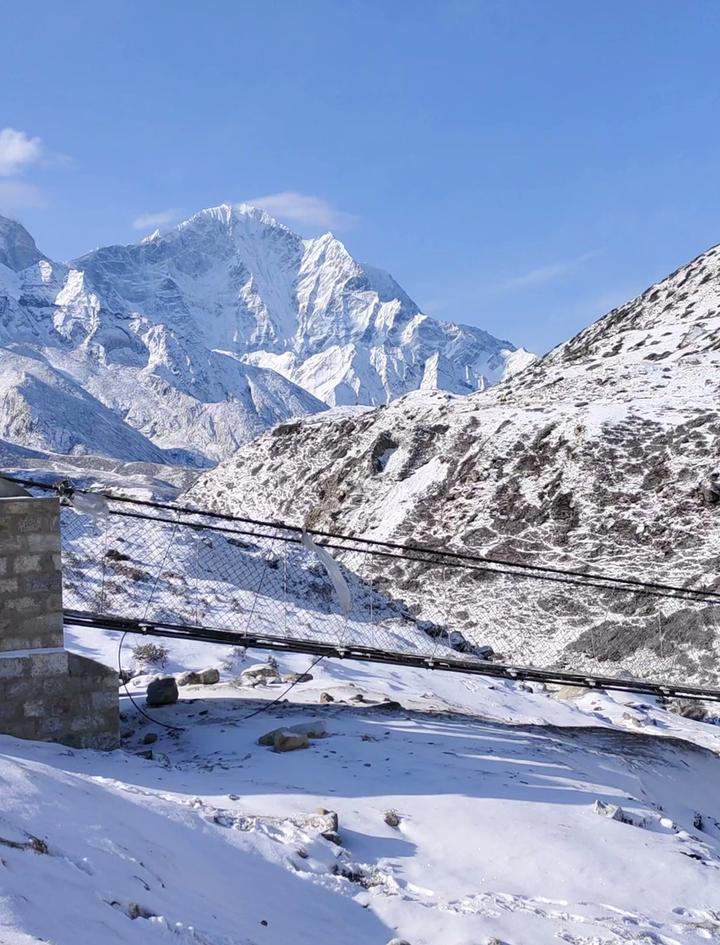
Underfoot on the EBC section, February is a slightly gentler version of January: firm, frozen, and quiet, with ice holding in the same shaded pockets between Tengboche and Dingboche. By late February, buds are fattening on the rhododendron below Namche, a small sign of the season to come that has nothing to do with the climb ahead but is hard not to notice on the walk in.

On the Imja Glacier, snow bridges over the crevasses are still thin and cold, and the climbing Sherpa’s rope-team pace stays conservative through most of the month. The headwall is the real February story: still icy enough in the first half to demand patient front-pointing, but by the final week the difference between a February ascent and an April one starts to narrow.
Crowds & teahouses

Who else is up there

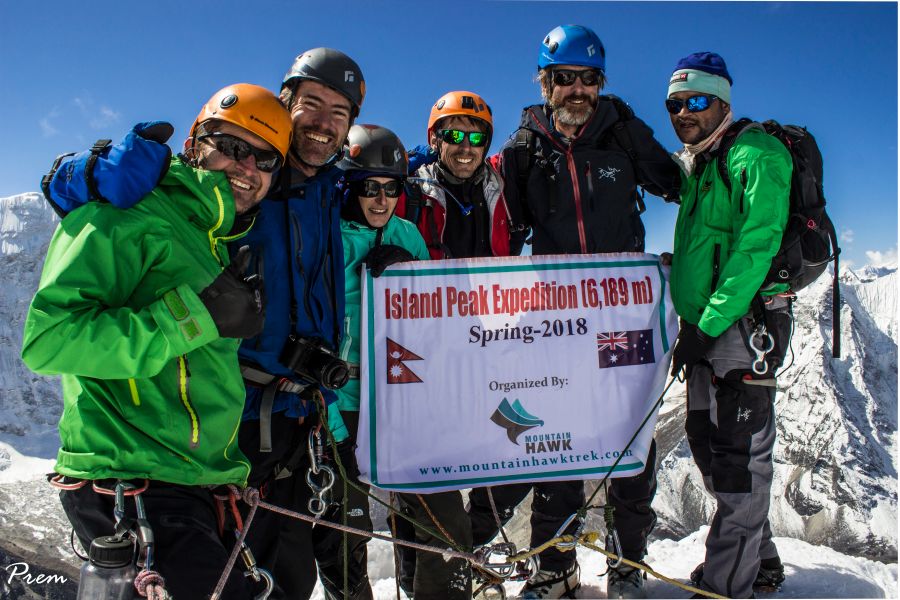
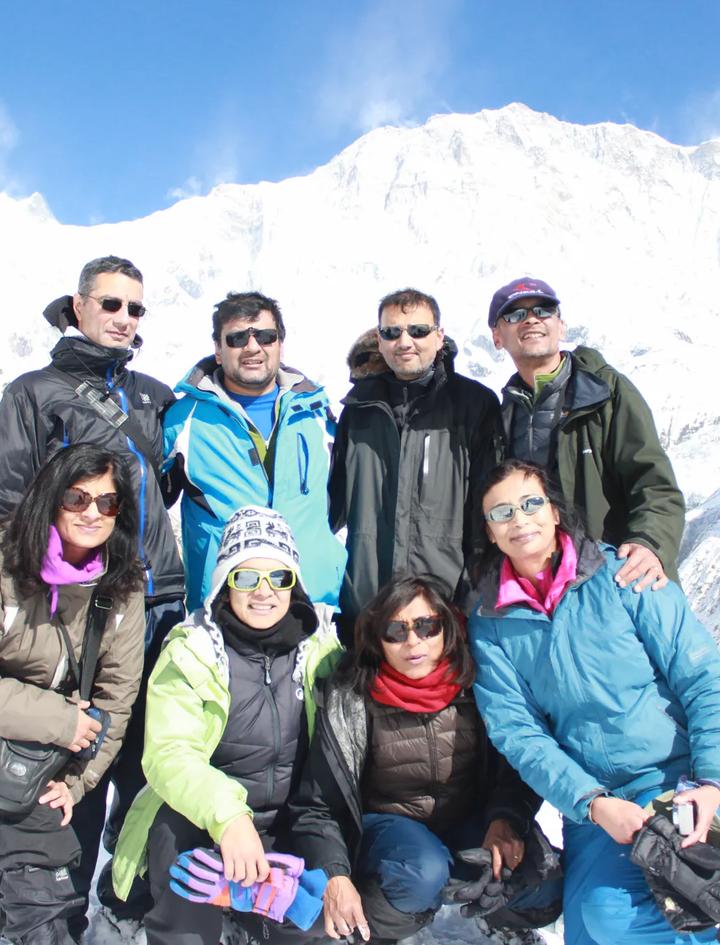
Numbers stay low through most of February, a notch above January but nowhere near spring volume. Chukhung and the tented camps above it see the occasional other party rather than a queue, and Pareshaya Gyab keeps its skills-session rope to yourselves most days. By the very end of the month, lodge owners in Namche and Dingboche start restocking ahead of March, a quiet signal that the season is about to turn.

Getting in & out

Flights, roads and logistics

Flights to Lukla still run direct from Kathmandu for most of February, and seats are easy to find outside the odd bad-weather week. Morning fog at Kathmandu and wind at Lukla remain the two delay risks, both usually costing hours rather than days this early in the year. One buffer day each way is the sensible minimum; the day 18 Kathmandu buffer on this itinerary is your only true insurance against a stacked delay before an international flight.

Pack for February

What changes this month

Frequently asked

February questions

Nepal trekking season 2026

Some mountains
don't wait

Permits close. Weather windows narrow. The best Everest region teahouse beds fill by October, and spring season opens again in March. Our Kathmandu team is already booking for autumn. If you have been planning a trek, this is the window.

TAAN & NTB certified15 years on these trailsResponse within 2 hours