- The two ways to climb Island Peak, and what USD 200 buys
- The NMA permit fee, corrected
- What else is already in the price: garbage deposit and the smaller permits
- Staff on the mountain, and the tip that isn't optional
- Gear: what's loaned, what you rent
- Flights, and the insurance gap at 6,189m
- Budget, standard, or premium: where our price sits
- Island Peak versus Mera Peak, cost side
- Frequently Asked Questions
Climbing Island Peak with Mountain Hawk Trek costs USD 2,175 per person for the 19-day route with Everest Base Camp, or USD 1,975 for the 16-day direct route via Chukhung. Both prices already include the full permit stack alongside the trekking and climbing logistics. That matters more than it sounds like it should, because most of what gets written about Island Peak climbing cost treats permits as a separate line item you tally up afterward.
This article prices the real product, what the number covers, and the smaller number you add on top of it. It also corrects an NMA permit fee that, as far as this research could find, every currently ranking competitor page still gets wrong. For the climb itself, the headwall, the summit ridge, the training plan, the complete Island Peak climbing guide covers that ground. Here, the job is the wallet.
The two ways to climb Island Peak, and what USD 200 buys
Mountain Hawk Trek runs two Island Peak departures, and they are not the same trip at two price points. They are two different decisions.
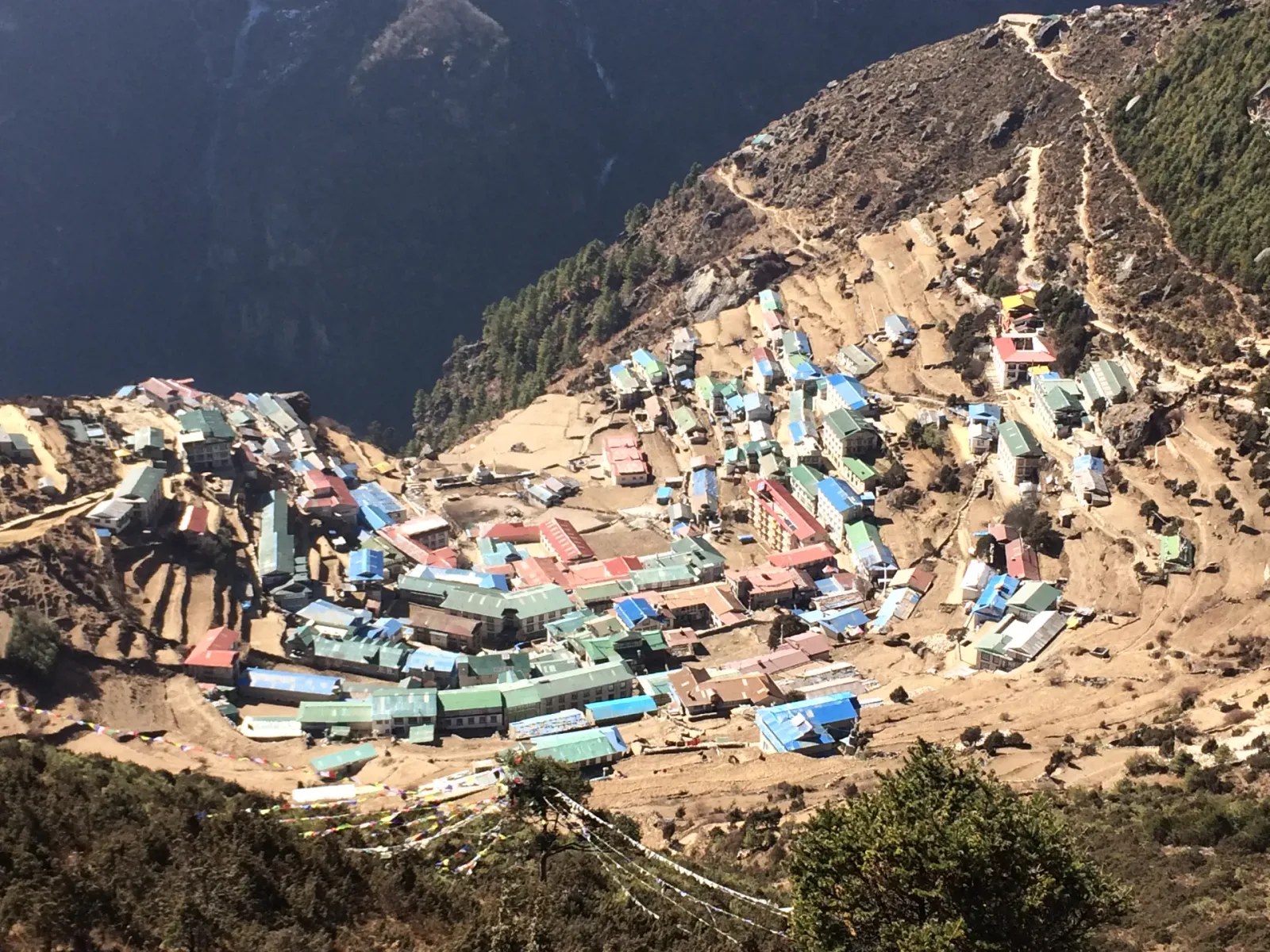
The Island Peak Climbing package runs 19 days and follows the classic Everest Base Camp route through Namche, Tengboche, and Dingboche before diverting to Chukhung and Island Peak Base Camp. You visit Everest Base Camp itself and climb Kala Patthar for sunrise, then continue on to the peak. Price: USD 2,175 per person.
The Island Peak Expedition runs 16 days and goes direct to Chukhung, skipping the EBC and Kala Patthar detour entirely. Same summit, same 6,189m, same permits, same climbing Sherpa. Price: USD 1,975 per person.
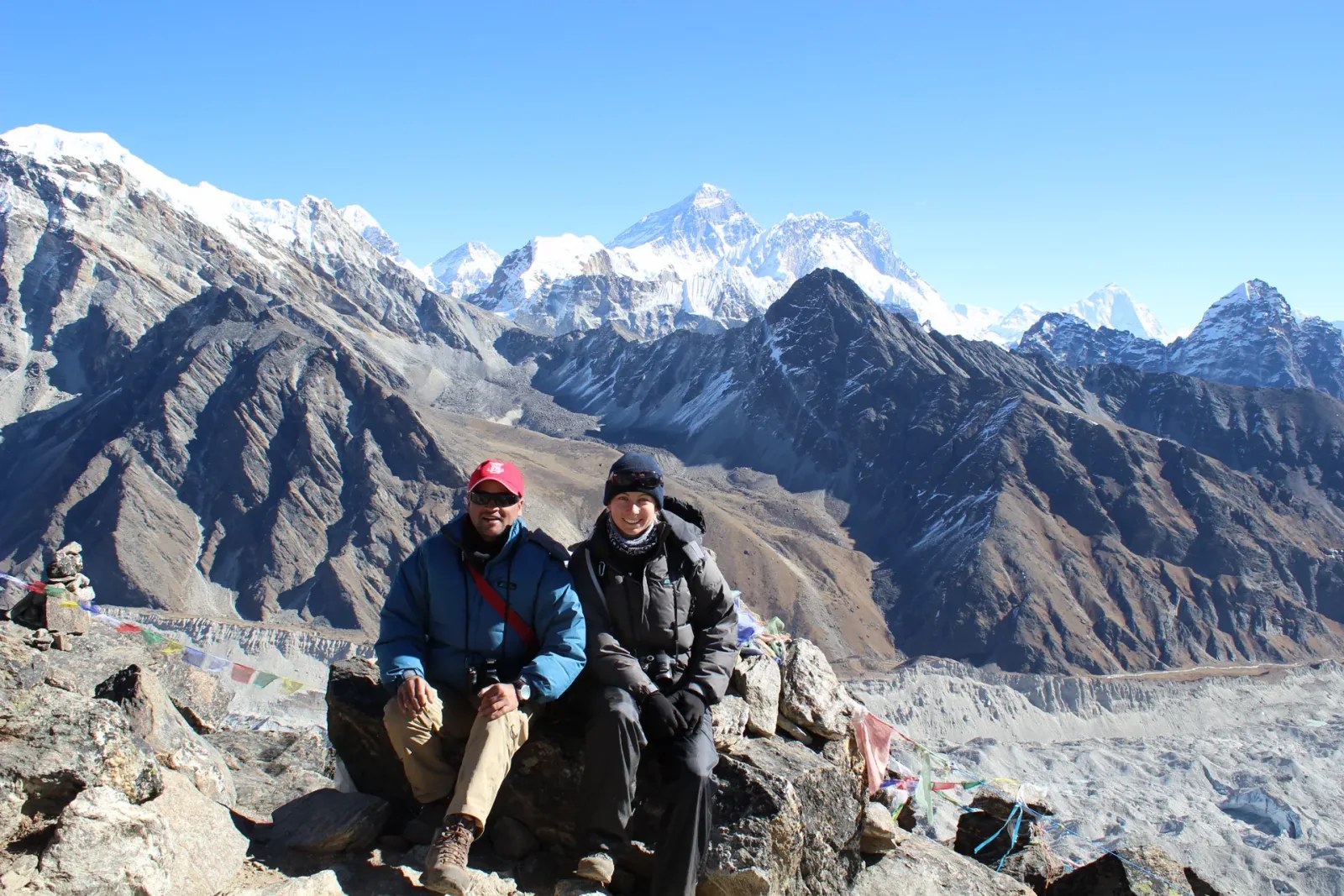
The gap between them is exactly USD 200. That buys three extra trekking days, a visit to Everest Base Camp (5,364m), and the Kala Patthar sunrise viewpoint (5,545m), the single most photographed vantage point in the Khumbu. For USD 200, most climbers who have the leave time take the 19-day route without much deliberation. The 16-day version exists for a genuinely different reason: it suits climbers who have already stood at EBC on a previous trip, or who simply cannot free up three more days. It is not the budget option. It is the shorter one.
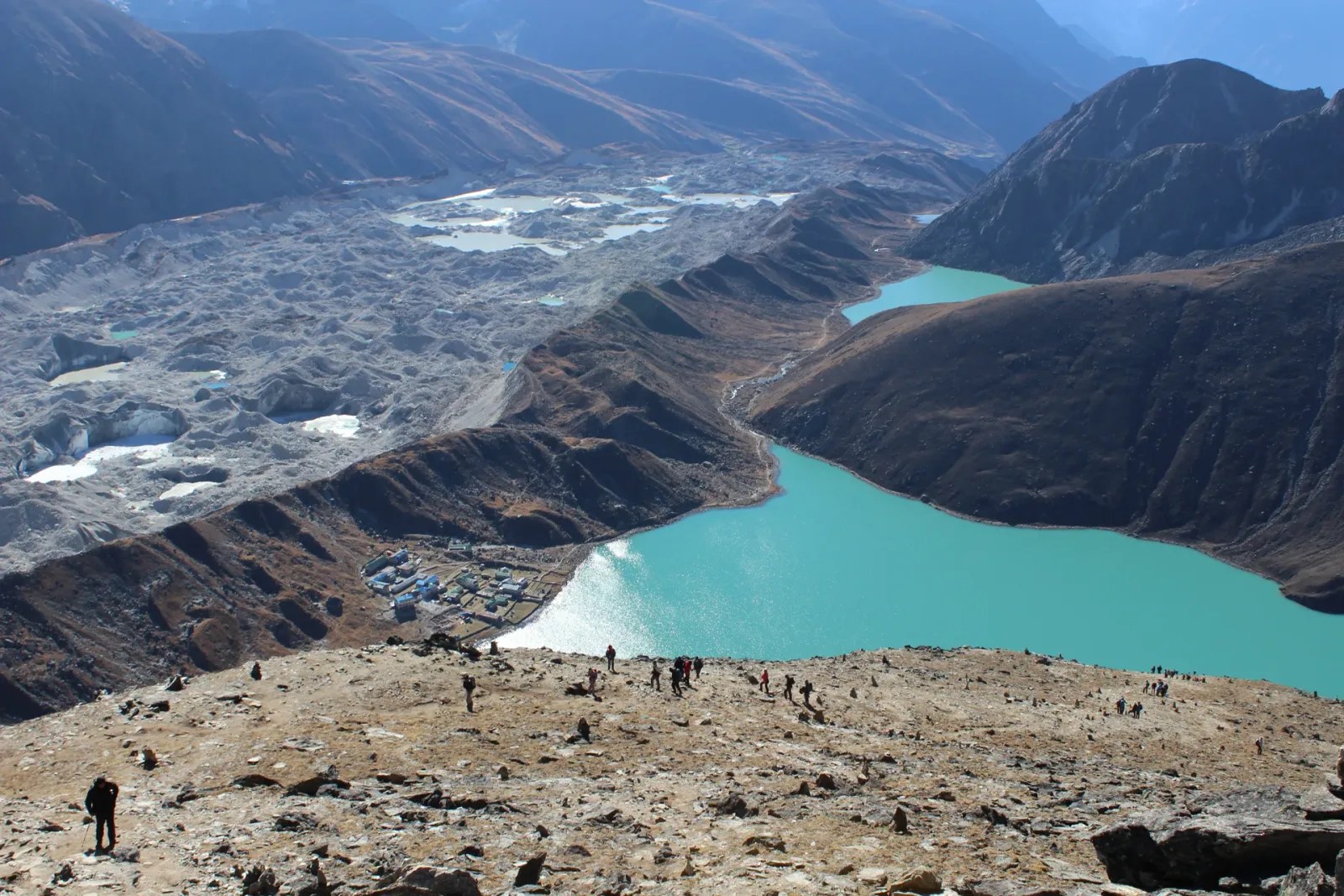
There is a real cost logic underneath that USD 200, and it deserves naming. Three more trekking days mean three more nights of teahouse lodging and meals, and the EBC and Kala Patthar detour adds distance without adding any climbing risk or technical difficulty. You are simply walking further before you turn toward Chukhung. Our Everest Base Camp cost breakdown prices that portion of the route on its own if you want to see exactly what those extra days are worth as a trek in their own right. Trekkers looking to go further still sometimes extend through Gokyo and Cho La before their Island Peak attempt; our Gokyo Lakes difficulty guide covers what that adds to the itinerary.
The NMA permit fee, corrected
One number matters more than the rest, because it is the one nearly every other page about this climb currently states wrong. The NMA climbing permit for Island Peak costs USD 350 per person in spring and USD 175 in autumn, winter, and summer. That rate took effect September 1, 2025, when the Nepal Mountaineering Association raised royalties across more than 30 peaks, Island Peak among them, alongside Mera Peak and Lobuche East in the same Group B bracket.
We checked the pages currently ranking for Island Peak cost queries. Every one of them, without exception, still quotes the older figures, roughly USD 250 in spring and USD 125 in autumn, some going as low as USD 70 for winter and summer. One page states a flat USD 1,500 group fee that doesn't match any other source found and reads like an error rather than a real rate. None state the current USD 350/175 figure. That is close to a 40 percent jump on both seasons, and it is the kind of number a climber comparing quotes would notice if an operator's pricing has not caught up.
This fee is not something you add to USD 2,175. It is already inside it. Both Island Peak departures include the NMA permit as a matter of course, priced for the correct current season and folded into the headline number you see on the tour page. So does every other permit on this mountain. That matters beyond bookkeeping, because of what it tells you about a suspiciously cheap quote elsewhere. If another operator's price looks a few hundred dollars lower than ours and their permit figures still show the pre-2025 rate, either their quote is stale or their margin is about to take a hit they will pass on to you later. Neither is a good sign to book against.
What else is already in the price: garbage deposit and the smaller permits
Three more items sit inside the USD 2,175 and USD 1,975 figures, and none of them show up as a separate invoice line on either of our departures.
The NMA requires a USD 500 garbage deposit per expedition group, refundable once the team descends with proof its waste came back down too. This is one of the more stable figures in Island Peak cost research generally: every source checked quotes the same USD 500 group amount, and it does not vary by season. In practice your operator pays it up front and handles the refund paperwork, so it never becomes something you personally chase.
Two smaller permits stack on top of the NMA fee: Sagarmatha National Park entry, NPR 3,000 (approximately USD 25), and the Khumbu Pasang Lhamu Rural Municipality fee, NPR 2,000 (approximately USD 15). Combined, that is roughly USD 40, and both are included in the package price on either route.
Worth stating plainly, because it trips up first-time climbers researching Nepal permits generally: Island Peak requires no TIMS card. The route runs entirely inside Sagarmatha National Park, and the permit system there works differently from the TIMS-card regions covered in trekking guides for other parts of the country. What you need is the NMA climbing permit, the national park entry, and the municipality fee, in that order of size. None of the three can be obtained independently as a foreign climber; all three come through a registered agency. Our Nepal trekking permits guide covers how this differs from TIMS-based regions if you're planning a multi-region trip.
| Item | Cost | Status |
|---|---|---|
| NMA climbing permit | USD 350 spring / USD 175 autumn, winter, summer | Included in package |
| Garbage deposit | USD 500 per group, refundable | Included in package |
| Sagarmatha National Park entry | NPR 3,000 (~USD 25) | Included in package |
| Khumbu Pasang Lhamu Rural Municipality fee | NPR 2,000 (~USD 15) | Included in package |
| TIMS card | Not required | N/A |
Staff on the mountain, and the tip that isn't optional
Both packages include a licensed trekking guide, a climbing Sherpa, and porters, along with their own food, accommodation, and insurance. The climbing Sherpa is the person who manages the fixed ropes and leads the technical sections on summit day, and their work on the headwall is a different job entirely from the trekking days that come before it.
Tipping sits outside the package price. It is the one staff cost you plan for yourself. Budget USD 120 to 180 total per climber across the whole trip, weighted toward the climbing Sherpa given the summit-day workload. That figure is the one we publish on our own tour page, not a number borrowed from an industry average. Have it in cash before you leave Kathmandu. Improvising at Chukhung on the last night is how people end up short.
Gear: what's loaned, what you rent
Both departures include a down jacket, sleeping bag, and duffel bag on loan, along with all the group climbing hardware: fixed ropes, ice screws, snow bars, and the fixed line on the headwall itself. That covers the bulkiest and most expensive items most climbers would otherwise need to source on their own.
What's left is the personal technical kit: mountaineering boots, crampons, a climbing harness, an ice axe, a helmet, and a jumar for ascending the fixed ropes. Renting the full set for the trip runs USD 100 to 150 in total, and Thamel in Kathmandu is generally the cheaper place to source it than waiting until Chukhung, where everything has traveled up the valley on someone's back and prices reflect that. Buying only makes financial sense if a second high-altitude trip is already on the calendar. For a single Island Peak summit, renting whatever the package doesn't already supply is the cheaper call. Our Nepal trek packing list has the fuller checklist for everything else you'll want in the bag.
Flights, and the insurance gap at 6,189m
Both Lukla flights, Kathmandu to Lukla and back, are included in either package, along with the associated airport taxes. During the busiest weeks of the season, congestion at Kathmandu's domestic terminal regularly shifts the departure to Ramechhap's Manthali airport instead, a drive of roughly five to six hours that operators schedule as a pre-dawn start to catch the morning flying window before mountain weather closes in. It doesn't add cost on a package where the flight is already included. It does add a long, early first day, and it's worth knowing about before setting an alarm expecting a relaxed breakfast.
Insurance is the one line item every climber sources separately, and it's where the most expensive mistake on this mountain happens. Island Peak's summit sits at 6,189m. A large share of standard trekking travel insurance policies cap coverage at 6,000m, which means the exact hours that matter most, the glacier crossing and the summit push, can sit outside a policy that otherwise reads as perfectly reasonable trekking cover. The gap here is not dramatic. It's 189m past a common cap, close enough that a climber skimming a policy summary can miss it entirely, which is exactly why it needs checking.
The fix is straightforward: buy a policy that explicitly states mountaineering or high-altitude coverage to at least 6,500m, with helicopter evacuation named as a benefit in the policy text. That typically runs USD 100 to 350 for a two to three week trip, depending on age, home country, and evacuation limit. "Adventure cover" and "trekking cover" are not the same thing as "mountaineering cover" on this specific mountain, and the difference only becomes visible on the one day it actually matters. If altitude illness is a new concept going into a Himalayan climb, our Everest Base Camp altitude sickness guide covers the mechanics of AMS, HAPE, and HACE that make evacuation cover non-negotiable in the first place.
Budget, standard, or premium: where our price sits
The wider Island Peak market runs from roughly USD 1,900 to 2,400 at the budget end, USD 2,500 to 4,000 for standard mid-range operators, and USD 4,000 and above for premium or luxury Western-managed expeditions. Our USD 2,175 sits right at the boundary between budget and standard, while still including every core permit at the correct current rate, a licensed guide and climbing Sherpa, and insured porters in the headline price.
The honest question to ask on any quote that looks noticeably cheaper isn't about the room category or the brand name on the website. Ask whether the itinerary still gives you enough acclimatization days, whether the guide-to-client ratio holds up in a larger group, and whether porter and staff insurance is named explicitly in writing. Those are the details that get thinned out to hit a lower headline number. A private tent at Base Camp doesn't make the headwall any shorter or the air any thicker at 6,189m. The mountain doesn't know what you paid for the tent.
Island Peak versus Mera Peak, cost side
The classic comparison for a first Himalayan summit is Island Peak against Mera Peak, and the permit is not where they differ. Both sit in the same NMA Group B bracket, USD 350 in spring and USD 175 the rest of the year, and the September 2025 revision moved both together. Anyone budgeting one against the other on permit cost alone is comparing identical numbers.
Where the two peaks genuinely diverge on cost is structure, not the permit line. Island Peak's price moves with which route you take: USD 1,975 direct, USD 2,175 with the EBC and Kala Patthar extension, a clean USD 200 decision. Mera Peak's two routes, over Zatra La Pass or through Paiya, cost the same regardless of which one you pick; the choice there is about terrain and schedule, not price. Our Mera Peak cost breakdown prices that route side by side in full if you're weighing both peaks against each other.
Everything above reflects our own published 2026 pricing, and the permit-fee correction in particular is worth rechecking with us directly at booking time given how recently the NMA revised its structure. If you want a straight answer on what your dates, route, and group size add up to, get in touch and we'll run the real numbers. For the climb itself, and for what the view from 6,189m actually looks like, the complete Island Peak climbing guide has the rest.
Frequently Asked Questions
How much does Island Peak climbing cost with Mountain Hawk Trek?
The 19-day Island Peak Climbing package, which includes the Everest Base Camp and Kala Patthar extension, costs USD 2,175 per person. That covers a licensed guide and climbing Sherpa, porters, teahouse lodging, all trekking meals, every permit including the NMA climbing permit and the garbage deposit, both Lukla flights, and group climbing hardware. The shorter 16-day direct route via Chukhung is USD 1,975. Budget USD 300 to 500 on top of either for gear rental, insurance, drinks, and tips.
What is the current NMA climbing permit fee for Island Peak?
USD 350 per person in spring and USD 175 in autumn, winter, and summer, a rate that took effect September 1, 2025, when the Nepal Mountaineering Association raised royalties on Group B trekking peaks including Island Peak, Mera Peak, and Lobuche East. Nearly every other Island Peak cost page currently online still quotes the pre-hike figures, roughly USD 250 spring and 125 autumn, so check the date on anything you read before budgeting.
Do I need a TIMS card to climb Island Peak?
No. Island Peak's route runs entirely inside Sagarmatha National Park, and permits there work differently from TIMS-card regions elsewhere in Nepal. What you need instead is the NMA climbing permit, Sagarmatha National Park entry, and the Khumbu Pasang Lhamu Rural Municipality fee, all arranged through your registered trekking agency.
Do I need special travel insurance for Island Peak?
Yes. Island Peak's summit sits at 6,189m, and a large share of standard trekking travel insurance policies cap coverage at 6,000m, which puts part of the summit push outside a policy that otherwise reads as reasonable trekking cover. Buy a policy that explicitly states mountaineering coverage to at least 6,500m with helicopter evacuation included, typically USD 100 to 350 for a two to three week trip.
Is Island Peak more expensive than Mera Peak?
Not on permits. Both peaks sit in the same NMA Group B bracket, USD 350 in spring and USD 175 the rest of the year, so the climbing permit costs exactly the same either way. Package prices for both land in a broadly similar market range. The bigger cost driver is whether you take Island Peak's EBC-combo route or its shorter direct option, not the peak itself.