
- Route Overview
- Day-by-Day Itinerary
- The Ridgeline: What Makes This Trek Different
- The Cloud Inversion
- Difficulty and Physical Demands
- Why It Is Harder Than Poon Hill
- Why It Is Easier Than ABC
- Altitude Sickness
- Fitness Benchmark
- What It Costs: Full 2026 Breakdown
- Option 1: Organized Trek (From $625)
- Option 2: Budget Independent (With Mandatory Guide)
- SAARC Nationals
- Permits and Regulations: 2026 Rules
- Best Time to Trek: Month-by-Month
- The Teahouse Situation: An Honest Warning
- Mardi Himal vs Other Treks
- Mardi Himal vs Poon Hill
- Mardi Himal vs ABC
- Wildlife on the Ridge
- What to Pack
- Mardi-Specific Additions
- Getting There
- Practical Tips
- Why Mardi Himal
The first time I walked the Mardi Himal ridge above the clouds, I turned around to look back at the trail and could not see it. The entire Modi Khola valley had filled with a white ocean of cloud below us. We were walking on a spine of grass and rock above it, and Machapuchare's south face was catching the first orange light of morning directly ahead. Nobody spoke for a while.
That was 2018. The trail had only been open for six years. We were among perhaps 20 people on the entire ridge that day. I remember thinking: this will not stay quiet forever.
It has not. Mardi Himal is no longer a secret. But it is still uncrowded compared to Annapurna Base Camp or Poon Hill. On a weekday in November, you share the ridge with a handful of groups rather than hundreds. The teahouses are small and basic. The trail above Forest Camp does not feel like a highway. It still feels like discovery.
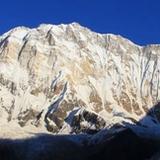
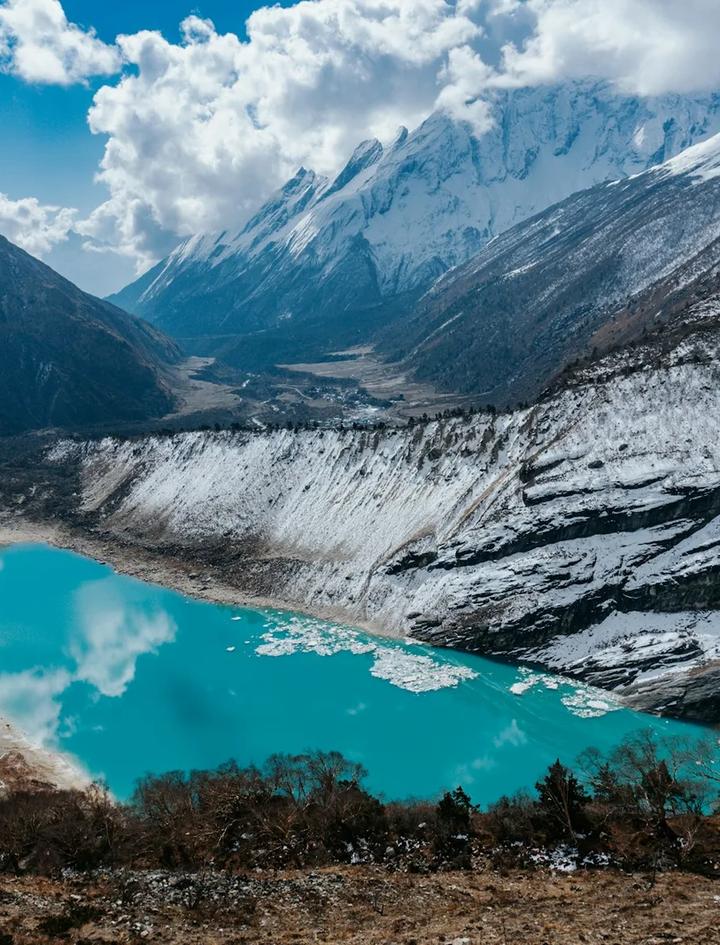
What makes Mardi Himal different from every other short trek in Nepal is the ridgeline. You do not walk inside a valley or up a gorge. You walk on top of a ridge, exposed on both sides, with the Annapurna massif and Machapuchare laid out at eye level. And the altitude (4,500m at Base Camp) puts you 1,300m higher than Poon Hill with only one extra day of walking.
This guide covers the full Mardi Himal trek itinerary, day by day. What the ridgeline is like, the honest truth about teahouse capacity, costs, permits, and why we think this is the best short trek in the Annapurna region for anyone who has the fitness for it.
Route Overview
The Mardi Himal trek starts from Kande (1,770m), a 45-minute drive from Pokhara. The trail shares its first section with the ABC trek, passing through Australian Camp and Pittam Deurali before splitting northeast onto the Mardi ridge. From the split, the trail climbs through rhododendron forest to Forest Camp, then emerges above the treeline at Low Camp and follows the ridge spine to High Camp and Base Camp.
Key numbers:
- Maximum altitude: 4,500m (Mardi Himal Base Camp)
- Highest sleeping point: 3,580m (High Camp)
- Trailhead: Kande (1,770m), 45 min from Pokhara
- Total trekking days: 5 to 7 (within an 11-day itinerary)
- Daily walking: 5 to 7 hours
- Trail distance: 41 to 45km round trip
- Difficulty: Easy (but harder than Poon Hill)
- Guided cost: From $625
The route is out-and-back: you ascend and descend the same ridge. But the perspective changes completely on the way down. Cloud that obscured the valley on your ascent often clears by afternoon, revealing the full depth below you.
Day-by-Day Itinerary
This is the standard 11-day itinerary. Days 1 and 11 are Kathmandu travel. Days 2 and 10 are Pokhara transit. The trekking runs Day 3 through Day 8.
Day 1: Arrival in Kathmandu (1,400m). Transfer to hotel. Gear check in Thamel if needed.
Day 2: Kathmandu to Pokhara. Drive (6 to 7 hours) or fly (25 minutes). Afternoon free in Lakeside. This is also when your guide confirms the teahouse bookings at High Camp. We always call ahead.
Day 3: Pokhara to Kande (1,770m), trek to Forest Camp (2,550m). Drive to Kande (45 minutes). The trail begins with a gentle climb to Australian Camp (2,060m), a popular viewpoint shared with the ABC route. Continue to Pittam Deurali (2,100m) where the trails split. The Mardi Himal path branches northeast and climbs through dense rhododendron and oak forest. The canopy closes overhead. In spring, this section is a tunnel of red and pink bloom. Forest Camp is a small clearing with 3 to 4 basic teahouses surrounded by old-growth rhododendron. Quiet. No phone signal. The first night feels remote. 5 to 6 hours walking.
Day 4: Forest Camp to High Camp (3,580m). This is the day the trek transforms. The trail climbs steeply through upper forest, passing Low Camp (2,970m) and Middle Camp (3,200m) as the trees thin and the ridge begins to reveal itself. Above Low Camp, the forest drops away and you step onto the exposed spine.
This is the moment.
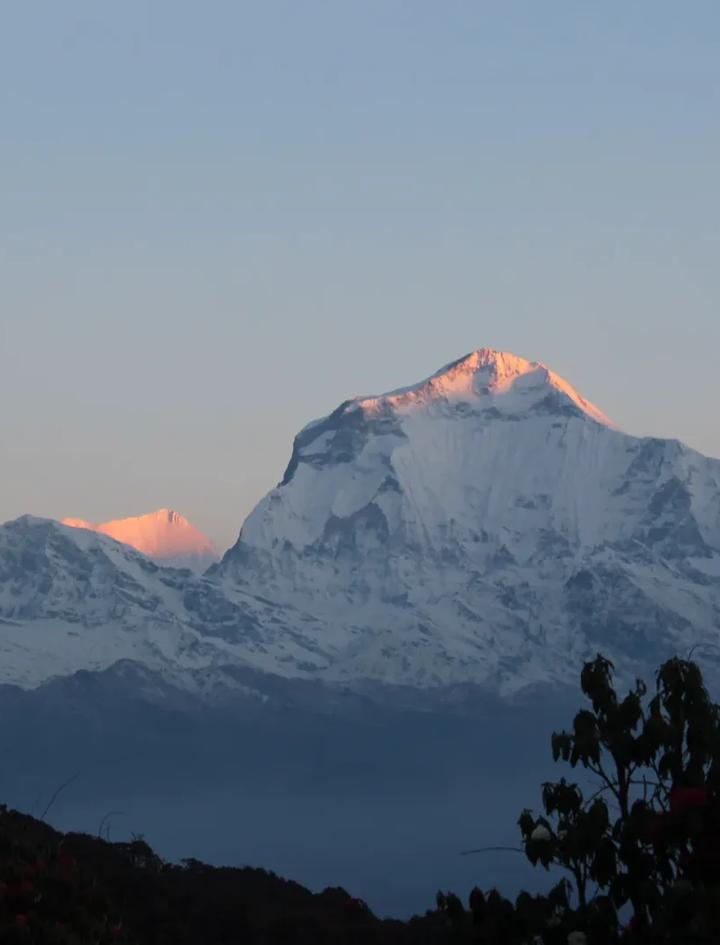
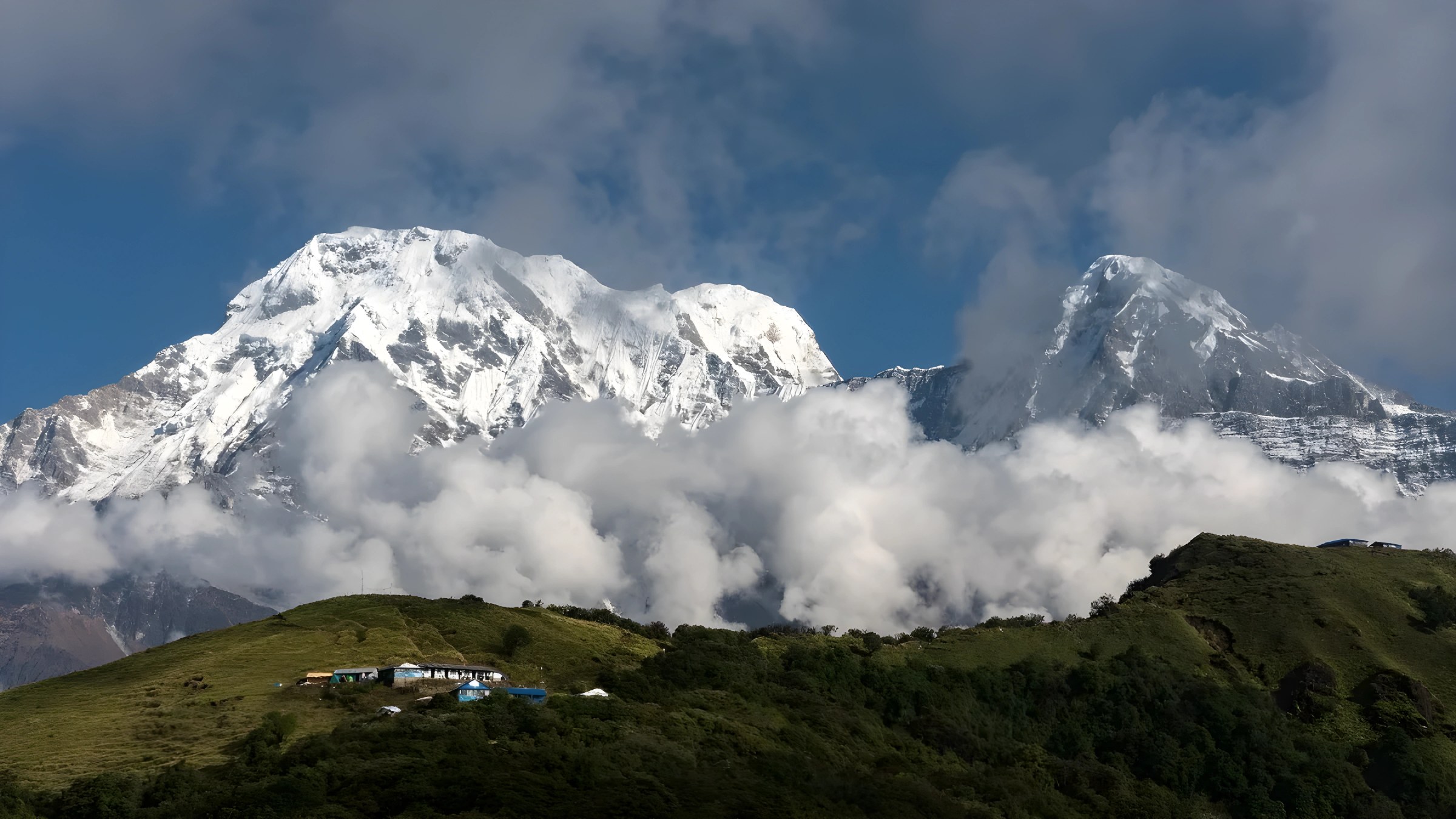
The ridge is grassy and broad at first, narrowing as you climb. To your left, the Modi Khola valley drops away into cloud. To your right, the Mardi Khola valley does the same. Ahead, Machapuchare's south face fills the horizon, closer with every step. There is nothing between you and the mountains except air.
High Camp sits on a shelf of the ridge at 3,580m. The teahouses are basic: tin roofs, shared rooms, a dining hall with a stove that everyone gathers around after dark. But the location is extraordinary. You are sleeping above the typical cloud layer. Sunrise from your teahouse porch is the reason people come here. 6 to 7 hours walking, +1,030m elevation.
Day 5: High Camp to Base Camp (4,500m) and back. The big day. Depart early (5:00 to 5:30 AM) for the climb to Mardi Himal Base Camp. The trail above High Camp crosses alpine meadow and moraine. The path is less defined here, marked by cairns and prayer flags. In snow or cloud, a guide who knows the route is essential.
Base Camp sits at 4,500m on a rocky shelf directly below Machapuchare's south face. The mountain rises 2,493m above you in a single wall of ice and rock. This is the closest a trekker can legally get to Machapuchare, a peak that has been permanently closed to climbing since 1964 out of respect for its sacred status. From ABC, you see Machapuchare from the north. From here, you see the dramatic south face that nobody photographs because nobody used to come here.
The panorama from Base Camp:
| Peak | Altitude | Position |
|---|---|---|
| Machapuchare (Fishtail) | 6,993m | Directly north, south face |
| Mardi Himal | 5,587m | Northeast, the peak itself |
| Annapurna South | 7,219m | Northwest |
| Annapurna I | 8,091m | North-Northwest |
| Hiunchuli | 6,441m | Northwest |
| Annapurna III | 7,555m | North |
Return to High Camp by early afternoon. Total: 4 to 5 hours up, 2 to 3 hours down. If cloud rolls in (common after 10 AM), the descent from Base Camp can be disorienting. Do not linger if weather deteriorates. Your guide will make this call.
Day 6: High Camp to Forest Camp (2,550m). Descent day. The ridge you climbed yesterday now reveals the views behind you: the foothills stretching south toward the Terai, Pokhara's lake glinting in the distance, and the full sweep of the Annapurna range to the west. The forest provides welcome shade and warmth after the cold of High Camp. 4 to 5 hours.
Day 7: Forest Camp to Kande, drive to Pokhara. Final descent through the lower forest and back to Kande. Vehicle to Pokhara. Afternoon free. 3 to 4 hours walking plus 45-minute drive.
Day 8: Buffer day in Pokhara. Weather contingency or rest day. After the cold and intensity of High Camp, Pokhara's warmth and food feel earned.
Day 9: Pokhara to Kathmandu. Drive or fly.
Day 10-11: Buffer/Departure. Extra day for flexibility, then airport transfer.
The Ridgeline: What Makes This Trek Different
I have guided treks in every region of Nepal for 15 years. The Mardi Himal ridge is the only trail where I consistently watch people stop talking. Not because the altitude is hard. Because the exposure is profound.
On ABC, you walk inside a gorge. On Poon Hill, you climb to a viewpoint and see mountains from a distance. On Langtang, you walk through a valley floor. On Mardi Himal, you walk along the top of the world with nothing above you except the peaks themselves.
The ridgeline section begins above Low Camp (2,970m) and continues all the way to Base Camp (4,500m). That is roughly 1,500m of vertical walking on an exposed spine, with valleys dropping away on both sides. The trail is not technically difficult. It is wide enough to walk normally. There are no cliff edges or scrambling sections. But there is also nothing blocking the view, and the sense of space is unlike anything else on a teahouse trek.
The Cloud Inversion
On clear October and November mornings, the valleys on either side of the ridge fill with cloud overnight while the ridge itself stays clear. You wake up at High Camp in sunshine, step outside, and see a flat white ocean below you with the Annapurna peaks rising out of it like islands. The ridge you walked on disappears into the clouds behind you.
This happens perhaps 60 to 70% of mornings in peak season. It is not guaranteed. But when it happens, it is among the most striking visual experiences available in Nepal without climbing a mountain.
Difficulty and Physical Demands
We rate Mardi Himal as Easy, the same category as Poon Hill and Langtang. But it is at the top of that category. If Poon Hill is a 3 out of 10 and ABC is a 5, Mardi Himal is a 4.5.
Why It Is Harder Than Poon Hill
- Altitude: 4,500m vs 3,210m. You cross the AMS threshold (3,500m) and sleep above it.
- Exposure: The ridge can be psychologically challenging for people uncomfortable with open space and drop-offs on both sides.
- Trail quality: Above Low Camp, the path is rougher and less maintained than Poon Hill's stone-stepped highway.
- Base Camp approach: The final section to Base Camp crosses moraine and loose rock. Not technical, but tiring at altitude.
Why It Is Easier Than ABC
- Duration: 5 to 7 trekking days vs 10 to 12.
- Cumulative fatigue: Fewer days means less accumulated tiredness.
- Stone staircases: ABC has the brutal Chhomrong staircase descent. Mardi has steep sections but nothing equivalent.
Altitude Sickness
At 4,500m (Base Camp), your body receives roughly 57% of sea-level oxygen. This is above the 3,500m threshold where AMS becomes a real consideration. Mild symptoms (headache, nausea, disrupted sleep) affect 30 to 40% of trekkers at High Camp on their first night.
The itinerary manages this through gradual ascent: 3 days of climbing before sleeping above 3,500m. The day hike to Base Camp (4,500m) returns to High Camp (3,580m) the same day, following the "climb high, sleep low" principle.
When to be cautious: If you have a severe headache, persistent vomiting, or confusion at High Camp, do not go to Base Camp. Descend to Forest Camp. Altitude sickness is rare but real at this height. Your guide monitors symptoms.
Fitness Benchmark
If you can hike 6 to 7 hours on steep terrain with an 8 to 10kg daypack on back-to-back days, you have the fitness. A 6 to 8 week preparation period with hill training is recommended. Stair climbing, incline treadmill, or loaded uphill hikes. The EBC difficulty guide has a training plan that works for Mardi too.
What It Costs: Full 2026 Breakdown
Mardi Himal is the most affordable trek in the Annapurna region that crosses 4,000m. The shorter duration and no domestic flight keep the total cost below ABC and significantly below EBC.
Option 1: Organized Trek (From $625)
The Mountain Hawk Trek Mardi Himal package starts at $625 per person and includes guide, permits, all meals and accommodation on trek, Pokhara-Kande transport, and Kathmandu-Pokhara transfers.
Option 2: Budget Independent (With Mandatory Guide)
| Expense | Daily Cost (USD) | 5-6 Trek Days | Notes |
|---|---|---|---|
| Teahouse room | $3-15 | $15-75 | Basic at Forest Camp. Shared rooms at High Camp in peak. |
| Meals (3x) | $8-15 | $40-90 | Dal bhat NPR 600-900. Higher at altitude. |
| Hot shower | $2-5 | $6-15 | Not always available above Low Camp. |
| WiFi/charging | $2-4 | $6-16 | Spotty above Forest Camp. |
| Guide fee | $25-35 | $125-210 | Split with partner halves cost. |
Subtotal (trek days): $195-400 per person.
| Fixed Cost | Amount (USD) |
|---|---|
| ACAP permit | $23 (foreigners) / $8 (SAARC) |
| TIMS card | $15 (individual) / $8 (group) |
| Municipality fee | $4-8 (NPR 500-1,000, cash at checkpoint) |
| Pokhara to Kande (taxi) | $10-15 |
| Guide tip | $20-35 |
Total budget estimate: $350 to $550 per person all-in.
SAARC Nationals
ACAP NPR 1,000 ($8), TIMS NPR 1,000 ($8). Substantial savings on permits.
Permits and Regulations: 2026 Rules
- ACAP (Annapurna Conservation Area Permit): NPR 3,000 (~$23) for foreigners. Available at Nepal Tourism Board in Kathmandu or ACAP counter in Pokhara.
- TIMS Card: NPR 2,000 (~$15) individual, NPR 1,000 (~$8) group. Same offices.
- Machhapuchhre Rural Municipality Fee: NPR 500 to 1,000 (~$4-8). Paid in cash at the local checkpoint on the trail. This is a newer fee that some older guides do not mention.
- Travel insurance: Required for permit issuance. Helicopter evacuation coverage mandatory.
- Licensed guide: Mandatory since April 2023. Enforced at ACAP checkpoints.
Best Time to Trek: Month-by-Month
| Month | Visibility | High Camp Temps | Crowds | Cloud Inversion | Verdict |
|---|---|---|---|---|---|
| January | 85-90% | -10 to 0C day, -20 to -15C night | Very low | Rare (too cold for cloud formation) | Extreme cold. Some teahouses closed. Experienced only. |
| February | 80-85% | -7 to 3C day, -18 to -12C night | Very low | Occasional | Still harsh. Warming slightly. |
| March | 70-80% | 0 to 10C day, -10 to -5C night | Low-moderate | Building | Spring starting. Comfortable days. |
| April | 65-75% | 5 to 14C day, -5 to 0C night | Moderate | Common | Rhododendron bloom below Low Camp. Warm. |
| May | 50-60% | 8 to 16C day, 0 to 5C night | Low | Less common (haze) | Pre-monsoon. Last window. |
| June-Sep | Under 20% | Warm but wet | Very low | N/A | Monsoon. Leeches, landslides, zero views. No. |
| October | 80-90% | 5 to 14C day, -5 to 0C night | Peak | 60-70% of mornings | The best month. Book High Camp early. |
| November | 85-90% | 0 to 10C day, -8 to -4C night | High | 50-60% of mornings | Excellent. Fewer people than October. |
| December | 85-95% | -5 to 5C day, -15 to -8C night | Low | Rare | Clear but cold. Snow above 3,500m possible. |
Our recommendation: October for the full experience (cloud inversion + warm days + all facilities). November for fewer people and equally clear skies. April if you want rhododendrons and warmth.
For the broader Nepal seasonal picture, see best time to trek in Nepal.
The Teahouse Situation: An Honest Warning
This is where Mardi Himal differs most from other treks, and where we believe in being direct with our clients.
Below Forest Camp: Normal teahouse availability. Multiple options, no booking issues.
Forest Camp to Low Camp: 3 to 5 teahouses per stop. Adequate but not abundant. Walk-ins usually fine.
High Camp: 5 to 6 teahouses with total capacity of roughly 50 to 80 beds. In peak October and early November, every bed fills. Late arrivals get a mattress on the dining hall floor, or share a room with 4 to 6 strangers.
This is not a complaint about the infrastructure. It is the reality of a new trail where construction has not caught up with demand. And the ridge location makes expansion slow: everything must be carried up by porter.
What we do about it: We book High Camp beds 3 to 7 days in advance by phone. We know which lodge owners answer their phones and which ones honour advance bookings. If High Camp is genuinely full, we adjust the itinerary: sleep at Low Camp and make the Base Camp push from there (longer day but guaranteed bed). We have never had a client sleep on a floor.
Winter (December-February): 1 to 2 High Camp teahouses close entirely. The remaining ones operate with reduced staff. Confirm availability before committing to a winter Mardi trek.
Mardi Himal vs Other Treks
Mardi Himal vs Poon Hill
| Factor | Mardi Himal | Poon Hill |
|---|---|---|
| Duration | 5-7 trekking days (11-day trip) | 4-5 trekking days (10-day trip) |
| Max altitude | 4,500m | 3,210m |
| Difficulty | Easy (top of range) | Easy (bottom of range) |
| Cost (guided) | From $625 | From $675 |
| Crowds | Low-Moderate | Moderate-High |
| Trail character | Exposed ridgeline, alpine | Forest paths, stone steps, village loop |
| View type | Ridgeline panorama, cloud inversion | Sunrise from dedicated viewpoint |
| Altitude sickness risk | Low-Moderate | Negligible |
| Best for | Second trek, photographers, solitude seekers | First trek, families, short timeframes |
Poon Hill is the better first trek. Mardi Himal is the better second trek. If you have already done Poon Hill and want to push further without committing to a 16-day expedition, Mardi Himal is the answer.
Mardi Himal vs ABC
| Factor | Mardi Himal | Annapurna Base Camp |
|---|---|---|
| Duration | 5-7 trekking days | 10-12 trekking days |
| Max altitude | 4,500m | 4,130m |
| Cost (guided) | From $625 | From $1,275 |
| Trail shared section | Kande to Pittam Deurali | Same |
| After the split | Northeast onto ridge | Northwest into Modi Khola gorge |
| Crowds | Low-Moderate | Moderate-High |
| Teahouse quality | Basic above Low Camp | Well-developed throughout |
| View character | Ridgeline + Machapuchare south face | Amphitheater surrounded by peaks |
| Best for | Shorter time, tighter budget, ridge experience | Full immersion, diverse culture, amphitheater |
Mardi Himal and ABC share their first day. At Pittam Deurali, the trails diverge. If you have 11 days and love ridgelines, take the Mardi fork. If you have 16 days and want the full Annapurna immersion, continue to ABC. Both are excellent. They are not competing treks so much as different flavours of the same region.
Wildlife on the Ridge
The forest between Kande and Low Camp is more ecologically diverse than most trekkers realize. We walk through it focused on the destination and miss what lives alongside the trail.
Danfe (Himalayan Monal): Nepal's national bird. Iridescent blue-green plumage, unmistakable. Common in the rhododendron forest between Forest Camp and Low Camp. We see them on perhaps one in three treks. They are not shy if you are quiet.
Langur monkeys: Grey langurs in troops of 15 to 30, usually in the canopy between Lama Hotel and Forest Camp. Audible before visible: their alarm calls carry through the forest.
Musk deer: Small, solitary, and mostly crepuscular. Tracks common above Low Camp. Actual sightings rare but not impossible in early morning.
Himalayan Tahr: Wild mountain goats on steep slopes above High Camp. More likely to spot on the Base Camp approach where rock faces provide habitat.
The Danfe especially is worth looking for. When a male catches sunlight in the rhododendron understory, the colour is startling. It is one of those trail moments that costs nothing and changes the morning.
What to Pack
Mardi Himal requires the same gear as Langtang: proper insulation for nights at 3,580m, plus altitude-appropriate sun protection and a warm sleeping bag liner.
Mardi-Specific Additions
- Wind layer: The ridge is exposed. A windproof shell over your insulating layer makes the difference between comfortable and miserable above Low Camp.
- Gaiters or leg protection: The trail above High Camp crosses scrubby alpine terrain. In morning frost, long pants soak through quickly.
- Extra snacks: Teahouse food above Forest Camp is limited in variety. Trail mix, energy bars, or biscuits supplement meals.
- Full water capacity: Carry 2 liters minimum above Low Camp. Water sources thin out on the ridge.
For the detailed packing list with weight targets, see our EBC packing list. Use the "moderate altitude" column and add the wind layer.
Getting There
Kathmandu to Pokhara:
- Tourist bus: $8 to $15, 6 to 7 hours.
- Domestic flight: $65 to $100, 25 minutes.
Pokhara to Kande:
- Private taxi: $10 to $15, 45 minutes. Your agency arranges this.
- The drive is short and paved. No mountain roads, no landslide risk.
Return: Same in reverse. Kande to Pokhara by taxi, then bus or flight to Kathmandu.
No Syabrubesi. No Lukla. No Nayapul. Kande is 45 minutes from Pokhara on a main road. You leave your hotel after breakfast and you are on the trail by mid-morning. This is the logistical simplicity that sets Mardi apart.
Practical Tips
Phone signal: Ncell works at Australian Camp, intermittently at Forest Camp, and sometimes at High Camp (step outside and hold the phone above your head, we tell clients). Above Low Camp, do not rely on connectivity.
Money: No ATMs after Pokhara. Bring NPR 3,000 to 5,000 per day in cash. Teahouses do not accept cards.
Water: Boiled water from teahouses or purification tablets. Stream water above Low Camp looks clear but carries glacial sediment that irritates the stomach.
The Base Camp push: Leave High Camp by 5:00 to 5:30 AM. The morning is clear. By 10:00 AM, cloud typically rolls up the valley and swallows visibility. If you start late, you may summit in a white-out that hides the view you climbed for. Early start is not optional.
Tipping: NPR 1,500 to 2,500 ($12-20) for your guide, NPR 1,000 to 1,500 ($8-12) for your porter. Mardi treks are shorter, so tip amounts are slightly less than longer treks. The gesture matters more than the amount.
Why Mardi Himal
We send more first-time trekkers to Poon Hill. We send more experienced trekkers to ABC or Everest. But when someone asks me which trek I personally find most beautiful per day on the trail, I hesitate, and then I say Mardi.
It is not the longest. It is not the highest. It does not have the name that makes your friends at home say "you did what?" But it has the ridge. And the ridge, on a clear morning above the clouds with Machapuchare ahead and nothing but sky around you, is the closest I have found to pure mountain experience on a teahouse route.
The trail was hidden until 2012. Before that, it was mountaineering territory, not trekking. It opened quietly and grew slowly. The teahouses are still basic. The path is still rough in places. The capacity is still limited. In ten years it will probably look like Poon Hill did in 2010. Right now, it still feels like walking somewhere that was not built for tourists.
If that appeals to you, go soon.
View the full Mardi Himal trek itinerary and pricing or get in touch to plan your trek.