
- Route Overview
- Day-by-Day Itinerary
- The Sunrise: What You See from Poon Hill
- Complete Peak Visibility Table
- What If It Is Cloudy?
- Difficulty and Physical Demands
- Altitude: Low Risk
- The Ulleri Staircase: The One Hard Part
- Daily Hours and Fitness Benchmark
- What It Costs: Full 2026 Breakdown
- Option 1: Organized Trek (From $675)
- Option 2: Budget Independent (With Mandatory Guide)
- Option 3: Mid-Range Independent
- SAARC Nationals
- Permits and Regulations: 2026 Rules
- What You Need
- Where to Get Permits
- The Jeep Road to Ghorepani
- Best Time to Trek: Month-by-Month Breakdown
- Where to Stay: Teahouse Guide
- Teahouse Standards by Stop
- What to Pack
- Essential Gear
- Clothing (Layer System)
- Poon Hill vs Other Treks
- Poon Hill vs Annapurna Base Camp
- Poon Hill vs Mardi Himal
- Poon Hill vs Langtang Valley
- Poon Hill as a Warm-Up
- Ghandruk and Gurung Culture
- Practical Tips
- Getting There
- Why Poon Hill First
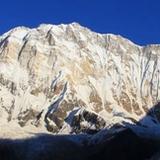
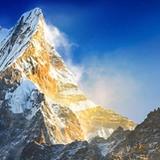
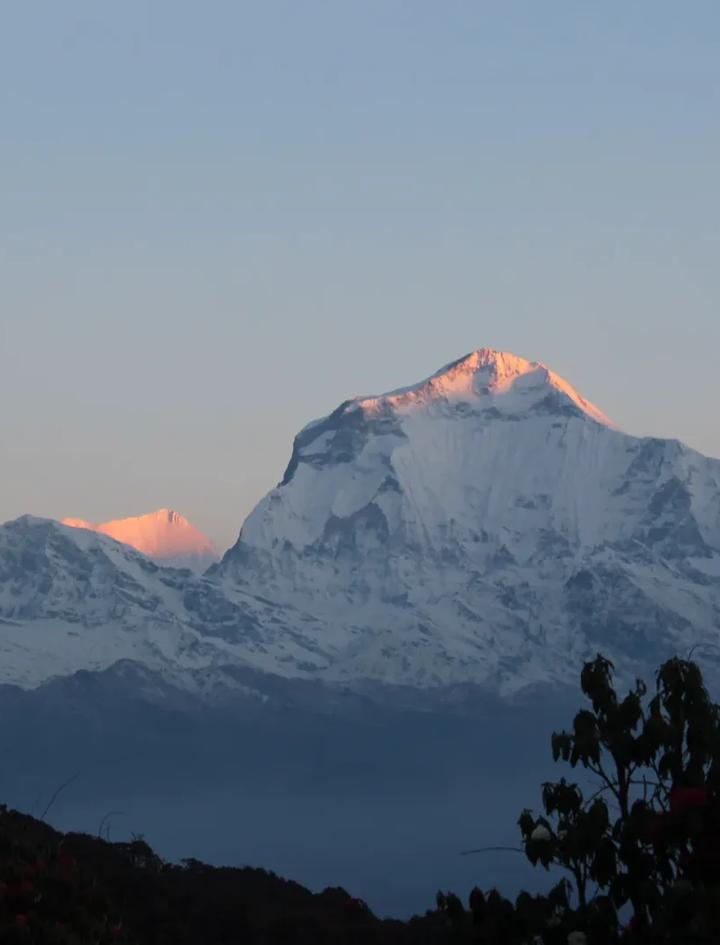
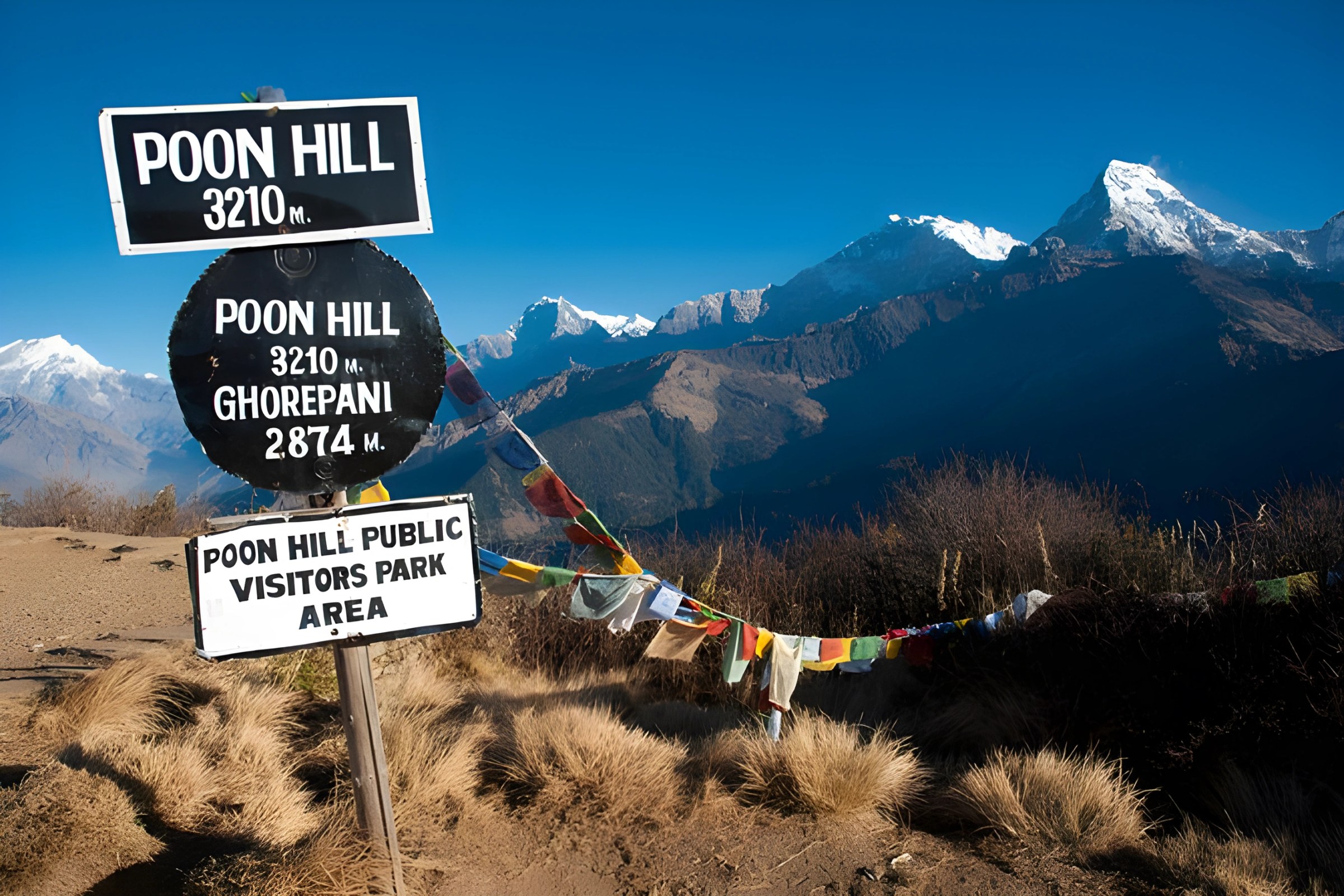
The Poon Hill trek is the most popular sunrise hike in Nepal, and it is popular for a reason. You stand at 3,210m on a cleared hilltop above Ghorepani and watch the sun hit Dhaulagiri (8,167m) and Annapurna I (8,091m) while 10 other peaks catch the light in sequence across a 200-degree panorama. It is the single most photographed mountain sunrise in the Himalaya.
What makes Poon Hill different from Nepal's longer, harder treks is that almost anyone can get there. The maximum altitude sits below the threshold where altitude sickness becomes a real concern. The trail is 4 to 5 days of walking on established stone paths through forests and villages. The hardest part is a staircase, not a glacier. And the payoff, two 8,000m peaks at sunrise from a viewpoint you reached on foot, is disproportionate to the effort.
This guide covers the full Poon Hill trek itinerary, day by day. What you see from the top, the cost breakdown, permits, the truth about Ulleri's 3,500 stone steps, and a month-by-month breakdown of when to go.
Route Overview
The Poon Hill trek starts from Nayapul, a small road-head town about 1.5 hours northwest of Pokhara by car. The classic route forms a loop: Nayapul to Tikhedhunga to Ghorepani (via the Ulleri staircase), summit Poon Hill at dawn, then descend through Tadapani and Ghandruk back to Nayapul. The loop means you never retrace your steps after the summit.
Key numbers:
- Maximum altitude: 3,210m (Poon Hill viewpoint)
- Ghorepani village (overnight): 2,874m
- Total trekking days: 4 to 5 (within a 10-day itinerary)
- Daily walking: 4 to 7 hours
- Trail distance: 37 to 49km depending on route variant
- Difficulty: Easy
- Guided cost: From $675
The 10-day itinerary includes travel days (Kathmandu to Pokhara and back), buffer days for weather, and 4 to 5 trekking days. The trekking portion alone can be done in as few as 3 days (Nayapul-Ghorepani-Tadapani-Nayapul), though 4 to 5 days is the standard pace that allows for proper enjoyment and a stop in Ghandruk.
Day-by-Day Itinerary
This is the standard 10-day itinerary. Days 1 and 10 are Kathmandu travel days. Days 2 and 9 are Pokhara transit. The trekking runs from Day 3 through Day 7.
Day 1: Arrival in Kathmandu (1,400m). Arrive at Tribhuvan International Airport. Transfer to hotel. If you need last-minute trekking gear, Thamel has everything from down jackets to trekking poles at a fraction of Western prices. No technical equipment is needed for Poon Hill.
Day 2: Kathmandu to Pokhara. Drive (6 to 7 hours via the Prithvi Highway) or fly (25 minutes). The drive follows the Trisuli River valley and is scenic but long. The flight gives aerial views of the Annapurna and Manaslu ranges on a clear day. Afternoon free in Pokhara Lakeside.
Day 3: Pokhara to Nayapul (1,070m), trek to Tikhedhunga (1,495m). Drive to Nayapul (1.5 hours). Register permits at the ACAP checkpoint in Birethanti. Begin the trek on a gentle riverside trail through rice paddies and small settlements. The walking is flat to moderate with roughly 400m elevation gain. Tikhedhunga is a small village with basic teahouses at the base of the Ulleri staircase. 3 to 4 hours walking.
Day 4: Tikhedhunga to Ghorepani (2,874m). The hardest day. The morning begins with the Ulleri staircase: approximately 3,500 stone steps climbing 700m in 2 to 3 hours straight up from Tikhedhunga to Ulleri (2,070m). The steps are relentless but the trail is well-maintained and shaded. After Ulleri, the gradient eases. The trail continues through Banthanti and Nangethanti, climbing through oak and rhododendron forest. In March and April, this corridor blooms in dense stands of red, pink, and white rhododendron, the largest rhododendron forest in the Annapurna region. You arrive in Ghorepani in the late afternoon with views of Dhaulagiri and Annapurna South from the village. Total elevation gain: roughly 1,380m. 6 to 7 hours walking.
Day 5: Poon Hill sunrise (3,210m), trek to Tadapani (2,630m). The alarm goes off between 3:30 and 4:30 AM depending on the season. The trail from Ghorepani to Poon Hill is a 45-minute climb on a stone-stepped path through forest. Headlamp required. You arrive at the viewpoint before dawn, along with anywhere from 20 to 200 other trekkers depending on season.
Then the sun comes up.
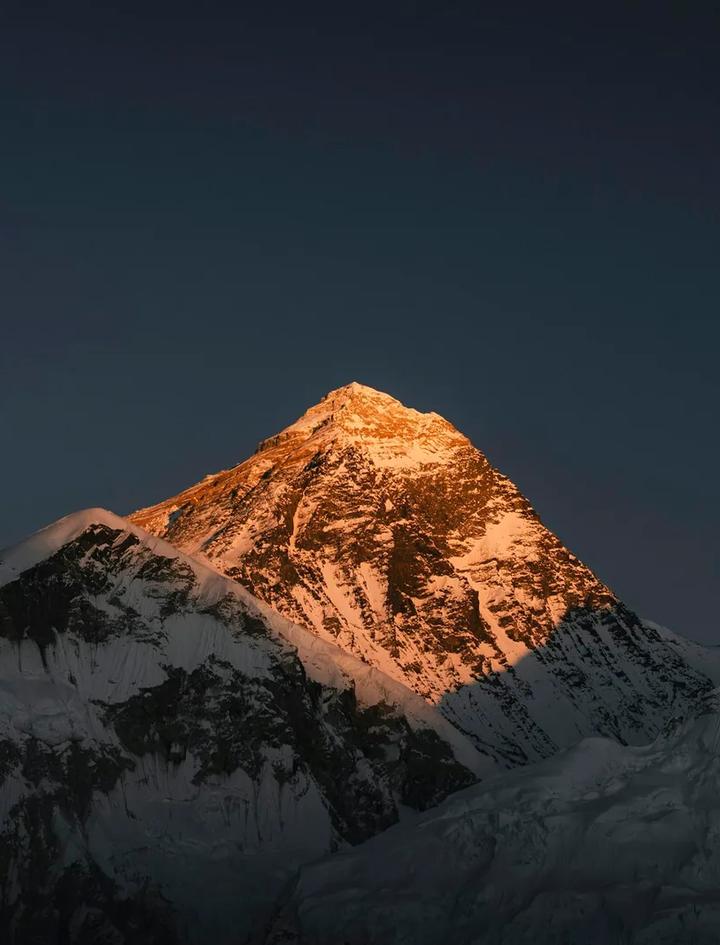
Dhaulagiri catches the first light, turning gold, then pink, then white. Annapurna I follows. Machapuchare's pointed summit glows. The full panorama of 12 peaks reveals itself over roughly 20 minutes. The entire Annapurna massif and Dhaulagiri range are laid out in front of you, separated by the deep Kali Gandaki gorge, the deepest gorge on Earth.
After sunrise (and photographs), descend to Ghorepani for breakfast. Then continue the trek to Tadapani via a forest trail that stays between 2,600m and 3,000m. This section through dense rhododendron forest is some of the most atmospheric walking on the entire trek. Tadapani sits on a ridge with views of Machapuchare's south face. 5 to 6 hours total.
Day 6: Tadapani to Ghandruk (1,940m). A relaxed descent through forest and terraced farmland. Ghandruk is one of the largest and best-preserved Gurung villages in Nepal. Stone houses with slate roofs line narrow flagstone lanes. The Gurung Museum documents the history of Gurung military service (the Gurkhas) and traditional culture. Ghandruk also has the first reliable hot showers since Ghorepani and better food than anywhere on the trail. The views of Annapurna South and Machapuchare from Ghandruk's upper terrace are among the best below the snowline. 3 to 4 hours walking.
Day 7: Ghandruk to Nayapul, drive to Pokhara. A final descent through rice terraces and scattered farmhouses to Nayapul. Vehicle transfer to Pokhara. Afternoon free. Pokhara Lakeside is the decompression zone: Phewa Lake, rooftop restaurants, cold beer. 3 to 4 hours walking plus 1.5-hour drive.
Day 8: Buffer day in Pokhara. Weather contingency. If trekking went smoothly, this is a free day. Boat on Phewa Lake, paraglide over the valley, or visit the International Mountain Museum. If weather caused delays on the trail, this day absorbs them.
Day 9: Pokhara to Kathmandu. Drive or fly.
Day 10: Departure. Transfer to Tribhuvan International Airport.
The Sunrise: What You See from Poon Hill
Poon Hill is not a peak. It is a cleared hilltop at 3,210m above the village of Ghorepani, positioned at the intersection of two massive mountain systems: the Annapurna range to the north and east, and the Dhaulagiri massif to the west. The Kali Gandaki gorge, the deepest in the world, drops between them directly below your line of sight.
This positioning is what makes the viewpoint exceptional. You see two 8,000m peaks from a single spot, separated by a gorge that plunges 5,500m below their summits.
Complete Peak Visibility Table
| Peak | Altitude | Direction | Notes |
|---|---|---|---|
| Dhaulagiri I | 8,167m (26,795 ft) | West-Northwest | 7th tallest on Earth. Catches first light. |
| Annapurna I | 8,091m (26,545 ft) | North | 10th tallest. Dominates the central panorama. |
| Annapurna II | 7,937m (26,040 ft) | Northeast | Visible on clear days behind the main range. |
| Annapurna III | 7,555m (24,787 ft) | North-Northeast | Left of Annapurna I in the panorama. |
| Gangapurna | 7,455m (24,459 ft) | North | Between Annapurna I and III. |
| Annapurna South | 7,219m (23,684 ft) | North | Most prominent from Ghorepani village itself. |
| Gurja Himal | 7,193m (23,599 ft) | West | Part of the Dhaulagiri massif. |
| Nilgiri Himal | 7,061m (23,166 ft) | North-Northwest | Marks the edge of the Kali Gandaki gorge. |
| Machapuchare | 6,993m (22,943 ft) | North-Northeast | The sacred Fishtail peak. Never climbed. |
| Tukuche Peak | 6,920m (22,700 ft) | Northwest | In the Dhaulagiri group. |
| Hiunchuli | 6,441m (21,132 ft) | North | Guards the entrance to the Annapurna Sanctuary. |
| Dhampus Peak | 6,012m (19,724 ft) | North | Lowest of the visible 6,000ers. |
On a clear morning, the panorama spans roughly 200 degrees. The peaks light up from west to east as the sun rises behind you, starting with Dhaulagiri and sweeping across to Annapurna II over the course of about 20 minutes.
What If It Is Cloudy?
The question nobody answers. Sunrise visibility varies by month:
- October/November: 80 to 90% clear mornings. Best odds of the year.
- March/April: 65 to 75% clear mornings. Afternoon haze sometimes builds but mornings are usually clean.
- December to February: 85 to 95% clear mornings. The cold keeps the air sharp.
- May: 40 to 50%. Pre-monsoon haze building.
- June to September: Under 20%. Monsoon. Not worth trying.
On a cloudy morning, you still see the lower slopes and ridgelines, and clouds often break partially to reveal individual peaks. A partial sunrise at Poon Hill is still better than most mountain views you will see anywhere else. But if conditions are poor, Ghorepani is worth a second night. Morning two often delivers what morning one did not.
Difficulty and Physical Demands
The Poon Hill trek is rated Easy, the lowest difficulty rating for Himalayan treks in Nepal. This does not mean it is a casual walk. "Easy" means it is achievable for reasonably fit adults with no prior trekking experience and no technical skills.
Altitude: Low Risk
The maximum altitude is 3,210m, which sits below the 3,500m threshold where acute mountain sickness (AMS) becomes a clinical concern. You sleep at Ghorepani (2,874m), even lower. At this elevation, your body receives roughly 68% of sea-level oxygen, compared to 60% at Annapurna Base Camp (4,130m) and 50% at Everest Base Camp (5,364m). Mild symptoms (slight headache, reduced appetite) are possible but rare and resolve with hydration and rest. Serious AMS is essentially unheard of on the Poon Hill trek.
The Ulleri Staircase: The One Hard Part
Day 4 is the defining physical challenge. The trail from Tikhedhunga (1,495m) to Ulleri (2,070m) climbs approximately 3,500 stone steps in 2 to 3 hours. There is no flat section. No switchback relief. Just steps, one after another, for 700m of vertical gain.
What makes it manageable:
- The steps are well-maintained, cut into the hillside over centuries.
- The trail is shaded by forest for most of the climb.
- You can stop every 15 to 20 minutes at rest points with benches.
- You are at low altitude (under 2,100m), so breathing is not a factor.
What makes it hard:
- There are 3,500 of them.
- Your pack is at its heaviest (day 2 of trekking, full supplies).
- Your legs have not yet adapted to daily climbing.
- If you have bad knees, the stone impacts accumulate.
Preparation tip: If you train for one thing before this trek, train for stairs. Stairmaster sessions, stadium steps, or repeated hill climbs. The rest of the trail is moderate forest walking.
Daily Hours and Fitness Benchmark
| Day | Section | Hours | Elevation Gain |
|---|---|---|---|
| Day 3 | Nayapul to Tikhedhunga | 3-4 hrs | +425m |
| Day 4 | Tikhedhunga to Ghorepani | 6-7 hrs | +1,380m |
| Day 5 | Poon Hill + Ghorepani to Tadapani | 5-6 hrs | +336m / -580m |
| Day 6 | Tadapani to Ghandruk | 3-4 hrs | -690m |
| Day 7 | Ghandruk to Nayapul | 3-4 hrs | -870m |
Fitness benchmark: If you can hike 5 hours on hilly terrain with an 8kg daypack without being exhausted, you can do this trek. A 4 to 6 week preparation period of regular hiking or stair climbing is sufficient for most people. Compare this to the EBC difficulty guide's recommended 12 weeks of preparation.
What It Costs: Full 2026 Breakdown
Option 1: Organized Trek (From $675)
The Mountain Hawk Trek Poon Hill package starts at $675 per person and includes guide, permits, accommodation, meals on trek, Kathmandu-Pokhara transport, and airport transfers. This is the simplest option. You show up, trek, go home.
Option 2: Budget Independent (With Mandatory Guide)
Since April 2023, a licensed guide is mandatory. You cannot trek solo. But you can hire a guide independently and manage your own teahouse bookings and meals.
| Expense | Daily Cost (USD) | 5 Trek Days | Notes |
|---|---|---|---|
| Teahouse room | $3-8 | $15-40 | Basic twin-share. Attached bathroom adds $5-10. |
| Breakfast | $2-4 | $10-20 | Dal bhat, pancakes, porridge. |
| Lunch | $3-5 | $15-25 | Dal bhat, noodles, momos. |
| Dinner | $3-5 | $15-25 | Same menu. Prices rise with altitude. |
| Hot shower | $2-4 | $6-12 | Per use. Not available everywhere. |
| Device charging | $1-2 | $3-6 | Per device per charge. |
| Guide fee (split) | $20-30 | $100-150 | Licensed guide, split between 2. Solo: $25-35/day. |
Subtotal (trek days): $165-280 per person for 5 days on trail.
| Fixed Cost | Amount (USD) |
|---|---|
| ACAP permit | $23 (foreigners) / $8 (SAARC) |
| TIMS card | $16 (individual) / $8 (group) |
| Kathmandu to Pokhara (bus) | $8-15 |
| Kathmandu to Pokhara (flight) | $65-100 |
| Pokhara to Nayapul (taxi) | $15-25 |
| Guide tip (customary) | $20-40 total |
Total budget estimate: $300 to $500 per person all-in (bus transport, shared guide, basic lodges).
Option 3: Mid-Range Independent
Better lodges (rooms with attached bathrooms, hot water), guide plus porter ($40-50/day total), domestic flights both ways, a night in a good Pokhara hotel before and after.
Total mid-range estimate: $600 to $900 per person all-in.
SAARC Nationals
Indian, Bangladeshi, Sri Lankan, and other SAARC nationals pay significantly less: ACAP permit NPR 1,000 ($8) instead of NPR 3,000 ($23), TIMS NPR 1,000 ($8) instead of NPR 2,000 ($16). Teahouse prices are the same for everyone.
Permits and Regulations: 2026 Rules
What You Need
- ACAP (Annapurna Conservation Area Permit): NPR 3,000 (~$23) for foreigners, NPR 1,000 (~$8) for SAARC nationals. Required for entry into the Annapurna Conservation Area. Available online through the NTNC portal or in person at the Nepal Tourism Board office in Kathmandu or the ACAP office in Pokhara.
- TIMS Card (Trekkers' Information Management System): NPR 2,000 (~$16) for individual trekkers (FIT), NPR 1,000 (~$8) for group/agency trekkers. Available from the same offices. If trekking with an agency like Mountain Hawk Trek, your TIMS is arranged at the group rate.
- Travel insurance with helicopter evacuation coverage. Required to obtain permits since 2024. Must cover rescue and medical evacuation up to at least $30,000. Most standard travel insurance policies include this, but check before departing. A dedicated trekking insurance policy from providers like World Nomads or Global Rescue runs $50 to $100 for a 2-week trip.
- Licensed guide. Mandatory since April 2023. Enforced at digital checkpoint scanners at Birethanti (the ACAP entry point on the Poon Hill trail). Your guide must carry their NATA or TAAN license. If booking through an agency, this is included.
Where to Get Permits
- In Kathmandu: Nepal Tourism Board office in Bhrikuti Mandap (near Ratna Park). Open Sunday to Friday, 10:00 to 16:00. Bring passport, 2 photos, insurance proof.
- In Pokhara: ACAP office near the Pokhara Tourist Bus Park. Same documents.
- Online: The NTNC online portal allows pre-registration. You still collect the physical permit card in person.
- Through your agency: If booking a guided trek, the agency handles all permits before you start walking.
The Jeep Road to Ghorepani
A new development in 2025-2026: a jeep road now connects Pokhara to Ghorepani in approximately 4 to 5 hours. This means a "2-day Poon Hill" itinerary is technically possible: jeep to Ghorepani, sunrise at Poon Hill, jeep back. This option bypasses the trekking entirely and misses the forests, villages, and Ulleri staircase. Useful for travelers with severe time constraints or mobility limitations, but it removes everything that makes the trek worth doing.
Best Time to Trek: Month-by-Month Breakdown
The generic answer is "spring and autumn." Here is the specific answer.
| Month | Visibility | Temperature at Ghorepani (2,874m) | Crowds | Rhododendrons | Verdict |
|---|---|---|---|---|---|
| January | 85-95% clear | -8 to 2C day, -15 to -8C night | Very low | None | Clear views but bitterly cold pre-dawn. Bring serious cold gear. |
| February | 80-90% clear | -5 to 5C day, -12 to -5C night | Low | None | Warming slightly. Good value, few trekkers. |
| March | 70-80% clear | 2 to 12C day, -5 to 2C night | Moderate | Starting below 2,500m | Spring begins. Warmer mornings. |
| April | 65-75% clear | 5 to 15C day, -2 to 5C night | High | Full bloom 2,500-3,000m | The rhododendron month. Forest trail between Ghorepani and Tadapani is spectacular. |
| May | 40-50% clear | 8 to 18C day, 2 to 8C night | Moderate | Fading | Pre-monsoon haze. Warm but visibility dropping. |
| June-Sep | Under 20% | Warm but wet | Very low | None | Monsoon. Rain, leeches, zero visibility. Not recommended. |
| October | 80-90% clear | 5 to 15C day, -2 to 5C night | Peak season | None | The best month. Clearest air, stable weather, comfortable temps. |
| November | 85-90% clear | 0 to 10C day, -5 to 0C night | High | None | Excellent. Slightly colder, slightly fewer trekkers than October. |
| December | 85-95% clear | -5 to 5C day, -10 to -5C night | Low | None | Clear but cold. Pre-dawn summit in -10C. Some lodges close. |
Best overall: October, then November. Best for rhododendrons: April. Best for budget/solitude: February or December. Worst: June through September.
For a broader Nepal trekking season comparison, see our best time to trek in Nepal guide.
Where to Stay: Teahouse Guide
The Poon Hill trail is fully teahouse-supported. No camping, no tent, no cooking equipment needed. Every stop on the itinerary has multiple lodges.
Teahouse Standards by Stop
| Stop | Elevation | Lodge Quality | Room Price | Hot Shower | WiFi | Charging |
|---|---|---|---|---|---|---|
| Tikhedhunga | 1,495m | Basic | $3-5 | Sometimes | Spotty | $1-2 |
| Ulleri | 2,070m | Basic | $3-5 | Rarely | No | $1-2 |
| Ghorepani | 2,874m | Good | $5-15 | Yes | Yes | $1-2 |
| Tadapani | 2,630m | Moderate | $3-8 | Sometimes | Spotty | $1-2 |
| Ghandruk | 1,940m | Best on trail | $8-20 | Yes | Yes | Free-$1 |
Booking strategy: In October and November (peak season), Ghorepani lodges fill up by mid-afternoon. Your guide should book ahead by phone. Off-season, walk-ins are fine everywhere.
Room expectations: Basic rooms have two single beds, a shared bathroom down the hall, and thin walls. You will hear your neighbors. Bring earplugs. Better rooms in Ghorepani and Ghandruk have attached bathrooms and thicker blankets but are still simple mountain lodges, not hotels.
Food: All teahouses serve the same core menu: dal bhat (rice, lentils, vegetables, unlimited refills), noodle soup, fried rice, momos (dumplings), pancakes, porridge, and eggs. Dal bhat is the best value at NPR 500 to 700 ($4 to $5) because of the refill policy. Expect higher prices at higher elevations. The food is simple but filling.
Water: Bring a reusable bottle and purification tablets or a filter. Bottled water costs NPR 100 to 300 and generates plastic waste. Most teahouses sell boiled water for NPR 100 to 150 per liter.
What to Pack
Poon Hill is the lightest-packing trek in Nepal. Maximum altitude is 3,210m and you sleep at 2,874m, so extreme cold weather gear is unnecessary except in December through February.
Essential Gear
- Daypack (25-35L) with rain cover
- Trekking boots (broken in, ankle support)
- Trekking poles (essential for Ulleri stairs and descent days)
- Headlamp (required for pre-dawn Poon Hill summit)
- Reusable water bottle + purification tablets
- Sunscreen, sunglasses, lip balm with SPF
- Basic first aid (blister kit, painkillers, anti-diarrheal)
Clothing (Layer System)
- Base layer (moisture-wicking, 2 sets)
- Insulating layer (fleece or lightweight down jacket)
- Outer shell (waterproof rain jacket)
- Trekking pants (2 pairs, quick-dry)
- Warm hat and gloves (for Poon Hill sunrise)
- Warm socks (merino wool, 3 pairs)
In March through November, a lightweight down jacket is sufficient for the pre-dawn summit. In December through February, add a heavier insulated layer and thermal base layers for the -10C pre-dawn temperatures.
For a detailed trekking packing list with weight targets and what to buy in Kathmandu vs. bring from home, see our EBC packing list. The list applies to Poon Hill with one adjustment: everything in the "extreme cold" category is unnecessary.
Poon Hill vs Other Treks
Poon Hill vs Annapurna Base Camp
The most common comparison. Both start from the same region, both pass through similar terrain at lower elevations, and both can be combined into a single trip.
| Factor | Poon Hill | Annapurna Base Camp |
|---|---|---|
| Duration | 4-5 trekking days (10-day trip) | 10-12 trekking days (16-day trip) |
| Max altitude | 3,210m | 4,130m |
| Difficulty | Easy | Moderate |
| Cost (guided) | From $675 | From $1,275 |
| Sunrise view | 12 peaks from dedicated viewpoint | Amphitheater panorama at camp |
| Trail character | Forest + villages + viewpoint hike | Forest + gorge + glacial moraine |
| Best for | First trek, short time, families | Immersive Himalayan experience |
If you have 10 days, do Poon Hill. If you have 16 days, do ABC. If you have 20 days, do both. The ABC complete guide covers the full itinerary and logistics.
Poon Hill vs Mardi Himal
Mardi Himal is the newer alternative. Similar duration (11 days, $625), but Mardi Himal climbs to 4,500m on a remote ridgeline trail with far fewer trekkers. Mardi is better for solitude and a more challenging experience. Poon Hill is better for the iconic sunrise, Gurung village culture, and accessibility for beginners.
Poon Hill vs Langtang Valley
Langtang Valley is a 11-day trek ($775) in a different region north of Kathmandu. It reaches 4,984m at Kyanjin Ri, passes through Tamang villages, and ends in a glacial valley below Langtang Lirung (7,227m). Langtang is more physically demanding but has fewer trekkers than either Poon Hill or ABC. It is a good second trek for someone who has done Poon Hill and wants more altitude and solitude.
Poon Hill as a Warm-Up
Many trekkers use Poon Hill as acclimatization before a longer Annapurna trek. A common combination is Poon Hill followed by ABC or the Annapurna Circuit. Poon Hill gets your legs, lungs, and stomach adapted to trail life at a manageable altitude before you push higher. If your schedule allows, this two-trek approach is one of the best ways to experience the Annapurna region.
Ghandruk and Gurung Culture
The Poon Hill circuit passes through Ghandruk, one of the largest and best-preserved Gurung settlements in Nepal. Most trekking guides mention it as an overnight stop. It deserves more than that.
The Gurung people are one of Nepal's major hill ethnic groups, historically known for their military service as Gurkha soldiers in the British and Indian armies. Ghandruk is a living village, not a museum exhibit: terraced fields, stone houses built without mortar, slate roofs, and a communal water system that predates modern plumbing. The Gurung Museum in the village documents traditional clothing, musical instruments, and the jhankri (shaman) healing traditions.
The food in Ghandruk is the best on the trail. Home-cooked dal bhat prepared by Gurung families who have fed trekkers for decades. Local specialties include dhido (buckwheat porridge) and gundruk (fermented greens). After days of identical teahouse menus, the variety here is welcome.
Take the afternoon to walk through the upper village. The views of Annapurna South and Machapuchare from the stone terraces above Ghandruk are among the finest below the snowline, and you have them without the crowds that gather at Poon Hill.
Practical Tips
Phone and connectivity. Ncell and Nepal Telecom both have signal in Nayapul, Ghorepani, and Ghandruk. Signal drops between stops. WiFi is available in Ghorepani and Ghandruk (NPR 100-200 per session, slow). Do not rely on mobile data for navigation. Download offline maps (Maps.me or Google Maps offline) before starting.
Money. There are no ATMs on the trail. Bring enough Nepalese rupees for the entire trek. Teahouses do not accept cards. Budget NPR 3,000 to 5,000 per day for food, lodging, and extras. Withdraw in Pokhara.
Water and hygiene. Do not drink tap water or stream water. Boiled water from teahouses (NPR 100-150 per liter) or purification tablets are your options. SteriPen UV purifiers also work. Toilets are squat-style at most teahouses except the better lodges in Ghorepani and Ghandruk.
Tipping. Customary to tip your guide NPR 1,500 to 3,000 ($12-25) at the end of the trek, and your porter (if you have one) NPR 1,000 to 2,000 ($8-16). Tips are not included in organized trek prices.
Leeches. Present during monsoon (June to September) in the forest sections below 2,500m. Outside monsoon season, leeches are not an issue on the Poon Hill trail.
Porter vs no porter. If your daypack is under 8kg, you do not need a porter. Poon Hill is short enough that most trekkers carry their own gear. If you prefer to walk light, a porter costs $15 to $20 per day and carries up to 25kg.
Getting There
Kathmandu to Pokhara:
- Tourist bus: $8 to $15, 6 to 7 hours, departures from Kantipath early morning.
- Micro bus: $5 to $8, same duration, less comfortable.
- Domestic flight: $65 to $100, 25 minutes. Buddha Air, Yeti Airlines. Book early in peak season.
Pokhara to Nayapul:
- Private taxi: $15 to $25, 1.5 hours. Your agency arranges this.
- Local bus: $2 to $3, 2 hours. Crowded but functional.
Nayapul to Pokhara (return):
- Same options in reverse. Most agencies arrange a vehicle pickup from Nayapul.
Why Poon Hill First
Poon Hill is often described as a "beginner trek" in a way that undersells it. It is beginner-friendly, yes. But the sunrise panorama you earn at 3,210m is not a beginner experience. It is one of the great mountain views on Earth, and it takes less than a week of walking to reach it.
For trekkers considering their first Himalayan trip, Poon Hill removes the barriers that make longer treks intimidating: extreme altitude, multi-week commitment, expensive gear, serious physical training. What it keeps is the essential experience: walking through Nepal's middle hills, sleeping in villages, eating dal bhat, waking before dawn, and standing in front of mountains that make you feel small.
If this trek makes you want more, the Annapurna Base Camp trek is the natural next step. Same region, deeper immersion, higher altitude. And you will already know how teahouses work, how stone staircases feel, and what rhododendron forests look like at 3,000m.
View the full Poon Hill trek itinerary and pricing or get in touch to plan your trek.