
- The Short Version
- Permits: NPR 5,000 (~USD 38)
- SAARC Nationals Pay Substantially Less
- Mandatory Travel Insurance (New for 2026)
- Guide and Porter: USD 100-300
- Tipping
- Food: USD 15-30 Per Day
- Breakfast
- Lunch and Dinner
- Drinks
- Accommodation: USD 2-12 Per Night
- Transport: USD 20-165
- Kathmandu to Pokhara
- Pokhara to Nayapul (Trek Start)
- Return: Ghandruk/Nayapul to Pokhara
- Gear Rental: USD 5-25
- The Costs Nobody Mentions
- Full Budget Breakdown: Three Scenarios
- Budget Trek: USD 360-480
- Mid-Range Trek: USD 500-750
- Guided Package: Mountain Hawk Trek (from USD 675)
- How Poon Hill Compares to Other Treks
- Saving Money Without Cutting Corners
- A Note on Prices
The Ghorepani Poon Hill trek is the cheapest classic trek in Nepal that still delivers a world-class sunrise panorama. Five days on the trail, a maximum altitude of 3,210m, and a total cost that can stay under USD 500 even with the mandatory guide requirement. For a more detailed look at the route, trail conditions, and what to expect at the summit, see the complete Poon Hill trek guide.
This is a full cost breakdown for 2026, with real prices in both NPR and USD, covering every category from permits to beer.
The Short Version
| Budget Style | Total Cost (USD) | What It Includes |
|---|---|---|
| Budget (with mandatory guide) | $360-480 | Bus transport, basic teahouses, dal bhat meals, porter-guide, own gear |
| Mid-range (guide + porter) | $500-750 | Guide + porter, comfortable teahouses, mixed menu, private transfers |
| Guided package (Mountain Hawk Trek) | $675 | 10-day package: guide, porter, meals, permits, transport, accommodation |
These figures cover the Nepal portion only. International flights and travel insurance are separate.
Permits: NPR 5,000 (~USD 38)
Two permits are mandatory for the Poon Hill trail.
Annapurna Conservation Area Permit (ACAP): NPR 3,000 (approximately USD 23). Required for all foreign trekkers entering the Annapurna Conservation Area. Available at the Nepal Tourism Board counter in Kathmandu (Bhrikutimandap) or the Tourist Service Centre in Pokhara (Damside). You can also apply online through the NTNC portal at ntnc.org.np. Bring two passport-sized photos and a passport copy.
TIMS Card (Trekkers' Information Management System): NPR 2,000 (approximately USD 15) for foreign nationals trekking through an agency. The TIMS card's enforcement status in the Annapurna region has fluctuated in 2026, with some checkpoints verifying it and others only checking ACAP. Budget for it regardless. Getting turned back at a checkpoint because you gambled on not needing it is a bad way to start a trek.
If you book with an agency, both permits are arranged before the trek and typically included in the package price. The combined cost is the lowest of any major trekking region in Nepal.
SAARC Nationals Pay Substantially Less
If you hold a passport from India, Bangladesh, Sri Lanka, Bhutan, Pakistan, Maldives, or Afghanistan, permit costs drop to near-zero. ACAP for SAARC nationals is NPR 200 (roughly USD 1.50). TIMS is NPR 300 (roughly USD 2.30). Total: approximately NPR 500 (USD 4) versus NPR 5,000 (USD 38) for other nationalities.
This makes Poon Hill one of the most cost-effective treks in the world for Indian trekkers. Combined with overland entry from the border and tourist bus transport, an Indian national can complete the entire trek for under USD 250.
Mandatory Travel Insurance (New for 2026)
Nepal now requires all foreign trekkers to carry travel insurance. Checkpoints verify coverage through a digital system. Poon Hill sits below 3,500m, so basic trekking insurance is sufficient. Expect to pay USD 30-60 for a 1-2 week policy that covers emergency evacuation. Policies from World Nomads and SafetyWing are common choices among trekkers in Nepal.
Being caught without insurance carries a USD 500 fine and potential permit cancellation. It is not worth the gamble, and the coverage is genuinely useful: even on a low-altitude trek, a twisted ankle or stomach illness can require an early evacuation to Pokhara.
Guide and Porter: USD 100-300
Nepal requires all foreign trekkers in the Annapurna region to hire a licensed guide. This is enforced at checkpoints. The old Green Independent TIMS card, which let you trek without a guide, no longer exists.
Porter-guide (combination): USD 20-25 per day. Carries your bag (up to 20-25 kg) and provides basic route navigation. This is the most popular option for Poon Hill because the trail is well-marked and does not require advanced guiding. For 5 trail days: USD 100-125.
Licensed trekking guide: USD 25-35 per day. Handles permits, teahouse arrangements, and local communication. Does not carry your gear. For 5 trail days: USD 125-175.
Separate porter: USD 15-20 per day. Carries your pack while you walk with the guide. For 5 trail days: USD 75-100.
Guide + separate porter (full crew): USD 40-55 per day combined. For 5 trail days: USD 200-275. This is the mid-range and guided package standard.
A porter-guide is the sweet spot for Poon Hill. The route from Nayapul to Ghorepani to Ghandruk is one of the most well-trodden trails in Nepal. You do not need a specialized guide for navigation. What you need is someone who speaks Nepali, handles logistics at teahouses during peak season when rooms fill up, and can help if something goes wrong. A porter-guide covers all of that and carries your bag.
Tipping
Tipping is expected and represents a significant portion of trekking staff income.
| Role | Standard Tip Per Day | Total for 5-Day Trek |
|---|---|---|
| Porter-guide | USD 8-12/day | USD 40-60 |
| Guide | USD 10-15/day | USD 50-75 |
| Porter | USD 5-10/day | USD 25-50 |
Hand tips directly to each person on the last day of the trek, in an envelope, using both hands. This is Nepali custom. Do not tip through the agency.
Food: USD 15-30 Per Day
Teahouse menus on the Poon Hill trail are standardized by the Annapurna Conservation Area Project. Prices increase with altitude, but the jumps are smaller than on the Everest trail because supply routes from Pokhara are short and road-accessible.
Breakfast
| Item | Price (NPR) | Price (USD) |
|---|---|---|
| Porridge/oatmeal | 300-500 | 2.25-3.75 |
| Pancakes (plain) | 400-500 | 3-3.75 |
| Pancakes (apple/honey) | 500-700 | 3.75-5.25 |
| Eggs (fried, scrambled, or boiled) | 300-500 | 2.25-3.75 |
| Toast with jam/butter | 200-350 | 1.50-2.65 |
| Tibetan bread | 250-400 | 1.90-3 |
| Chapati with egg | 400-600 | 3-4.50 |
Lunch and Dinner
| Item | Price (NPR) | Price (USD) |
|---|---|---|
| Dal bhat (unlimited refills) | 450-1,000 | 3.40-7.50 |
| Noodles/chowmein | 500-650 | 3.75-4.90 |
| Fried rice | 400-600 | 3-4.50 |
| Momos (dumplings) | 500-650 | 3.75-4.90 |
| Pasta/spaghetti | 450-600 | 3.40-4.50 |
| Pizza | 600-900 | 4.50-6.75 |
| Soup (garlic/tomato/noodle) | 350-550 | 2.65-4.15 |
Drinks
| Item | Price (NPR) | Price (USD) |
|---|---|---|
| Tea (black or milk) | 100-200 | 0.75-1.50 |
| Coffee (instant) | 150-300 | 1.15-2.25 |
| Hot lemon/honey | 150-300 | 1.15-2.25 |
| Hot chocolate | 200-350 | 1.50-2.65 |
| Bottled water (1L) | 100-350 | 0.75-2.65 |
| Safe drinking water (refill) | 50-100 | 0.40-0.75 |
| Soft drink (Coke, Fanta) | 200-400 | 1.50-3 |
| Beer (Everest/Tuborg, 650ml) | 600-1,000 | 4.50-7.50 |
The lower end of each price range applies to villages closer to Pokhara (Tikhedhunga, Birethanti). The upper end applies to Ghorepani and Tadapani where supplies arrive by mule.
Daily food cost by style:
- Budget (dal bhat twice, tea, water): USD 15-20
- Mid-range (mixed menu, coffee, snacks): USD 25-30
- Comfort (multiple courses, beer, dessert): USD 35-45
Over 5 trail days, food costs USD 75-225 depending on your appetite and your relationship with dal bhat.
One practical note: teahouses expect you to eat where you sleep. Rooms are cheap because the margin is on food. If you sleep at one teahouse and eat at the one next door, you will create problems. This is universal on every teahouse trek in Nepal.
Accommodation: USD 2-12 Per Night
Teahouse rooms on the Poon Hill route are basic but functional. A twin bed, thin mattress, pillow, and sometimes a blanket. Bring your own sleeping bag.
| Village | Basic Room (per night) | Better Room (per night) |
|---|---|---|
| Tikhedhunga | NPR 300-500 (USD 2-4) | NPR 800-1,000 (USD 6-8) |
| Ghorepani | NPR 500-1,000 (USD 4-8) | NPR 1,000-1,500 (USD 8-12) |
| Tadapani | NPR 500-800 (USD 4-6) | NPR 1,000-1,500 (USD 8-12) |
| Ghandruk | NPR 500-1,000 (USD 4-8) | NPR 1,500-2,000 (USD 12-16) |
Basic means shared bathroom, thin walls, foam mattress. Better means a thicker mattress, sometimes an attached bathroom (available in Ghorepani and Ghandruk), and better blankets.
Rooms are often discounted to NPR 200-300 or even free if you eat both dinner and breakfast at the same teahouse. This is standard practice, not a special deal. The lodge makes its money on food.
Peak season (October-November, March-May): Rooms fill up by early afternoon at popular stops like Ghorepani. Having a guide who calls ahead to book is genuinely useful during these months, not a luxury.
Off-season (June-August, December-January): Lower prices, more negotiation room, and no competition for beds. Some lodges close entirely during deep monsoon.
Over 4-5 nights, accommodation costs USD 10-60.
Transport: USD 20-165
Kathmandu to Pokhara
| Mode | Price | Duration |
|---|---|---|
| Local bus | NPR 700-1,000 (USD 5-8) | 8-12 hours |
| Tourist bus | NPR 1,000-1,500 (USD 8-12) | 7-10 hours |
| Deluxe tourist bus | NPR 1,500-2,000 (USD 12-15) | 7-9 hours |
| VIP sofa-seat bus | NPR 2,500-3,500 (USD 19-26) | 7-9 hours |
| Domestic flight | USD 110-145 | 25 minutes |
Tourist buses depart from Sorhakhutte bus park (near Thamel) at 7 AM daily. Flights on Buddha Air, Yeti Airlines, and Shree Airlines run multiple times daily from Tribhuvan International Airport. Foreigners pay the highest tier under Nepal's three-tier flight pricing.
Pokhara to Nayapul (Trek Start)
| Mode | Price | Duration |
|---|---|---|
| Local bus (from Baglung Bus Park) | NPR 200-300 (USD 1.50-2.25) | 2-2.5 hours |
| Shared jeep | NPR 500-800 per person (USD 4-6) | 1.5-2 hours |
| Private taxi (from Lakeside) | NPR 1,800-3,000 (USD 14-23) | 1.5 hours |
Local buses run every 30 minutes from 5:30 AM.
Return: Ghandruk/Nayapul to Pokhara
Most trekkers finish in Ghandruk and take a jeep or bus back.
| Mode | Price | Duration |
|---|---|---|
| Bus (Ghandruk to Pokhara) | NPR 450 (USD 3.50) | 3-5 hours |
| Shared jeep (Ghandruk, split among passengers) | Share of NPR 5,000-6,000 | 2 hours |
| Local bus (Nayapul to Pokhara) | NPR 200-300 (USD 1.50-2.25) | 2-2.5 hours |
| Private jeep (Ghandruk to Pokhara, whole vehicle) | NPR 13,000 (USD 100) | 2 hours |
Round-trip transport budget: USD 20-35 by bus. USD 80-165 if you fly one direction and take a private jeep to/from the trailhead.
Gear Rental: USD 5-25
Poon Hill is a low-altitude trek that requires no technical equipment. If you already own trekking gear, this costs nothing. If you need to rent, Thamel (Kathmandu) and Lakeside (Pokhara) have dozens of shops with the same inventory at similar prices.
| Item | Daily Rental | 5-Day Total |
|---|---|---|
| Sleeping bag (-5 to -10C, sufficient for Poon Hill) | USD 1 | USD 5 |
| Down jacket | USD 1-1.50 | USD 5-7.50 |
| Trekking poles (pair) | USD 0.50-1 | USD 2.50-5 |
| Trekking boots | USD 2-3 | USD 10-15 |
| Backpack (50-65L) | USD 1-2 | USD 5-10 |
Shops require a refundable deposit (usually a passport copy or USD 50-100). Sleeping bags marketed for -20C are overkill for Poon Hill, where overnight lows rarely drop below -5C even in winter. A -10C bag keeps you warm and costs less per day.
Trekking boots are the one item worth bringing from home if you own them. Rental boots are broken in by hundreds of feet that are not yours.
Total gear rental for 5 days: USD 5-25.
The Costs Nobody Mentions
These are small individually but add up over 5 days.
| Item | Cost Per Use | 5-Day Total |
|---|---|---|
| Hot shower | NPR 400-500 (USD 3-4) | USD 9-16 (every other day) |
| Device charging (phone) | NPR 100-400 (USD 0.75-3) | USD 3.75-15 |
| Wi-Fi | NPR 100-300/hour (USD 0.75-2.25) | USD 3.75-11.25 |
| Water purification tabs (one-time buy) | USD 8-15 | USD 8-15 |
| Bottled water (if not purifying) | NPR 150-350/L (USD 1.15-2.65) | USD 5.75-13.25 |
| Snickers/energy bars | NPR 200-400 each (USD 1.50-3) | USD 7.50-15 |
Water strategy matters. Buying bottled water at NPR 200-350 per liter adds USD 6-13 over 5 days. A SteriPEN (USD 50-70) or purification tablets (USD 8-15) pay for themselves on a single trek and eliminate the plastic waste. Safe drinking water refill stations along the Annapurna trail charge NPR 50-100 per liter.
Realistic hidden costs total for 5 days: USD 20-50.
Full Budget Breakdown: Three Scenarios
All scenarios assume 5 days on the trail (4 trekking days plus the pre-dawn Poon Hill summit morning), starting and ending in Kathmandu.
Budget Trek: USD 360-480
| Category | Cost (USD) |
|---|---|
| Permits (ACAP + TIMS) | 38 |
| Travel insurance (basic) | 30-50 |
| Kathmandu-Pokhara return (tourist bus) | 20-30 |
| Pokhara-Nayapul return (local bus) | 3-5 |
| Accommodation (4 nights @ USD 3-4) | 12-16 |
| Food (5 days @ USD 15-18) | 75-90 |
| Porter-guide (5 days @ USD 20-25) | 100-125 |
| Tip for porter-guide | 40-60 |
| Gear rental (sleeping bag + jacket) | 10-15 |
| Hidden costs (charging, water, showers) | 20-30 |
| **Total** | **$348-469** |
The budget floor assumes dal bhat for every meal, local buses for all transport, basic teahouse rooms, carrying your own daypack, and a porter-guide instead of a separate guide and porter. Splitting a porter-guide between two trekkers (USD 50-63 each for 5 days) brings the total closer to USD 300 per person, but finding a compatible trekking partner adds uncertainty.
Mid-Range Trek: USD 500-750
| Category | Cost (USD) |
|---|---|
| Permits (ACAP + TIMS) | 38 |
| Travel insurance | 40-70 |
| Kathmandu-Pokhara return (deluxe bus or one-way flight) | 30-150 |
| Pokhara-Nayapul return (shared jeep) | 8-12 |
| Accommodation (4 nights @ USD 6-10) | 24-40 |
| Food (5 days @ USD 25-30) | 125-150 |
| Licensed guide (5 days @ USD 30) | 150 |
| Porter (5 days @ USD 18) | 90 |
| Tips (guide + porter) | 75-100 |
| Gear rental | 15-25 |
| Hidden costs (showers, charging, wifi, beer) | 35-50 |
| **Total** | **$630-855** |
The wide range comes from the Kathmandu-Pokhara leg. Flying one direction and busing the other is a popular compromise: USD 120 for the flight, USD 15 for the bus, saving 6 hours on one leg without doubling the transport budget.
Guided Package: Mountain Hawk Trek (from USD 675)
Our 10-day Poon Hill trek package includes:
- Licensed trekking guide for the full trek
- Porter support
- Teahouse accommodation (twin-sharing)
- Breakfast and dinner daily
- All permits (ACAP + TIMS)
- Kathmandu airport transfers
- Kathmandu-Pokhara-Kathmandu transport
Not included: International flights, travel insurance, lunch, personal spending (wifi, hot showers, charging, snacks, drinks), tips, gear.
The package price removes the logistics. Permits arranged, teahouses booked ahead during peak season, transport coordinated. For a first-time trekker in Nepal or someone who does not want to negotiate room rates and meal choices daily in Nepali, the convenience is genuine.
How Poon Hill Compares to Other Treks
The cost difference between Poon Hill and longer Nepal treks is significant enough to influence which trek you choose.
| Trek | Duration | Budget Cost (USD) | Mid-Range Cost (USD) | Guided Package |
|---|---|---|---|---|
| Ghorepani Poon Hill | 5 days | 360-480 | 500-750 | $675 |
| [Mardi Himal](/tours/trekking-in-nepal/annapurna-region/mardi-himal-trek) | 7-8 days | 400-550 | 600-900 | $625 |
| [Annapurna Base Camp](/blog/annapurna-base-camp-trek-cost) | 10-12 days | 700-800 | 1,000-1,300 | $1,275 |
| [Everest Base Camp](/blog/everest-base-camp-trek-cost) | 12-14 days | 1,200-1,500 | 1,600-2,200 | $1,775 |
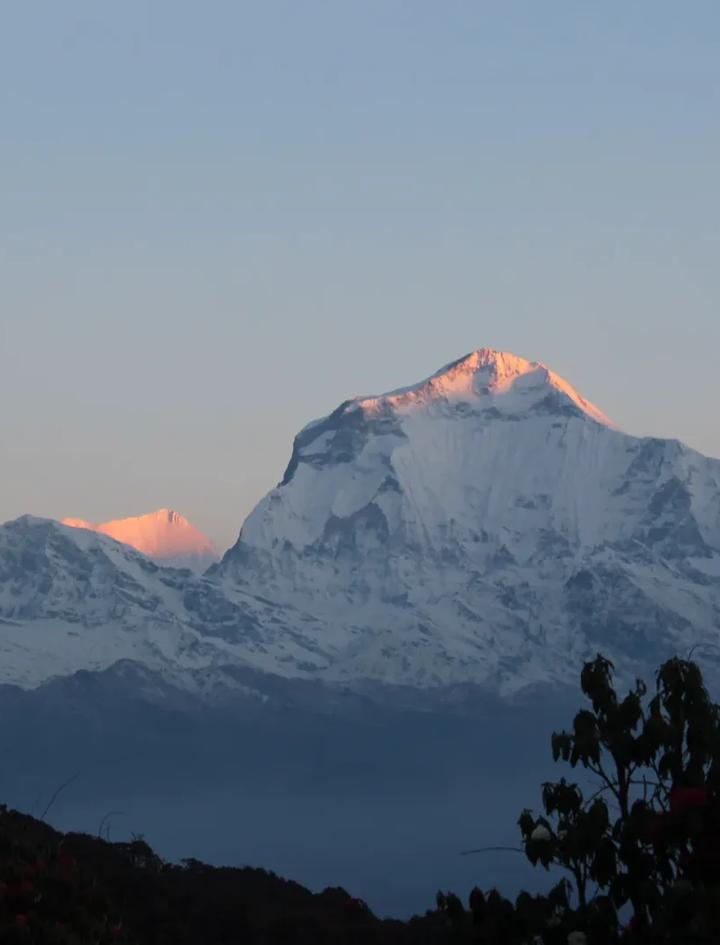
Poon Hill is the cheapest because it is the shortest. No domestic flight, no high-altitude park permits, fewer trail days means fewer meals and nights. The sunrise view from 3,210m, looking at Dhaulagiri, Annapurna South, Machhapuchhre, and Annapurna I, is comparable in raw impact to views that cost two or three times more to reach.
For trekkers deciding between Poon Hill and Mardi Himal, the cost difference is small (roughly USD 50-100). The decision usually comes down to whether you want the famous sunrise panorama (Poon Hill) or a quieter trail with close-up Machhapuchhre views (Mardi Himal).
Saving Money Without Cutting Corners
Eat dal bhat. It is the best value meal on every teahouse menu because refills are unlimited. Two dal bhat meals per day keeps food costs near USD 15. The rice, lentils, greens, and pickle provide everything your body needs for sustained walking.
Take the tourist bus. The flight between Kathmandu and Pokhara saves 6 hours but costs USD 100-130 more. The bus ride through the Trisuli river valley is scenic, and the money saved covers two full days of food on the trail.
Purify your own water. A USD 10 pack of purification tablets replaces 5 days of bottled water purchases. At NPR 200-350 per bottle, this saves USD 5-12 per trek. It also means less plastic on the trail.
Go in off-season. December through February and June through August see lower teahouse prices, fewer crowds, and more willingness to negotiate. The winter sunrise from Poon Hill is colder but equally dramatic, and some trekkers prefer the solitude.
Share a porter. If you are traveling with a partner, one porter can carry both packs. The daily rate does not double for two bags.
Skip the down jacket rental if you layer properly. A fleece, a windbreaker, and a thermal base layer are enough for Poon Hill's altitudes. The down jacket is a comfort item, not a survival requirement, on this route.
A Note on Prices
Every number in this article is based on 2026 pricing collected from teahouse menus, transport operators, permit offices, and trekking agency rates. Prices on the trail fluctuate with the season, fuel costs, and how recently a new road was cut (roads lower supply costs and eventually lower menu prices). The Poon Hill route benefits from its proximity to Pokhara: supply chains are short, competition between teahouses is healthy, and prices stay lower than on more remote routes.
If you want a specific budget for your trip dates, group size, and comfort preferences, reach out through our contact page. We will put together an itemized quote based on current season rates.
For the full route breakdown, day-by-day itinerary, sunrise information, and difficulty assessment, see the complete Poon Hill trek guide.