Day01
Arrival in Kathmandu
KathmanduArrive at Kathmandu airport (1,345 m). Overnight at hotel.
Enter the Forbidden Kingdom of Lo Manthang on a 15-day trek through Upper Mustang. Medieval walled city, cave monasteries, Tibetan culture, and a landscape resembling the moon. New 2026 permit: USD 50/day (reduced from USD 500 flat). From USD 1,975.
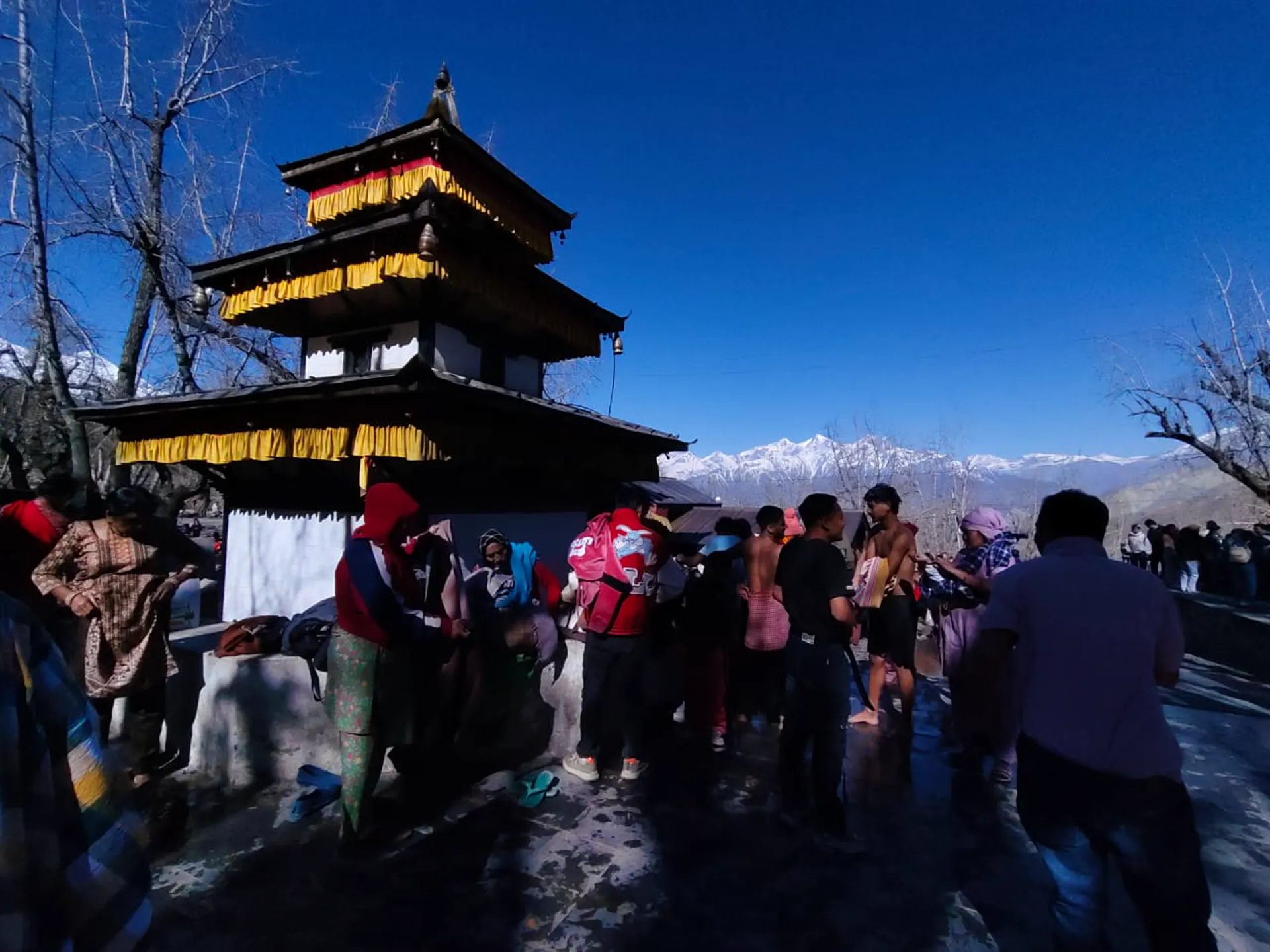
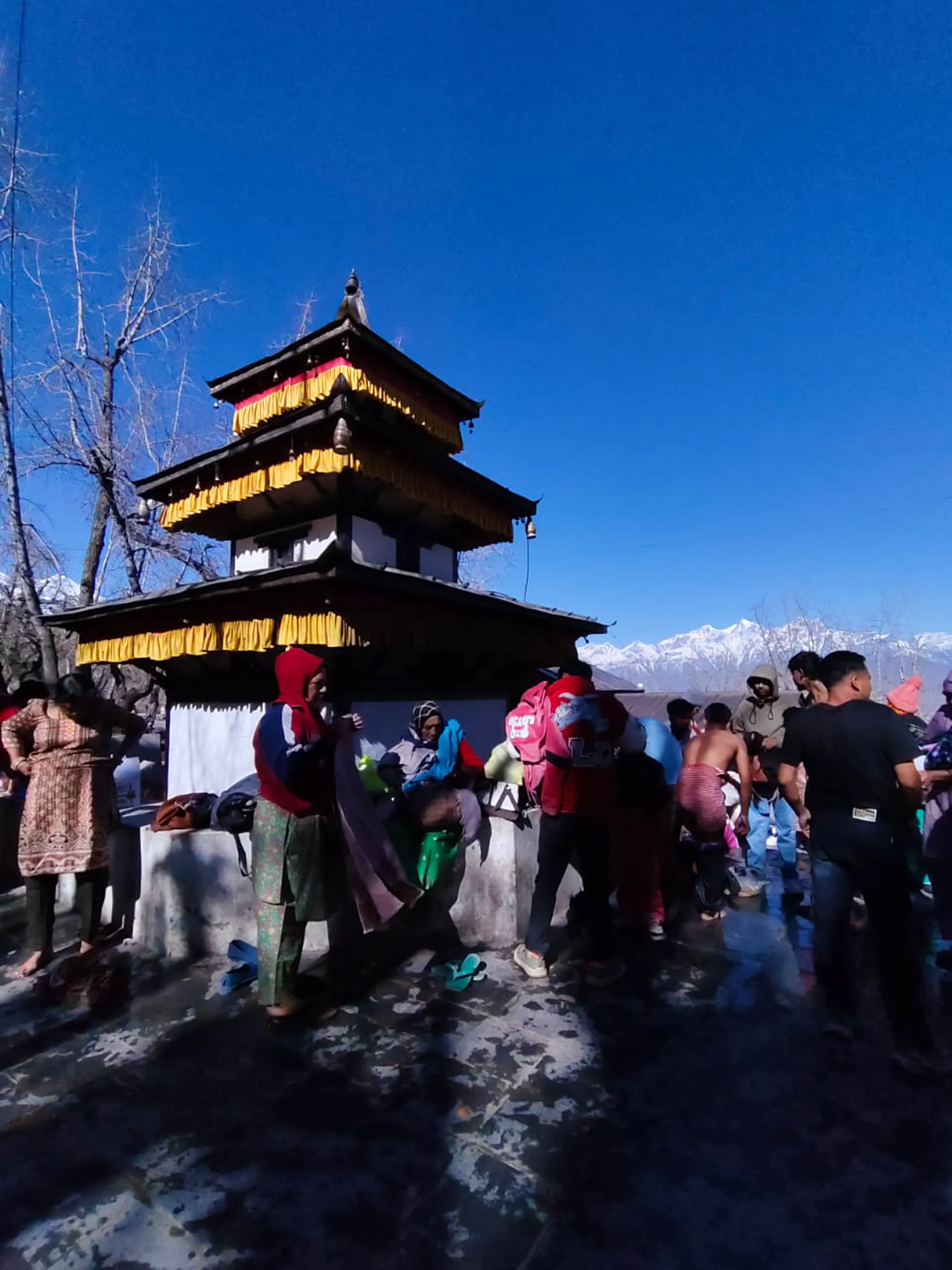
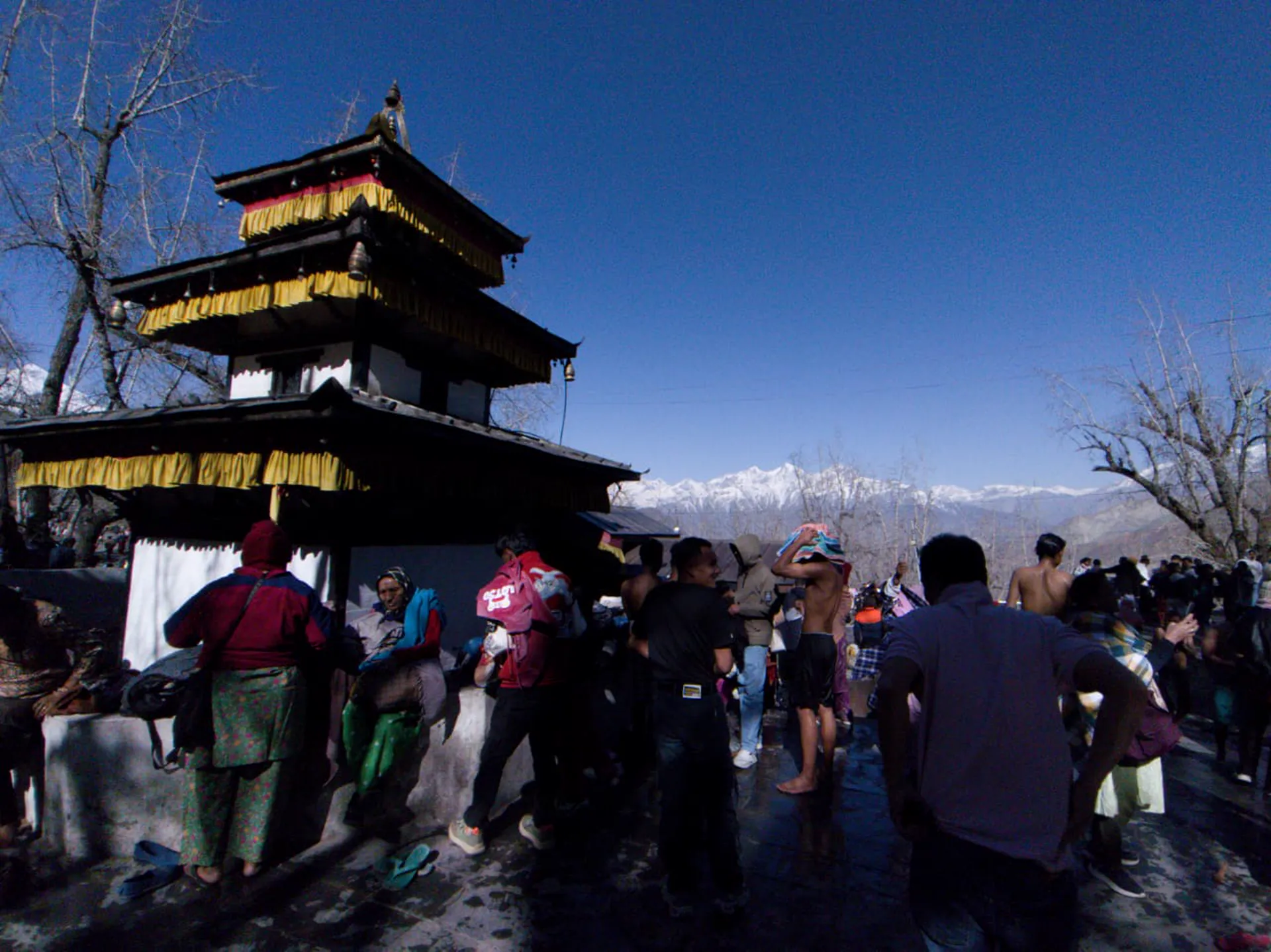
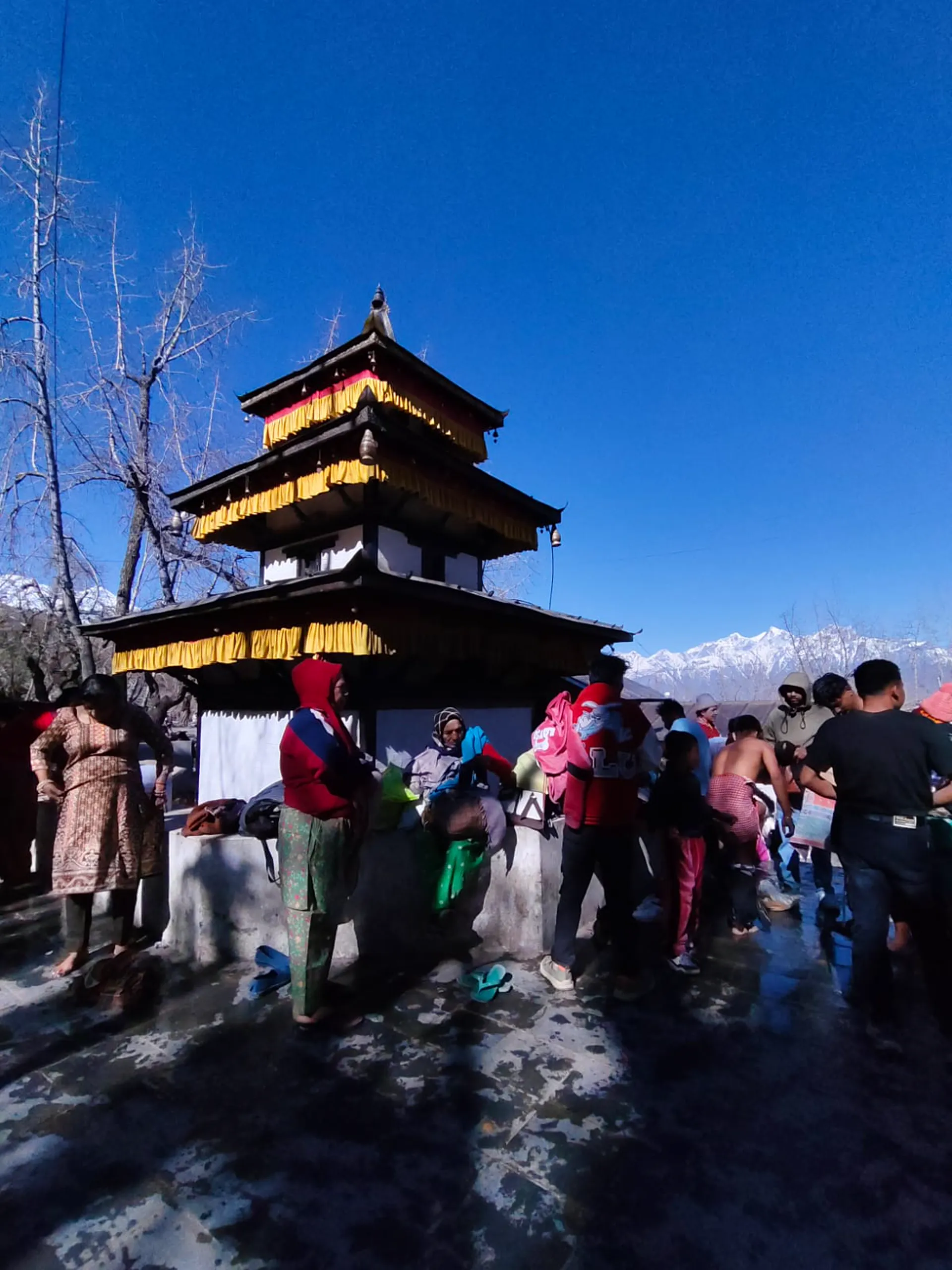
Lo Manthang is a medieval walled city at 3,840m. Four gompas contain Buddhist murals dating to the 14th and 15th centuries, some recently restored by international conservation teams. The royal palace sits at the center. The city feels like a living museum of Tibetan culture.
The cave monasteries between Kagbeni and Lo Manthang are carved into painted earth cliffs. Some contain sky burial sites and ancient manuscripts. The Chhoser cave system north of Lo Manthang was occupied over 3,000 years ago.
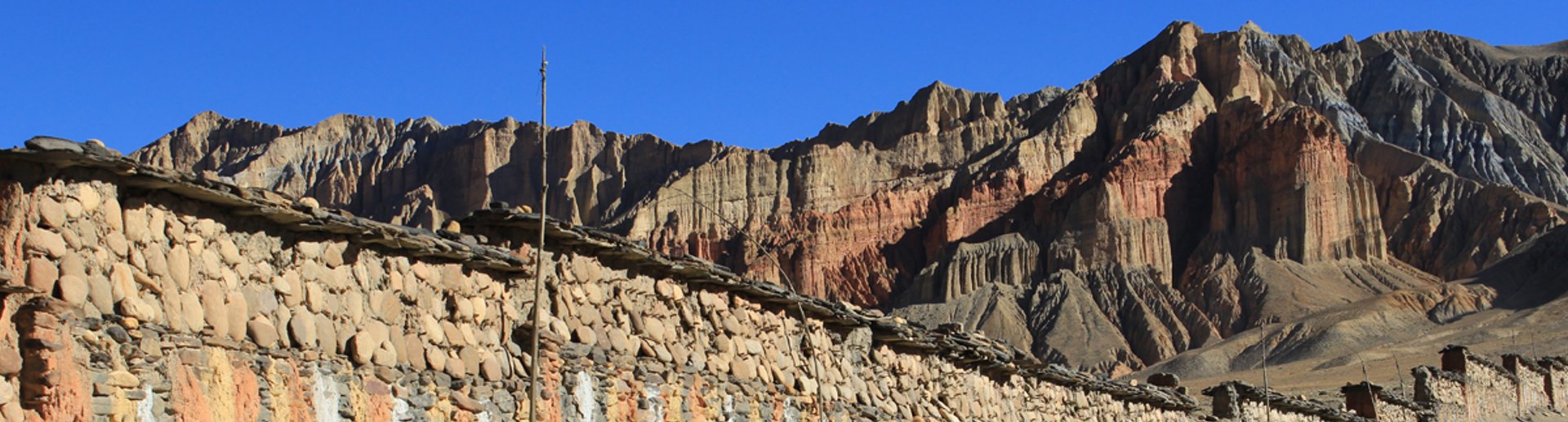
The landscape of Upper Mustang is lunar: eroded earth pillars, red and ochre cliffs, and a treeless plateau that receives almost no monsoon rain. The Kali Gandaki gorge below Kagbeni is the deepest on Earth; above Kagbeni the terrain opens into arid desert.
The Upper Mustang Trek is a 15-day journey to Lo Manthang (3,840m), the walled capital of the former Kingdom of Lo, one of the last surviving Tibetan-influenced kingdoms on Earth. Upper Mustang was closed to outsiders until 1992 and remains a restricted area with a special permit. The landscape is arid, wind-sculpted, and resembles the Tibetan Plateau more than Nepal.
The trail starts from Jomsom, following the Kali Gandaki north through Kagbeni (the gateway to Upper Mustang) and climbing through painted earth cliffs, cave monasteries, and Tibetan-style villages to Lo Manthang. The walled city contains four major gompas with Buddhist murals dating to the 14th century, a royal palace, and a population of about 800.
2026 permit change: the old USD 500 flat fee has been replaced with a flexible USD 50/day tariff. Solo trekkers can now obtain permits individually (previously required groups of 2+). Licensed guide mandatory.
Permits: ACAP, TIMS, and restricted area permit. All included.
For Upper Mustang by jeep instead of on foot, the Upper Mustang Jeep Tour covers Lo Manthang in 12 days (USD 1,800). For the Kali Gandaki gorge without the restricted area, the Jomsom Muktinath Trek reaches Muktinath in 15 days.
15 days from Kathmandu arrival to departure. Hover any day for full details.
Arrive at Kathmandu airport (1,345 m). Overnight at hotel.
Drive to Pokhara (865 m), approximately 6 hours. Overnight at hotel.
Drive to Kagbeni (2,800 m), approximately 7 hours. Overnight at teahouse.
Trek to Chele (3,050 m), approximately 6 hours. Overnight at teahouse.
Trek to Syanbochen (3,475 m), approximately 5 hours. Overnight at teahouse.
Trek to Ghami or Dhakmar (3,520 m), approximately 6 hours. Overnight at teahouse.
Trek to Ghar Gompa to Lo Manthang (3,800 m), approximately 7 hours. Overnight at teahouse.
Exploration day around Lo Manthang and Chhosar . Overnight at teahouse.
Trek to Yara (3,607m), approximately 6 hours. Overnight at teahouse.
Trek to Tengbe (3,240 m), approximately 7 hours. Overnight at teahouse.
Trek to Tetang (3,067 m), approximately 9 hours. Overnight at teahouse.
Trek to Muktinath (3,800 m), approximately 8 hours. Overnight at teahouse.
Drive back to Pokhara 8 hours. Overnight at hotel.
Fly back to Kathmandu. Overnight at hotel.
Transfer to the international airport for your final flight departure.
Airport to hotel to airport pickup and drop-off by private car, van, or bus.
Standard twin-sharing accommodation in a two or three-star hotel: 3 nights in Kathmandu and 2 nights in Pokhara, breakfast included.
Guided city tour in Kathmandu by private car, van, or bus.
Standard meals (lunch, dinner, and breakfast) and teahouse accommodation during the trek.
A government-licensed English-speaking guide for the trek, the required number of porters, and their food, accommodation, salary, insurance, equipment, and a general first aid kit.
Flight fare from Pokhara to Jomsom to Pokhara and Pokhara to Kathmandu, including airport departure taxes at Pokhara and Jomsom.
Annapurna Conservation Area permit, Upper Mustang special trekking permit, and all other necessary permits.
Surface transfer from Kathmandu.
Down jacket, duffel or kit bag, and sleeping bag (to be returned after the trek).
All applicable government taxes.
Tourist service charge.
Lunch and dinner while in Kathmandu.
Travel insurance (compulsory).
International airfare and airport departure tax.
Nepal entry visa fee.
Items of a personal nature such as alcoholic drinks, soft drinks, and laundry.
Personal trekking equipment.
Tips for trekking staff and driver.
Sightseeing and monument entrance fees.
Any other expenses not mentioned in the Price Includes section.
Dear guest, should you require additional accommodation in Kathmandu, we are pleased to offer the following rates: US$60 per person per night for a single room and US$35 per person per night for a double (twin sharing) room, both inclusive of breakfast.
Three reasons this trek stays with you long after the plane home.
Lo Manthang is one of the last walled cities in the Himalayas. Medieval Buddhist murals, a royal palace, and 800 residents living inside 14th-century walls.
The landscape is unlike anywhere else in Nepal. Painted earth cliffs, wind-sculpted pillars, and a treeless plateau that looks like another planet.
Cave monasteries and sky caves with 3,000+ years of human occupation. Archaeology and adventure combined.
A few things worth knowing before you commit. No sugar-coating, no surprises on day one.
You want Nepal's most culturally significant restricted-area trek. Lo Manthang is unmatched.
You can walk 5 to 6 hours a day for 11 trekking days on arid terrain. Maximum altitude is 3,840m.
You are interested in Tibetan Buddhist art, architecture, and living cultural traditions.
The new USD 50/day permit makes this more affordable than before.
You have 15 days available for a culturally immersive trekking experience.
The full kit that's built from years on the trail. Skip it at your own risk, bring it and you'll never think about it again.
Duffel bag ( Company provide complementary)
Daypack
Down Jacket and Sleeping bag 4 season ( if you need nice and clean down jacket and sleeping bag company provide which needs to be returned after the trek)
Hiking pants
Waterproof jacket
Full, sleeves shirt
Jumper or pile jacket
T, shirts
Trekking boots (Water proof)
Camp shoes/Sandal
wool socks
Light cotton socks for under wool socks( take quite several pairs of these too. Better to carry some extra weight rather than spend the whole time washing socks)
Sun hat
Beanie
Gloves
Sun block for lips
Sun lotion
Goggles or sunglasses ( with spare )
Thermal Long underwear (take quite a few pairs. Although the weather may be cold one tends to sweat a lot)
windproof pants
Water bottle
Sewing kit
Medical & first aid kit
Flash light ( with spare batteries)
Personal towel
Personal toiletries and medication which should be labelled Please.
Tight fitting, figure-hugging clothing, such as those made with Lycra can often be offensive to locals, especially on women. If you find these items comfortable as a base layer then please pack something to wear over the top of them.
Still have questions? Tap through the answers below or reach out directly. We reply within the hour.
Reviews from trekkers who have walked this exact route.
My wife and I went to Upper Mustang in October of 2016 with Prem Pandit from Mountain Hawk Treks. I can only say that it was the most remarkable trip we’ve ever been on. Mustang is vast, stark, raw, remote, and to date, unspoiled. The landscape is most reminiscent of the old American West, just bigger, and with the Himalayas as the backdrop, and more spectacular. It is high desert with altitudes ranging from 2800 to 4000 meters (9000 to 13,500 ft). Daytime temperatures were a comfortable 15C (60F), nighttime approaching 0C (32F). The culture is Tibetan, and the entire area is dotted with Buddhist monasteries, stupas and chortens. Beautiful works of religious art are found within the monasteries (which are dark inside: a flashlight is a necessity) and the chortens. The villages themselves are small, with people living traditional Tibetan, Buddhist lives. You feel that you are looking back in time. I suspect this will begin to change as adventure tourism continues to grow. Our guide Prem was indispensable. He not only planned our trek with us in mind (we are in our sixties), but he is very flexible and made wonderfully thought-out changes to our plans when circumstances dictated. Our impromptu trek to Muktinath comes to mind as one of the highlights, and it was added because we needed an extra day in Lo Manthang which changed the original itinerary. Prem is passionate about what he does. He is very well informed about the wildlife, the cultural and the religious aspects of this region. He loves trekking and it shows. His thoughtfulness and insight made sure we had a successful trip. I recommend him highly to anyone who wants a real adventure. Prem is honest, considerate, and highly respected in the villages and among his peers. He will not let you down. This was our second trek with Mountain Hawk, and we’d go again with Prem.
Verified reviews from Everest, Annapurna, Manaslu, and Langtang treks.

He designed the trek entirely around our schedule and the overall organisation was superb. Prem and his team were a great laugh along the route.

Prem and his team are super awesome. So personalized and caring.

Unlike other trekkers we passed along the way, we did not get sick at all as Prem took exceptional care of us. Our holiday planning was effortless.

His knowledge of the area and having trekked this region for over 20 years made our experience second to none.

Thank you so much Prem, Min and Sanjay for everything. My heart is so full after this trip. God bless you all!

Fantastic trek to ABC, made exceptional by Prem the main guide. A friendship was built up over the days of the trip. We had a lot of laughs!
Mountain Hawk made my first ever trekking experience to EBC an awesome, beautiful and memorable experience. I will not hesitate to use their services again.

Our guide went above and beyond to ensure all our needs were met. It was a pleasure doing business with Mountain Hawk and we hope to come back again.
We were 100% happy with the service Mountain Hawk provided and would definitely recommend it to anyone who is thinking about trekking.

Prem and his team at Mountain Hawk were the complete package: knowledgeable, enormously helpful, and amazingly friendly.

His knowledge of the landscape, flora and fauna, health and well-being was outstanding. I will definitely be going back and won't even consider looking elsewhere.

Mountain Hawk Treks took care of everything from sleeping bags to flights and accommodation. I would definitely recommend them again.

The 12-day trek felt like a luxury trek with Prem and his team constantly ensuring all accommodation, food and logistics were taken care of in advance.

If you are finding it difficult to choose between a trekking company, stop thinking and book with Mountain Hawk. You won't be disappointed.

He is great company, very knowledgeable and really made my trip. He took one look at me and made sure I reached base camp safely. I couldn't recommend him more.

Extremely professional, polite and an honest company. You shouldn't have any issues with your trek if you book with Mountain Hawk.

Their local knowledge, advice and assistance made our trek to EBC very enjoyable. The professionalism extended onto the trek.
Mountain Hawk trekking company was very professional and prompt. At last minute Prem arranged 3 wonderful days in Chitwan for our family.

I can wholeheartedly recommend Prem and his team. Mountain Hawk Trek is the best choice when planning any adventure in Nepal.
Without hesitation we recommend Mountain Hawk as a trekking company. The staff is excellent and they know what they are doing.

We highly recommend Mountain Hawk without reservation for a great Nepal adventure. We hope to see Prem again in the future.

Fantastic day hike with Prem Pandit to Nagarjun Hill. Beautiful views, great stories, wonderful snacks and good humour throughout.

Prem and his team were brilliant in taking care of all of us. We all made it to Gokyo Ri and came back safe.

I know for sure that I will be back in Nepal soon, and mountain hawk trek would be the first company I would contact. I fell in love with trekking and Nepal.

I'm very happy to recommend Mountain Hawk for anyone going trekking in Nepal. I loved the experience.

Prem, Badri and the team were instrumental in providing assistance all the way. I would highly recommend Mountain Hawk to any trekker visiting Nepal.
The service was very good by the team. This was my fifth trip to Nepal and I have always used Prem for my trekking expeditions.

We were very well looked after by our guide Badri who helped us along the journey. I would definitely recommend Mountain Hawk.

It was the adventure of a lifetime and Prem made sure it was perfect. A reliably amazing journey.
If you are planning to trek in Nepal, do yourself a really huge favour and use Mountain Hawk Trekking. We highly recommend them.

Best trekking company ever. With many years of experience and over 100 climbs to Everest Base Camp, we felt in good hands.

Prem's invaluable experience of the mountains and his thoughtfulness made this trip an incredible, memorable experience. Best in class!

The experience was as close to perfect as real life can get. Prem and Min are extremely kind and pleasant people with whom it is a pleasure to spend time.

Prem was more another member of our group rather than a tour guide. He allowed custom changes to visit more remote, less tourist-oriented places.

After 2 weeks in Nepal, everyone at Mountain Hawk felt like family. Prem and Badri are wonderful!
Excellent trip with Mountain Hawk team. My wife enjoyed the trek and the care given by the staff. I will come back to Nepal.
His ever smiling and ever helpful nature made our trip the most memorable. This was my second time with Mountain Hawk.

As a family of differing ages and fitness levels, Prem went out of his way to help us individually so we all achieved our goal of reaching Everest Base Camp.

Absolutely fantastic. Prem had everything under control. He is very informative and fun. This is your guy.

We were looked after well with the guides and they went out of their way to do anything for us, always with a smile on their faces.

Prem is one of the most informative and educated guides I have ever run into. He is a genuine, kind man that truly enjoys sharing his expertise.
Prem and his staff are first class on all aspects. Trekking with them you feel you are with family members.

An excellent, safe and challenging adventure organized by Prem Pandit and his team at Mountain Hawk Trek. Overall, very much recommended.

Prem is the master of trekking logistics and management. I have known Prem since 2007 and whenever I come to Nepal he is the only one I want to guide me.

Prem's company is truly professional and most importantly flexible. They specialise in small groups which allow you to go at your own pace.

With just the three of us travelling together it was really important that he was such a wonderful travelling companion. We can thoroughly recommend the Mountain Hawk experience.

We have memories to last a lifetime and friends in Prem and Badri to last a lifetime. I would recommend Mountain Hawk Trekking again and again.

Prem and his team organised the trip to the finest detail. MH is an experienced operator ensuring an almost 100% success rate.

His experience and relationships are evident. There is no way we would have gotten as much out of our trip if it wasn't for Prem.

They care for your health and safety as a number one priority. We always felt safe and comfortable throughout the entire trek.
On the mountain he was guide, mentor, motivator and best of all a good friend. We will go back to Nepal and will be using Mountain Hawk and Prem again.
Our guide Badri was not only a great guide but also a fun, caring, super nice travel companion who made sure we were safe and comfortable throughout.

Prem's attention to detail is fantastic, as is his knowledge of the area. I can highly recommend Mountain Hawk Trekking for your trip to Nepal.

Mountain Hawk looked after us from the time we landed in Kathmandu right to the time we left for London. Service with a personal touch!

Extraordinary effort was made in the planning of our itinerary, hand tailored to our needs. Can't speak highly enough of Mountain Hawk expeditions.

From the second I arrived in Kathmandu airport and saw Badri with my name on the Mountain Hawk board, I knew I was in safe hands.
Prem and his staff took care of everything. I would highly recommend Mountain Hawk to anyone considering trekking in Nepal.

My wife and I went to Upper Mustang in October of 2016 with Prem Pandit from Mountain Hawk Treks. I can only say that it was the most remarkable trip we’ve ever been on. Mustang is vast, stark, raw, remote, and to date, unspoiled. The landscape is most reminiscent of the old American West, just bigger, and with the Himalayas as the backdrop, and more spectacular. It is high desert with altitudes ranging from 2800 to 4000 meters (9000 to 13,500 ft). Daytime temperatures were a comfortable 15C (60F), nighttime approaching 0C (32F). The culture is Tibetan, and the entire area is dotted with Buddhist monasteries, stupas and chortens. Beautiful works of religious art are found within the monasteries (which are dark inside: a flashlight is a necessity) and the chortens. The villages themselves are small, with people living traditional Tibetan, Buddhist lives. You feel that you are looking back in time. I suspect this will begin to change as adventure tourism continues to grow. Our guide Prem was indispensable. He not only planned our trek with us in mind (we are in our sixties), but he is very flexible and made wonderfully thought-out changes to our plans when circumstances dictated. Our impromptu trek to Muktinath comes to mind as one of the highlights, and it was added because we needed an extra day in Lo Manthang which changed the original itinerary. Prem is passionate about what he does. He is very well informed about the wildlife, the cultural and the religious aspects of this region. He loves trekking and it shows. His thoughtfulness and insight made sure we had a successful trip. I recommend him highly to anyone who wants a real adventure. Prem is honest, considerate, and highly respected in the villages and among his peers. He will not let you down. This was our second trek with Mountain Hawk, and we’d go again with Prem.