Day01
Arrival in Kathmandu
KathmanduArrive at Kathmandu airport (1,345 m). Overnight at hotel.
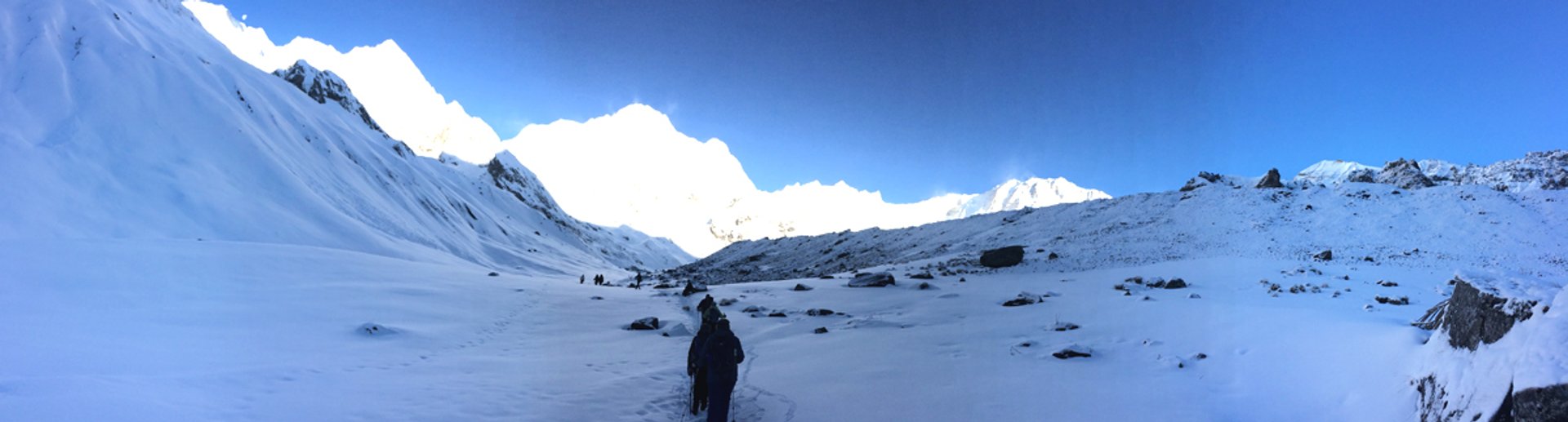

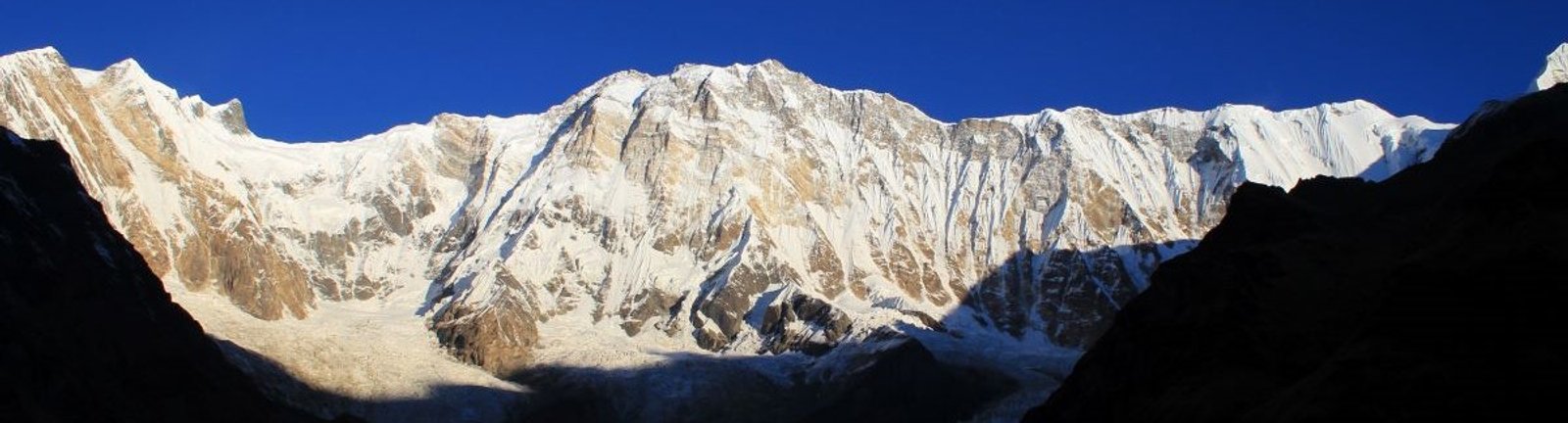
Reach the Annapurna Sanctuary at 4,130m in just 10 days via the direct Chhomrong route. Same base camp experience as the 13-day trek on a tighter schedule. Machhapuchhre, Annapurna I, Gurung villages. From USD 950.
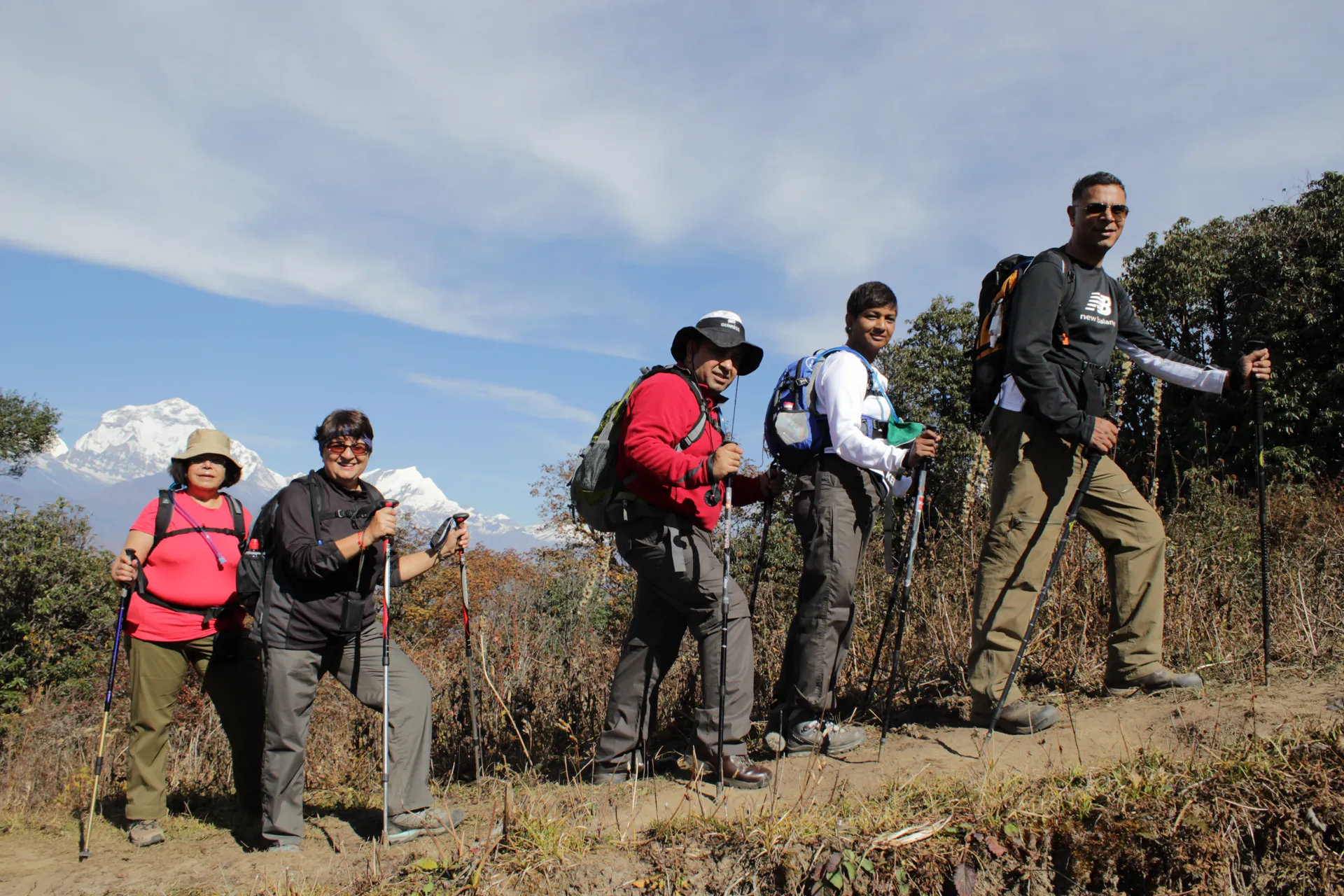
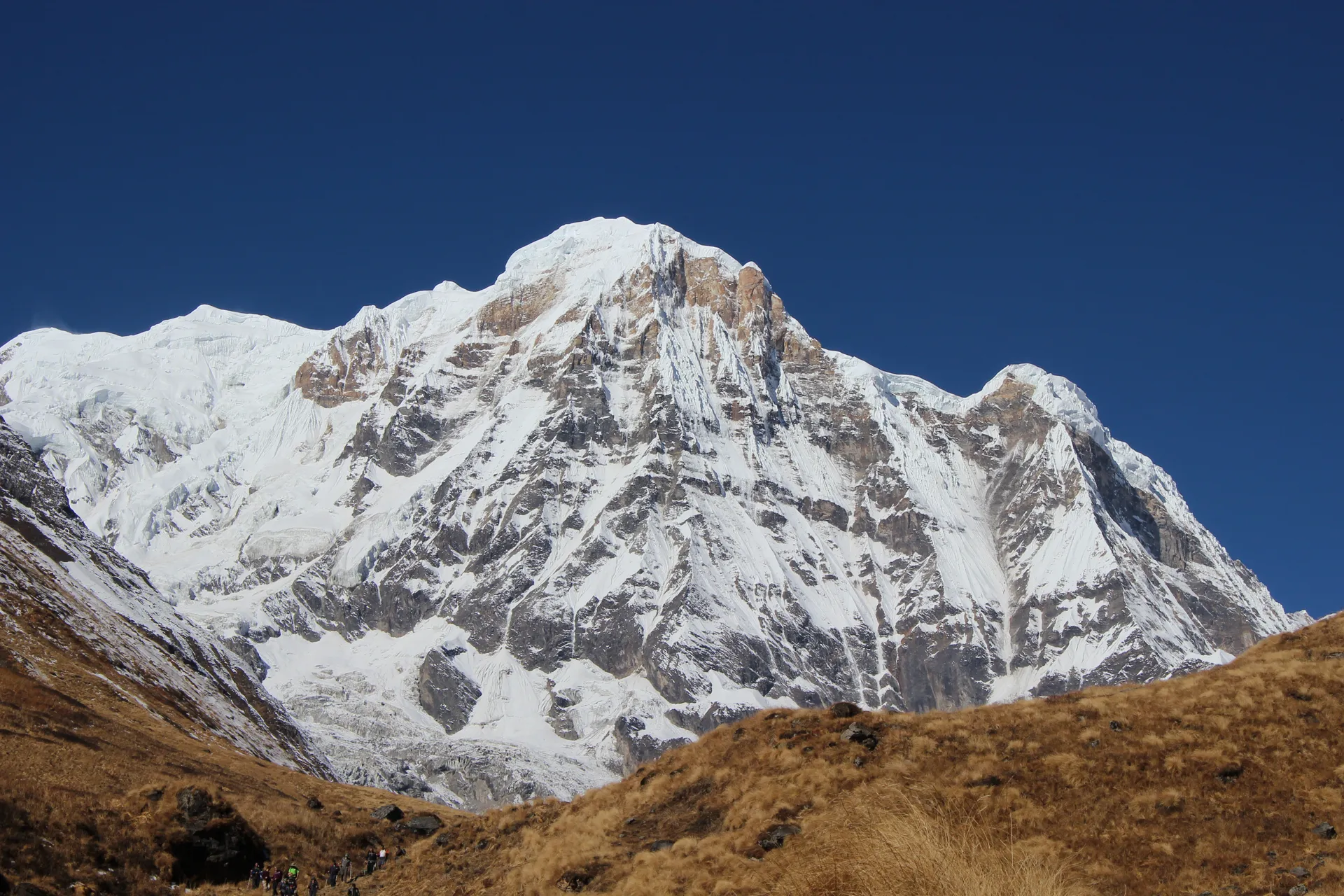
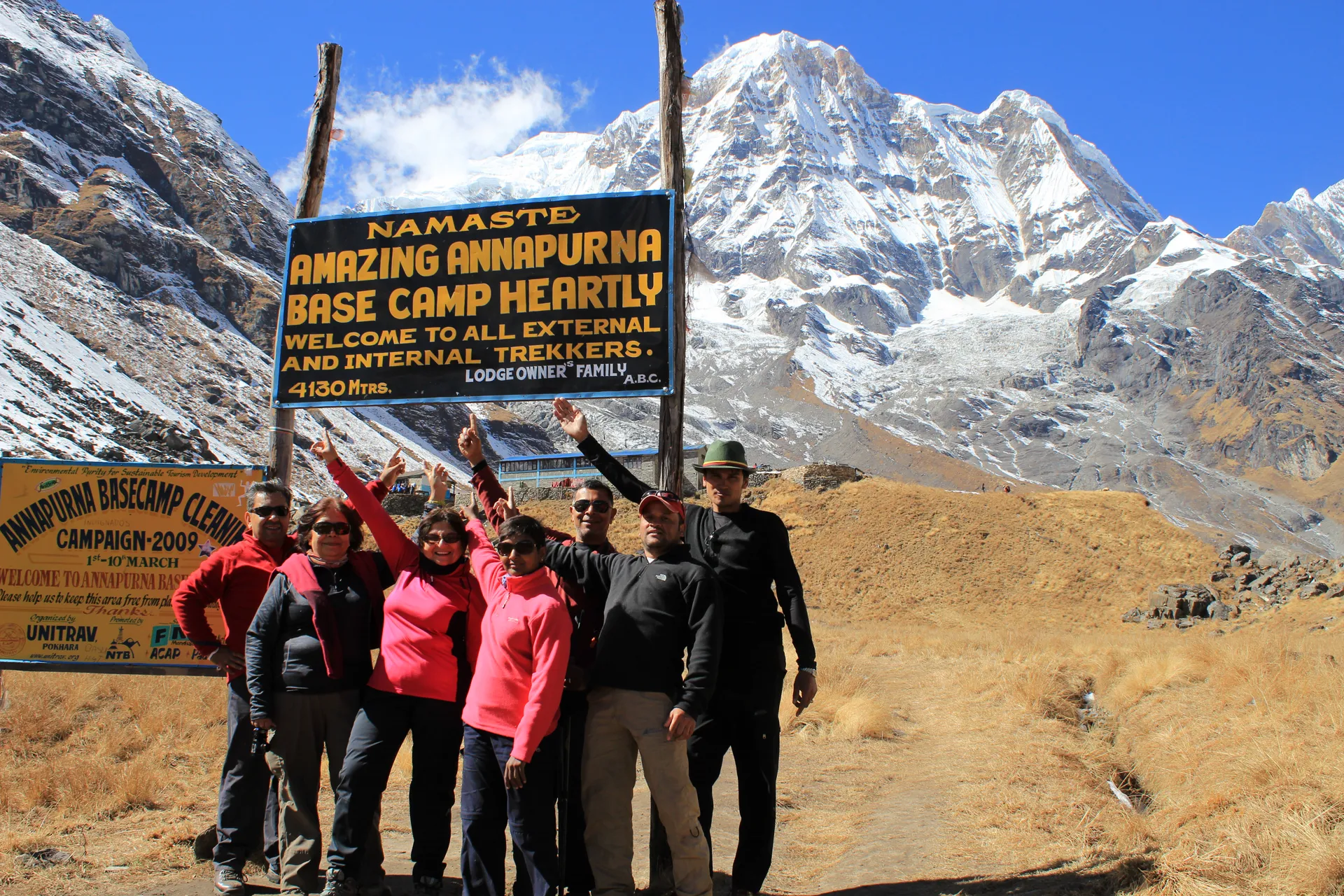
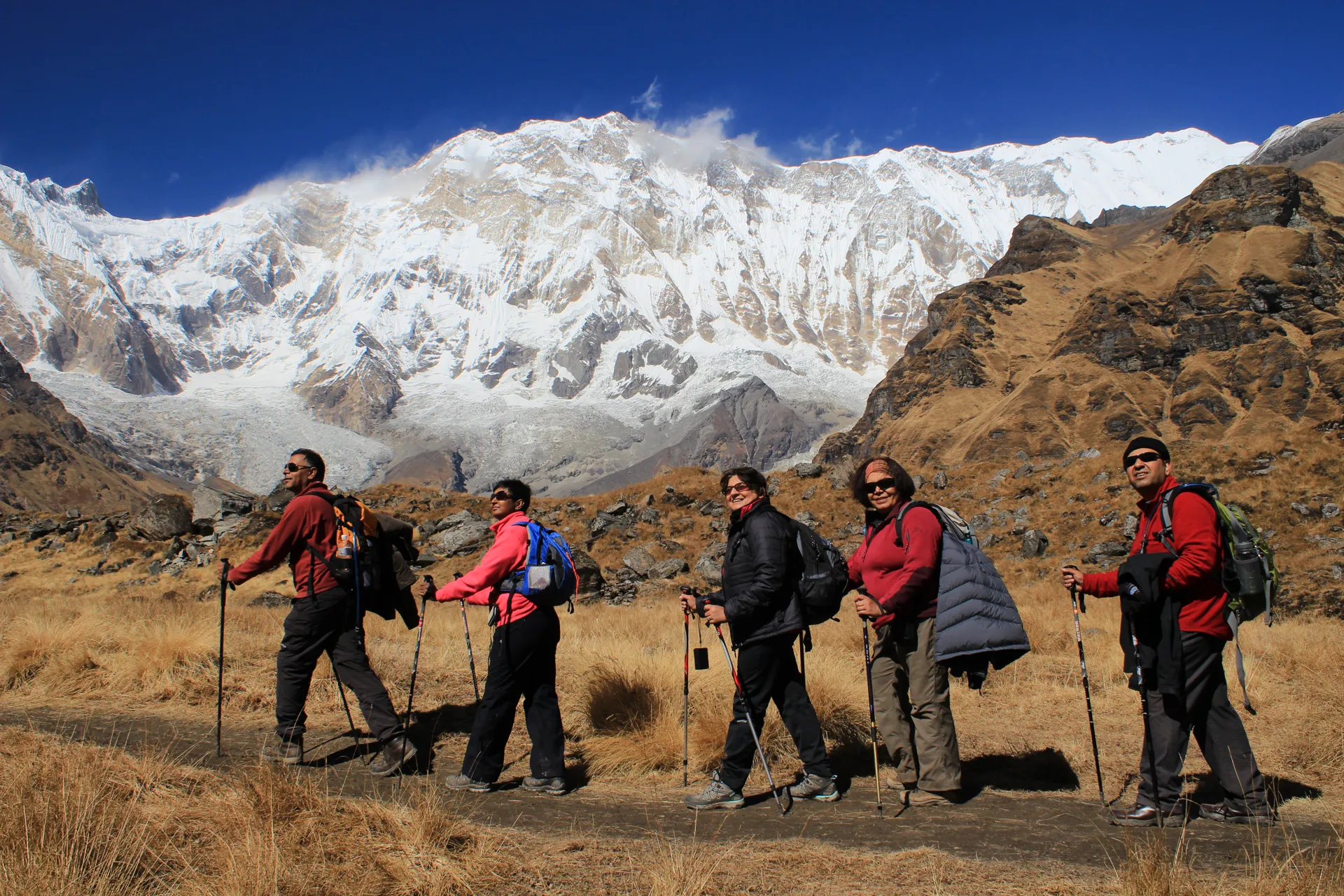
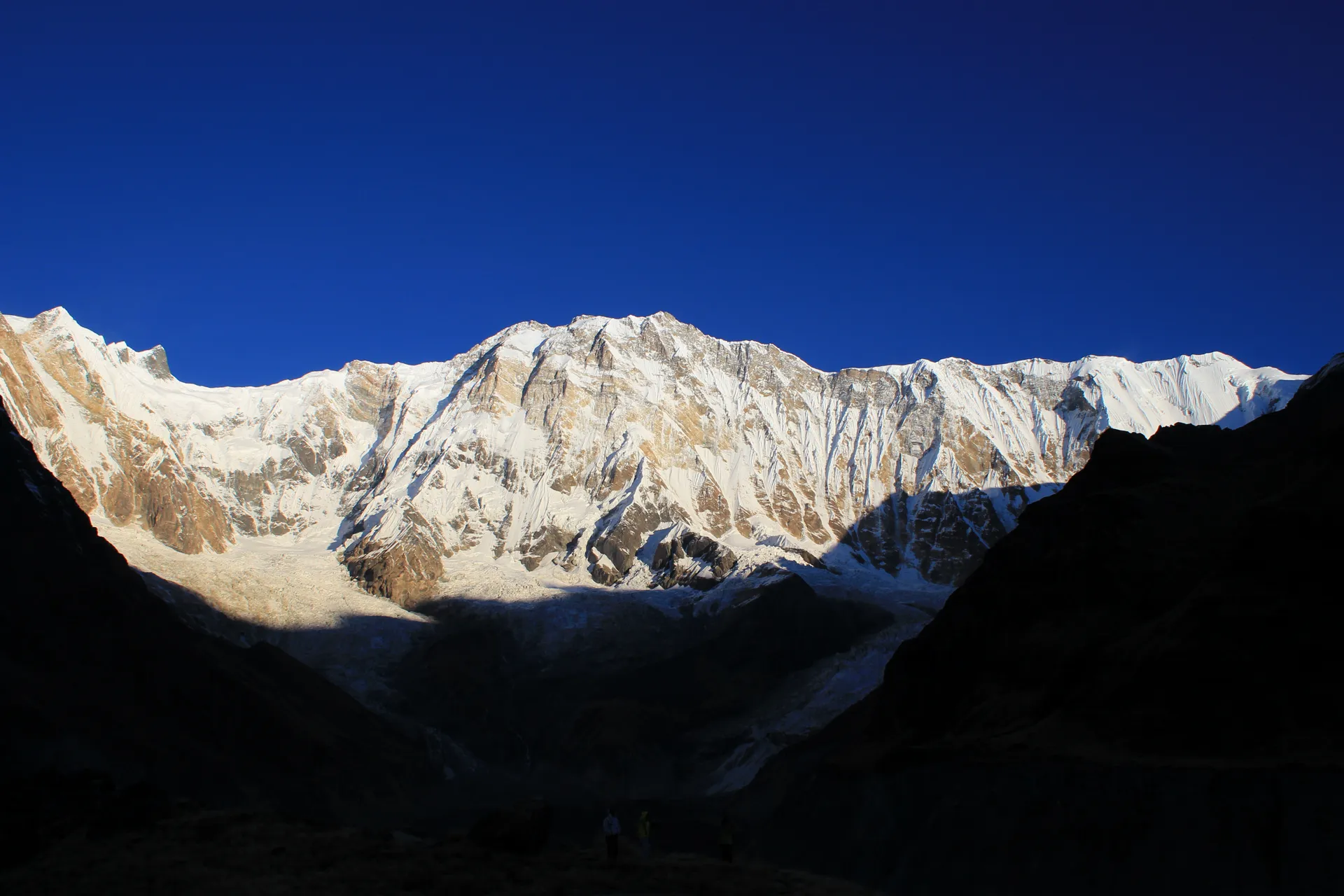
This is the fastest route to the Annapurna Sanctuary without compromising the destination. You reach the same 4,130m base camp, see the same ring of peaks, and wake to the same sunrise as trekkers on the 13-day itinerary. The difference is pace: longer walking days and fewer rest stops in the lower villages.
The bamboo forest between Sinuwa and Deurali is a highlight regardless of pace. Dense canopy, hanging moss, and the sound of the Modi Khola below. In spring (March to May), rhododendrons add color to the understory.
At USD 950 this is the most affordable guided route into the Annapurna Sanctuary, making it the go-to option for trekkers with limited time and budget who still want the full base camp experience.
The Annapurna Base Camp Short Trek covers the same trail to the Annapurna Sanctuary in 10 days instead of 13. The itinerary trims the Kathmandu-Pokhara transit days and moves at a slightly faster pace through the lower villages, reaching Chhomrong by day 3 and base camp by day 6. You get the same sunrise at 4,130m inside the amphitheatre of Annapurna I, Machhapuchhre, and Hiunchuli.
The route follows the Modi Khola from Nayapul through Ghandruk (1,940m) and Chhomrong (2,170m), then climbs through bamboo forest to Deurali (3,230m) and into the Annapurna Sanctuary. Walking days are slightly longer at 6 to 7 hours to compress the schedule. The acclimatization profile is adequate but less conservative than the 13-day version.
Permits required: ACAP (NPR 3,000) and TIMS card, both included. Licensed guide mandatory for all foreign trekkers in the Annapurna Conservation Area.
If 10 days feels rushed, the standard Annapurna Base Camp Trek adds 3 days for a more relaxed pace at USD 1,275. For a lower-altitude alternative, the Ghorepani Poon Hill Trek reaches 3,210m in 8 days. The Mardi Himal Trek offers a quieter 11-day route to 3,900m with similar Machhapuchhre views.
10 days from Kathmandu arrival to departure. Hover any day for full details.
Arrive at Kathmandu airport (1,345 m). Overnight at hotel.
Drive to Ghandruk (1,720 m), approximately 6 hours. Overnight at teahouse.
Trek to Chomrong (2,117 m), approximately 7 hours. Overnight at teahouse.
Trek to Himalaya (2,800 m), approximately 6 hours. Overnight at teahouse.
Trek to Annapurna Base Camp (4,130 m), approximately 6 hours. Overnight at teahouse.
Trek back to Bamboo (2,400 m), approximately 5 hours. Overnight at teahouse.
Trek to Jhinu Danda or the hot spring (1,780 m), approximately 6 hours. Overnight at teahouse.
Trek to Nayapul and drive back to Pokhara, approximately 1 hour. Overnight at hotel.
Drive back to Kathmandu. Overnight at hotel.
Transfer to the international airport for your final flight departure.
Airport to hotel to airport pickup and drop-off by private car, van, or bus.
Standard twin-sharing accommodation in a two or three-star hotel: 2 nights in Kathmandu and 1 night in Pokhara, breakfast included.
Standard meals (lunch, dinner, and breakfast) and teahouse accommodation during the trek.
A government-licensed English-speaking guide for the trek, the required number of porters, and their food, accommodation, salary, insurance, equipment, and a general first aid kit.
Annapurna Conservation Area Permit and all other necessary permits.
Surface transfer from Kathmandu.
Down jacket, duffel or kit bag, and sleeping bag (to be returned after the trek).
All applicable government taxes.
Tourist service charge and VAT.
Lunch and dinner while in Kathmandu and Pokhara.
Travel insurance (compulsory).
International airfare and airport departure tax.
Nepal entry visa fee.
Items of a personal nature such as alcoholic drinks, soft drinks, and laundry.
Personal trekking equipment.
Tips for trekking staff and driver.
Sightseeing and monument entrance fees.
Any other expenses not mentioned in the Price Includes section.
We kindly offer the option of a flight from Kathmandu to Pokhara and back at an additional cost of US$200 per person (US$100 for one way). Additionally, should you require extra accommodation in Kathmandu, including breakfast, the rates are US$60 per person per night for a single room and US$35 per person per night for a double (twin sharing) room.
Three reasons this trek stays with you long after the plane home.
Same destination, three fewer days. You stand at Annapurna Base Camp inside the sanctuary amphitheatre without taking two weeks off work.
At USD 950 this is the cheapest guided route to any major base camp in Nepal. Full board, guide, porter, permits all included.
Machhapuchhre sunrise from 3,700m is stunning whether you arrive in 6 days or 8. The mountain does not care about your itinerary length.
A few things worth knowing before you commit. No sugar-coating, no surprises on day one.
You have 10 days or fewer and want to reach a major Himalayan base camp. This is the fastest option in the Annapurna region.
You can walk 6 to 7 hours a day on steep terrain. The pace is noticeably faster than the 13-day version.
You are comfortable with a slightly compressed acclimatization schedule. The highest sleep is 4,130m with one night at 3,700m beforehand.
You want the Annapurna Sanctuary experience at the lowest guided price available.
Prior trekking experience is helpful. The faster pace leaves less margin for adjustment.
The full kit that's built from years on the trail. Skip it at your own risk, bring it and you'll never think about it again.
Clothing:
Moisture-wicking base layers (long-sleeve tops and pants)
Insulating mid-layers (fleece jackets or down jackets)
Waterproof and windproof outer shell jacket
Waterproof and breathable trekking pants
Thermal underwear (for colder seasons)
Trekking shorts or convertible pants (for warmer days)
Quick-drying hiking socks (wool or synthetic blend)
Warm hat or beanie
Lightweight gloves or mittens
Sun hat or cap for sun protection
Footwear:
Sturdy and broken-in hiking boots with ankle support
Comfortable trekking sandals or shoes for camp or rest days
Gaiters (optional) for added protection from snow, mud, and debris
Accessories:
Daypack (20-30 liters) for carrying essentials during the day
Trekking poles for stability and reducing strain on knees
Sunglasses with UV protection
Buff or neck gaiter for sun and wind protection
Headlamp or flashlight with extra batteries
Personal first aid kit with medications, blister treatments, and bandages
Lip balm with SPF protection
Sunscreen with high SPF rating
Insect repellent (especially during summer months)
Portable water purification system or water purification tablets
Gear:
Sleeping bag suitable for cold temperatures (rated to at least -10°C/14°F)
Sleeping pad or inflatable mattress for insulation and comfort
Lightweight and quick-drying towel
Multi-purpose knife or tool.
Portable power bank for charging electronic devices
Optional Items:
Camera or smartphone for capturing memories
Binoculars for wildlife and scenic viewing
Still have questions? Tap through the answers below or reach out directly. We reply within the hour.
Reviews from trekkers who have walked this exact route.
Verified reviews from Everest, Annapurna, Manaslu, and Langtang treks.

Thank you so much Prem, Min and Sanjay for everything. My heart is so full after this trip. God bless you all!

Without hesitation we recommend Mountain Hawk as a trekking company. The staff is excellent and they know what they are doing.

Prem and his team at Mountain Hawk were the complete package: knowledgeable, enormously helpful, and amazingly friendly.

The 12-day trek felt like a luxury trek with Prem and his team constantly ensuring all accommodation, food and logistics were taken care of in advance.

Best trekking company ever. With many years of experience and over 100 climbs to Everest Base Camp, we felt in good hands.

Fantastic day hike with Prem Pandit to Nagarjun Hill. Beautiful views, great stories, wonderful snacks and good humour throughout.

Prem and his staff are first class on all aspects. Trekking with them you feel you are with family members.

Fantastic trek to ABC, made exceptional by Prem the main guide. A friendship was built up over the days of the trip. We had a lot of laughs!

If you are finding it difficult to choose between a trekking company, stop thinking and book with Mountain Hawk. You won't be disappointed.

The service was very good by the team. This was my fifth trip to Nepal and I have always used Prem for my trekking expeditions.

An excellent, safe and challenging adventure organized by Prem Pandit and his team at Mountain Hawk Trek. Overall, very much recommended.

If you are planning to trek in Nepal, do yourself a really huge favour and use Mountain Hawk Trekking. We highly recommend them.
Unlike other trekkers we passed along the way, we did not get sick at all as Prem took exceptional care of us. Our holiday planning was effortless.

Prem is one of the most informative and educated guides I have ever run into. He is a genuine, kind man that truly enjoys sharing his expertise.
Mountain Hawk made my first ever trekking experience to EBC an awesome, beautiful and memorable experience. I will not hesitate to use their services again.

Prem's invaluable experience of the mountains and his thoughtfulness made this trip an incredible, memorable experience. Best in class!

We were very well looked after by our guide Badri who helped us along the journey. I would definitely recommend Mountain Hawk.

Prem was more another member of our group rather than a tour guide. He allowed custom changes to visit more remote, less tourist-oriented places.

Our guide Badri was not only a great guide but also a fun, caring, super nice travel companion who made sure we were safe and comfortable throughout.

From the second I arrived in Kathmandu airport and saw Badri with my name on the Mountain Hawk board, I knew I was in safe hands.
He designed the trek entirely around our schedule and the overall organisation was superb. Prem and his team were a great laugh along the route.

Our guide went above and beyond to ensure all our needs were met. It was a pleasure doing business with Mountain Hawk and we hope to come back again.

Prem is the master of trekking logistics and management. I have known Prem since 2007 and whenever I come to Nepal he is the only one I want to guide me.

Mountain Hawk Treks took care of everything from sleeping bags to flights and accommodation. I would definitely recommend them again.

Extraordinary effort was made in the planning of our itinerary, hand tailored to our needs. Can't speak highly enough of Mountain Hawk expeditions.

Prem's attention to detail is fantastic, as is his knowledge of the area. I can highly recommend Mountain Hawk Trekking for your trip to Nepal.
Their local knowledge, advice and assistance made our trek to EBC very enjoyable. The professionalism extended onto the trek.
Prem and his team were brilliant in taking care of all of us. We all made it to Gokyo Ri and came back safe.

It was the adventure of a lifetime and Prem made sure it was perfect. A reliably amazing journey.

His ever smiling and ever helpful nature made our trip the most memorable. This was my second time with Mountain Hawk.
Mountain Hawk trekking company was very professional and prompt. At last minute Prem arranged 3 wonderful days in Chitwan for our family.

Mountain Hawk looked after us from the time we landed in Kathmandu right to the time we left for London. Service with a personal touch!

As a family of differing ages and fitness levels, Prem went out of his way to help us individually so we all achieved our goal of reaching Everest Base Camp.

Absolutely fantastic. Prem had everything under control. He is very informative and fun. This is your guy.

Prem's company is truly professional and most importantly flexible. They specialise in small groups which allow you to go at your own pace.

He is great company, very knowledgeable and really made my trip. He took one look at me and made sure I reached base camp safely. I couldn't recommend him more.

His experience and relationships are evident. There is no way we would have gotten as much out of our trip if it wasn't for Prem.
His knowledge of the landscape, flora and fauna, health and well-being was outstanding. I will definitely be going back and won't even consider looking elsewhere.

After 2 weeks in Nepal, everyone at Mountain Hawk felt like family. Prem and Badri are wonderful!

His knowledge of the area and having trekked this region for over 20 years made our experience second to none.

We were looked after well with the guides and they went out of their way to do anything for us, always with a smile on their faces.

On the mountain he was guide, mentor, motivator and best of all a good friend. We will go back to Nepal and will be using Mountain Hawk and Prem again.

With just the three of us travelling together it was really important that he was such a wonderful travelling companion. We can thoroughly recommend the Mountain Hawk experience.

The experience was as close to perfect as real life can get. Prem and Min are extremely kind and pleasant people with whom it is a pleasure to spend time.
We were 100% happy with the service Mountain Hawk provided and would definitely recommend it to anyone who is thinking about trekking.

Prem and his team organised the trip to the finest detail. MH is an experienced operator ensuring an almost 100% success rate.

I can wholeheartedly recommend Prem and his team. Mountain Hawk Trek is the best choice when planning any adventure in Nepal.

We highly recommend Mountain Hawk without reservation for a great Nepal adventure. We hope to see Prem again in the future.

We have memories to last a lifetime and friends in Prem and Badri to last a lifetime. I would recommend Mountain Hawk Trekking again and again.
Excellent trip with Mountain Hawk team. My wife enjoyed the trek and the care given by the staff. I will come back to Nepal.

Prem, Badri and the team were instrumental in providing assistance all the way. I would highly recommend Mountain Hawk to any trekker visiting Nepal.
Prem and his staff took care of everything. I would highly recommend Mountain Hawk to anyone considering trekking in Nepal.

I know for sure that I will be back in Nepal soon, and mountain hawk trek would be the first company I would contact. I fell in love with trekking and Nepal.
Prem and his team are super awesome. So personalized and caring.

I'm very happy to recommend Mountain Hawk for anyone going trekking in Nepal. I loved the experience.

Extremely professional, polite and an honest company. You shouldn't have any issues with your trek if you book with Mountain Hawk.
They care for your health and safety as a number one priority. We always felt safe and comfortable throughout the entire trek.

Hi Prem, Badri and the team, Thank you for all of your help and support. We had a fantastic trek to annapurna base camp. You were very professional and helpful and will certainly be happy to recommend your company to our friends and family. We will remember this wonderful trip forever. Thank you. Martin and Tom Beanland, Nick Cook, Rod Poxon, David Reynolds, Peter Addlem, John Denny