Best Time · Gokyo Cho La Pass

Gokyo Cho La Pass Trek in August

Tough seasonLukla's wettest month on record, and the one day the lakes see a crowd
16°C
Daytimeat Namche Bazaar
2°C
Overnightat Dingboche (modelled)
206 mm
Rain / Snowprecipitation at Namche Bazaar
Quiet
Trail Trafficvisibility poor
Gokyo Cho La Pass, the year at a glance

August is the wettest month at Lukla in the weather-service normals, 642 mm, with Namche at 206 mm. Operators call the whole June to August window rain nearly every day. About 500 Hindus bathe in the lakes at Janai Purnima, usually in August. Trekkers get an empty trail, cloud and mud.

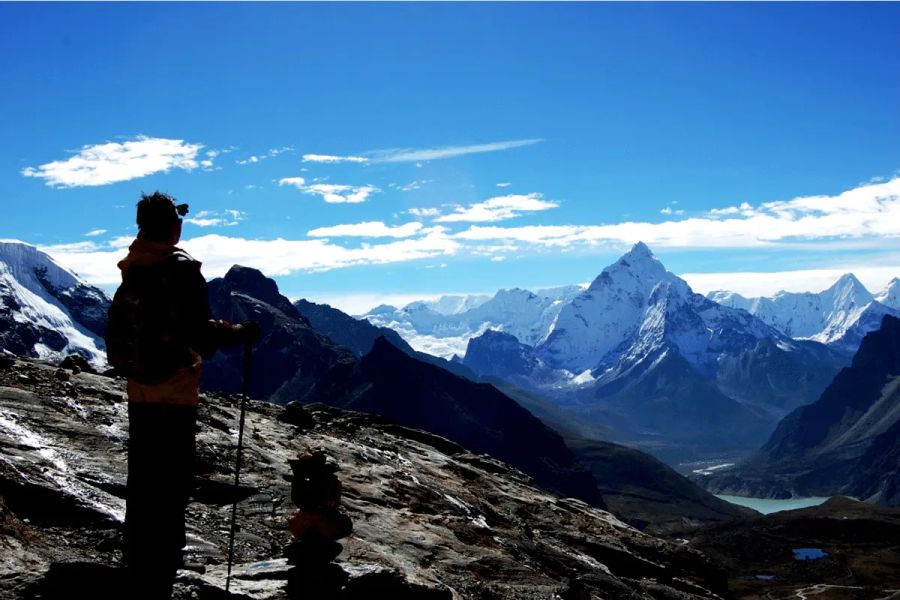
Panorama of Ngozumpa Glacier, frozen lakes, and peaks from Gokyo Ri summit
Weather by altitude

August temperatures, valley to high camp

WaypointElevation Day Night
Lukla (station)2,786m19°C13°C
Namche Bazaar3,450m16°C8°C
Dingboche (modelled)4,410m13°C2°C

August is the warmest month on the stations and the wettest at Lukla. Lukla's mean maximum is 19°C, level with September at the top of the year, and its precipitation 642 mm. Namche reads 206 mm, a little under July. The modelled Dingboche night is 2°C. Day is the mean daily maximum and night the mean daily minimum, rounded. The Gokyo lake research puts the rain peak in July and August, the same months the stations show.

On the trail

Trail conditions in August

The wet months are when the lakes of the Gokyo valley are at their fullest. The research mooring at the fourth lake had the water level rising from early July to the end of the record in early September. A visitor in August walks beside a lake that is still filling, under cloud.

Both Hindus and Buddhists hold the lakes sacred, and Wikipedia says about 500 Hindus take a holy bath there at Janai Purnima, usually in August. A trekker in the valley on that full moon shares it with pilgrims.

The pass is the same as in any month in its order of events: a steep climb on loose rock, a short glacier stretch, then the descent to Dzongla. Rain and cloud are the difference. Our tour notes call the Cho La risky during the monsoon, and August has the least margin for that.

Crowds & teahouses

Who else is up there

August trekkers are few. The park's mid-July to mid-August window recorded 125 entries in 2024, and the mid-August to mid-September window 1,331. No count for August alone is quoted.

The Gokyo side is simpler than the main trail even in October, as our tour notes say, so ask which lodges are open before you book.

Getting in & out

Flights, roads and logistics

August flights leave from Kathmandu under our flight notice. The weather-service record puts 642 mm of rain at Lukla in August, the wettest month of the year, and HoneyGuide's 2020 article calls July and August the highest-risk window with one flight a day and about 22 rainy days. Those 22 days are a HoneyGuide average, not a measurement we hold.

If you go, put several spare days at the end, not the single day 18 of the day table.

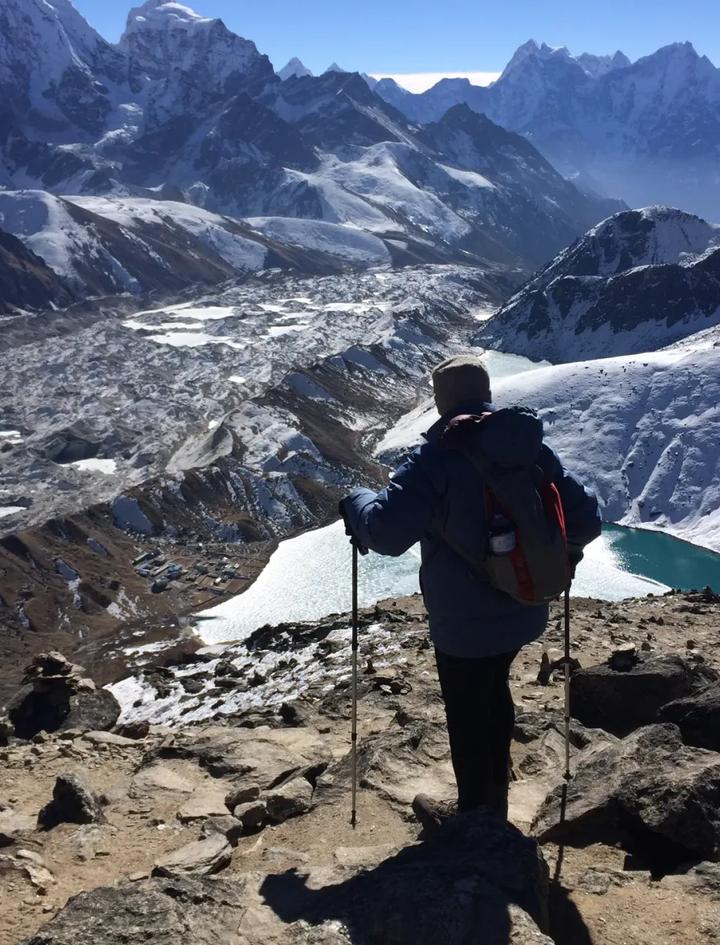
Solo trekker overlooking Ngozumpa Glacier and a turquoise glacial lake
Large trekking group of about twenty people posing on a grassy hillside
Pack for August

What changes this month

Frequently asked

August questions

Nepal trekking season 2026

Some mountains
don't wait

Permits close. Weather windows narrow. The best Everest region teahouse beds fill by October, and spring season opens again in March. Our Kathmandu team is already booking for autumn. If you have been planning a trek, this is the window.

TAAN & NTB certified15 years on these trailsResponse within 2 hours