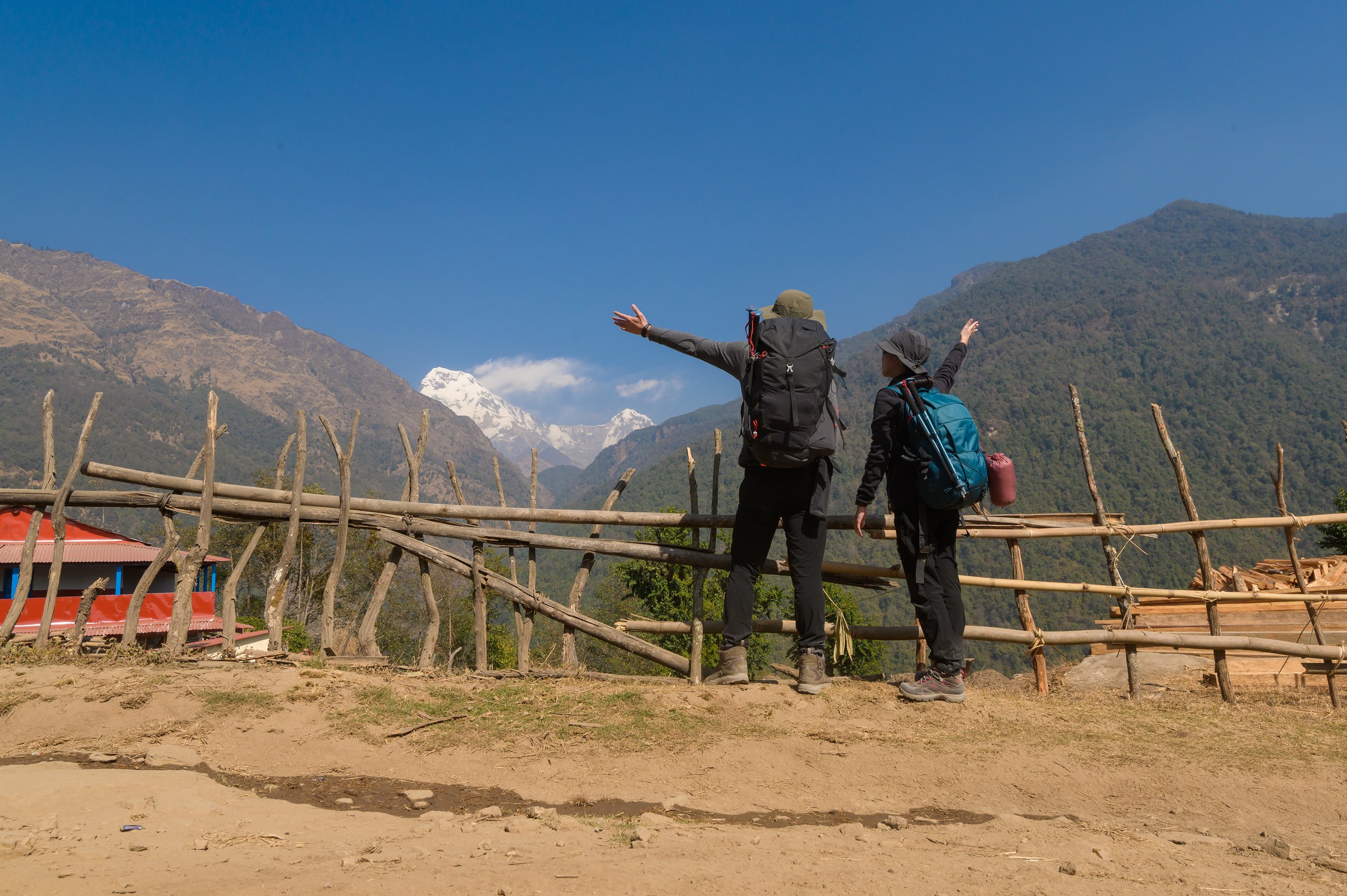


- Quick verdict: which month?
- Month-by-month breakdown
- January
- February
- March
- April
- May
- June, July, and August
- September
- October
- November
- December
- The sunrise from Poon Hill
- When do rhododendrons bloom on poon hill trek
- Poon hill trek weather month by month
- Ghorepani poon hill trek autumn vs spring
- How Poon Hill compares to other treks by season
- Who should go when
- Poon hill trek off season pros and cons
- When is the best time to do poon hill trek: FAQ
October and November are the best time to trek Poon Hill. Post-monsoon skies are clean, temperatures at 3,210m range from -3 to 14 degrees Celsius, and the sunrise panorama of Annapurna South and Dhaulagiri is visible on most mornings. March and April are the second window, when rhododendron forests between Ulleri and Ghorepani turn red and pink. Winter treks (December to February) are cold but feasible. The monsoon (June to August) is not recommended.
What is the best month to trek poon hill? It depends on a single honest question: what do you actually care about? The poon hill best season for mountain views is different from the best season for flowers, which is different from the best season for an empty trail and cheap teahouses. Most guides online treat this as a two-sentence answer. It is not. Each of the twelve poon hill trek months behaves differently at 3,210m, and the difference between going in early October versus late November can mean the difference between eight peaks burning gold at dawn and a white wall of fog.
This is a complete poon hill trek season guide covering weather, sunrise probability, rhododendron status, crowd density, cost, and trail safety for every month of the year. If you want the full route breakdown, read the Poon Hill trek complete guide. If you want to know what it costs, the Poon Hill cost breakdown covers permits, guides, teahouses, and tips by season.
Quick verdict: which month?
| Month | Views | Weather | Crowds | Cost | Trail | Verdict |
|---|---|---|---|---|---|---|
| January | 8/10 | 3/10 | 1/10 | 9/10 | 5/10 | Cold solitude |
| February | 8/10 | 4/10 | 2/10 | 9/10 | 5/10 | Late winter |
| March | 7/10 | 7/10 | 5/10 | 7/10 | 7/10 | Rhododendrons |
| April | 7/10 | 7/10 | 7/10 | 6/10 | 8/10 | Peak bloom |
| May | 4/10 | 5/10 | 3/10 | 8/10 | 6/10 | Pre-monsoon |
| June | 2/10 | 2/10 | 1/10 | 9/10 | 3/10 | Monsoon |
| July | 1/10 | 1/10 | 1/10 | 9/10 | 2/10 | Monsoon |
| August | 1/10 | 1/10 | 1/10 | 9/10 | 2/10 | Monsoon |
| September | 4/10 | 4/10 | 2/10 | 8/10 | 4/10 | Late monsoon |
| October | 10/10 | 9/10 | 8/10 | 5/10 | 9/10 | Best overall |
| November | 9/10 | 8/10 | 6/10 | 6/10 | 8/10 | Close second |
| December | 8/10 | 3/10 | 2/10 | 8/10 | 5/10 | Early winter |
If you want the clearest sunrise: October. If you want flowers: late March. If you want solitude: January. If you want the lowest price: December through February.
Month-by-month breakdown
January
The poon hill trek in january is the coldest month on the circuit. Nighttime temperatures at Ghorepani (2,853m) drop to -8 to -12 degrees Celsius, and the summit at 3,210m is colder still. How cold is poon hill in january? Cold enough that the water in your bottle will freeze overnight if you leave it outside your sleeping bag. The poon hill in january cold is real, but the trade-off is worth it for a certain kind of trekker. January skies are dry and sharp. Atmospheric moisture is at its annual low, which means the panorama from the summit, Annapurna South, Dhaulagiri, Machapuchare, Hiunchuli, and the full Annapurna range, is etched against a deep blue sky with zero haze. You will see more stars at 4 a.m. than you thought existed.
Teahouses between Nayapul and Ghorepani stay open year-round. Above Ghorepani, some close for winter, but the Poon Hill viewpoint is a 1.5-hour climb from the village, so this affects you less than it would on longer routes. The trail above 2,500m may have snow. Pack microspikes and a -15 degree sleeping bag.
Does it snow on poon hill in january? Most years, yes. Snow depth varies from a light dusting to 30cm. The trail from Ghorepani to the viewpoint is short enough that snow is manageable, but trekking poles and gaiters make the pre-dawn ascent less of a gamble on ice.
Crowds: almost zero. You may be the only group at the viewpoint. Teahouse prices drop 15 to 25 percent from peak-season rates.
February
The poon hill trek in february snow and cold are still present, though conditions ease in the second half of the month. Poon hill in february weather is more forgiving than January: daytime temperatures at Ghorepani climb to 4 to 8 degrees Celsius by late February, with nights around -6 to -10. Snow lingers above 2,800m but the lower sections of the trail (Nayapul to Ulleri) are dry.
The last two weeks of February are a transition period. Winter teahouse owners who closed in January start reopening. Trekker numbers tick upward. You get winter solitude with the faintest preview of spring warmth in the afternoons.
Visibility remains high. Clear-sky probability at the Poon Hill summit in February rivals October's. The cold, dry air strips moisture from the atmosphere, producing the kind of razor-edged mountain profiles that photographers wait for.
Crowds: very low. Two to three groups per night in Ghorepani is typical. Teahouse discounts of 10 to 20 percent are still available.
March
The poon hill trek in march opens the spring trekking season. The ghorepani poon hill best time for flower-oriented trekkers is the last two weeks of March, when the rhododendron forests between Ulleri (1,960m) and Ghorepani (2,853m) reach peak bloom.
Poon hill in march rhododendrons are the defining experience of this month. Nepal has over 30 rhododendron species, and the Annapurna Conservation Area is among the country's densest habitats for them. The canopy between Ulleri and Deurali turns a deep, saturated crimson that photographs well and looks even better in person. The bloom progresses uphill as the month advances: lower elevations around 1,800m peak in mid-March, while forests near 2,800m peak in the last week of March or early April.
Temperatures at the summit for a 5 a.m. sunrise start range from -3 to 2 degrees Celsius. By mid-morning, daytime walking temperatures are comfortable at 10 to 15 degrees.
Visibility: good, but not October-level. Spring haze builds through March as temperatures rise. Early March mornings are clearer than late March mornings.
The poon hill trek march atmosphere sits somewhere between winter silence and autumn crowds. Trails have a healthy number of trekkers without feeling packed. Teahouse rooms in Ghorepani are available without advance booking most nights, though weekend bookings (Friday/Saturday) are wise.
April
The poon hill trek in april weather and trail conditions are the best of the spring season. Temperatures at 3,210m range from -2 to 10 degrees Celsius during the day. Nights are cold but not punishing. All teahouses on the circuit are open and fully staffed.
Poon hill in april spring conditions are defined by two things: the tail end of the rhododendron bloom and the beginning of pre-monsoon cloud buildup. Flowers are still visible in the first two weeks, fading by mid-April at lower elevations but lingering above 2,500m. By late April, afternoon clouds appear with increasing frequency, occasionally dropping light rain on the lower trail.
Morning views remain reliable through April. The sunrise at Poon Hill is best between 5:45 and 6:15 a.m. in April, with golden light on Annapurna South lasting about 25 minutes. Afternoon haze means the panorama is typically clearest before 10 a.m.
Crowds: heavy. April is the second-busiest month after October. Ghorepani teahouses fill by early afternoon, and advance booking is recommended for Friday and Saturday nights. The trail between Ulleri and Ghorepani has steady foot traffic throughout the day.
May
The poon hill trek in may is the final month before the monsoon. The first two weeks of May still offer decent trekking, with clear mornings, cloudy afternoons, and evening showers becoming the pattern by mid-month.
Temperatures are the warmest of the year at Ghorepani: 12 to 18 degrees Celsius during the day, 2 to 5 at night. The comfort of warm weather is offset by declining visibility and increasing rainfall. By late May, mountain views from the summit are a coin flip.
Leeches emerge below 2,500m from mid-May onward. The lower trail between Nayapul and Tikhedhunga gets muddy. Trekkers who go in May tend to be experienced hikers comfortable with uncertainty and willing to accept a shorter weather window each morning.
Crowds: thin. Most tour groups stop running in May. This is shoulder season pricing, 10 to 15 percent below October rates.
June, July, and August
The poon hill monsoon season july august is when the route is at its worst. The poon hill trek in june, july, and august all fall squarely in the monsoon. The Annapurna region receives 3,000 to 4,000mm of annual rainfall, and roughly 80 percent of it falls between June and September. July and August average 600 to 700mm each.
Can you trek poon hill during monsoon? Physically, yes. The trail does not close. But the experience is dramatically different from any other season. Persistent cloud cover blocks the mountain panorama most days. The sunrise that defines the Poon Hill experience (Annapurna South and Dhaulagiri lit gold against a clean horizon) is effectively unavailable. You might trek for four days and never see a single peak.
The poon hill trail slippery monsoon conditions make the stone staircases between Tikhedhunga and Ulleri genuinely hazardous. Leeches are active at every elevation below 3,000m. Landslide risk increases on the lower sections where the trail cuts across steep hillsides.
If you want to trek during monsoon, the poon hill trek avoid monsoon tips are straightforward: go somewhere in Nepal's rain shadow instead. Upper Mustang and Dolpo stay relatively dry through the monsoon and offer a completely different landscape.
The poon hill trek trail conditions rainy season are poor enough that we do not recommend this window. If you have no schedule flexibility, September is a marginally better gamble than June through August.
September
Poon hill in september post monsoon conditions make it a transition month. The poon hill trek in september is unpredictable. The monsoon begins to withdraw from the Annapurna region around September 20th, depending on the year. The first three weeks are still monsoon conditions: rain most afternoons, persistent cloud, leeches active. The last ten days see increasing breaks in the weather, with clear mornings becoming more frequent.
Late September is the earliest shoulder season window. Teahouse prices have not yet climbed to October rates. Trails are green and lush from four months of rain. On a clear day, you get the post-monsoon clarity that makes October so good, just without the consistency.
The risk: a late monsoon in any given year can push the withdrawal into early October. If you book a September trek, build in schedule flexibility. A rigid four-day window starting September 18th is a gamble. Starting September 25th is safer.
Crowds: almost no one. The trail feels empty. September is the least crowded month for poon hill trek outside of winter, and you get warmer temperatures than December or January.
October
The poon hill trek in october is the consensus best time to trek Poon Hill, and the consensus is correct.
What is the weather like on poon hill in october? Post-monsoon air has been scrubbed clean by four months of heavy rain. Atmospheric visibility is at its annual peak. The probability of a cloud-free sunrise on any given October morning at the summit is the highest of the entire year. Poon hill in october weather is stable: daytime temperatures at Ghorepani sit between 10 and 14 degrees Celsius, and nights drop to 2 to 5 degrees. Rain is almost nonexistent. The trail is dry and in excellent condition.
The poon hill average temperature october at 3,210m is around 0 to 8 degrees Celsius depending on the time of day, and the poon hill trek temperature in october makes it the most comfortable month for walking. A base layer and light fleece are enough during the day, with a down jacket needed only for the pre-dawn summit push.
The sunrise panorama in October is the full show. Eight peaks above 7,000m are visible from the viewpoint: Annapurna South (7,219m), Annapurna I (8,091m), Dhaulagiri (8,167m), Machapuchare (6,993m), Hiunchuli (6,441m), Annapurna III (7,555m), Annapurna IV (7,525m), and Nilgiri South (6,839m). On a clear October morning, every ridge line is visible. The golden-hour light on Annapurna South typically lasts 20 to 40 minutes after the sun clears the eastern ridgeline.
The downside: crowds. October is the busiest month on the Poon Hill circuit. Ghorepani teahouses fill by mid-afternoon, especially on weekends and during the Dashain and Tihar festival periods when Nepali domestic trekkers join the trail. Advance room booking is strongly recommended. Arrive in Ghorepani before 2 p.m. or risk sleeping in a dining hall.
Despite the crowds, October earns its reputation. If you have the freedom to choose any month, choose October.
November
The poon hill trek in november is the second-best month overall and the smarter choice for anyone who dislikes walking in a crowd. The poon hill trek november crowd and conditions show a clear pattern: views are nearly as good as October, while trekker numbers drop noticeably after the first week.
Poon hill in november weather is colder than October. Daytime temperatures at Ghorepani fall to 6 to 10 degrees Celsius, and nights reach -2 to -5 by late November. The lower elevations remain comfortable for walking. The summit push at 5 a.m. is cold enough to need a proper down jacket and insulated gloves.
Visibility remains strong through November. Poon hill trek visibility for mountain views is nearly identical to October's through most of the month. A subtle haze can build in the lower valleys as dry-season dust accumulates, but this does not reach the summit viewpoint at 3,210m.
Rhododendrons: none. The bloom is months away. November is about mountains, not flowers.
Late November begins the transition to winter. By the last week, nighttime temperatures at Ghorepani approach winter levels and snow becomes possible above 3,000m. Early November (first two weeks) is the sweet spot: October-quality views with fewer people and slightly lower teahouse rates.
December
The poon hill trek in december marks the beginning of winter trekking. Poon hill in december snow is common from mid-December onward, with the summit viewpoint receiving a dusting that can accumulate to 10 to 20cm by month's end. Conditions vary by year, but expect at least some snow on the trail above Ghorepani; the poon hill snow conditions in december range from a light dusting to ankle-deep accumulation.
Ghorepani weather december is cold and dry, with a poon hill trek temperature in december of 3 to 6 degrees Celsius during the day and -6 to -10 at night. At the summit at 5 a.m., expect -5 to -10. How cold does poon hill get in december? Cold enough that water bottles freeze, tea at the summit teahouse costs double, and you will genuinely appreciate a hot sleeping bag.
Views: often excellent. December air is dry and clear, producing the kind of sharp Himalayan profiles that justify the cold. The trade-off between warmth and visibility is the defining tension of winter trekking.
Most teahouses on the main circuit remain open in December, though some above Ghorepani operate on reduced schedules. The trail is passable with basic winter gear (microspikes, warm layers, trekking poles). This is not a beginner month.
Crowds: very low. December is one of the quietest months alongside January and February. Teahouse prices drop 15 to 25 percent.
The sunrise from Poon Hill
Every trekker on this route is walking to see the same thing: a Himalayan sunrise from 3,210m. The poon hill sunrise view season runs year-round, but the probability of clear skies varies enormously.
The best time to see sunrise from poon hill is October, followed closely by February and November. These three months have the driest air, the least cloud interference, and the highest probability of an unobstructed horizon. June through August are the worst. You could wait three mornings in monsoon season and see nothing.
What time does the sun rise at poon hill? It varies by month. October: approximately 6:00 to 6:10 a.m. December to January: closer to 7:00 a.m. March: around 6:15 to 6:30 a.m. Late April: back to about 6:00 a.m. Most teahouse operators in Ghorepani wake guests at 4:30 a.m. for the 1.5 to 2 hour ascent to the summit viewpoint, allowing arrival before first light regardless of season.
Poon hill sunrise visibility conditions depend on atmospheric moisture more than cloud type. In October, the air is washed clean by four months of rain, producing the best weather for poon hill annapurna sunrise views. In winter (December to February), cold dry air strips moisture from the atmosphere, giving sharp visibility. Spring is less reliable because warming temperatures draw moisture upward through the day, creating afternoon haze that sometimes lingers into the following morning.
Poon hill fog when is it clearest: mornings before 8 a.m., especially in October and February. By mid-morning in March and April, low cloud can fill the Modi Khola valley, obscuring the lower slopes while leaving the peaks visible above the cloud line, which is actually a dramatic sight worth seeing.
The best time to visit ghorepani for sunrise is the night before a clear October morning. If you arrive in Ghorepani by early afternoon and the sky is clear at sunset, the following sunrise is almost guaranteed. The poon hill cloud cover forecast season follows predictable patterns: clear mornings with gradual cloud buildup through the afternoon from March through May, reliably clear all day in October through December, and unpredictable in transition months (September and January).
Poon hill wind conditions summit can be significant during winter months. Exposed ridgelines at 3,210m funnel wind from the west, and the wind chill at the summit in January can push the felt temperature 5 to 10 degrees below the thermometer reading. A windproof outer layer is not optional from November through February. In October, wind is rarely a problem.
When do rhododendrons bloom on poon hill trek
The poon hill trek rhododendron bloom season runs from approximately mid-March through mid-April depending on elevation. The forests between Ulleri (1,960m) and Ghorepani (2,853m) host over 30 rhododendron species, with crimson, pink, and white varieties dominating the canopy.
Peak bloom at lower elevations (1,800 to 2,200m) typically occurs in the second and third weeks of March. Above 2,500m, the bloom peaks in the last week of March or first week of April. The highest sections near Deurali (3,100m) may not peak until mid-April.
A poon hill trek in spring rhododendron is one of the most visually memorable experiences in Nepal's Annapurna region. The trail passes through tunnels of red flowers for hours at a stretch, and the contrast between the crimson canopy and the white peaks above it is unlike anything else on the Annapurna circuit.
The bloom window shifts by 5 to 10 days year to year depending on winter temperatures. A cold January and February tend to delay the bloom by a week. A warm winter can push it earlier. If rhododendrons are your priority, the safest window is March 15 to April 5.
Poon hill trek weather month by month
Poon hill 3210m temperature by season varies from a low of -12 degrees Celsius on January nights to a high of 18 degrees on May afternoons. Understanding poon hill trek weather month by month helps you pack correctly and set realistic expectations for what you will see at the summit.
| Month | Day temp (°C) | Night temp (°C) | Rainfall (mm) | View probability |
|---|---|---|---|---|
| January | 2 to 6 | -8 to -12 | 10 to 15 | Very high |
| February | 4 to 8 | -6 to -10 | 20 to 30 | Very high |
| March | 8 to 14 | -3 to 2 | 30 to 45 | High |
| April | 10 to 16 | -2 to 4 | 50 to 70 | Moderate to high |
| May | 12 to 18 | 2 to 5 | 120 to 180 | Moderate |
| June | 12 to 16 | 6 to 9 | 300 to 400 | Very low |
| July | 12 to 15 | 7 to 10 | 550 to 700 | Very low |
| August | 12 to 15 | 7 to 10 | 500 to 650 | Very low |
| September | 10 to 15 | 5 to 8 | 250 to 350 | Low |
| October | 10 to 14 | 0 to 5 | 10 to 25 | Very high |
| November | 6 to 10 | -2 to 3 | 5 to 15 | Very high |
| December | 3 to 6 | -6 to -10 | 5 to 10 | Very high |
These are temperatures at Ghorepani village (2,853m). At the Poon Hill summit (3,210m), subtract 2 to 3 degrees from each value. During the pre-dawn summit push (4:30 to 6:00 a.m.), expect conditions 3 to 5 degrees colder than the nighttime lows listed here.
But poon hill temperature by month tells only half the story. Rainfall matters more for planning, and the poon hill rainfall monthly average shows why the annapurna region weather best months are October and November, when total rainfall drops below 25mm. The gap in poon hill trek rainfall (how much rain falls in monsoon versus dry season) is enormous: 700mm in July versus 10mm in December. That gap determines everything, from trail condition and visibility to leech activity and whether you see the mountains at all.
When does it snow? Poon hill snowfall when does it snow on the route is a common question: typically from late November through February, with occasional early March snow at the summit. Above 2,800m, poon hill frost and ice conditions are most severe in January, when the stone steps between Ghorepani and the viewpoint can be glazed with ice in the pre-dawn hours.
For gear planning, poon hill temperature at night winter (December through February) is the most important number. At -8 to -12 degrees at Ghorepani, you need a sleeping bag rated to -15 or below, an insulating sleeping pad, and a plan for keeping your water and electronics warm overnight.
Ghorepani poon hill trek autumn vs spring
The most common question after "when should I go" is whether to go in autumn or spring. For anyone weighing the poon hill trek autumn vs spring which is better question, it comes down to priorities:
Autumn (October to November): clearer skies, drier trails, colder nights, larger crowds, higher teahouse prices, no flowers. The annapurna poon hill best time for pure mountain views falls in this window.
Spring (March to April): rhododendron bloom, warmer afternoons, occasional afternoon haze, moderate crowds, standard teahouse prices, pre-monsoon rain possible in late April.
If mountain photography is the priority, go in autumn. What month has the clearest views from poon hill? October, without question. The best month for clear sky poon hill views is the first three weeks of October. February is the runner-up, though few people think of it.
If you want flowers and mountains, late March gives you both, though mountain views are slightly less reliable than in October.
The poon hill trek october vs november debate is also worth settling. Is october or november better for poon hill? October has marginally clearer skies and warmer temperatures. November has fewer trekkers and slightly lower prices. Early November (first two weeks) gives you October-quality views with November-level quiet. Late November starts getting genuinely cold.
Is march or april better for poon hill? The poon hill trek march vs april comparison depends on the bloom. March catches the rhododendrons at peak. April catches the tail end of the bloom with warmer weather and drier trails. First-time trekkers who are nervous about cold find April more comfortable.
Spring versus winter is less about preference and more about capability. The poon hill trek spring vs winter comparison is simple: spring is for anyone, while winter requires proper cold-weather gear, route experience, and comfort with sub-zero mornings. A poon hill winter trek december january is genuinely rewarding, but it is not the right introduction to Nepal for a first-timer.
Summer versus autumn needs no debate. The poon hill trek summer vs autumn comparison is straightforward: summer (June to August) is monsoon, autumn (October to November) is peak season. Go in autumn.
As for poon hill trek dry season vs wet season, the split is clean: October through May is dry season (with increasing moisture from March onward), and June through September is wet season. The best poon hill trek conditions fall in October and November, the driest months of the dry season.
How Poon Hill compares to other treks by season
If you are deciding between treks, the season may narrow your choice.
Poon hill vs annapurna base camp best time: both treks share the same optimal windows (October to November and March to April) because they are in the same region. ABC reaches 4,130m, so altitude-related weather is more extreme. If you are deciding between the best nepal trek october poon hill or ebc, Poon Hill is the shorter, easier option (10 days, $675, maximum 3,210m) while EBC is longer, harder, and more expensive (14 days, $1,775, maximum 5,364m). October is the best month for either.
Poon hill vs mardi himal best time: both treks are in the Annapurna region, so the same seasonal windows apply. Mardi Himal reaches 4,500m and has fewer teahouses, making it slightly more affected by winter weather than Poon Hill. The Mardi Himal trek is a good alternative if you want a quieter trail during peak October.
Annapurna circuit vs poon hill best time: the Circuit crosses the Thorong La Pass at 5,416m, which closes with heavy snow from late December through February. Poon Hill stays accessible year-round because its maximum elevation (3,210m) rarely accumulates enough snow to close the trail. If you are planning a winter trek, Poon Hill is the safer bet.
Poon hill trek vs everest base camp best season: both are best in October to November. EBC is significantly harder to reach in winter because the Lukla flights are less reliable in December and January, and the altitude at Gorak Shep (5,164m) is brutal in sub-zero conditions. Poon Hill's lower altitude and shorter approach from Pokhara make it the more flexible option across all seasons.
Who should go when
Different trekkers have different priorities. This is the audience-specific poon hill trek spring season guide and poon hill trek autumn season guide rolled into one.
Beginners: the poon hill trek for beginners best season is October or April. October gives the best weather with the largest safety margin (dry trails, open teahouses, other trekkers around). April is slightly warmer and less crowded. If the poon hill trek suitable for beginners what month question is yours, those two are the answer.
Families: October or early November is the poon hill trek for families best time. Consistent weather, dry trails, and well-staffed teahouses reduce the logistics that make family trekking stressful. The ghorepani trek best time for families aligns with school half-term holidays in most countries. Avoid winter (too cold for younger children) and monsoon (leeches and slippery trails).
Seniors: October or late March is the poon hill trek for seniors best season. Both offer comfortable daytime temperatures and minimal trail hazards. The key for older trekkers is avoiding the extreme cold of winter months and the steep, slippery stone steps during monsoon.
Photographers: the best time poon hill trek for photographers is October, specifically the first three weeks. For poon hill trek photography best time sunrise conditions, atmospheric visibility peaks and golden-hour light hits Annapurna South at its most dramatic angle. Photographers who also want foreground interest (rhododendrons framing the mountain panorama) should go in the last week of March.
Solo female travelers: October or April is the poon hill trek solo female traveler best month. High trekker volume means busy teahouses, well-traveled trails, and a social atmosphere at rest stops. Since Nepal's 2023 guide mandate, all trekkers (including solo travelers) must trek with a licensed guide, which adds safety regardless of month.
Honeymoons: the poon hill honeymoon trek best time is late March, when the rhododendron bloom creates the most photogenic trail conditions in Nepal. Crowds are moderate (not the October crush), temperatures are comfortable, and Ghorepani teahouses often have private rooms available.
Group tours: October is the poon hill trek group tour best month. Large group tours benefit from the most predictable weather window and the widest teahouse availability. November is the second choice if your operator avoids the Dashain/Tihar festival congestion.
Students on a budget: for a poon hill student budget trek best season is December through February, when teahouse rates, guide fees, and flight prices all hit their annual lows. You trade warmth for savings: a 15 to 25 percent discount on the same trail, same views, and same sunrise, just with fewer people and a heavier jacket.
Poon hill trek off season pros and cons
Is poon hill trek possible in winter? Yes. Is it the same experience as October? No. Understanding both sides before committing to a non-standard month matters.
The poon hill trek off season vs peak season cost difference is meaningful. Peak season (October) guide packages and teahouse rates are at their highest. Off-season months (December to February, June to September) drop 15 to 25 percent. For budget-conscious trekkers, this is real money: on a 10-day trek costing $675 in October, the savings can reach $100 to $170. Trail conditions in off-season depend entirely on which off-season you choose: winter is cold and clear, monsoon is warm and blind.
Is poon hill trek safe in winter? The trail itself is not dangerous. The risks are cold-related: hypothermia from inadequate gear, slips on icy stone steps, and the isolation of being the only group on the trail if something goes wrong. With proper gear (rated sleeping bag, microspikes, layering system) and a guide, winter Poon Hill is safe for experienced trekkers.
Can you do poon hill trek in the rain? During monsoon, yes, physically. The trail does not close. But the experience is poor. Views are blocked, trails are slippery, and leeches are active. Rain gear and leech socks are required. If you must go during monsoon, accept that the sunrise panorama (the reason most people do this trek) will probably not happen.
When is the best time to do poon hill trek: FAQ
When is the best time to do poon hill trek? October is the best single month. Post-monsoon skies are the clearest of the year, temperatures are comfortable, trails are dry, and all teahouses are open. November is nearly as good with fewer crowds. For the complete route guide and day-by-day itinerary, see our separate article.
What month has the clearest views from poon hill? October, particularly the first three weeks. February is the second-clearest month because cold, dry winter air minimizes atmospheric moisture. The worst months for visibility are June through August (monsoon).
When do rhododendrons bloom on poon hill trek? Mid-March through mid-April, peaking in the last two weeks of March at elevations between 1,800m and 2,800m. The bloom shifts by 5 to 10 days depending on how cold the preceding winter was.
How cold does poon hill get in december? Nighttime temperatures at Ghorepani (2,853m) drop to -6 to -10 degrees Celsius in December. At the summit (3,210m) during a 5 a.m. start, expect -5 to -10 before wind chill. A sleeping bag rated to -15 and a quality down jacket are non-negotiable.
What is the weather like on poon hill in october? Dry, clear, and comfortable. Daytime temperatures at Ghorepani range from 10 to 14 degrees Celsius. Rainfall is under 25mm for the entire month. Mountain visibility is at its annual peak.
Which season is least crowded for poon hill? January and February are the quietest months on the circuit. You may have the Poon Hill sunrise viewpoint to yourself. September is the quietest warm-weather month, though monsoon rain is still possible. Read more about what to expect in the best time to trek in Nepal overview.
Does it snow on poon hill in january? Usually, yes. Snowfall at 3,210m is common from late November through February. Accumulation of 10 to 30cm is typical in January. The trail from Ghorepani to the viewpoint is short enough (1.5 hours) to manage with trekking poles and microspikes.
What time does the sun rise at poon hill? In October: approximately 6:00 to 6:10 a.m. In late December to January: around 7:00 a.m. In March: 6:15 to 6:30 a.m. Teahouse operators wake guests at 4:30 a.m. for the pre-dawn ascent regardless of season.
Mountain Hawk Trek runs the Ghorepani Poon Hill Trek as a 10-day package starting at $675 per person, including licensed guide, permits, teahouse accommodation, and daily breakfast and dinner. The trek operates year-round with adjusted gear recommendations for winter months. For current availability, visit the trek page or contact us directly.