
- What the Kailash Mansarovar Yatra costs from Nepal in 2026
- Via Lhasa or overland via Kerung, and what the extra five days buy
- Per-day budget: what the price already covers, and what does not
- Permits and visa costs, and why the fee depends on your passport
- What still costs extra: pony, porter, and the insurance that actually matters
- Why 2026 specifically: Fire Horse Year and Saga Dawa
- Group joining tours and fixed departures
- Helicopter and luxury variants, and where our price sits against them
- Nepal route versus India route, and the difficulty that does not change either way
- Frequently Asked Questions (FAQ)
We run two ways into the Kailash Mansarovar Yatra from Nepal, and the price gap between them is the first honest number in this whole subject. The 10 day overland route via Kerung costs $1,975 per person. The 15 day route via Lhasa, flying into Tibet's capital before driving west toward Darchen, costs $2,800. Both figures already include permits, a Tibetan guide, ground transport, and twin-share accommodation. Neither is a teaser number that grows once the extras show up.
This article prices both routes in full, states what each one already covers, and lists the smaller costs a pilgrim genuinely still pays: the China group visa, insurance rated for 5,630m, and pony or porter hire on the kora itself. It also covers why 2026 specifically changes the math, because this is a Fire Horse Year on the Tibetan calendar, and Saga Dawa falls on May 31.
What the Kailash Mansarovar Yatra costs from Nepal in 2026
Pricing across the operator market runs in fairly consistent bands. Bare-bones overland packages from Kathmandu start around $1,800 to $2,500. The more common mainstream overland product, usually 13 to 14 days, runs $2,500 to $3,500. Routes that fly into Lhasa first, adding sightseeing days and sometimes an Everest North Base Camp detour, run $3,900 to $4,200 and up. Helicopter routes sit higher still, and private luxury departures can clear $8,500.
Our two products sit under most of that. $1,975 for the 10 day overland tour is below the entry-level floor almost everywhere else in this market. $2,800 for the 15 day via-Lhasa route undercuts every via-Lhasa competitor we found by more than $1,000. A Kathmandu operator booking you directly onto the route can price this way because the markup an international booking agent adds never enters the number.
Both prices are per person, based on twin-share accommodation, and cover the full itinerary from Kathmandu back to Kathmandu. What they do not cover is small and specific, and the rest of this article is that list.
Via Lhasa or overland via Kerung, and what the extra five days buy
The $825 between these two prices buys a different first week, and choosing between them is a decision about Lhasa, not about Kailash.
The Kailash Mansarovar Yatra runs 10 days overland, crossing at Rasuwagadhi into Kerung and driving west through Saga toward Lake Mansarovar and Darchen. No flights inside Tibet. You see the plateau from the road the entire way in, which is its own kind of introduction to the scale of the place. Price: $1,975.
The Kailash Mansarovar Tour via Lhasa runs 15 days and starts with a flight from Kathmandu into Lhasa itself, adding the Potala Palace, the Jokhang Temple, and a proper acclimatization window in the city before the long drive west begins. Price: $2,800.
The difference is $825 for five extra days and a different first half of the trip. Pilgrims who have already seen Lhasa, or who are tight on leave, take the 10 day route and drive straight through. Pilgrims for whom this may be a once-only journey to Tibet tend to take the Lhasa route, because skipping the capital to save time on a trip this significant is the kind of decision people regret quietly, years later, not loudly at the time. Readers weighing a longer Tibet itinerary that leans harder into the Everest side of the plateau, rather than Kailash, might compare against our Everest Base Camp overland tour, which runs the same Kerung border crossing before turning toward Rongbuk instead of Darchen.
Per-day budget: what the price already covers, and what does not
Package price covers accommodation, meals, transport, and permits for every day of either itinerary. What it does not cover is personal spending on top: bottled water, snacks, laundry, and the odd coffee in Kathmandu before departure. Plan on $10 to $20 a day for incidentals, lower on driving days and higher in Lhasa itself.
Guesthouses near Darchen and Saga are basic, and basic keeps the package price down. We run three meals a day into the package rather than leaving food as a daily cash decision on the plateau, where shop options thin out fast past Saga.
The real budgeting number is the package price plus roughly $300 to $600 in permits, insurance, and a kora porter (covered next), or closer to $1,000 if you plan to ride the kora with a hired pony, plus whatever personal spending money feels right for two weeks with limited places to spend it.
Permits and visa costs, and why the fee depends on your passport
Three permit layers stack on a Tibet crossing, and they are not interchangeable with the TIMS-card system used on Nepal's own trekking routes. Our own Nepal trekking permits guide covers how that domestic system works if the contrast is useful.
The Tibet Travel Permit itself is officially free, though the paperwork and processing sit inside the service your agency charges for arranging it. The Alien's Travel Permit, required for any foreigner traveling beyond Lhasa into areas like the Mansarovar region, costs 50 CNY per person and is issued once you are already in Tibet.
The China Group Visa is where the real variation sits, and it is nationality-based rather than flat. US citizens pay $140. Canadian citizens pay closer to $120. Many other nationalities pay somewhere between $15 and $50. The pricing follows a reciprocity logic: what a country's government charges Chinese citizens for a comparable visa is roughly what its own citizens pay here. On top of the visa fee, Kathmandu agencies typically add a $20 to $45 per-person service charge for handling the embassy application. One detail that catches small parties out: the China Group Visa requires a minimum of five travelers on a single application. Solo travelers and pairs need to be placed onto a group booking to qualify at all.
What still costs extra: pony, porter, and the insurance that actually matters
The 52km, three day Kailash Kora is where the remaining real costs sit, and none of them are hidden exactly, they just never appear next to the package price.
Hiring a pony for the full kora runs CNY 2,500 to 4,500 at Darchen, roughly $350 to $630, and that rate covers both the pony and the horseman who leads it. A porter to carry just a daypack, nothing heavier than about 5kg, runs CNY 1,300 to 1,500, roughly $180 to $210 for the same three days. Both have to be arranged at Darchen before you start walking, in cash. You cannot flag one down halfway up the pass. And ponies stop at the top of Dolma La regardless of how many days you paid for; the descent on the far side is on foot no matter what.
Insurance is the one cost every pilgrim sources themselves, and it is where the most expensive mistake on this route happens. Dolma La sits at 5,630m. A policy capped at 5,000m, or one with vague wording about altitude, leaves exactly the hours that matter uncovered. Buy a policy explicitly rated to at least 6,000m with Tibet named in the covered territory, and look for a dedicated evacuation benefit in the $25,000 to $50,000 range. Insurance specialists commonly report that helicopter evacuation is not generally available inside Tibet itself, so a real emergency typically means a road transfer before any air evacuation becomes possible. Standard trekking-insurance FAQs skip this, and it changes what "covered" should mean to you on this specific route.
Tips sit outside the package too, budgeted separately for your guide and driver, and worth carrying in cash before you cross the border. There are no ATMs waiting for you on the plateau.
Why 2026 specifically: Fire Horse Year and Saga Dawa
2026 is a Horse Year in the twelve-year Tibetan zodiac cycle, and specifically a Fire Horse Year in the rarer sixty-year elemental cycle. The last one was 1966.
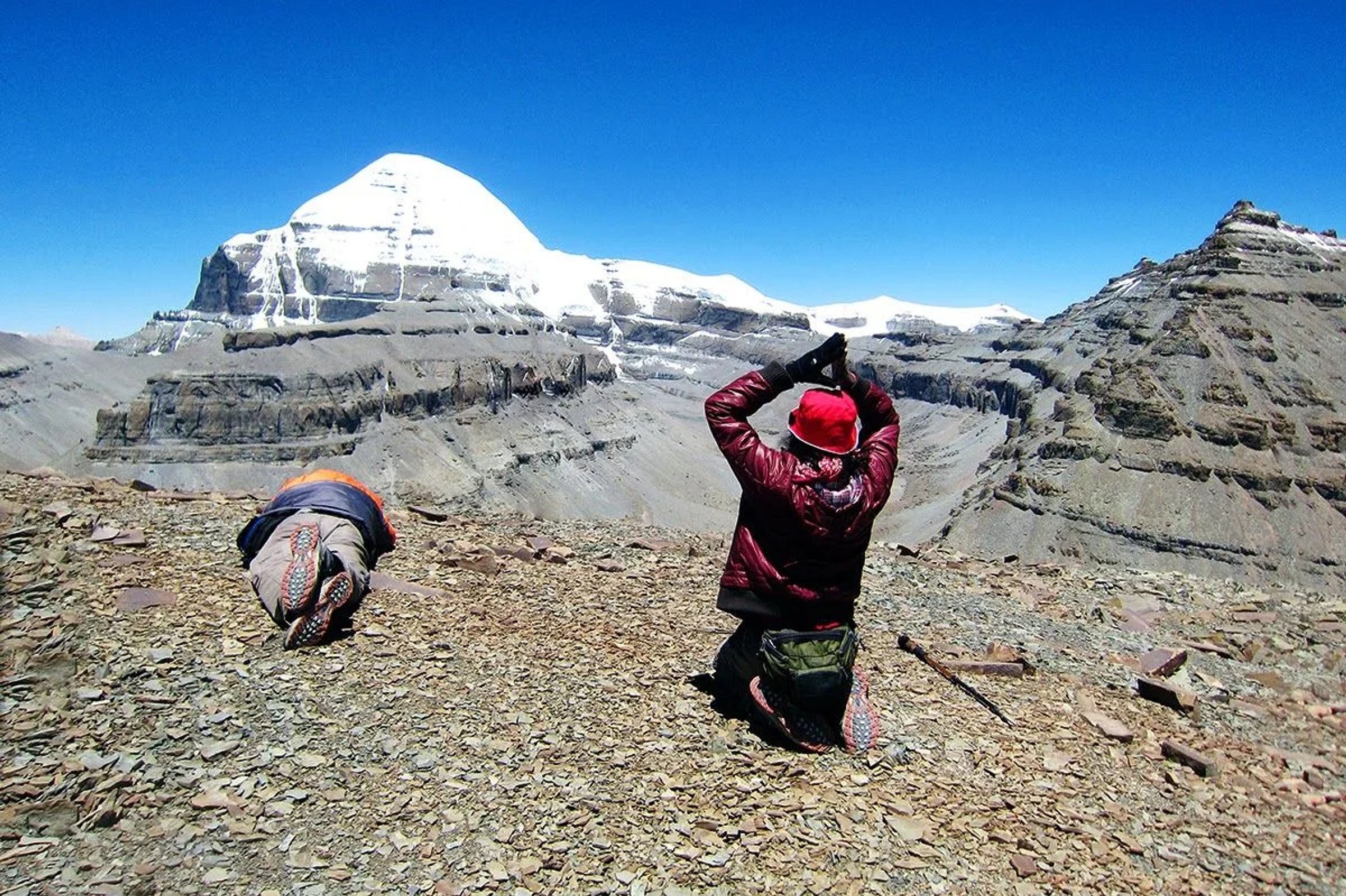
Tibetan Buddhist tradition holds that completing one circuit of the kora during a Horse Year carries the same merit as completing thirteen in an ordinary year. That is a belief, not a historical fact, and we state it as one even while taking it seriously, because the demand it generates is entirely real. Saga Dawa Duchen, the full moon day marking the Buddha's birth, enlightenment, and death, falls on Sunday, May 31, 2026. Expect the weeks around that date to be the busiest and most expensive window of the season, on both routes, well before the general May-to-September travel season even peaks.
If a Horse Year departure matters to you specifically, book earlier than you would in an ordinary year. Rooms in Darchen and Saga are limited, and this year they will not stay open long. Our month by month guide to the best time for the yatra weighs each window of the season in detail.
Group joining tours and fixed departures
The season runs May through September. Fixed group departures run monthly across that window industry-wide, with extra departures added around full moon periods in June, July, and August alongside the Saga Dawa date itself. Joining a fixed group costs less than booking private, since a private departure carries the same guide, vehicle, and permit costs split across fewer people.
Group size matters for the visa specifically. A China Group Visa needs a minimum of five travelers per application, so a small party of two or three needs to join a scheduled departure rather than book independently, unless the agency has enough other bookings that week to combine applications.
Exact 2026 departure dates get confirmed closer to the season rather than a year out, across the whole industry. Lock in the seat early, not the exact date, particularly for the late-May window.
Helicopter and luxury variants, and where our price sits against them
For travelers who want to compress the trip, helicopter routes via Simikot or ex-Lucknow cut days at the cost of dollars, running $4,300 to $7,500 depending on group size and starting point. Private luxury departures with dedicated vehicles and upgraded lodging can clear $8,500 to $12,000.
Neither of our two products is built for that market, and that is deliberate. Both are ground routes, and the ground is most of the point of a pilgrimage: the slow approach across the plateau, watching Kailash appear at a distance long before you are anywhere near it. A helicopter route solves a time problem. It does not solve, or particularly try to solve, the reason most people make this trip in the first place.
Nepal route versus India route, and the difficulty that does not change either way
India's official government route, run through the Ministry of External Affairs, is the cheapest formal option at roughly $2,000 to $2,200, but it operates on a lottery system with a fixed, limited number of seats allocated each year. Missing the lottery, or wanting more control over dates, is why a large share of Indian pilgrims book through Nepal instead. The Nepal route has no lottery, faster and more predictable permit processing, and is open to a wider range of nationalities, but it costs more once you are actually booked, generally $2,500 and up once you are past the cheapest overland tier.
The difficulty itself does not change based on which border you cross. The kora is 52km over three days, and Dolma La, at 5,630m, is the hardest single stretch of it: a long, steep climb over loose scree and often snow, followed by a knee-jarring descent on the far side. Mount Kailash itself rises to 6,638m and is not climbed, only circled and viewed, which is part of what makes the kora a pilgrimage rather than an expedition. Most of the route sits above 4,500m, with Lake Mansarovar around 4,590m and Darchen close to 4,670m, so mild altitude symptoms are close to universal in some degree even among fit, well-prepared pilgrims. Our altitude sickness guide covers the mechanics of AMS in more depth if this is your first time at this elevation, and most of what applies on the Everest side applies here too. For the full fitness picture, day by day, our Kailash difficulty guide breaks the kora down properly.
Book the route that matches your time and your reason for going, not the cheaper number by default. If Tibet itself, Lhasa, the Potala, the whole capital, is part of why you are making this trip, the 15 day route is worth the extra $825. If Kailash and Mansarovar are the destination and Lhasa is a detour you can take another time, the 10 day route gets you there and back for less. For travelers who want Lhasa without the full pilgrimage attached, our 6-day Best of Lhasa tour covers the capital on its own. And for pilgrims drawn to this kind of trip generally rather than Tibet specifically, Nepal has high-altitude pilgrimage routes of its own: Muktinath, sacred to both Hindus and Buddhists, and the wilder, less-visited trek to Damodar Kunda beyond it.
Frequently Asked Questions (FAQ)
How much does the Kailash Mansarovar Yatra cost from Nepal?
$1,975 per person for the 10 day overland route via Kerung, or $2,800 for the 15 day route via Lhasa. Both prices include permits, a Tibetan guide, ground transport, and twin-share accommodation. Budget a further $300 to $600 for the visa, insurance, and kora extras.
What is the difference between the overland route and the via Lhasa route?
Five extra days and a real change in the first half of the trip. The overland route crosses directly at Rasuwagadhi into Kerung and drives west. The via-Lhasa route flies into Tibet's capital first, adding the Potala Palace, the Jokhang Temple, and an acclimatization window in the city before the same westward drive begins. The gap is $825.
How much is the Tibet group visa from Kathmandu?
It depends on your passport. US citizens pay $140, Canadians around $120, and many other nationalities $15 to $50, on top of a $20 to $45 per-person agency service fee. The China Group Visa requires a minimum of five travelers per application.
How much does pony or porter hire cost for the kora?
A pony for the full three day kora runs CNY 2,500 to 4,500 at Darchen, roughly $350 to $630 including the horseman who leads it. A porter carrying just a daypack costs CNY 1,300 to 1,500, roughly $180 to $210 for the same distance. Both are arranged at Darchen before you start, and ponies stop at the top of Dolma La regardless of how many days they were hired for.
When is Saga Dawa in 2026, and why does the Fire Horse Year matter?
Saga Dawa Duchen falls on Sunday, May 31, 2026. 2026 is also a Fire Horse Year in the Tibetan calendar's sixty-year cycle, last seen in 1966. Tibetan Buddhist tradition holds that one kora during a Horse Year carries the merit of thirteen in an ordinary year, a belief rather than a verified fact, but one that fills departures and lifts prices around this specific season.
Do I need special travel insurance for the Kailash Mansarovar Yatra?
Yes. Dolma La sits at 5,630m, above the cap on many standard trekking policies. Buy insurance explicitly rated to at least 6,000m, with Tibet named in the covered territory and an evacuation benefit of $25,000 to $50,000. Insurance specialists commonly report that helicopter evacuation is not generally available inside Tibet itself, so a real emergency often means a road transfer before any air evacuation can happen.