

- The three hikes at a glance
- Sarangkot: the sunrise hike
- Dhampus and Australian Camp: the village ridge
- The lake and ridge day: World Peace Pagoda and Pumdikot
- Which month for which hike
- From a day hike to a trek
- Which one first
- Frequently Asked Questions
- Can a first-time hiker manage these?
- What should I carry?
- What if cloud covers the mountains?
- Can I do two of them in one day?
- Is Dhampus the same as the Mardi Himal trek?
- Which hike has the best Annapurna view?
Pokhara has three short hikes worth a guided morning or a whole day, and they ask three different things of you. Sarangkot asks for an alarm set before 3 AM. Dhampus asks for good knees, because the stone steps down to Phedi are the real work of the day. The pagoda and the Pumdi ridge ask for a boat ride and some patience with stairs. All three start at your Lakeside hotel, and all three sit in our Day Hiking collection beside the Kathmandu hikes.
We run each as a guided day: the Sarangkot sunrise hike, the Dhampus hike and the World Peace Pagoda and Pumdikot hike. This guide sets them side by side. How long each takes, how hard it is, which months suit it, what the Annapurna skyline shows from each, and which trek each one leads into. Prices live on the package pages, because they change and a blog post goes stale.
The three hikes at a glance
| Hike | Highest point | Time on foot | Grade |
|---|---|---|---|
| Sarangkot sunrise | 1,600 m | 2 to 3 hours up, 1 to 2 down | Moderate |
| Dhampus via Australian Camp | about 2,060 m | 5 to 6 hours | Moderate |
| Boat, World Peace Pagoda and Pumdi ridge | about 1,100 m at the pagoda | 4 to 6 hours | Moderate |
All three carry the same grade on our pages, and they feel nothing alike. At Sarangkot, Moderate means about 800 m of steps climbed in the dark. At Dhampus it means 900 m of descent that your knees will remember. On the pagoda day it means one steep stair path near the top. None needs a night in the hills, and none needs a flight. Kathmandu to Pokhara is about 206 km, 6 to 7 hours by road, so most guests arrive the evening before and walk the next day.
Sarangkot: the sunrise hike
Lakeside sits near 822 m and the Sarangkot viewpoint near 1,600 m. You climb the difference, about 800 m over roughly 8 km, on stone steps through sal and pine forest. A short vehicle ride of about 1.5 km takes us to the Sedi Bagar trailhead, and the walk from there takes 2 to 3 hours at an easy pace. Plan on 3 hours from the hotel. Coming down in daylight takes 1 to 2 hours.
The path has few markers. Faded arrows are painted on some rocks, the trail leaves the road at a spot that is easy to miss in the dark, and several branches lead to different viewpoints. That is the practical reason a guide walks with you.
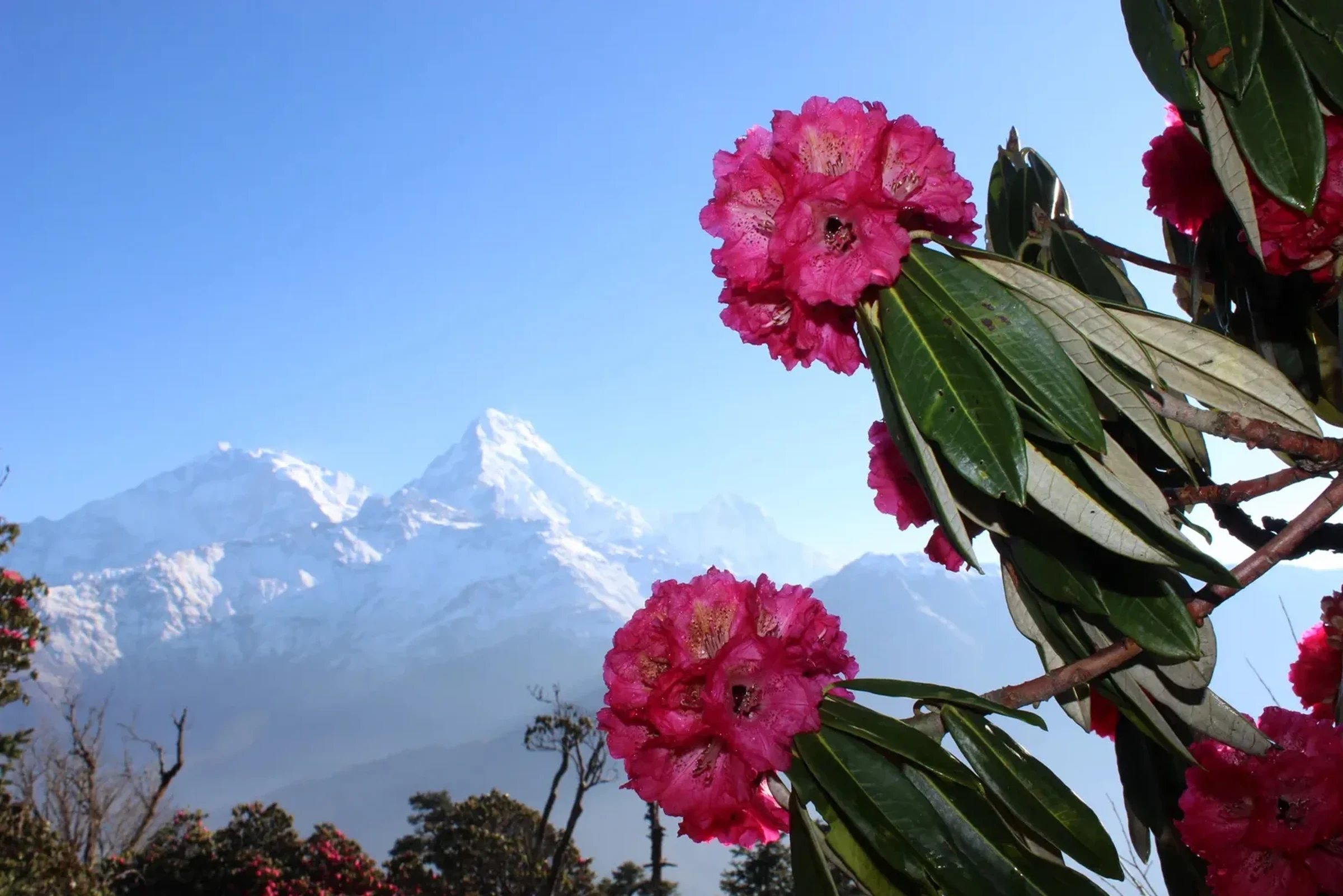
The view is worth the hour you lose sleeping. On a clear morning the line runs from Dhaulagiri I (8,167 m) in the west across Annapurna South (7,219 m) to Annapurna I (8,091 m). Machhapuchhre (6,993 m) sits in the middle and looks taller than the giants behind it, because it is nearer. Manaslu (8,163 m) shows far to the east when the air is very clean. Colour reaches the peaks before the valley, and the warmest tones last 10 to 15 minutes after the sun clears the horizon.
Be ready for the top. It is busy and commercial, with a tower, a restaurant and a play area, and the Runaway Traveller blog describes an October morning with the tour buses arriving at about 5:45 AM. A walker who started in the dark is on the platform before them. Mosquitoes are out in the forest in October, so a little repellent goes in the pack.
The start time follows the sun. Sunrise at Pokhara runs from about 5:12 AM in mid-June to about 7:02 AM in mid-January, and we aim to reach the tower about 30 minutes before first light.
| Month (15th) | Sunrise | Hotel pickup, about |
|---|---|---|
| January | 7:02 AM | 3:45 AM |
| March | 6:19 AM | 3:00 AM |
| June | 5:12 AM | 2:00 AM or earlier |
| October | 6:09 AM | 3:00 AM |
| December | 6:53 AM | 3:45 AM |
The sunrise times come from the sunrise-sunset.org service at Pokhara's coordinates, checked on 24 November 2026. The pickup column is our arithmetic: 3 hours of walking plus the early arrival. In June that arithmetic puts you on wet steps at 2 AM, and the sky is hazy and wet from May to August. If your dates fall between May and August, talk to us before you book a Sarangkot morning.
Sarangkot needs no trekking permit, TIMS card or Annapurna Conservation Area permit. The viewpoint ticket and a breakfast at the top are in our price. A cable car also runs to the top from 5 AM, and a taxi takes 30 to 45 minutes from Lakeside. Both are fine ways up, but they are a different morning from the one this section describes.
Dhampus and Australian Camp: the village ridge
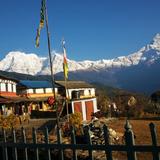
The Dhampus hike is the one that tests your legs. We collect you at 7:30 AM and drive about 27 km to Kande, 45 minutes to an hour from Lakeside. From Kande you climb about 300 m through forest in roughly 2 hours to Australian Camp, at about 2,060 m. The camp was once a grazing pasture called Thulo Kharka, the big field, and today it is a cluster of lodges and a tea stop with the first open view: Annapurna South, Hiunchuli, Machhapuchhre and Lamjung Himal, with the Pokhara valley far below.
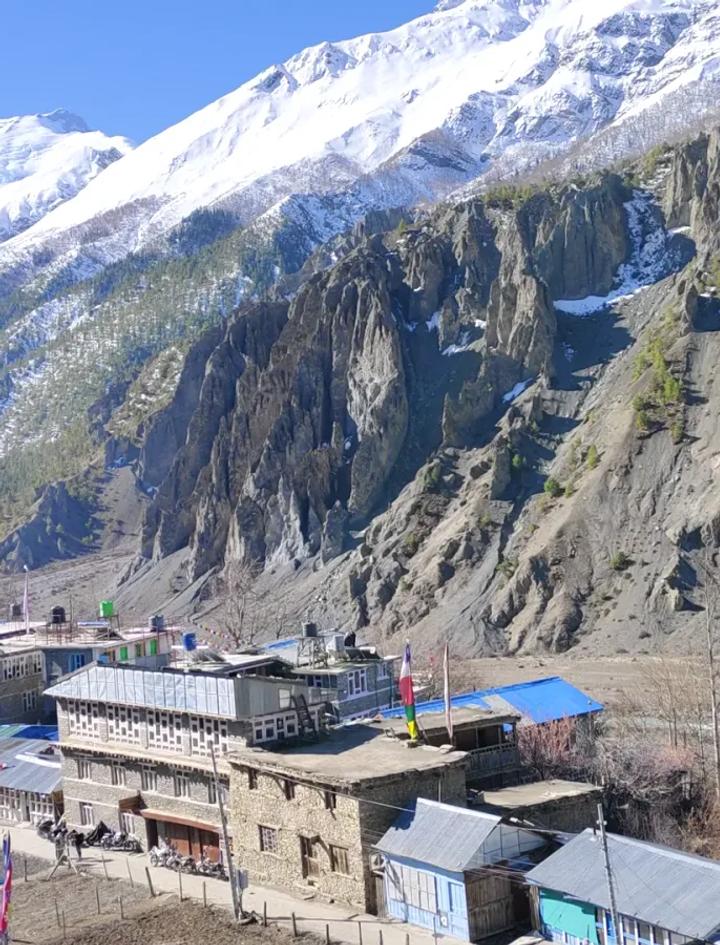
From the camp the ridge walk to Dhampus village takes about an hour and is the gentlest part of the day. Dhampus (about 1,650 m) is a working Gurung village with stone houses, slate roofs, prayer flags, a school and a monastery. Lunch is dal bhat or momos at a local lodge, eaten without hurry, and Phewa Lake shows from the village on a clear day.
Then comes the part the other lists skip. After lunch the trail drops about 500 m on stone steps to Phedi, at about 1,100 m, and takes about 2 hours. In all you walk roughly 300 m up and 900 m down over 9 to 11 km, with 5 to 6 hours on your feet and a back-at-the-hotel time near 4:30 PM. Slower groups can take 7 hours on foot. The lungs are fine at 2,060 m. The knees are not guaranteed. We lend poles, and we walk the steps slowly.
Timing matters more here than at Sarangkot. The Magical Nepal guide to this route says the first 40 minutes after dawn give the clearest views, and our 7:30 start puts us on the ridge in mid-morning, when cloud has often begun to build. October and November give the best odds, and March and April bring rhododendrons along with some haze.
This is the one hike of the three that lies inside the Annapurna Conservation Area. The entry permit, ACAP, costs NPR 3,000 for foreign nationals and NPR 1,000 for SAARC nationals, tax included and single entry, according to the official NTNC ePermit page read on 24 November 2026. We buy it for every guest and include it in the price. Our guide to Nepal trekking permits keeps the wider fee schedule.
The lake and ridge day: World Peace Pagoda and Pumdikot
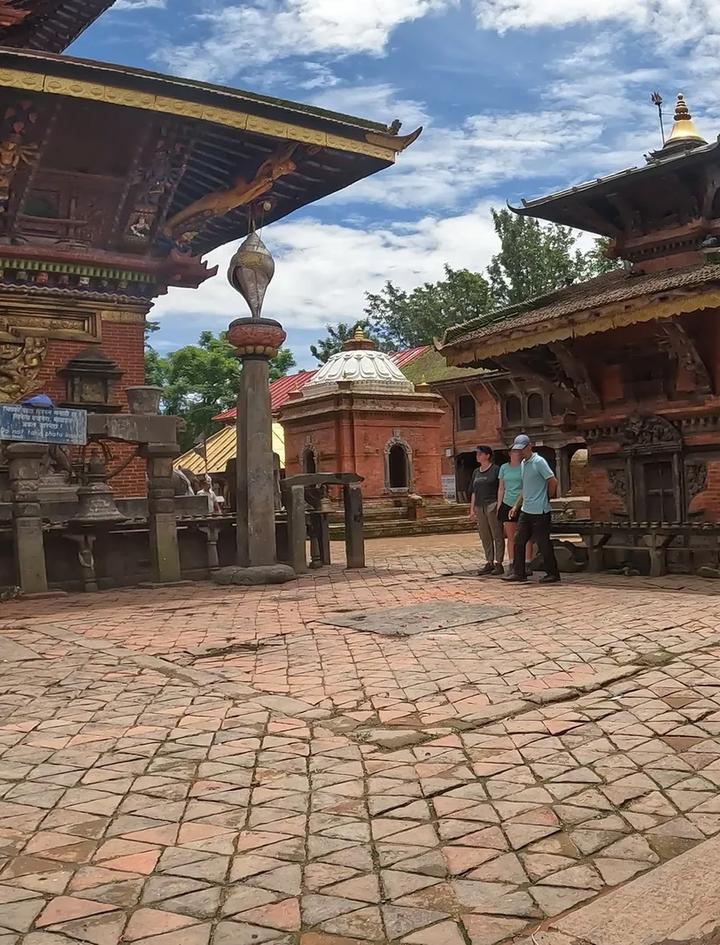
The World Peace Pagoda hike starts on water. A boat from the Lakeside shore crosses Phewa Lake in 15 to 20 minutes. If you ask on the morning, the boatman can stop at Tal Barahi, the small temple on an island in the lake, for another 15 to 20 minutes. That stop is not in our price, so you pay the boatman for it. The boat lands on the south shore below Anadu Hill, and the walking begins: stone steps and dirt path through forest, shaded for most of the way, about an hour and roughly 300 m of climbing to the pagoda.
The boat is the part I would not skip, and the only reason is that every other way up starts with a car park.
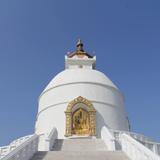
The pagoda stands at about 1,100 m and is 115 feet tall, about 35 m. Japanese monks of the Nipponzan-Myohoji order built it, and it was inaugurated on 30 October 1999. Shoes come off at the foot of the final stairs, so bring a bag for them. From the platform you see Phewa Lake, Pokhara city and, on a clear morning, the Annapurna range. There are cafes just below the top.
Many pagoda walks stop there. Ours keeps going. The ridge path to Pumdikot runs 45 minutes to an hour through Pumdi Bhumdi, a former village committee that is now part of Pokhara: houses, farm terraces and small patches of forest. The last stretch is a steep stair path. It is the hardest part of the day and the reason we grade the whole route Moderate. At the end stands the Shiva statue, 51 feet tall and 108 feet counting its white base, ringed by 108 lingas. It was finished in late 2021, and the site around it is still being built out, so facilities change from one season to the next. Dress modestly and take your shoes off where the stairs begin.
You have two ways down. By default our vehicle meets you at the Pumdikot parking lot and drives you back to Lakeside in about 30 minutes. If you would rather walk, ask us and we take the forest trail down through Raniban forest, which adds about 1.5 hours of downhill in daylight. Either way you cover 4 to 6 hours on foot and about 600 to 700 m of climbing, and you are usually back by early afternoon. The World Peace Pagoda and Pumdikot hike page has the full timetable, and the entry fees at the pagoda and the statue are covered in our price.
Which month for which hike
October and November are the clearest months for all three, with the cleanest air and the best chance of seeing the full skyline. March and April come second. December to February is cold and sharp, with ice on the Sarangkot steps after a cold snap and snow on the Dhampus ridge only rarely. The pagoda route is at its best from October to April, and the dry window runs from September to June.
Summer is the weak season, and for a plain reason. Wikipedia gives Pokhara about 3,868 mm of rain a year, with July the wettest month at about 941 mm. The stone steps turn slippery, leeches appear on the forest sections, and the peaks are usually hidden. Mornings are clearer than afternoons in every season, which is why the sunrise hike and the 7:30 starts exist at all. Our guide to the best time to trek in Nepal shows the wider year.
From a day hike to a trek
These three walks are short treks in miniature, and each one hands you to a longer route.
Poon Hill. Our Ghorepani Poon Hill trek runs 8 days to 3,210 m and is graded Easy. The skyline you meet from Sarangkot is the one Poon Hill adds a sunrise tower to, and the Poon Hill complete guide covers the route in full.
Mardi Himal. The Dhampus day starts on the Kande road that our Mardi Himal trek uses on day 3, and the two share the first stretch of trail from Kande to Australian Camp. That trek runs 8 days and is graded Easy. If the Dhampus steps feel good, the Mardi Himal guide shows what lies beyond the camp.
Annapurna Base Camp. The Annapurna Base Camp trek is the longer commitment in the same hills: 13 days, a high point of 4,130 m, graded Moderate. Its day table runs through Tikhedhunga and Ghorepani rather than Kande, and the Annapurna Base Camp guide lays it out.
If you cannot decide among the three treks, our comparison of Poon Hill, Mardi Himal and Annapurna Base Camp does that job.
Which one first
Pick Dhampus if you want to know how your legs behave on a long staircase before you commit to a week of them. Pick Sarangkot if you have one free morning and can stand the alarm. Pick the lake day if you have a spare day before or after a trek, or you travel with someone who dislikes dawn. The three together fill a long weekend in Pokhara.
Staying in Kathmandu first? The short walks around the capital have their own guide, day hikes from Kathmandu Valley. To see all nine of our day hikes in one place, the Day Hiking collection lists every one of them.
Frequently Asked Questions
Can a first-time hiker manage these?
Yes, with the right pick. Sarangkot is short and has no altitude issue at 1,600 m, so the cost is sleep. Dhampus is the one to approach with some stair practice, because the descent is long. The pagoda day sits between them. Tell your guide at the start about any knee trouble.
What should I carry?
A headlamp and a warm layer for Sarangkot, since you climb in the dark and then stand still in the cold. Shoes with real grip for all three, because wet stone is the one hazard. A small daypack, water, sun protection and some rupees for tea. Leave the large pack at the hotel.
What if cloud covers the mountains?
You still get the forest, the lake and the village, and the next clear morning is a day away. On Sarangkot, if heavy rain or lightning makes the steps unsafe, the guide moves the hike to the next clear morning at no charge.
Can I do two of them in one day?
No, and it is not worth trying. Sarangkot starts around 3 AM, while the other two start at 7:30 AM and fill most of a day. Spread them over two or three days and put the lake day between the other two, since it is the gentlest on the legs.
Is Dhampus the same as the Mardi Himal trek?
No. They share the first stretch from Kande to Australian Camp. The Dhampus day then turns along the ridge and drops to Phedi. The Mardi Himal trek continues upward for 8 days in total.
Which hike has the best Annapurna view?
Sarangkot, if the sky is clear at dawn, because you stand above the valley and see the range from Dhaulagiri to Annapurna I with Machhapuchhre in the middle. Dhampus gives a close and quiet look at Annapurna South from the ridge, though usually later in the morning.